Full Article
about Nestares
Village in the Camero Nuevo, near the N-111; a good base for exploring the sierra.
Hide article Read full article
By mid-morning in Nestares, the light falls sideways across the stone façades, casting sharp shadows beneath the eaves. Old roof tiles, many darkened with age, still hold the coolness of the night. The streets are almost silent: a door opening somewhere, a car passing slowly along the nearby road, the wind dropping down from the hillside and slipping between the houses.
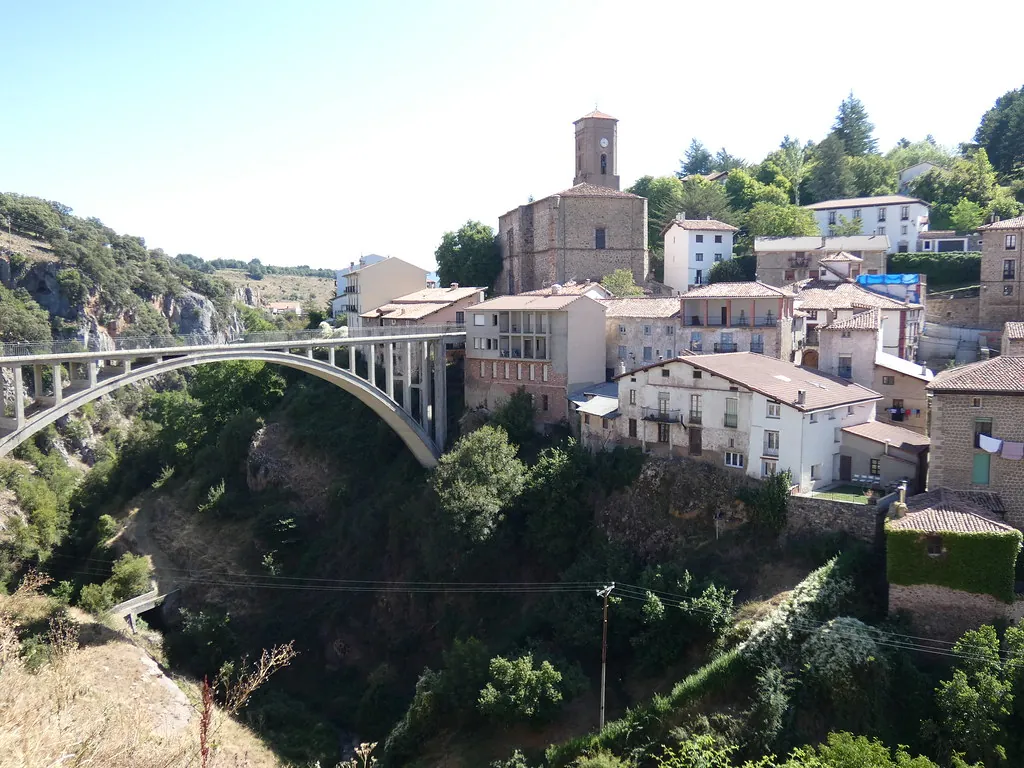
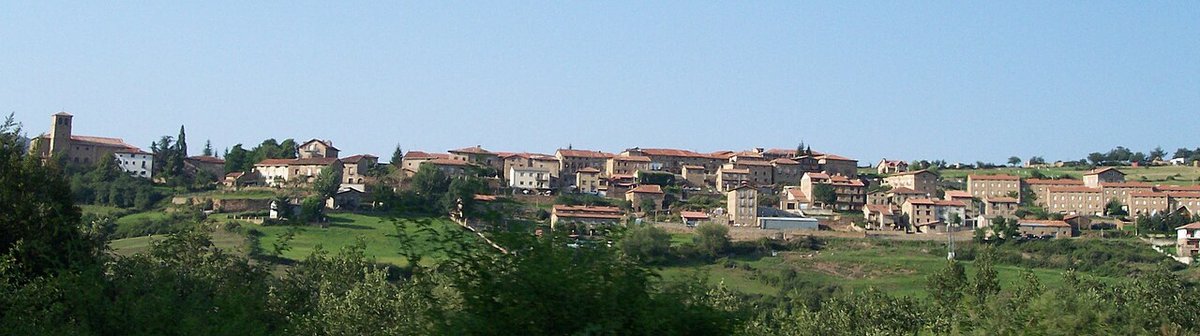
Nestares is a small village in the Camero Nuevo area of La Rioja, a few kilometres from Torrecilla en Cameros. Fewer than a hundred people live here all year round, and that is immediately reflected in the unhurried rhythm of daily life. The houses, built with thick masonry and darkened timber, seem designed to withstand long winters. Many still have continuous wooden balconies and large gateways, a reminder of the time when stables formed part of the home.
The parish church, dedicated to San Millán, stands at one of the most visible points in the village centre. It is not monumental, but sober and built in stone, with the practical air common to many mountain churches in northern Spain. Around it, the streets follow the natural slope rather than any strict plan, adapting to the contours of the land.
Walking into the Hills
The countryside begins almost as soon as you leave the last house behind. Footpaths and forest tracks thread through oak and beech woodland, with occasional meadows where the ground softens and opens out. In autumn the forest floor is covered with damp leaves and the air carries the scent of turned earth. In spring the green is brighter, and small streams can be heard running through the undergrowth.
There is no need to plan ambitious routes to explore the area. Paths set off directly from the village, climbing gradually towards nearby hills. From these higher points there are broad views over the Iregua valley. On clear days, the distant outlines of the sierras of la Demanda and Urbión come into view.
During mushroom season, the hills become noticeably busier. Foraging is common throughout the Cameros region, and Nestares is no exception. Care is essential, as edible varieties grow alongside others that are not safe to eat. It is part of the seasonal rhythm here, drawing people into the woods when conditions are right.
A Small Village with a Steady Pace
Nestares does not offer grand monuments or a long checklist of sights. Its appeal lies in the overall scene: stone houses grouped along sloping streets, low walls edging vegetable plots, the sound of wind descending from the sierra.
Village festivities usually take place in August, around the feast day of San Millán. During those days the atmosphere shifts. Residents who live elsewhere return, and the main square fills more than usual. Outside that brief period, Nestares maintains a very calm tempo, particularly in winter when night falls early and the cold makes itself felt as soon as the sun disappears behind the hills.
Winter light fades quickly in this part of La Rioja. By mid-afternoon, shadows are already stretching across the valley. The change in season alters the experience of the landscape rather than diminishing it. Autumn is often one of the most rewarding times to visit, as the surrounding woods turn shades of ochre and rust, and the hills feel especially alive.
Practical Notes for a Visit
If arriving by car, it is best to leave the vehicle at the entrance to the village and continue on foot. The streets are narrow, and residents still use doorways and access points as part of their everyday routine. Walking also allows time to notice details that might otherwise be missed: the texture of stone walls, the grain of old wooden doors, the way balconies project over the street.
Good footwear is advisable. After rain, the paths become soft underfoot, and in shaded areas mud can linger for some time before drying. Conditions in the hills change with the seasons, and surfaces that seem firm in summer may feel very different in autumn or winter.
The Road through the Iregua Valley
From Logroño, the usual route heads up the Iregua valley towards Torrecilla en Cameros. The Iregua is one of the main rivers running south from the mountains into the Ebro basin, and the road follows its course for much of the journey. After Torrecilla, the route continues through bends and wooded stretches as it approaches the villages of the Camero Nuevo.
It is not a long drive, but it is worth taking slowly. Some sections are narrow, with changes in gradient that require attention. The landscape often encourages a gentler pace in any case: forests, meadows and open hillsides accompany the road, reinforcing the sense of moving deeper into a quieter, more sparsely populated part of La Rioja.
Nestares fits naturally into that setting. With fewer than a hundred permanent residents, stone houses built for endurance, and hills that begin at the edge of the last street, it offers a straightforward experience of rural Camero Nuevo. There are no grand claims here, only the steady presence of the landscape and the daily life that continues within it.