Full Article
about Ortigosa de Cameros
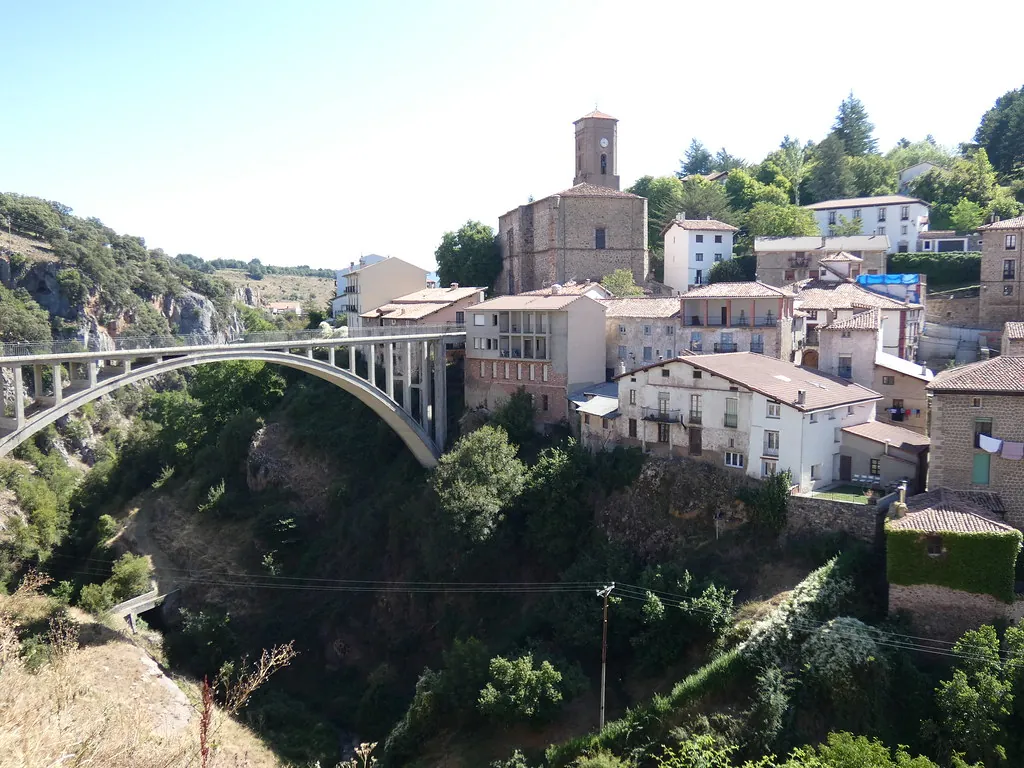
Spectacular village with two quarters linked by a concrete bridge; visitable caves and a reservoir.
Hide article Read full article
Arriving through forest and bends
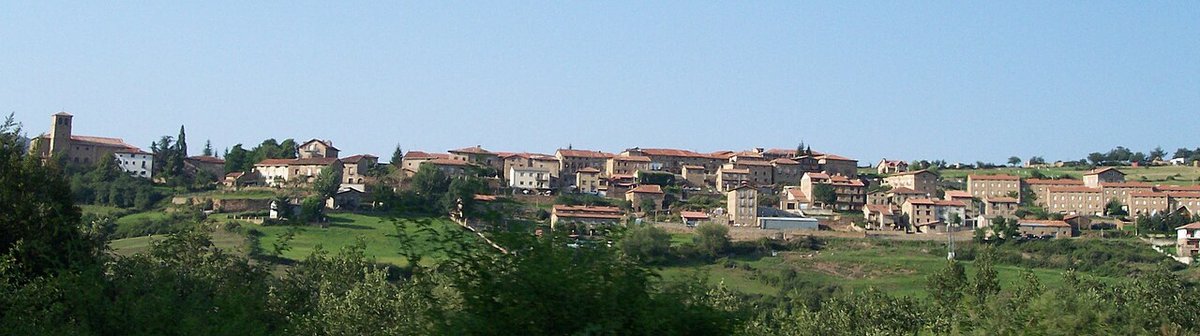
Some places appear almost without warning. The road along the N‑111 winds between bends and woodland, and then Ortigosa de Cameros comes into view as if it had always been there. The approach from Logroño or Soria passes through stretches of oak and beech forest, setting the tone before you even arrive.
This is mountain country, shaped by long winters and a practical way of building. Ortigosa does not try to impress at first glance. The sense of place comes more slowly, through stone façades, wooden beams and houses that sit carefully on the slope. Everything feels built to endure rather than to stand out.
A compact village to wander through
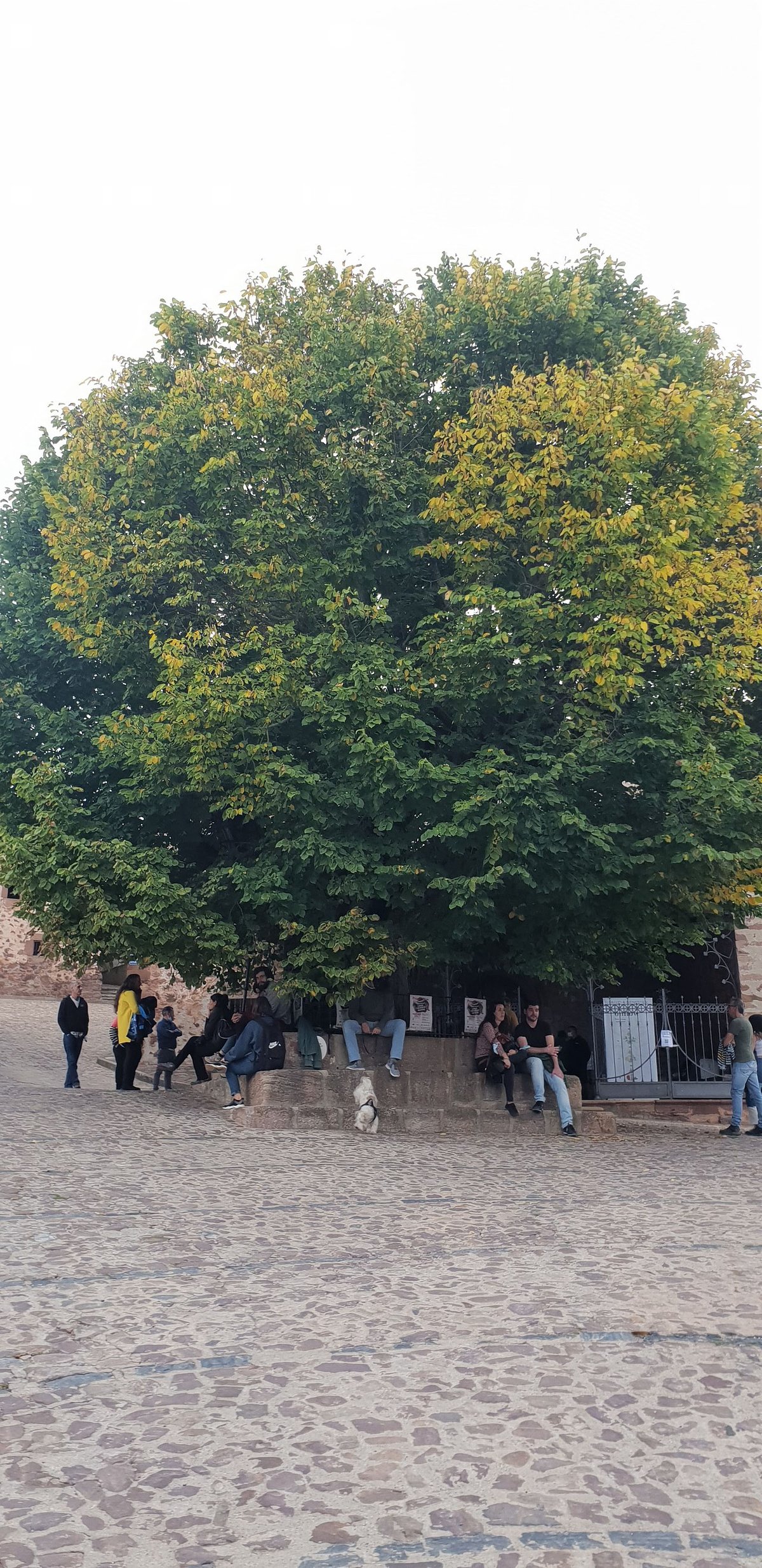
The centre is small and easy to walk. A handful of narrow streets rise and fall just enough to remind you that you are in the Cameros area, a mountainous part of La Rioja. The Plaza Mayor acts as a natural meeting point, framed by traditional houses with wooden balconies and exposed masonry walls. Some arcades still provide shade when the sun gets stronger.
The parish church of Santa María stands slightly apart from the immediate centre, in a more open area. It is a restrained building that fits naturally into its surroundings. Stone construction, simple lines and a tower that can be seen from several points in the village give it a quiet presence.
Details matter here. Doorways, iron fittings and wooden eaves reveal much about how these buildings were made and used. In places like this, the interest often lies in those smaller elements rather than in any single landmark.
Surrounded by woodland
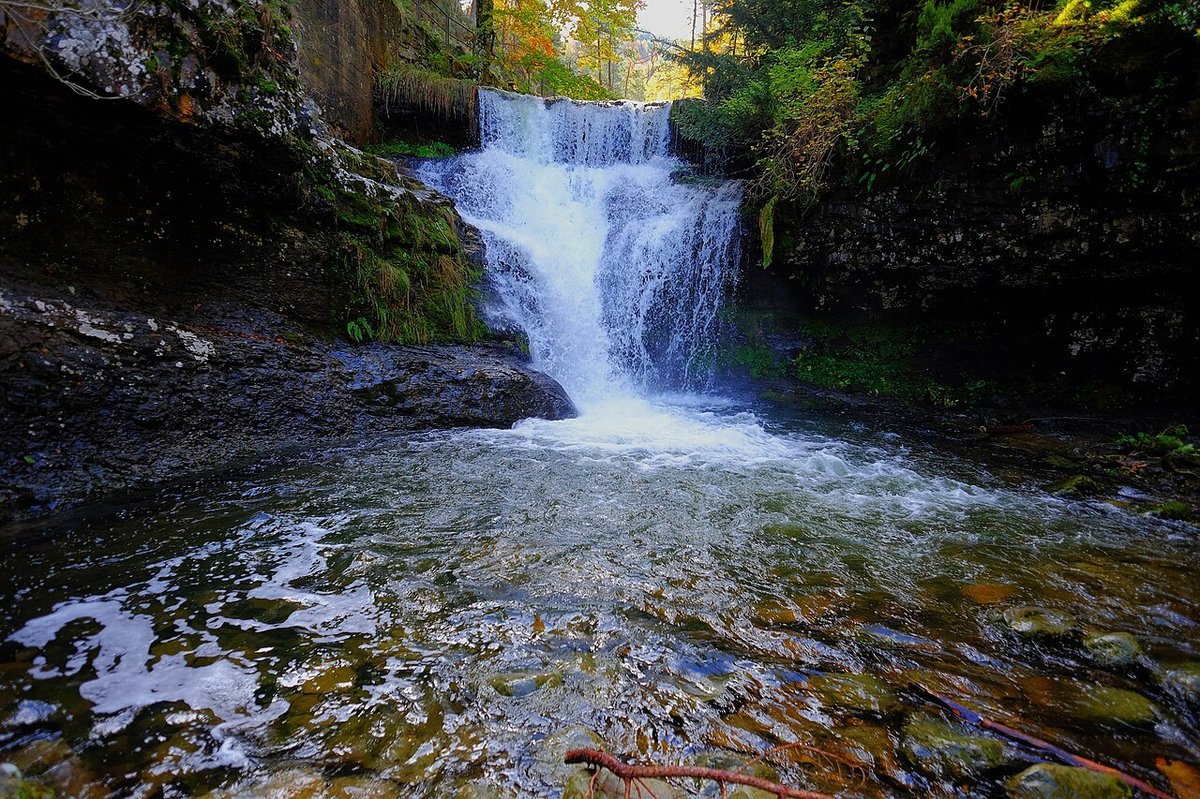
One of the defining features of Ortigosa de Cameros is how completely it is enclosed by the surrounding hills. Within a few minutes on foot, the village gives way to forest tracks and paths that lead into oak woodland.
There are several natural cavities in the area that have been known and used for a long time, forming part of the village’s identity. Beyond that, the landscape mixes open pasture, where livestock can still be seen, with dense stretches of forest that change noticeably with the seasons.
Autumn brings deep colours to the oaks, the kind of tones that feel almost like an old photograph. Winter often introduces snow or low cloud that lingers among the trees for hours. The same path can look entirely different depending on the day, the light and the weather.
Walking without overplanning
Walking is the simplest and most rewarding way to experience Ortigosa. There is no need for a complicated plan.
Several paths lead out from the centre towards the surrounding hills. Some are short routes that loop back to the village within an hour, easy to follow without checking the time. Others climb higher and reach quieter areas where encounters with other walkers become rare.
It makes sense to set out with water, a layer for warmth and enough time to return without rushing. Weather in the sierra can shift quickly, and the wind becomes more noticeable once you leave the shelter of the village.
Gaining height, gaining views
Climbing any of the paths around the valley gradually opens up wider views. From higher points, the landscape stretches in two directions, towards La Rioja on one side and towards the neighbouring lands of Soria on the other.
Early in the day, low mist often settles between the oaks, softening the outlines of the hills. Later, as the afternoon draws in, the light falls at an angle and brings out reddish and ochre tones across the slopes. For anyone interested in landscape photography, it is a place where staying still for a while pays off, simply watching how the light shifts.
Food rooted in the mountains
The local cooking reflects the environment directly. Meals are straightforward and filling, designed for people who spend time outdoors rather than for delicate appetites.
You will find spoon dishes based on legumes such as lentils or beans, along with substantial stews. Pork and locally raised beef feature prominently. Fresh cheeses and cured sausages are also common, shaped by traditional methods of preservation.
This is food that aims to satisfy after a day in the fields or the hills, not something intended to be light or elaborate.
How long to spend
Ortigosa de Cameros is not a place to fill an entire day within the village itself. A couple of hours is enough to walk through its streets at an easy pace. The experience becomes more complete once you step beyond the centre and follow one of the surrounding paths.
From there, it is natural to continue towards other villages in the Cameros area, which lie within a reasonable distance and allow you to extend the day by moving through the wider region.
What stays with you is the sense of calm that begins on the road in. Forest, quiet and a small cluster of houses that have been facing the mountains for a long time. For anyone looking to spend a few hours walking and taking in the landscape, Ortigosa de Cameros fits that plan without complication.