Full Article
about Pinillos
Small village in Camero Nuevo; overlooks the Iregua valley and offers complete peace.
Hide article Read full article
A village on the southern slopes
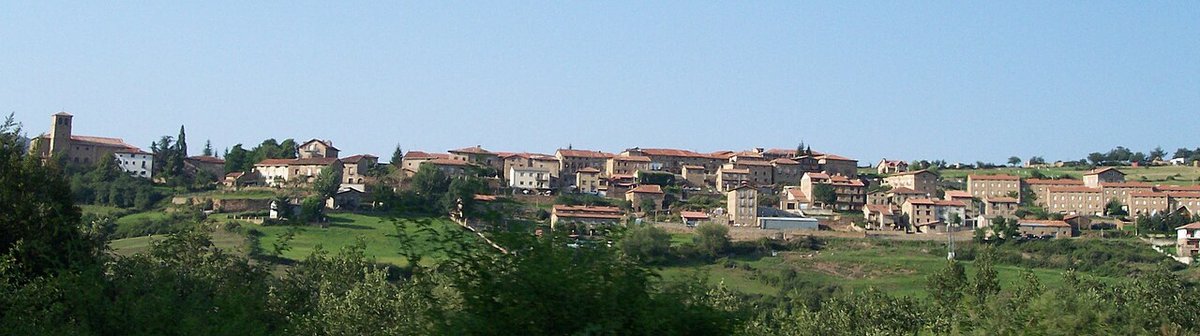
Set on the southern side of the Sierra de Cameros, at over 1,000 metres above sea level, Pinillos is one of those small mountain settlements where the logic of how and why it was built is still easy to read. Tourism in Pinillos tends to be brief. Partly because the village itself is very small, but also because its interest lies less in individual landmarks and more in how it fits into the landscape around it.
Stone houses dominate the village, many of them incorporating timber in their eaves and upper galleries. These are not decorative choices. They reflect long winters and a way of life traditionally linked to livestock. Every element of construction responds to climate and daily necessity.
The layout and what it reveals
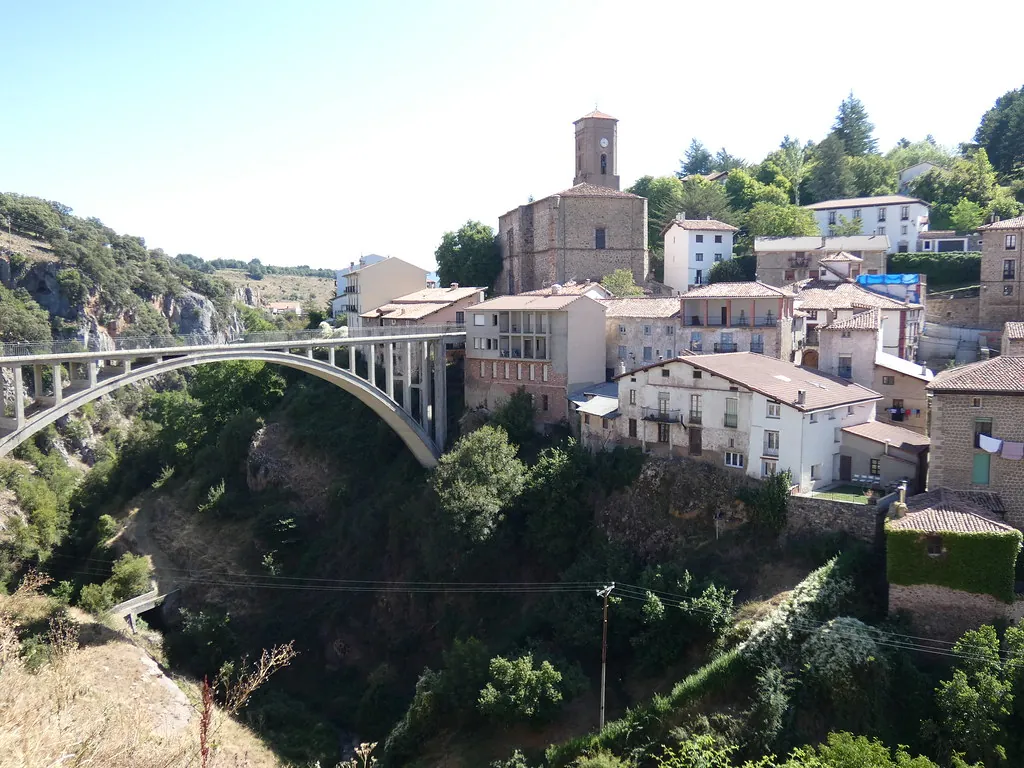
The village is organised around the church of San Andrés, probably built in the 16th century and altered at a later date. It is not a particularly complex building, yet it helps explain how settlements in this part of Cameros were structured. The church sits at the centre, surrounded by some of the older houses, and from there short streets branch out, adapting to the slope.
The houses themselves follow patterns typical of mountain architecture in the region. Large doorways open onto ground floors used as stables or storage areas, while the living quarters occupy the upper level. This arrangement was practical rather than aesthetic. Keeping animals close helped retain warmth during the winter and made daily work more manageable. At this altitude, nothing in the design was accidental.
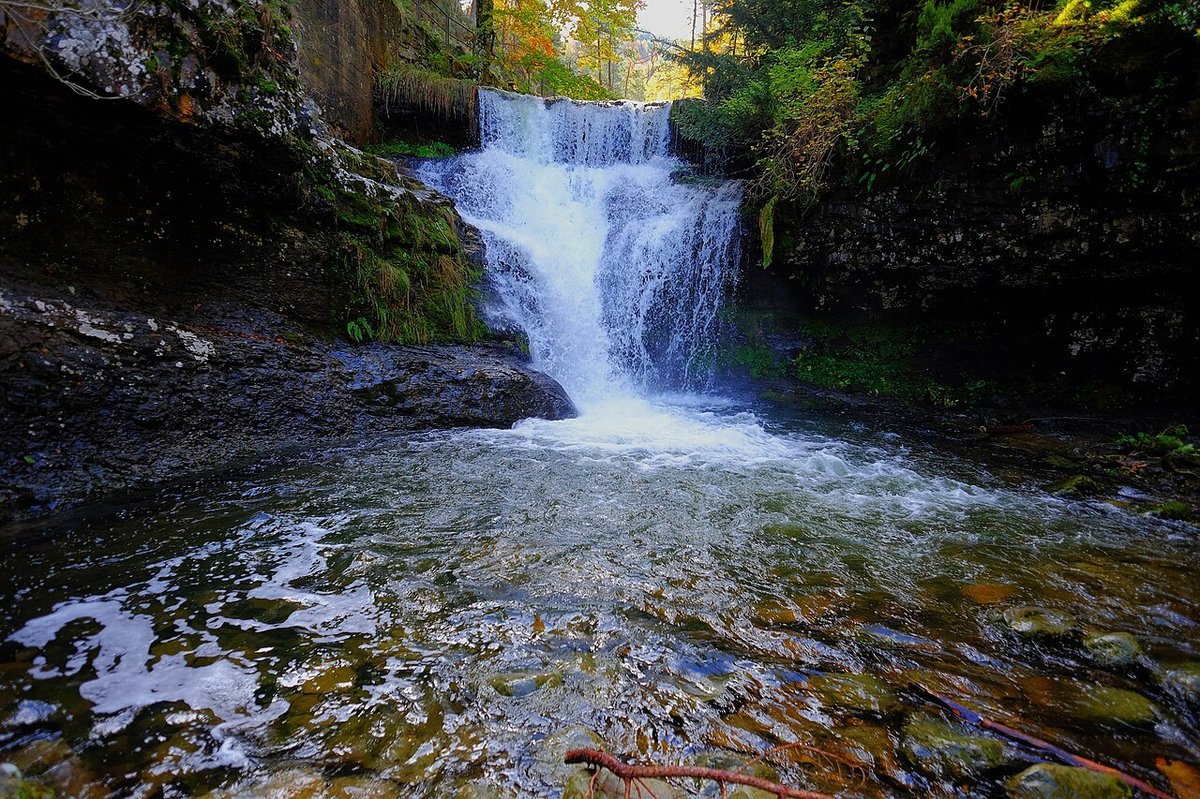
Around the built area, patches of oak and beech woodland appear alongside pasture and more open ground. Several streams run down the hillsides. In spring, or after snowmelt, their sound can be heard from within the village. During summer, their flow usually diminishes, which is common across this part of Cameros.
Walking into the surrounding landscape
Pinillos can be explored on foot without difficulty. The village is small and its streets are straightforward. The more interesting routes lie beyond the houses, where paths lead towards the nearby hills. Some of these were traditionally used to reach grazing areas or to connect with neighbouring settlements.
Not all of these paths are signposted, so it is sensible to carry a map or a track if planning a longer walk. Along the edges of the forest, traces of roe deer or wild boar are not unusual, and wildlife tends to be more active in the early morning or towards the end of the day.
Weather plays a strong role in how the area feels. When fog rolls in, which happens fairly often in this mountain range, visibility drops and distances seem compressed. The village can feel almost enclosed by the surrounding slopes. Snow changes things again. Access may become more difficult, and activity within the village slows to a near standstill.
A short circuit through the village
A quiet walk through Pinillos is enough to notice how the houses are oriented to catch sunlight and shield themselves from the wind. Some still retain very thick walls and steeply pitched roofs designed to cope with snowfall.
From the edges of the settlement, tracks and footpaths quickly lead out into the wider mountain landscape. Within a few minutes, the transition from built space to open terrain becomes clear. For those unfamiliar with the area, it makes sense not to stray too far. Part of the appeal lies precisely in how quickly the village gives way to the surrounding hills.
Before you go
Pinillos is very small. The permanent population amounts to only a few dozen residents, and there is no standout monumental heritage. Its value lies in the whole rather than in any single building, and in the landscape that frames it.
Photographs often show the village in clear, bright conditions, but on grey days the atmosphere shifts noticeably. It becomes harsher, more in keeping with a mountain settlement that remained fairly isolated for centuries.
It works well as a short stop within a wider route through the Cameros area, or as a starting point for walks in the nearby hills.
Things to bear in mind
Weather conditions can change quickly here. Even in summer, temperatures drop in the evening, and wind is common in higher areas.
It is worth checking the state of the road before travelling up in winter or after periods of rain, as mud or snow can complicate access. And because the village is so quiet, any noise carries easily. This is the kind of place where a low-key, unhurried approach feels most appropriate.