Full Article
about Terroba
A small village on the route through Camero Viejo; known for its church and quiet.
Hide article Read full article
A village that appears around a bend
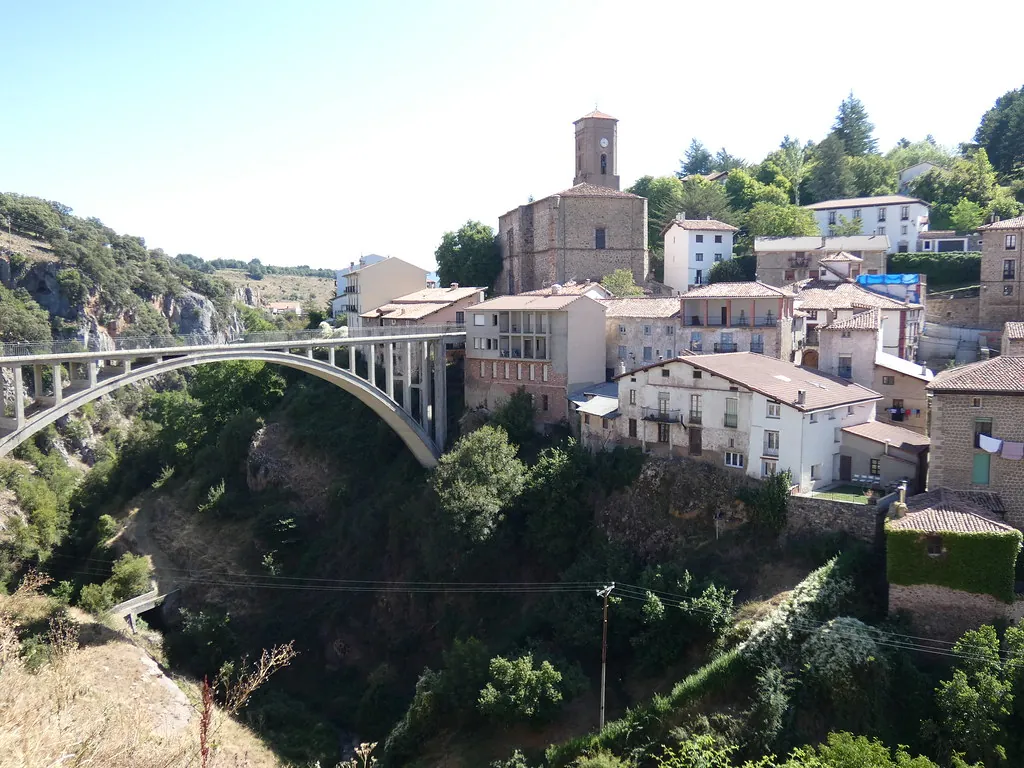
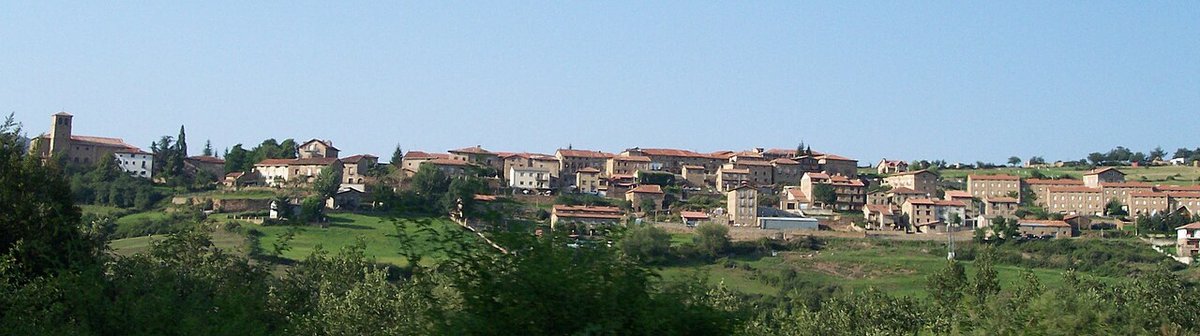
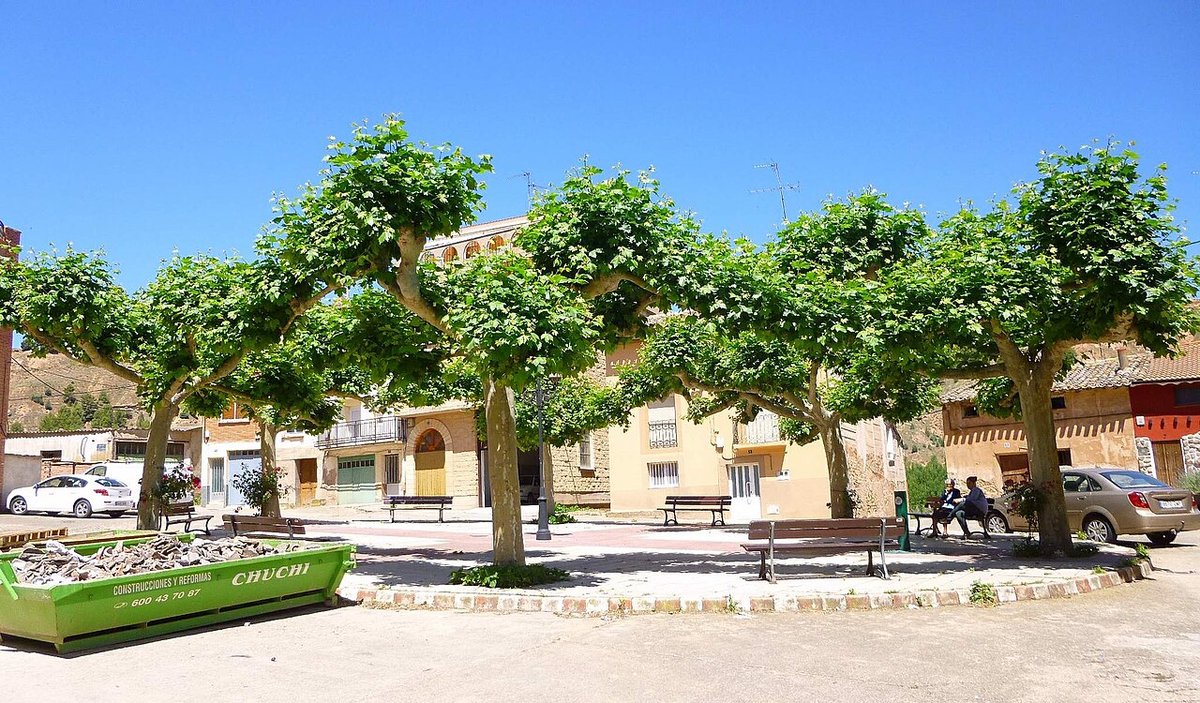
Some places reveal themselves all at once. Terroba does exactly that. The road winds through the hills, forest on either side, and then the houses come into view, clinging to the slope as if placed carefully one above the other.
Terroba sits in the Cameros area of La Rioja, a mountainous region in northern Spain. It is tiny, with a population that hovers at around thirty residents. That number shapes everything. There are no information boards every few metres, no curated routes designed to entertain visitors. Instead, it is the sort of place where a short walk is enough to grasp how life works here.
The streets are narrow. Stone walls are left unrendered. Roofs slope sharply. Some houses have been restored with care, others show their age without disguise. Now and then an old lintel comes into view, or a carved coat of arms above a doorway. Small details, yet they say a great deal about what the village once was.
Santa Eulalia and traces of the past
The church of Santa Eulalia is the first building to catch the eye. Not because of its size, but because it clearly has history behind it. The structure blends periods. In certain corners and parts of the doorway, Romanesque remains can be made out, although the building as a whole has been altered over time.
Inside, there is usually an old baptismal font and remnants of a Baroque altarpiece. Access is not guaranteed. In villages of this size, the key often depends on a neighbour or on when the priest happens to come up. Finding it open is more a matter of chance than fixed hours.
The church anchors the village visually, yet it does not dominate it. It feels woven into daily life, much like everything else in Terroba.
Walking out into the Cameros landscape
The real appeal of Terroba begins just beyond the last houses. Within a few minutes, meadows appear where livestock still graze. Small oak woods cover the nearby hills.
Autumn alters the scene considerably. The oaks shift from green to reddish and brown tones, and the whole valley seems different. From the surrounding hills, the view opens southwards, with the mountain range rolling away as far as the eye can see.
The paths leading out of the village are old. Some once connected neighbouring settlements or led to grazing land. They are not always signposted, yet they are easy enough to follow because generations have walked them.
An early start increases the chances of spotting wildlife. Roe deer sometimes cross clearings. Birds of prey circle above the oaks. When mushroom season arrives, there is more human movement too, with people scanning the ground and carrying baskets.
The terrain is straightforward rather than dramatic, but it has character. Earth and stone underfoot, gentle slopes in places, steeper stretches in others. It is countryside that rewards a slow pace.
A brief stop, not a full-day plan
Terroba can be explored quickly. A walk through the streets, a look at the church, a pause at the edge of the village to take in the valley, and a clear impression forms.
After that, the natural impulse is to spend time walking in the surrounding hills or to continue on towards other villages in the Cameros. Terroba works better as a short stop than as a destination for an entire day.
There is something direct about the experience. No layers of interpretation, no organised attractions. The visit consists of what is there: stone houses, open landscape, quiet.
Practical points to bear in mind
Shops and bars should not be expected to be open at all times. In a village with so few residents, that depends heavily on the day or the season. Anyone planning to spend a few hours here is wise to bring water and something to eat.
Good footwear matters. The paths are made of dirt and stone, and some sections involve a slope. Nothing especially demanding, yet unsuitable for thin-soled trainers.
Silence is another simple detail worth noting. Hardly anyone passes through. At times the only sounds are the wind or the distant ringing of a cowbell. The absence of traffic noise becomes part of the visit.
Seasons in the hills of La Rioja
Spring brings very green meadows and plenty of wildflowers along the edges of the paths. The landscape feels open and fresh.
Autumn deepens the palette of the oak woods and gives the Cameros scenery a darker tone overall. It is a noticeable shift rather than a subtle one.
Winter turns the atmosphere harsher. If snow falls, the village appears almost visually cut off within the mountains. Summer has strong midday sun, yet evenings tend to cool down considerably.
Each season changes the surface of Terroba, although the underlying rhythm remains the same.
Reaching Terroba
From Logroño, the capital of La Rioja, the route heads up towards the Cameros mountains along the main road that runs through the Iregua valley. After that, local roads branch off and wind between hills. They are typical mountain roads, full of curves, unhurried, with open views along the way.
Terroba lies at the end of one of these roads. On arrival, the first noticeable change is the absence of noise. The sound of traffic fades, replaced by wind or the faint echo of livestock. In a place this small, that quiet is not a backdrop. It is part of what defines the visit.