Full Article
about Torrecilla en Cameros
Capital of Camero Nuevo and birthplace of Sagasta; tourist spot with a river and pools.
Hide article Read full article
First Light in the Iregua Valley
Early in the morning, when the sun has barely reached the floor of the Iregua valley, the stone façades of Torrecilla en Cameros still hold the night’s damp. There is a faint chill in the air, the kind that lingers in mountain villages. Tourism in Torrecilla en Cameros tends to begin like this: slowly, on foot.
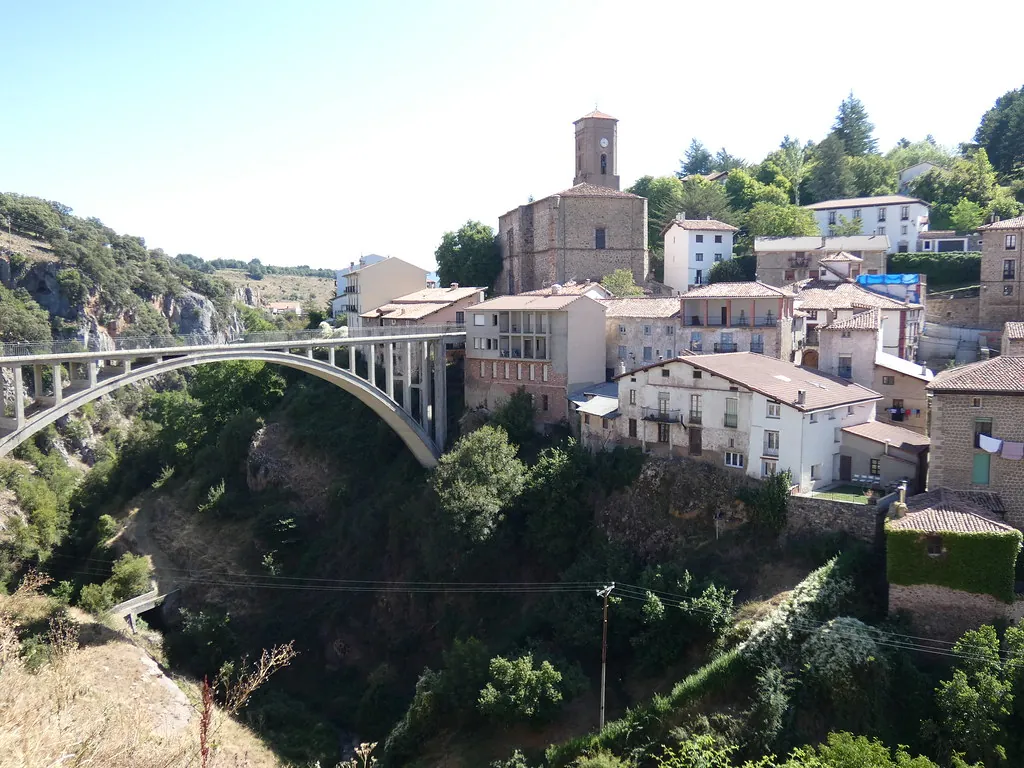
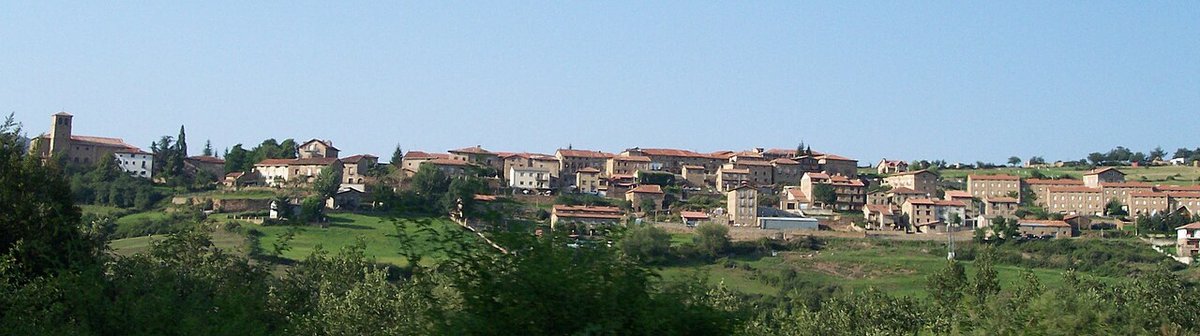
The houses line Calle Mayor in a compact row, topped with reddish roof tiles and wooden balconies darkened by time. The village is small enough to grasp in a matter of minutes. A short walk is all it takes to understand its layout and rhythm.
Cars parked close to the walls are a reminder that this is a lived-in place. Torrecilla is not a stage set preserved for photographs. Neighbours move up and down the street carrying shopping bags, tools or simply hurrying home. Daily life continues at its own pace, indifferent to anyone passing through.
The Road Along the Iregua
The approach from Logroño sets the tone. The LR‑250 follows the Iregua valley, climbing gradually between bends and pale rock cuttings. In the final kilometres the road narrows slightly, and it is worth taking them calmly. Cyclists are common on this stretch, and a tractor can appear unexpectedly around a curve.
On entering the village, the cluster of houses gathers close to the river. Parking is usually straightforward if done with care. The central streets are narrow, and one badly positioned car can make things awkward.
From the outset, the geography is clear. The river shapes the settlement, and the surrounding slopes rise quickly into wooded hills. Torrecilla feels enclosed by landscape rather than spread across it.
The Plaza and the Church of San Pedro
The main square opens suddenly between the houses. Here stands the parish church of San Pedro, its structure combining rough masonry with more regular stone blocks at the corners and around the doorways. The contrast in materials is easy to spot if you pause for a moment.
On some nearby lintels, worn coats of arms and dates can still be made out, though you may need to step closer to decipher them. Time has softened the carvings, leaving outlines rather than sharp detail.
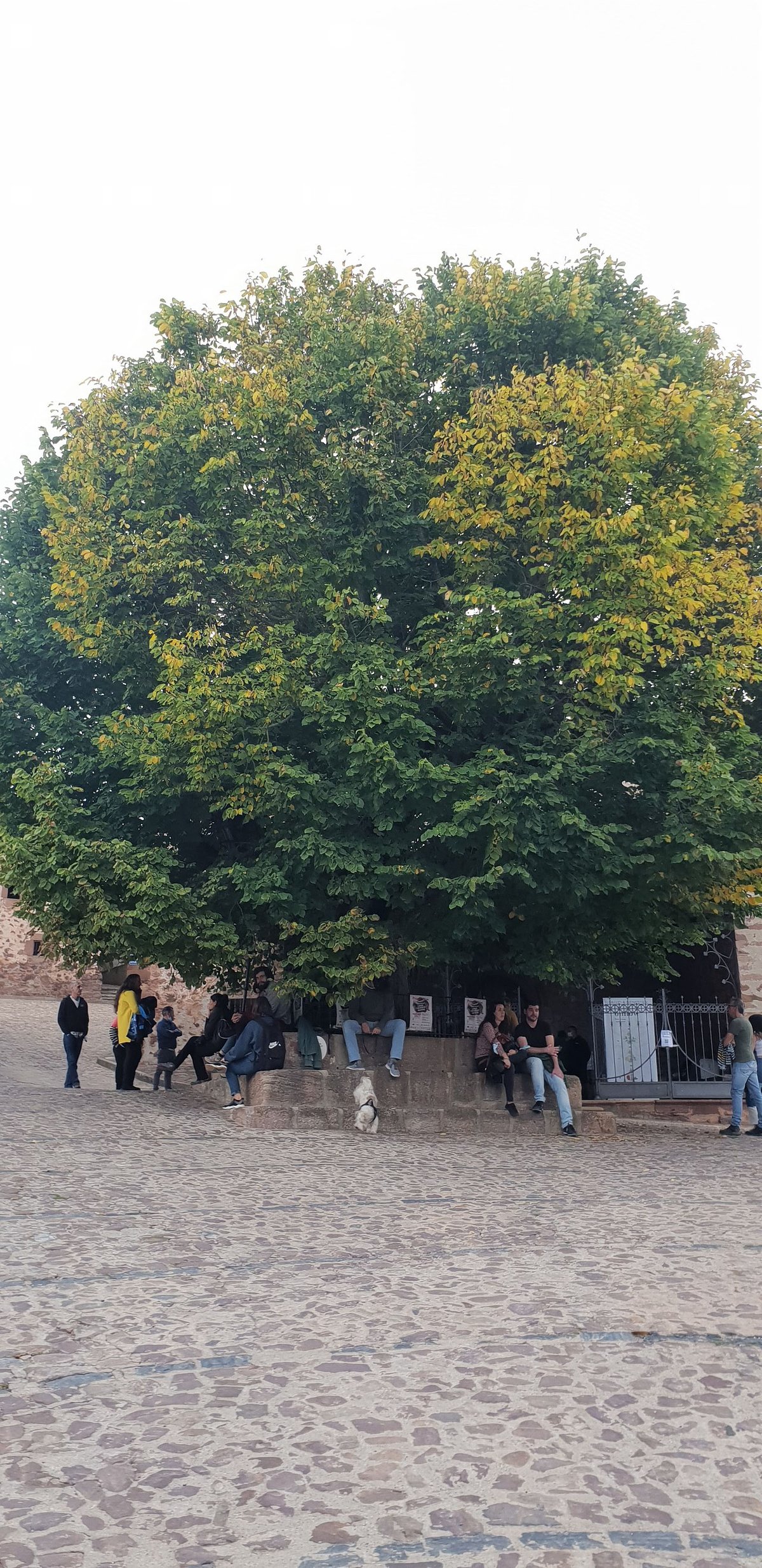
By mid-afternoon, light enters the square at an angle from the valley. The relief of the stonework becomes more pronounced, and reddish veins in certain walls catch the sun. It is a good time to wander without hurry through the streets around the plaza, noticing small variations in height and alignment that reveal how the village adapted to its terrain.
There is no sense of monumental scale here. The interest lies in texture and proportion: stone against wood, narrow passages that open onto small spaces, the quiet presence of the church at the centre.
Paths Into the Oak Woods
Several tracks and footpaths begin within the urban area itself. Within minutes, the sound of the village fades and oak woods take over. In autumn, dark bark stands out against a ground thick with fallen leaves.
Some of these paths climb towards low hills that serve as natural viewpoints. Signage is not always clear. The routes are straightforward, yet it pays to pay attention at junctions. A wrong turn will not take you far, but it may require retracing your steps.
From higher up, the Iregua valley stretches out as a green strip between more densely forested slopes. The contrast is visible: open valley floor, wooded hillsides, and beyond them the layered outlines of the Sierra.
The terrain varies noticeably from one section to another. There are stretches of compact earth and others that feel sandier underfoot. In places, tree roots cross the path. Even on short walks, footwear with a good sole makes a difference.
What You Hear at Dawn
In these hills, sound often arrives before sight. Head out early and the first impressions are acoustic. The sharp tapping of woodpeckers echoes against tree trunks. In shadier areas, the low call of a tawny owl carries through the trees.
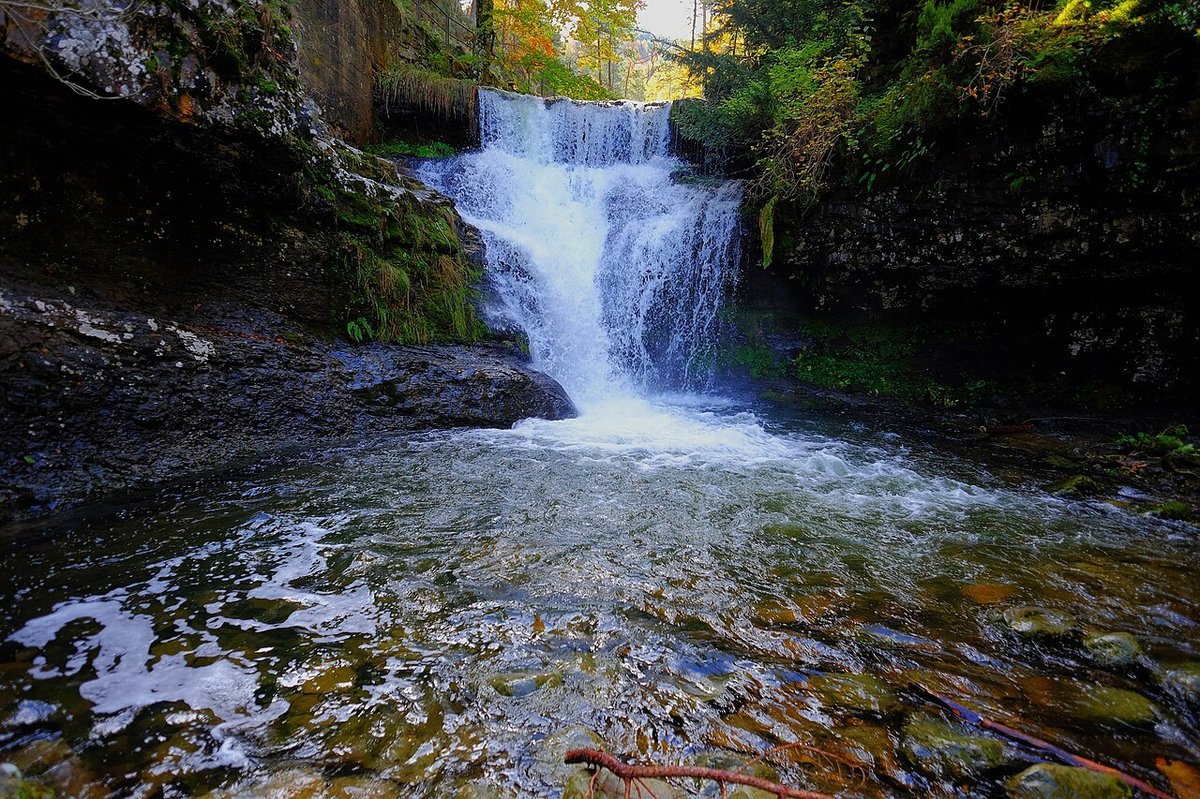
Small streams flow down towards the river, keeping the ground damp for much of the year. Moisture shapes the vegetation and affects the feel of the paths. After rain, certain sections remain soft while others dry quickly.
The experience of walking here changes with the hour. At dawn, it is about listening. Later in the day, light filters through branches and defines the contours of the valley. There is no need for long routes to sense the shift from village to woodland. The transition happens within a few minutes of leaving the last houses behind.
Mushroom Season and Mountain Cooking
When autumn is wet, the forests around Torrecilla en Cameros attract mushroom hunters. The gathering of wild mushrooms is usually regulated in the area to prevent damage to the woodland, so it is sensible to check the rules before setting out with a basket.
This seasonal activity fits naturally with the local cooking of the Sierra. The food is direct and suited to the climate: hot stews, potatoes, meat and produce linked to nearby livestock farming. These are flavours that make sense in cool mountain weather, filling rather than elaborate.
The connection between forest and kitchen is practical rather than decorative. What grows in the surrounding land influences what appears on the table, especially when temperatures drop and mist settles low over the valley.
A Village That Keeps Moving
Torrecilla en Cameros retains an old appearance, yet it is not fixed in the past. Some façades show recent renovations. On the outskirts, cultivated vegetable plots and agricultural machinery parked beside sheds speak of ongoing work.
The climate shapes any visit. In spring, the valley turns intensely green and rain showers are frequent. Autumn brings low-lying mist and yellow leaves along the paths. Winter days are short and cold. In summer, by contrast, nights cool noticeably once the sun has set.
Many visitors use Torrecilla as a base for exploring the wider Cameros area or simply for spending a few quiet hours away from the Ebro valley. The pace here is different. Walk a short distance, whether through Calle Mayor or into the oak woods, and that slower rhythm becomes clear.
Torrecilla en Cameros does not demand a checklist. It asks for time on foot, attention to light and sound, and an acceptance of its everyday life. Between stone façades, forest tracks and the steady presence of the Iregua, the village reveals itself gradually, at the same measured speed with which it begins each morning.