Full Article
about Aguilar del Río Alhama
Town in Rioja Baja on the Alhama River; noted for its Celtiberian archaeological sites.
Hide article Read full article
A village that reveals itself slowly
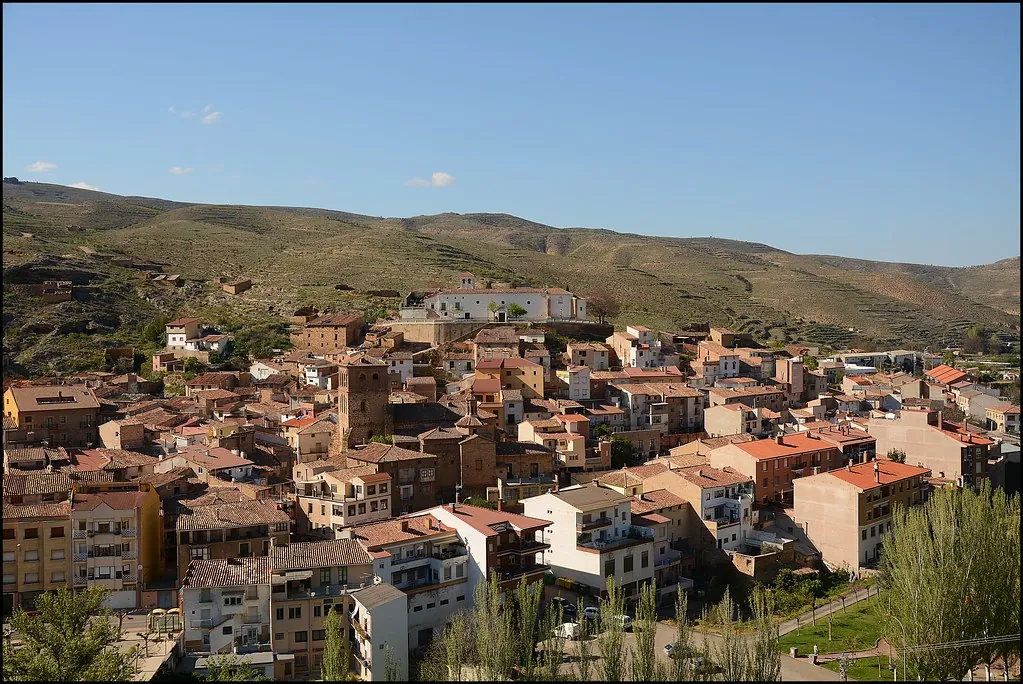
By mid-afternoon, when the sun has eased off, the river Alhama is heard before it comes into view. Water runs through rows of poplars with a steady sound that blends with a distant tractor and the sharp thud of a shutter being pulled down. In Aguilar del Río Alhama, nothing is staged. The village appears as it is: simple streets, pale stone façades and wooden doors that have seen many winters.
There is no single central square or tightly packed old quarter. Streets drift outwards instead, opening towards the river and the surrounding fields. Between houses, there are vegetable plots, yards and small patios. On some façades, carved coats of arms or dates are still visible in the stone, details that are easy to miss if you walk too quickly.
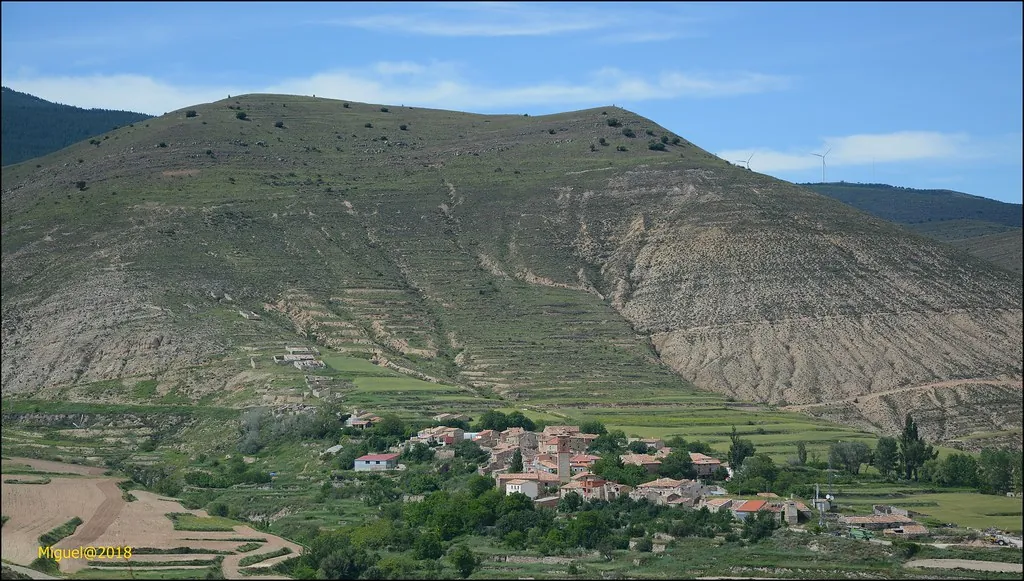
The municipality has around four hundred residents and lies close to the border with the province of Soria. That location shapes the landscape: open farmland, low hills in the distance and a sense of being in a place people pass through. After rain, the smell of damp earth lingers in the streets for some time.
From the edges of the village, the Vega del Alhama spreads out. In spring, the green is intense and the poplar groves form a pale wall of leaves along the riverbank. In autumn, those same trees turn yellow and the afternoon light filters through in warmer tones. Summer is usually dry here, and the fields shift to muted browns and ochres.
The river runs close to the last houses. There are no formal promenades or marked paths. The riverbank blends into vegetable plots, farm tracks and stretches where vegetation grows freely. It is possible to walk down to the water from certain access points, though it is best done carefully, watching where you step.
Walking through Aguilar
The parish church of Santa María is the most recognisable building. It is not large or heavily decorated: a simple arched entrance, stone walls and a bell gable with two bells that can be seen from several streets.
Around it, streets such as Mayor and Santa Lucía reflect the practical character of villages in this valley. Houses are built with limestone walls, small barred windows and wooden gates darkened by time. Now and then, an old inscription or a small carved cross appears on a corner.
Rather than seeking out specific monuments, the place is better understood by wandering without a fixed route. By mid-morning, it is common to see residents fixing tools, walking a dog or chatting while leaning in a doorway. Daily life unfolds slowly and mostly outdoors, on the street.
Following any of the tracks leading out of the village quickly opens up views across the valley. From slightly higher ground, the course of the Alhama becomes clear as it winds between cultivated plots and lines of poplars marking the water’s path.
Everyday rhythms and simple activities
The farm tracks around Aguilar allow for walks or bike rides across the vega, provided the land is treated with respect. These are working paths used by farmers to reach fields and vegetable plots, not signposted routes with information panels.
At certain times of year, tractors move in and out of the village, and people can be seen harvesting fruit near the river. It is a quiet but steady agricultural activity.
The river also attracts anglers. Trout are common in the Alhama, though fishing is regulated by specific stretches and seasons, so it is important to check the rules before heading down with a rod.
Food here reflects the surrounding land. Depending on the time of year, there are seasonal vegetables, lamb dishes and home-made preserves. It is not a place with a wide gastronomic offer, but rather one shaped by what is grown and raised in the valley.
Practical notes before visiting
Aguilar del Río Alhama can be explored quickly. In one or two hours, it is possible to get a good sense of the place and its pace. It works best as a quiet stop along a route through the Alhama valley or this part of La Rioja Baja.
In summer, the middle of the day is best avoided. The sun is strong, and outside the village streets there is little shade. Early morning or late afternoon offer a different, more comfortable experience.
After periods of rain, some paths near the river can become soft or muddy. Anyone planning to explore the riverbank should wear suitable footwear and avoid crossing private land.
Accommodation within the municipality is limited. Many visitors stay in nearby towns such as Cervera del Río Alhama and come to Aguilar for a relaxed walk through the village and its surroundings.
Getting there from Logroño
From Logroño, the usual route follows the N‑232 towards the area of Cervera del Río Alhama. From there, smaller local roads continue through fields and small settlements before reaching Aguilar.
Access by car is straightforward. Within the village itself, parking is possible, though it is best done with consideration for the narrow streets and everyday use of the space.