Full Article
about Cervera del Río Alhama
County seat in the far southeast; known for its espadrilles and the Contrebia Leucade site.
Hide article Read full article
The smell of hemp hits as soon as you pass beneath the first arch of the old town walls. It is not sweet. It is dry, herbal, almost rough at the back of the throat. In a few streets there are still workshops where the fibre is handled much as it was in the past, with stained hands and thick fingers used to twisting esparto grass and rope. For decades, espadrilles were more than a domestic craft here. Whole boxes once left Cervera del Río Alhama bound for America.
That movement has largely faded, yet if a workshop door stands open the creak of thread pulled tight can still be heard. Tourism in Cervera del Río Alhama is less about headline monuments and more about these small continuities: the sound of tools, the presence of the river, the sense that spaces are still used in the same way they always have been.
When the Alhama slows down
The River Alhama runs fast from the mountains. As it reaches Cervera, it widens into calmer stretches where the water settles into pools among the stones. In summer, some people arrive with a towel and slip into these natural bathing spots. When the flow is clear, the riverbed is visible and trout can sometimes be seen holding steady against the current.
Behind the old mill, ask anyone in the village and they will point the way, the river bends in a slow curve. Willow branches lean down to form a kind of green canopy. By mid-afternoon the water darkens and the sound of it becomes almost everything you hear.
If the plan is to swim, early morning or late in the day is best. In August the area fills with people stopping off on their way elsewhere, and quiet does not last long. Outside the height of summer, the rhythm feels slower and the river seems to belong to the village again.
The Basílica and the hilltop remains
The Basílica de la Virgen del Monte holds an unusual detail. On its walls hang small metal exvotos, offerings left in thanks or supplication. They take the form of legs, hearts or farm tools. Each piece represents a promise fulfilled or a favour requested. Local residents tell different versions of the stories linked to them, each account slightly at odds with the next.
Inside there is a mixed scent of wax and old wood, the familiar atmosphere of a church whose door is rarely completely shut.
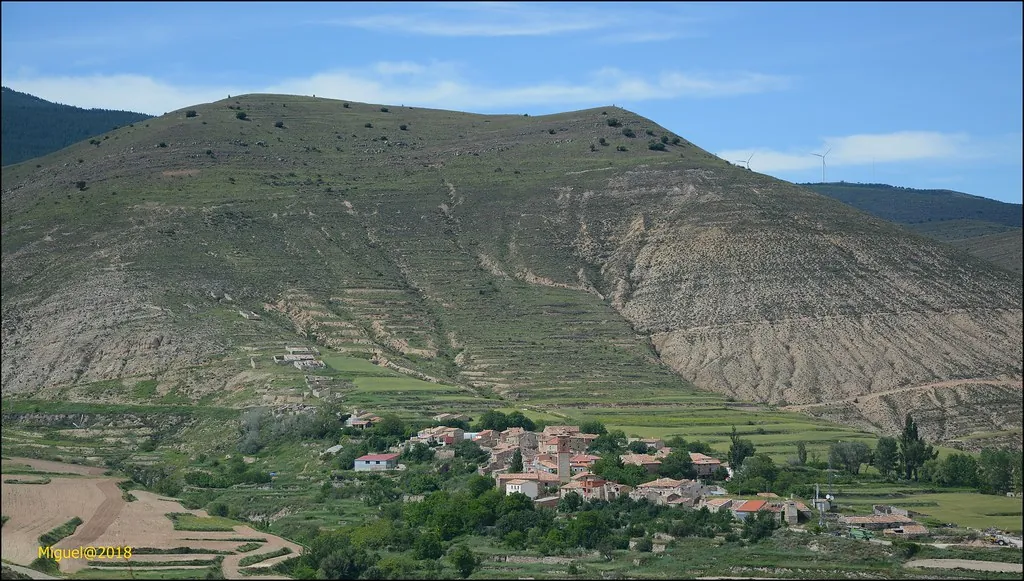
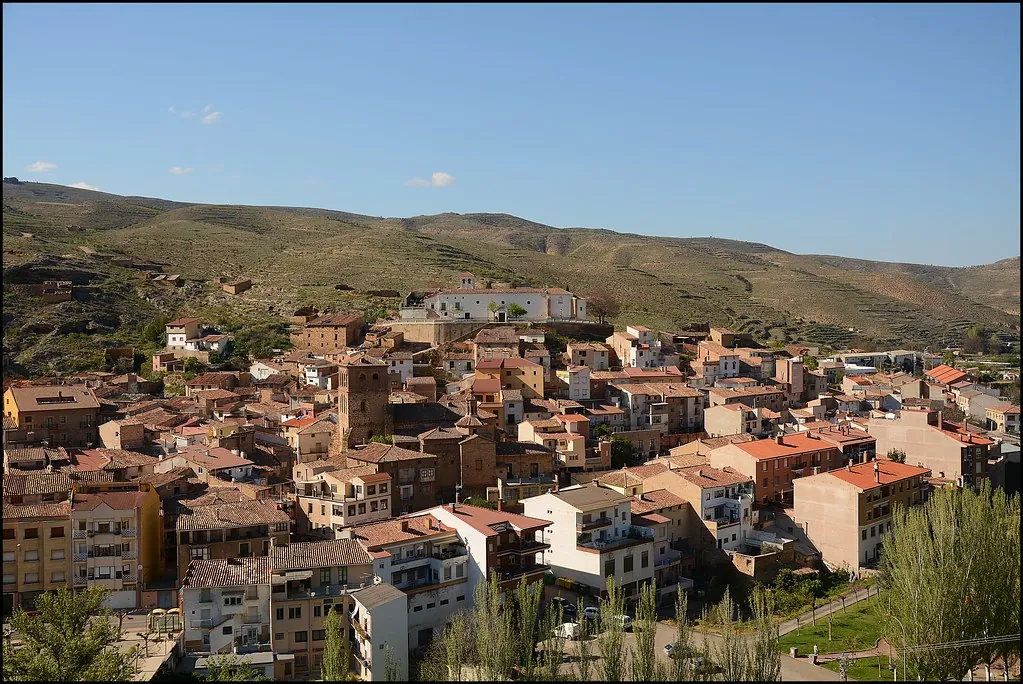
Above the village, the remains of the castle still command the valley. What survives of its walls and towers crowns the slope. From here the Alhama valley opens wide: cultivated terraces, patches of almond trees, the dark roofs of Cervera clustered below. Kestrels often hover over the hillside when there is a little wind. The climb is short but steep in places, and in summer the stone holds the heat well into the afternoon, so it is worth taking it slowly.
The view explains why this height mattered. The valley can be read at a glance from here, fields and river laid out in full.
Bread at dawn and market days
In the old quarter, at least one wood-fired oven is still working in the early hours. The smell arrives before the doorway comes into sight: soft smoke, toasted flour, warm crust. The bread emerges with a thick outer shell and a compact crumb, the sort that keeps its texture for several days.
On market days, which continue to draw people from nearby villages, stalls display sheep’s cheese, vegetables from local kitchen gardens and seasonal fruit. There is little ceremony. A set of scales, brown paper, and unhurried conversation about the weather or the latest harvest are usually enough.
These exchanges form part of the everyday fabric of Cervera. They are not staged for visitors. They happen because they have always happened, and travellers who arrive on the right morning simply step into that routine.
Contrebia Leucade, white stone above the valley
A few kilometres from the town centre lies the archaeological site of Contrebia Leucade. The landscape shifts as you approach. The slopes grow pale, rock lies exposed, and a dry wind crosses the plateau. Here stand the remains of an ancient Celtiberian city built on the edge of a ravine.
Walking among the excavated walls is a quiet experience. There is little shade, so in summer it makes sense to arrive early or wait until later in the day. The dominant scent is wild thyme and rosemary growing between the stones.
From the edge of the settlement the valley opens out below, with the Alhama winding across it. From this vantage point the choice of location becomes clear. Anyone settled here could see movement across the surrounding land. The river traces a line through the fields, and the sense of height is constant.
The site does not overwhelm with scale. Instead, it invites a slower pace, following the lines of walls and trying to imagine how daily life once fitted into this exposed plateau.
Almond trees on the way back
Returning to Cervera, one of the paths runs past scattered almond trees on the hillside. In late winter they flower before the landscape has fully turned green. From a distance they appear as white patches suspended over brown earth.
Beside the track stands a large stone where people often pause, especially those walking up from the village. In summer it is warm from the afternoon sun. In winter it keeps the cold even at midday.
These small pauses shape a visit here as much as any viewpoint or monument. The path, the flowering trees, the shift in temperature stored in stone, all add to the impression of a place lived in rather than arranged.
Practical notes
Spring and early autumn are usually the calmest times to wander through the village and head out to Contrebia Leucade without intense heat. In high summer the sun is strong in the central hours of the day, particularly on the exposed slopes above the valley.
To reach Cervera del Río Alhama, leave the A‑68 and take the turning towards the Alhama valley. The road narrows between vineyards and dry hills until the river begins to run alongside it. At that point, the town is close.
Cervera does not rely on spectacle. Its identity rests in textures and traces: hemp fibres pulled tight, river water slipping past stone, white rock catching the wind above the valley.