Full Article
about Cornago
Medieval town crowned by an imposing castle; famous for its dinosaur footprints.
Ocultar artículo Leer artículo completo
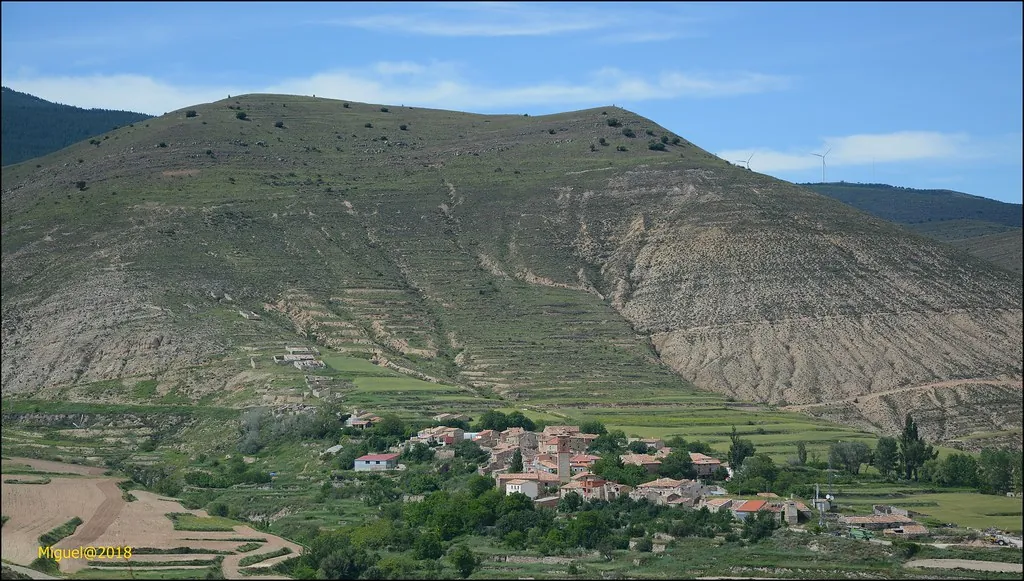
The road climbs past Cervera del Río Alhama and suddenly the vineyards vanish. In their place: thyme-scented hills, black slate outcrops and a sign that reads "Cornago 8 km" with an incline warning that isn't decorative. At 727 m the village sits higher than Ben Nevis's summit starts, yet nobody here sells hiking poles or souvenir crampons. They sell bread, tractor parts and, on Fridays, cheese from a cool box behind the bar.
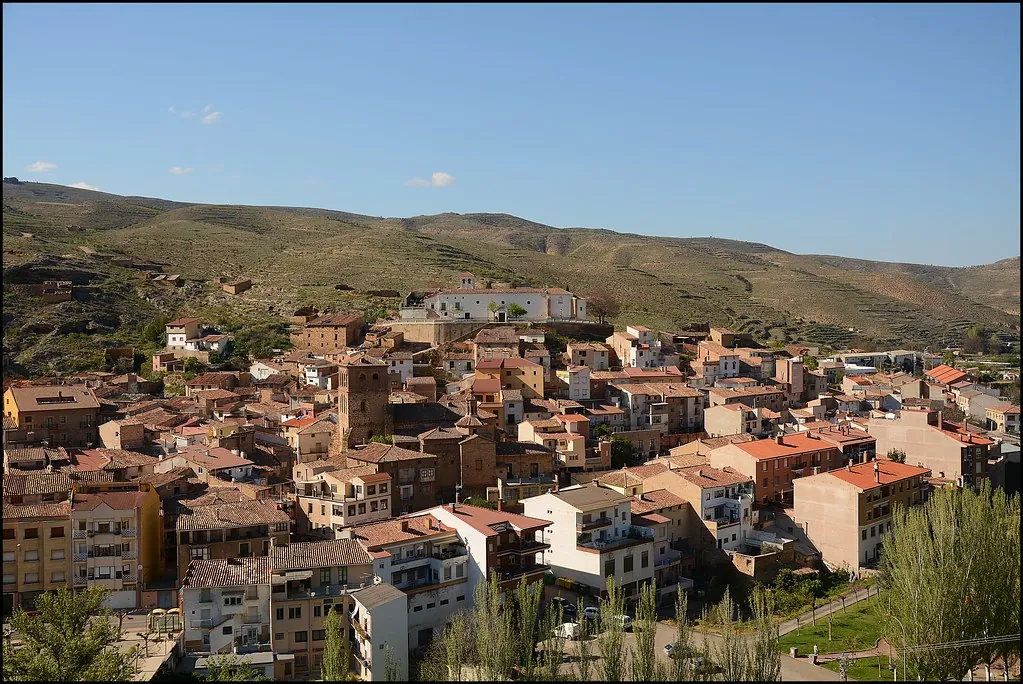
Cornago's main street is steep enough to make calf muscles complain within minutes. Stone houses shoulder so close together that neighbours can pass a wrench through adjoining windows. The only flat stretch is the tiny Plaza Mayor, barely the size of a tennis court, where elderly men occupy the same bench each morning and track strangers with unhurried curiosity. Population 310 on the last census, though locals reckon the true figure drops below 200 once the olive harvest finishes and seasonal workers move on.
A Castle That Refuses to Pose
The Castillo de Cornago dominates a crag 600 m south-west of the church. Built in the 14th century for the infante Don Juan of Castile, it looks exactly as a castle should – crenellated, forbidding, unreachable by wheelchair or flip-flop. The final 200 m footpath is loose shale; trainers slide, boots grip. Inside, the keep retains its original spiral staircase, narrow enough to graze elbows. Entry costs €3, collected by a caretaker who appears from a side tower when the bell is rung. Views stretch south across the Sierra de Alcarama, a rumpled carpet of holm oak and abandoned almond terraces. On hazy days the Ebro valley glints 40 km away like polished pewter.
Below the castle, fossil-rich limestone holds dinosaur tracks – 120-million-year-old sauropod prints the size of tractor tyres. The site lies 4 km down a graded track; an information board shows where to look but offers no café, gift shop or audible commentary. Bring water and imagination.
Food Without the Fanfare
Cornago won't starve you, but it won't bombard you with tasting menus either. The only full-time restaurant is La Reyes on Calle San Pedro, open Thursday to Sunday. Order the chuletón al estilo riojano – a single rib-eye that feeds two hungry walkers and arrives sizzling on a cast-iron platter. Medium means pink-centred; anything more offends the chef. House wine comes in a plain glass jug, light and unoaked, produced by the cooperative in Aldeanueva de Ebro 35 km north. Prices sit around €14–16 for a main; bread and alioli add €2. Cards accepted, though the terminal sometimes claims the network is "en obras" – carry cash.
For lighter bites, Bar La Plaza serves tortilla thicker than a paperback and coffee that tastes of coffee, not caramel. The local queso camerano, a soft goat's cheese, arrives wrapped in waxed paper with a spoon for spreading. Breakfast here costs less than a London cappuccino.
Walking Into Silence
Cornago functions best as a trailhead. A signed 12-km loop, the Ruta de las Carboneras, drops into the Río Alhama gorge, climbs through pine reforestation and returns along an old charcoal burners' track. Way-marking is sporadic; download the GPX before leaving town. After rain the red clay clings like treacle – wellies beat hiking boots in winter. Spring brings orchids and swooping griffon vultures; autumn smells of damp rosemary and gunmetal skies.
For a gentler outing, follow the farm track west towards Murillo de Río Leza. The path skirts abandoned threshing circles and a ruined shepherd's hut whose roof collapsed under last decade's snow. Allow 90 minutes out, 70 back, mostly downhill. Nobody will ask to see your OS map; nobody else will be there.
When to Come, When to Skip
April–June and September–October give warm days and cool nights without the furnace heat of the enclosed valley. In July the thermometer can touch 38 °C by noon; shade is scarce and the castle's stone radiates like a storage heater. Winter brings sharp frost and occasional snow that melts by lunchtime but leaves cobbles treacherous. Accommodation shuts in January – owners head to Logroño for children's schooling.
Fiestas are short, loud and local. San Pedro at the end of June fills the square with a single brass band and a pop-up bar serving calimocho (red wine plus cola) for a euro. August's three-day romería includes a Saturday paella cooked in a pan two metres wide; outsiders are welcome but nobody will hand them a translated programme. Expect fireworks at 3 a.m. – earplugs advised if your room fronts the street.
Getting Here, Getting Out
No railway, no Sunday bus. From Bilbao airport take the A-68 south to Logroño, then AP-68 towards Zaragoza, exiting at Cervera. Fill the tank there; Cornago's solitary pump closes at 20:00 and refuses cards after 14:00 on Saturdays. The final 15 km wriggle along the LR-250, a road wide enough for one lorry and several suicidal pheasants. Parking is free beside the cemetery; ignore the "todo dirección prohibida" signs – they were erected during a one-way experiment that nobody observes.
Mobile coverage fades two kilometres outside the village. Download offline maps and tell someone where you're walking. The Guardia Civil post is staffed only on Tuesday mornings; emergencies dial 112, but the responder may ask you to spell "Cornago" twice.
The Honest Verdict
Cornago offers altitude without pretension, ruins without ropes, and silence that stretches until a dog barks two valleys away. It is not adorable, nor undiscovered, simply a working hill village that happens to own an impressive castle. Come for the walking, stay for the cheese, leave before you need a launderette. If you require artisan gin, boutique hotels or taxis at dawn, remain in the Rioja Alta. If a stone cottage, star-loaded skies and the smell of woodsmoke suffice, Cornago delivers – provided you remember to bring cash and carry your own rubbish down.