Full Article
about San Asensio
Birthplace of clarete, site of the famous Battle of the Clarete; ringed by vineyards and monasteries.
Hide article Read full article
A Village Organised Around Wine
Tourism in San Asensio inevitably revolves around wine. The village stands on one of the hills of Rioja Alta, between Haro and the Najerilla valley, and vineyards surround it in every direction. This is not a recent development created for visitors. For centuries, the local economy has been structured around the vine, and that long history is visible both in the landscape and in the layout of the town itself.
San Asensio is small, with just over a thousand inhabitants, yet it preserves the compact form typical of wine-producing villages in this part of La Rioja. Streets cluster around the parish church, and beneath them runs a network of underground cellars carved into the rock. For generations, these spaces were used to make and store wine, forming the hidden backbone of daily life.
The sense of continuity is clear. Vineyards are not simply fields at the edge of town, they define the rhythm of work, the shape of the year and even the way the historic centre developed along the slope.
Iglesia de San Millán and the Heart of the Town
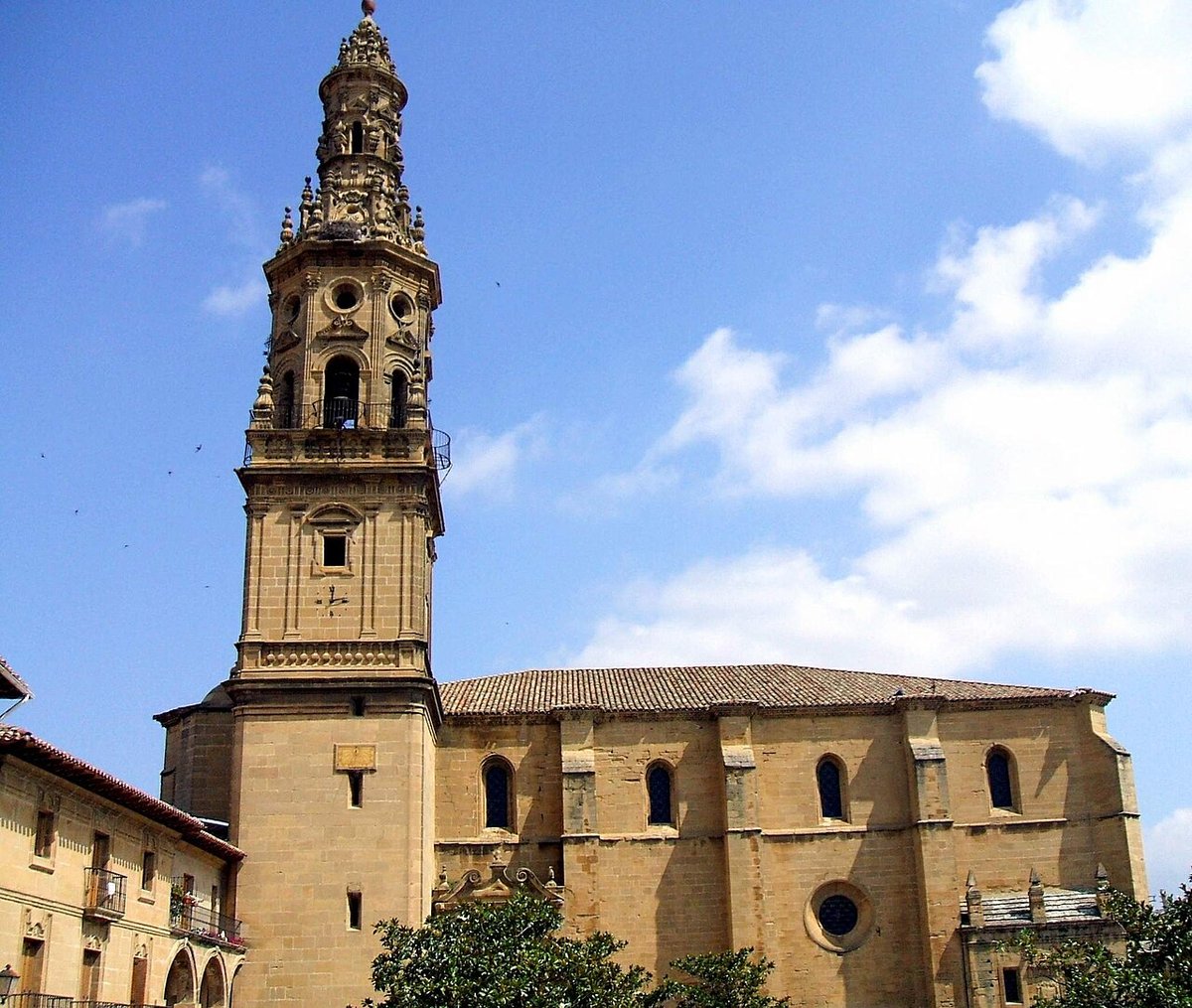
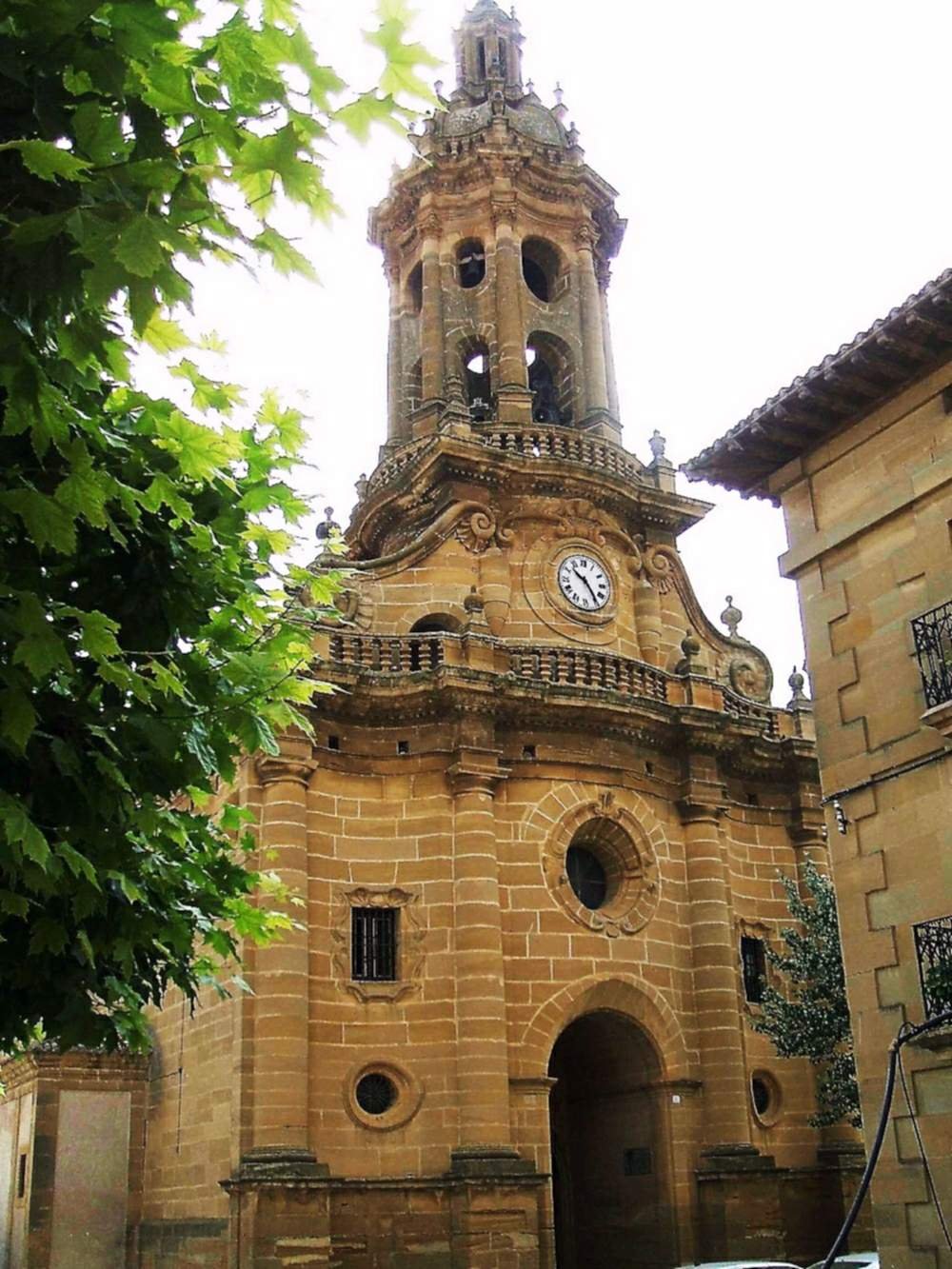
The Iglesia de San Millán dominates the skyline of the historic centre. The current building dates from the 16th century, although it was altered in later periods, as was common with churches that adapted to changing needs over time. Its architecture combines late Gothic elements with later additions, particularly from the Baroque period.
Beyond artistic details, its position helps explain how the village is organised. From the area around the church, it becomes clear how the houses spread along the hillside, with streets descending towards the vineyards that encircle the urban core. The slope is not dramatic, but it shapes the flow of the town, guiding narrow streets downwards towards cultivated land.
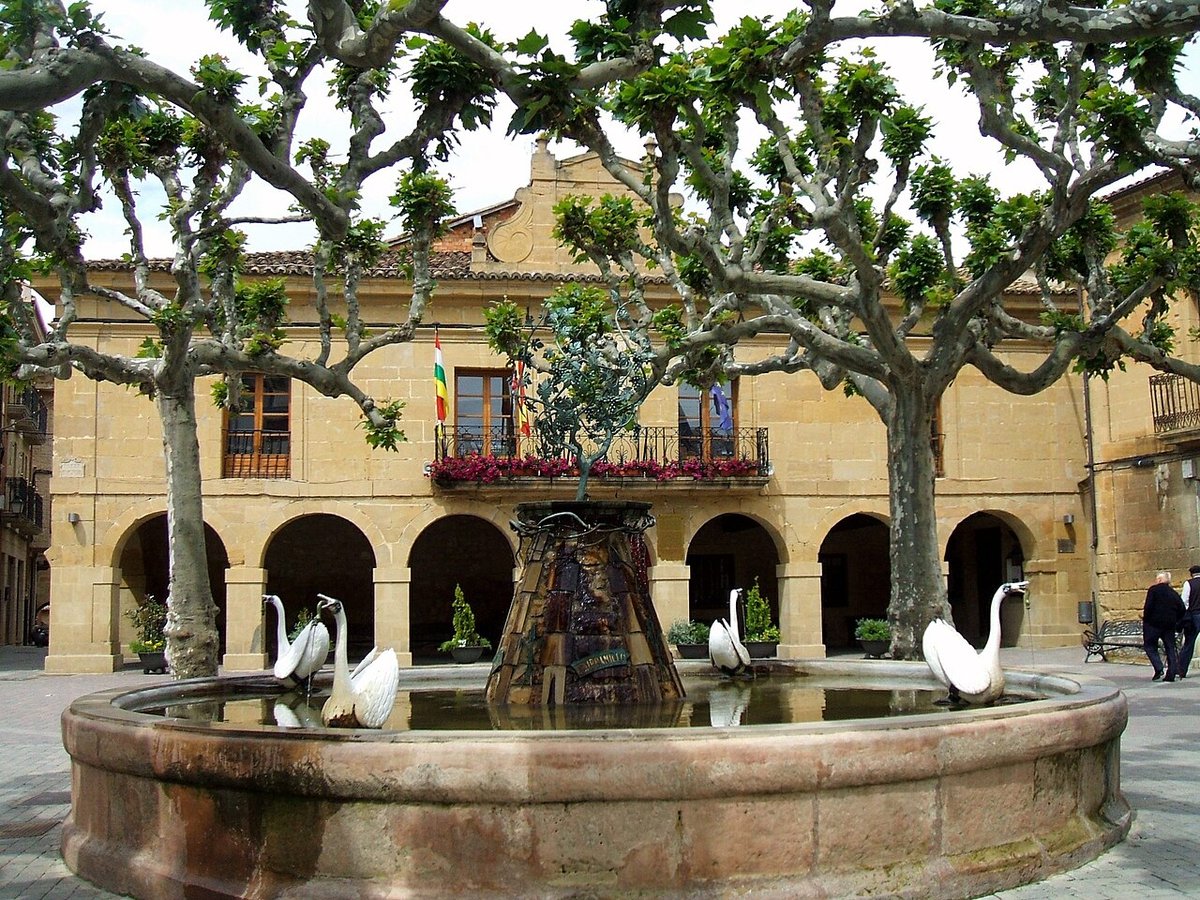
Around the church lie the oldest streets and the main square. This is a simple space, without grand ornamentation, where much of daily life unfolds. Neighbours sit and talk on benches or cross the square on their way to the vineyards and cellars. The atmosphere is practical rather than staged for visitors, and that straightforward character defines the centre as a whole.
A short walk here offers a quick understanding of how San Asensio functions: church at the top, compact streets around it, and agricultural land just beyond.
Los Calados: Wine Beneath the Streets
One of the most distinctive features of San Asensio is its calados, underground cellars excavated directly into the rock. They extend beneath many houses and streets, forming a kind of second level below the village. For centuries, these spaces allowed wine to be produced and stored at a relatively stable temperature, long before modern facilities existed.
Some calados still retain their traditional appearance. Narrow galleries lead to small side chambers, and ventilation shafts open discreetly onto the surface. From above, these openings can appear as modest structures or grilles, easy to overlook unless you know what they are.
Not all of the calados can be visited freely. In many cases, access needs to be arranged in advance. When the opportunity arises to go down into one of them, it becomes much easier to understand how wine production functioned before industrial-scale installations. The underground environment explains why these cellars were so effective: cool, protected and integrated into the fabric of the village.
They are not decorative relics. Many still have a practical use, which is one reason visits are not always organised according to regular tourist timetables.
Walking Among the Vineyards
It takes only a few minutes to leave the built-up area and find yourself among vines. Agricultural tracks branch out from the village and pass through plots that have been cultivated for generations.
The landscape shifts dramatically with the seasons. In winter, the vines are reduced to dark lines etched across the soil. In spring, the first shoots appear and the fields begin to close in with green. Autumn transforms the hills around San Asensio into a patchwork of reddish tones as leaves turn and the harvest approaches.
These walks help put the scale of wine-growing into perspective. The countryside is divided into small parcels connected by service tracks, with wineries scattered around the immediate surroundings of the village. It is not an abstract “wine region” but a working agricultural environment where each plot represents ongoing labour.
From the edges of the village, the view opens onto what is often described as a sea of vines, a defining feature of this part of Rioja Alta. The sense of continuity between town and countryside is immediate, with no sharp boundary separating one from the other.
A Brief but Revealing Visit
San Asensio can be explored without difficulty in a short space of time. A walk around the church, the main square and the surrounding streets provides a clear impression of how the historic centre is arranged. The compact size works in its favour, allowing visitors to grasp its structure quickly.
If the Iglesia de San Millán is open, stepping inside adds context to what is visible from outside. Afterwards, it makes sense to head towards areas where some calados can be seen from the exterior, even if access is not always possible. These visible traces of the underground network reinforce the idea that much of the village’s history lies beneath its surface.
From the outskirts, the views across the vineyards complete the picture. The hills of Rioja Alta roll outwards, shaped by cultivation rather than dramatic geography. The appeal of San Asensio lies in observing how a small community continues to revolve around wine, not as a performance for visitors, but as an everyday way of life.
Practical Notes
The streets in the centre are narrow, so it is usually more convenient to leave the car at the entrances to the village and continue on foot. During the grape harvest, movement of tractors and agricultural vehicles increases noticeably.
If the aim is to visit wineries or access specific calados, it is advisable to seek information in advance. Many of these facilities remain in active use and do not operate according to fixed tourist schedules.
San Asensio is less than an hour by car from Logroño and very close to Haro. For that reason, it is often included as part of a broader route through Rioja Alta. The interest here lies in seeing how a small village remains structured around viticulture, where vineyards, underground cellars and daily routines all form part of the same enduring landscape.