Full Article
about Clavijo
Site of the legendary Battle of Clavijo; its castle overlooks the Iregua valley with stunning views.
Hide article Read full article
A hillside village near Logroño
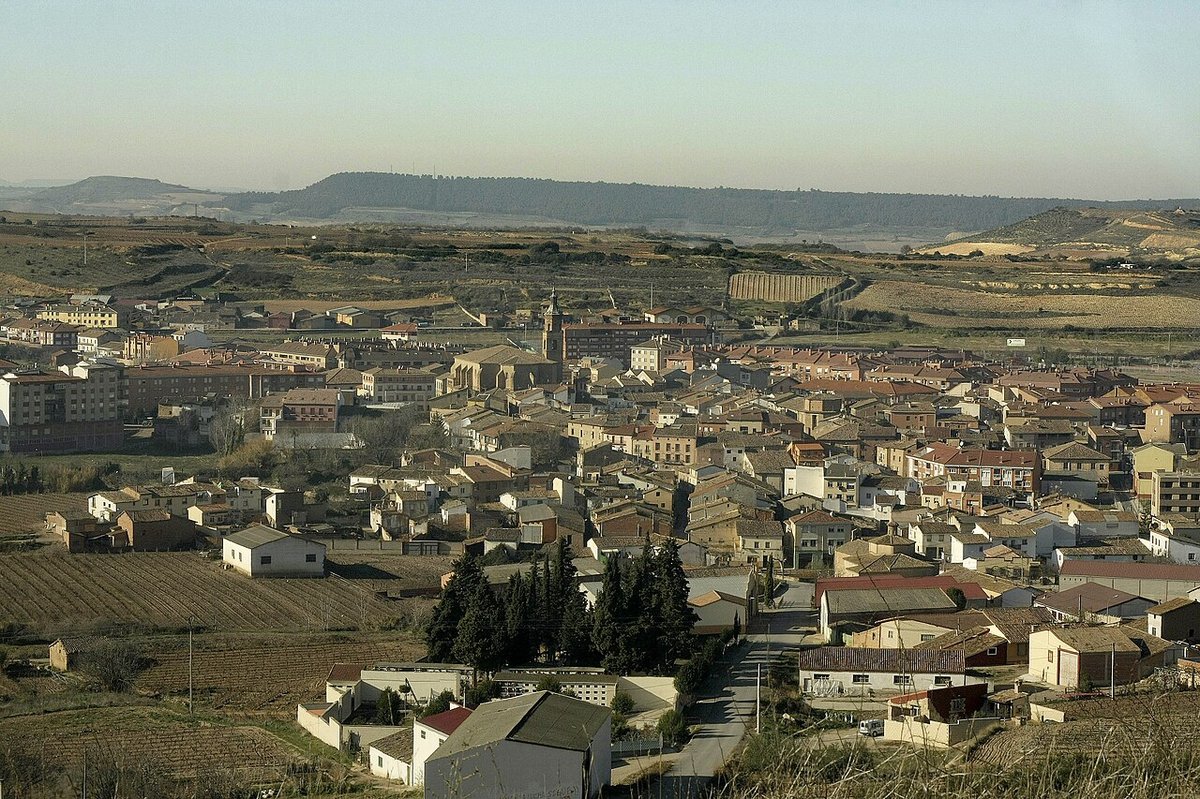
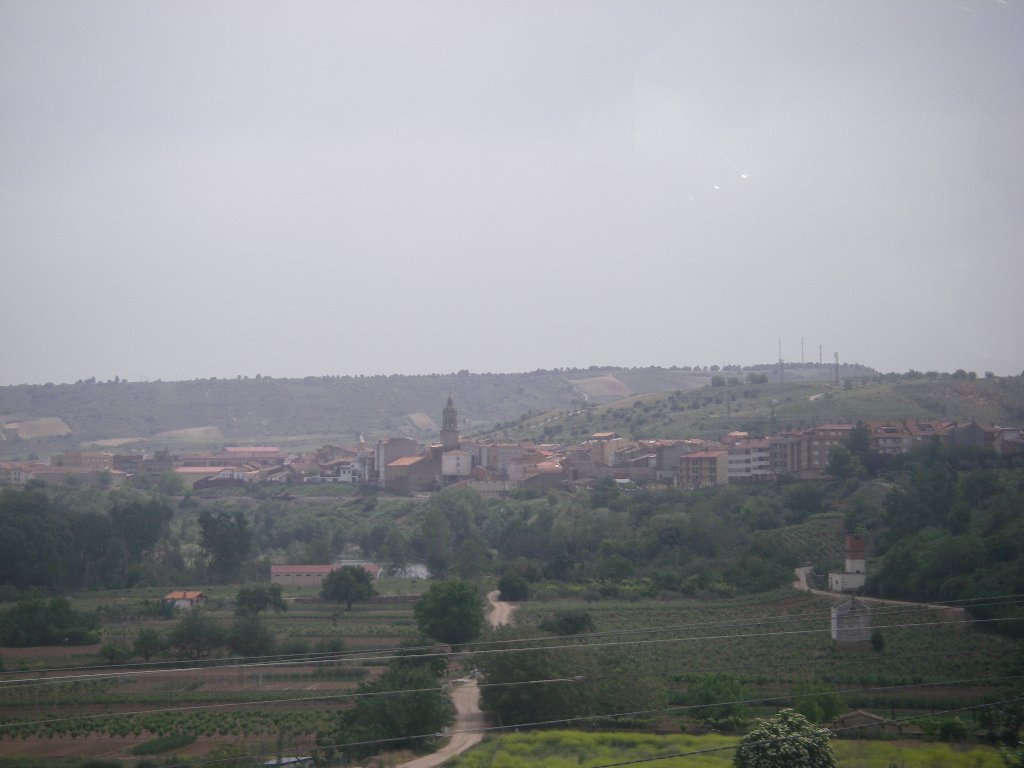
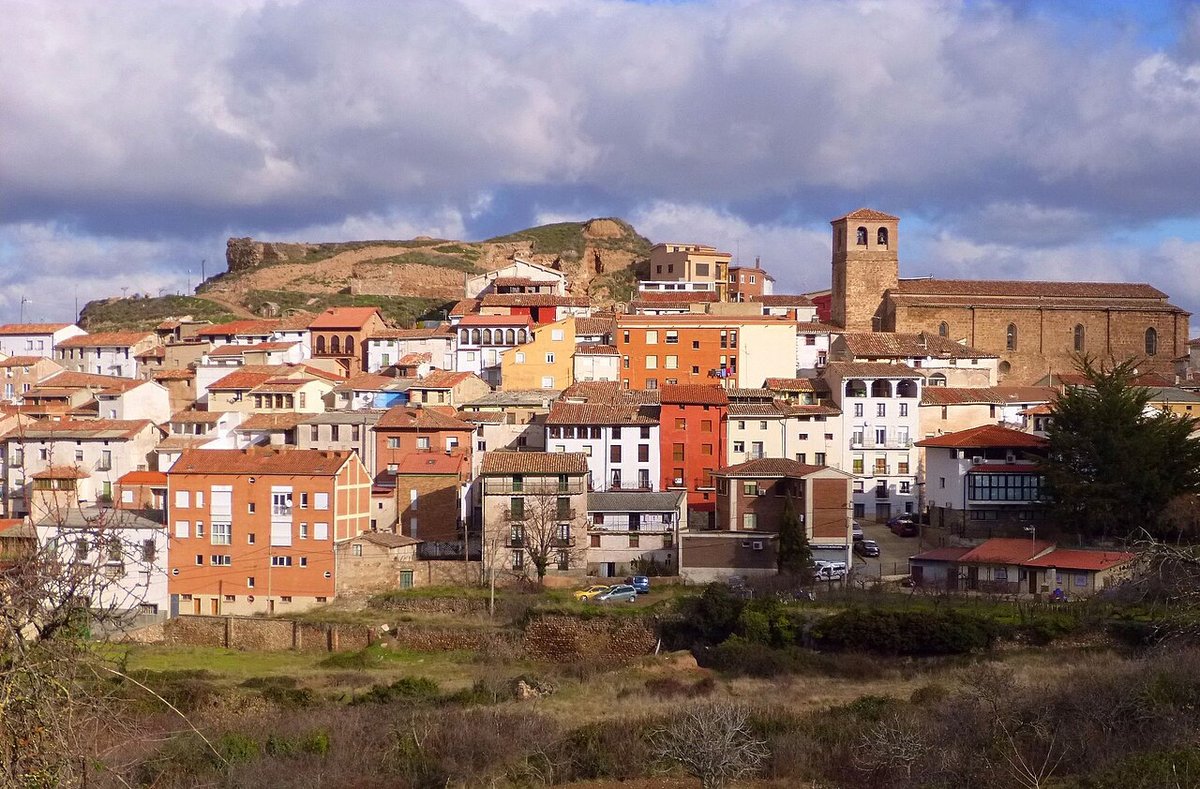
Clavijo stands on the slope of the mountain range that closes the Leza valley to the south, just a few kilometres from Logroño. It is a small place, with only a little over three hundred inhabitants, yet its outline is easy to recognise: houses gathered beneath a rocky crag topped by a castle. The setting gives the village a strong presence within this part of La Rioja.
The landscape around it is dry and stony. Limestone hills and open fields stretch out, shifting in appearance with the seasons. At certain times of year the tones are pale and dusty, while at others the ground shows more contrast and texture. The terrain feels exposed, shaped by wind and weather as much as by human use.
Clavijo’s name is often linked to the so‑called Battle of Clavijo. According to medieval tradition, Christian forces defeated Muslim troops here with the miraculous help of the apostle Santiago. Historians have long pointed out that this episode belongs more to legend than to documented history. Even so, the story left a clear mark on local culture and religious imagery, and it still frames how the place is understood.
The castle on the crag
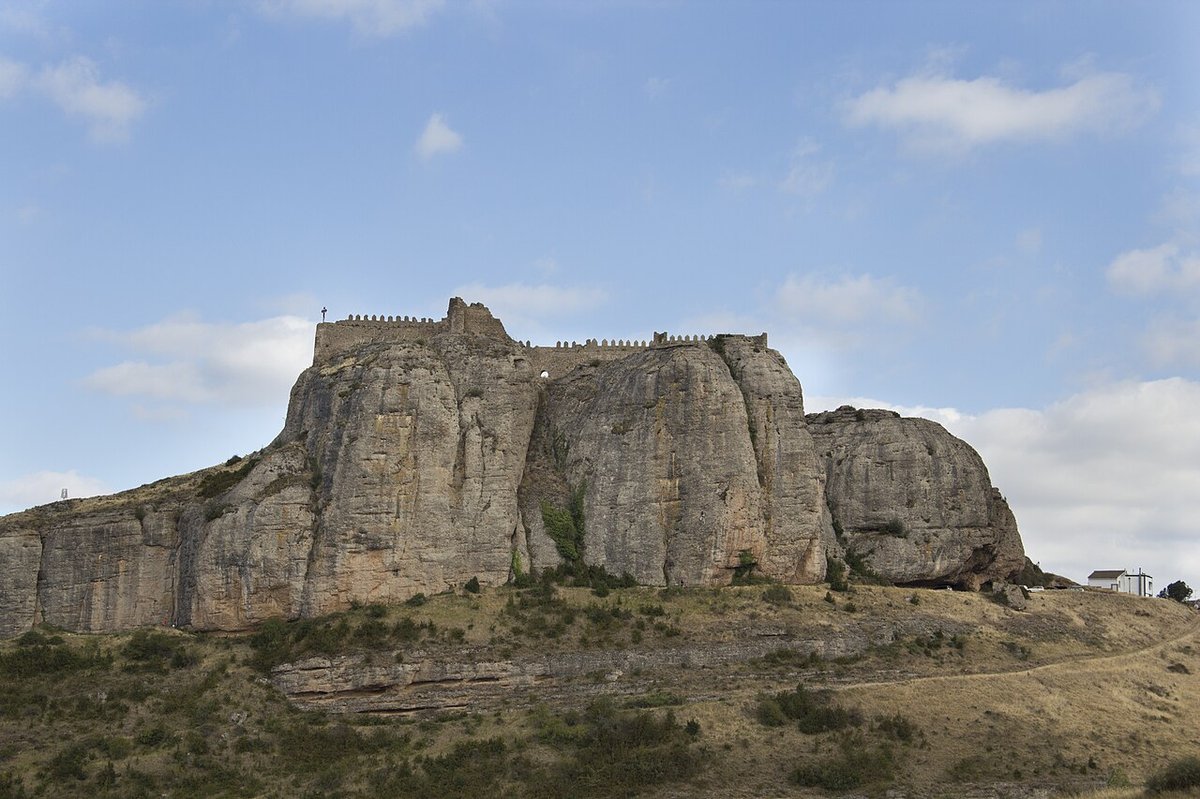
The castle of Clavijo is the first thing to come into view when approaching along the road through the Leza valley. It rises on a sharply defined rocky ridge that dominates the surrounding land. Today, what remains are sections of wall and parts of a tower. Even in this state, it is enough to grasp the strategic value of the site. From this height, a large stretch of the valley can be observed.
This is not a restored fortress or a fully prepared monument in the usual sense. It is closer to a set of ruins that invite an effort of imagination, suggesting how the defence of the territory might have been organised in medieval times. The sense of exposure is part of the experience, as the structure sits directly on the rock with little to soften its edges.
Reaching the castle involves a walk. A path climbs up the slope from the village, uneven underfoot and with stretches of loose stone. Higher up, the wind often blows strongly, something typical of this mountain range. The final approach reinforces the feeling that the site was chosen for visibility and control rather than comfort.
The church and the compact old centre
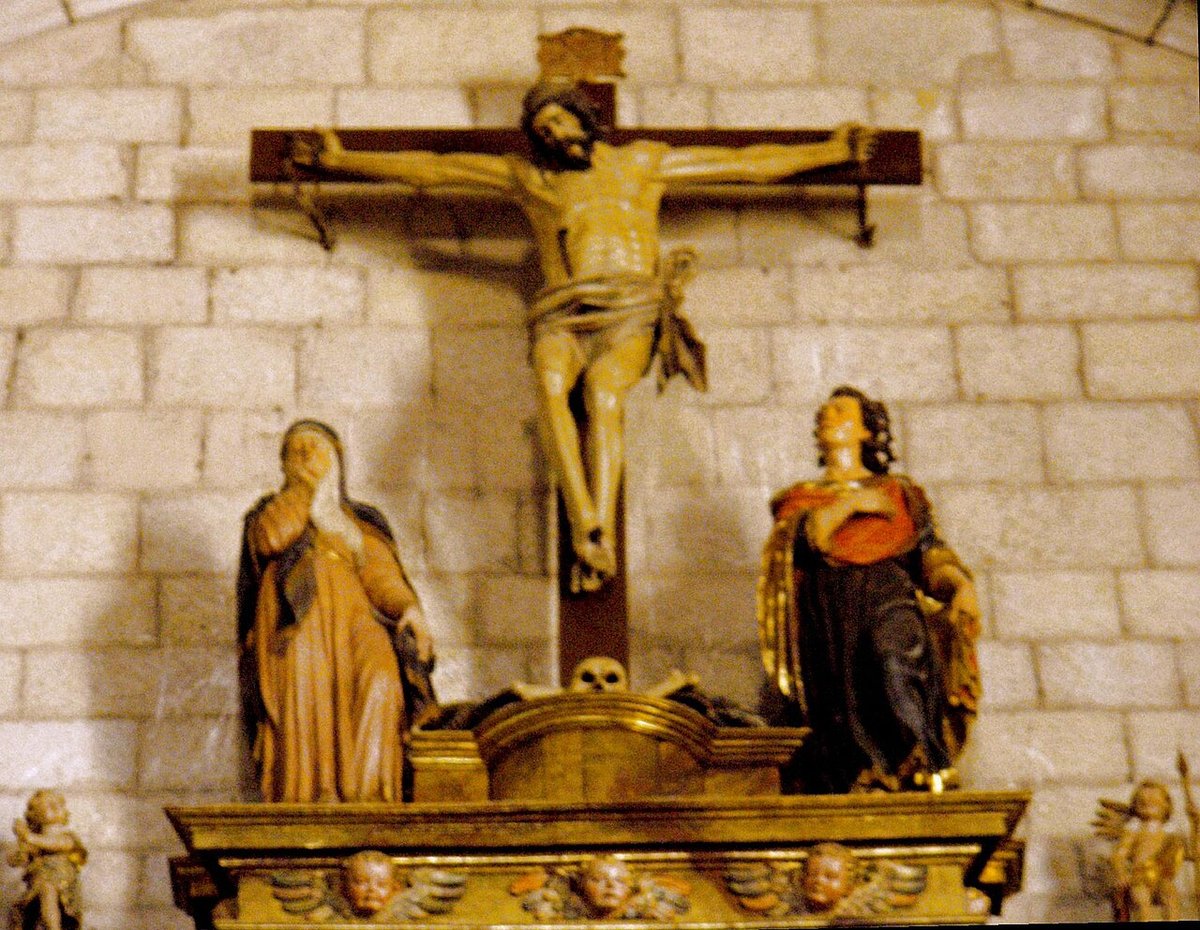
At the centre of Clavijo stands the parish church of the Asunción, built in the 17th century over an earlier structure. Like many rural churches in La Rioja from that period, the exterior is restrained. Inside, however, there is a Baroque altarpiece and an image of Santiago Matamoros, a direct reference to the battle tradition associated with the village.
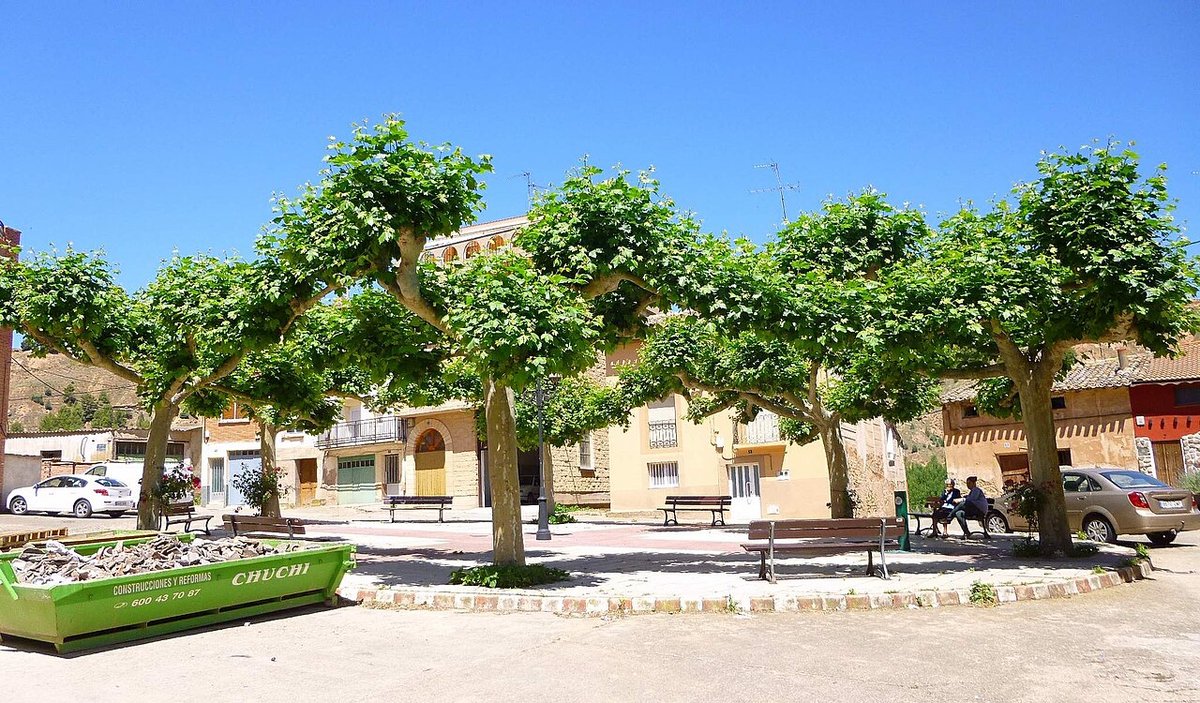
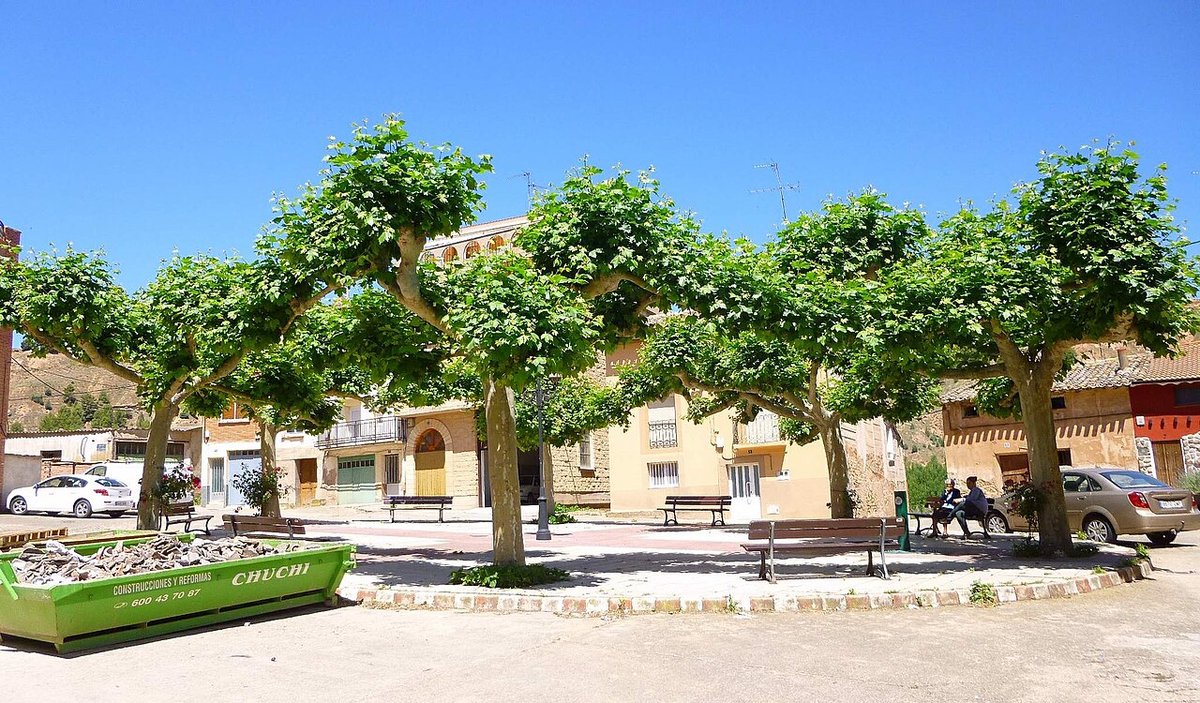
The streets of the old centre are short and sloping, shaped by the hillside. Stone houses dominate, with thick walls designed to withstand the wind that comes down from the sierra. The layout is compact rather than expansive, a small cluster that can be explored at a slow pace.
As you move through these streets, the crag with the castle remains in view, acting as a constant point of reference. The village does not separate itself from its setting; instead, it seems arranged around that rocky height, with every turn offering another angle towards it.
San Cristóbal and the wider landscape
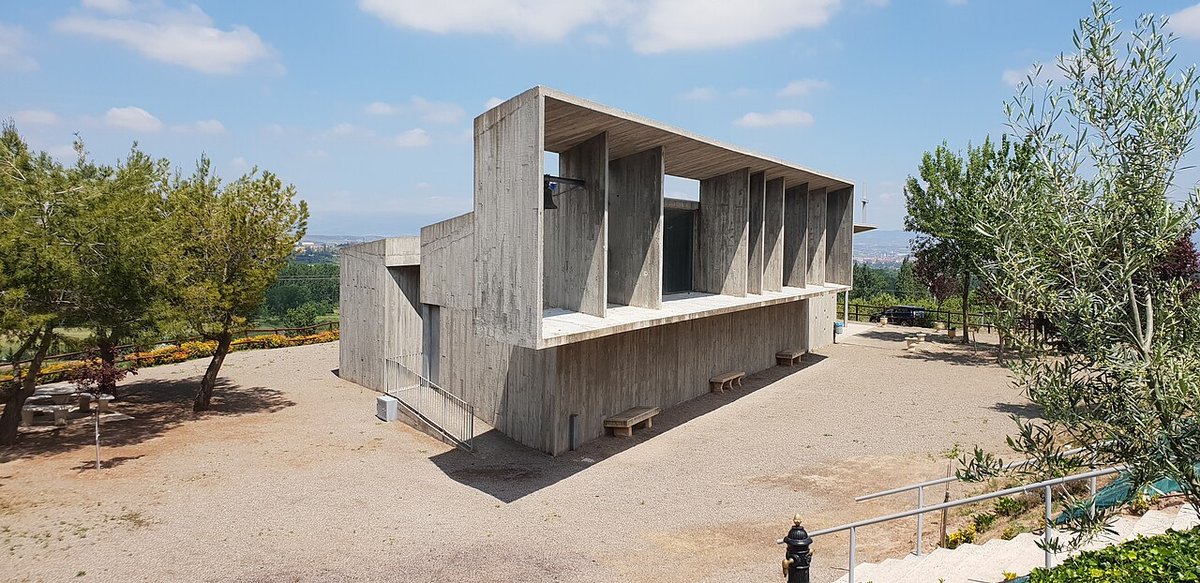
On the outskirts of Clavijo lies the hermitage of San Cristóbal, reached by a short walk from the village. From this point, the position of Clavijo within the landscape becomes clearer. On one side rises the sierra, on the other opens the Leza valley, with its cultivated land and ravines.
This area has the feel of a transition zone. It sits between lower mountain terrain and the broader riverside landscape that appears as one moves closer to Logroño. That shift helps explain why Clavijo held a role as a lookout point in the past. The ability to see across both types of terrain would have been significant for monitoring movement through the area.
The view from near the hermitage brings these elements together. The slopes, the valley floor and the scattered agricultural plots form a setting that is both open and structured, shaped by natural contours and human activity over time.
Walking through Clavijo
A visit to Clavijo usually begins in the village itself and continues with the ascent towards the castle. Good footwear is advisable, as the path includes sections of loose stone and uneven ground. When the wind is strong, the upper part of the route can feel exposed.
Afterwards, the walk to the hermitage of San Cristóbal offers a wider perspective over the valley. The contrast between the close, enclosed feel of the village streets and the open views from this point adds another layer to the visit.
Clavijo is small and can be seen fairly quickly. Many travellers include it as a stop while exploring the Leza valley or as an outing from Logroño. The access road comes from the LR‑250 and climbs in its final stretch with several bends. Leaving the car at the entrance to the village is often the most practical option, as the streets become narrower further in.
Seen from below, with the crag rising behind it, the castle already conveys much of what defines Clavijo. The combination of stone, height and exposure shapes both the landscape and the way the village is experienced.