Full Article
about Alesanco
Small village in the Tuerto valley with farming roots; historic stop near Nájera.
Hide article Read full article
A village that explains itself
Some places do not need a long introduction. You stop the car, step out, look around, and within minutes you understand the rhythm of the place. Alesanco, in La Rioja Alta, gives exactly that impression. It is small, calm, surrounded by vineyards, and shows little interest in drawing attention to itself.
Alesanco sits in the comarca of Nájera and has around 480 residents. Life here moves at its own pace. Not because it is a staged rural setting, but because daily routines set the tone: working the land, tending the vines, and following the seasons that shape the year. Driving through its streets makes it clear that the village is designed for those who live here year-round, not for occasional visitors passing through.
A compact place to walk without thinking
The built-up area is compact, the kind you can cross without noticing while chatting or looking at the façades. In about twenty minutes you will have covered most of it.
Many houses still show exposed stone, with iron balconies and large doorways that hint at its agricultural past. There are no grand monuments or dramatic squares waiting around a corner. Alesanco works through its overall feel rather than individual highlights.
Wandering along the two or three main streets without a plan suits the place. It is easy to find your bearings without signs or directions. The layout feels intuitive, as though the village explains itself as you go.
The presence of San Esteban
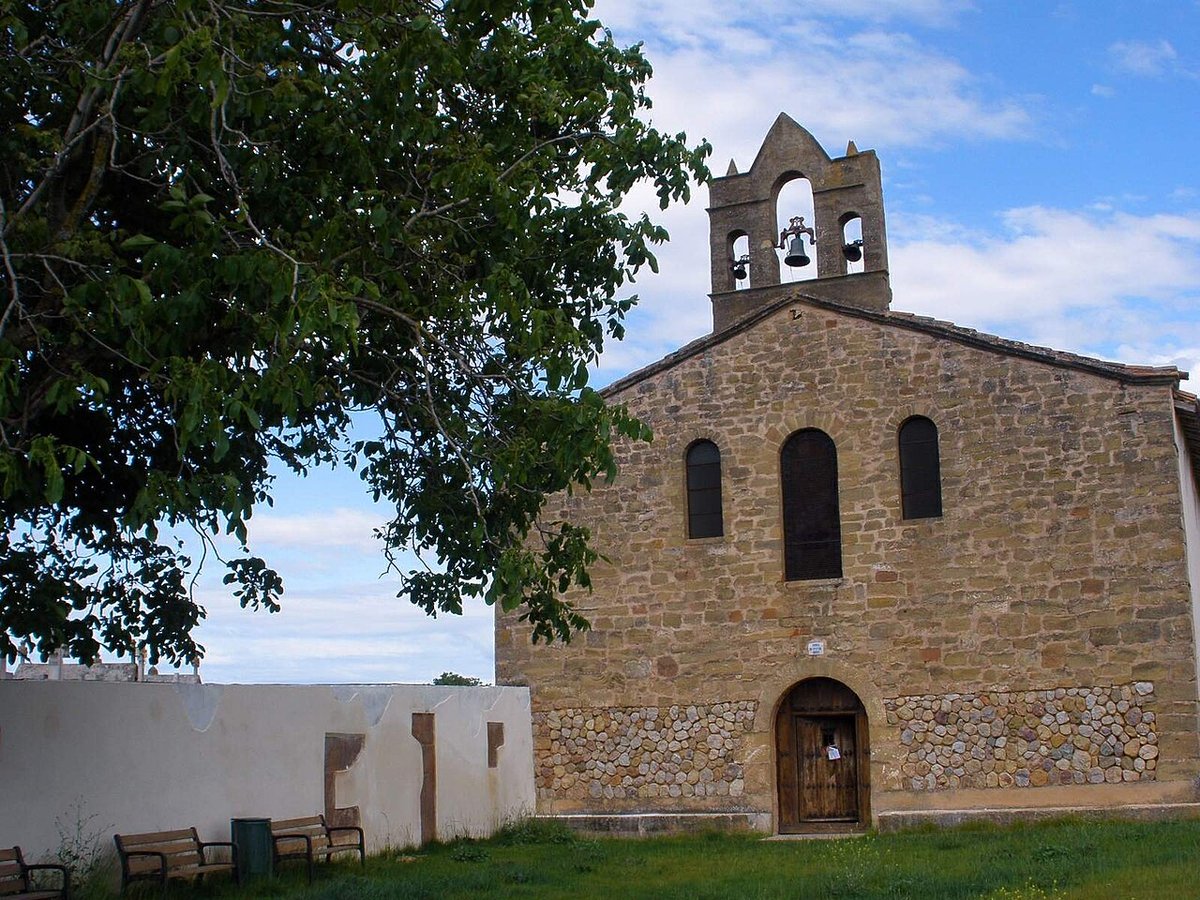
The parish church of San Esteban is the most prominent feature when you look at Alesanco’s outline. Its tower can be seen from several points in the surrounding area and acts as a reference when returning from the nearby tracks.
The building has the solid presence typical of churches in this part of La Rioja: stone construction, a sense of weight, and little in the way of ornament. If the doors happen to be open, it is worth stepping inside. If not, walking around the exterior already gives a clear sense of how it sits at the centre of the village.
Tracks through vineyards
Beyond the last houses, the countryside begins almost immediately. Vineyards dominate the landscape, with plots that rise gently towards nearby hills.
There are no marked routes or specially prepared walking paths. Most of the tracks are agricultural, used by tractors and local workers tending the fields. Even so, walking here has its appeal. The terrain is open, and the church tower remains visible, making it easy to orient yourself on the way back.
On clear days, the valley opens out and feels spacious. When low fog settles in, something not unusual in La Rioja Alta, the atmosphere shifts. The landscape becomes quieter, more subdued, and the sense of distance softens.
Wine as part of everyday life
Wine is present even when it is not immediately visible. The vineyards surrounding Alesanco define both the scenery and the working calendar. Winter is for pruning, spring brings growth, and harvest arrives when the time is right.
In the wider area, there are usually bodegas that organise visits or tastings, often by prior arrangement. It is worth checking in advance, as schedules are not always extensive.
Even without stepping into a winery, the landscape itself tells much of the story. The rows of vines, the seasonal changes, and the steady pace of work all point to the role wine plays here.
A stop within a wider journey
Alesanco is not a place designed for a full day of activities, and that is part of its character. It works best as a stop along a route through the comarca of Nájera or across La Rioja Alta.
Arriving, taking a relaxed walk through the village, heading out briefly along one of the vineyard tracks, and then continuing on your way feels like the natural rhythm. With an hour or two, there is enough time to explore the centre, see the church, and step into the surrounding countryside.
There is no pressure to see everything. The appeal lies in the lack of urgency.
When to come
Spring and autumn tend to suit this area well. Temperatures are mild, and the vineyards shift in colour, giving the landscape a changing tone.
Summer is still a viable time for walking, though earlier in the day or later in the afternoon is more comfortable. Around midday, the sun can be strong, and the tracks offer very little shade.
Winter brings a different mood. The vines are bare, there is less movement, and the scenery becomes more austere. After heavy rain, some of the agricultural tracks can turn muddy, which may affect how far you can wander.
In the end, Alesanco is the kind of place that fits naturally into a journey rather than dominating it. You pause, take in the vineyards around the village, spend a quiet stretch of time, and then continue on. Sometimes that is exactly what a route needs.