Full Article
about Arenzana de Arriba
Small rural settlement overlooking the valley; it keeps the charm of traditional farming villages.
Ocultar artículo Leer artículo completo
The church bell strikes noon, but only three people hear it. One tends tomatoes behind a stone wall. Another leans on a tractor, debating whether the clouds mean business. The third is you, standing in the single street where asphalt gives up and houses shrink to human scale. Welcome to Arenzana de Arriba, population thirty-six on a good fiesta weekend, fifteen kilometres north-east of Logroño as the vulture flies—twenty-five by the LR-204’s switchbacks.
At 650 metres, the air is thinner than in the regional capital and noticeably cooler. Mornings arrive with a crackle that makes British lungs think of Derbyshire rather than central Spain. The village perches on a ridge between the Ebro Valley and the Cantabrian foothills; when the mist lifts you can trace the silver thread of the Najerilla river and pick out cereal fields that change colour weekly—emerald after rain, biscuit by July.
Stone, Vine and the Art of Not Filling Time
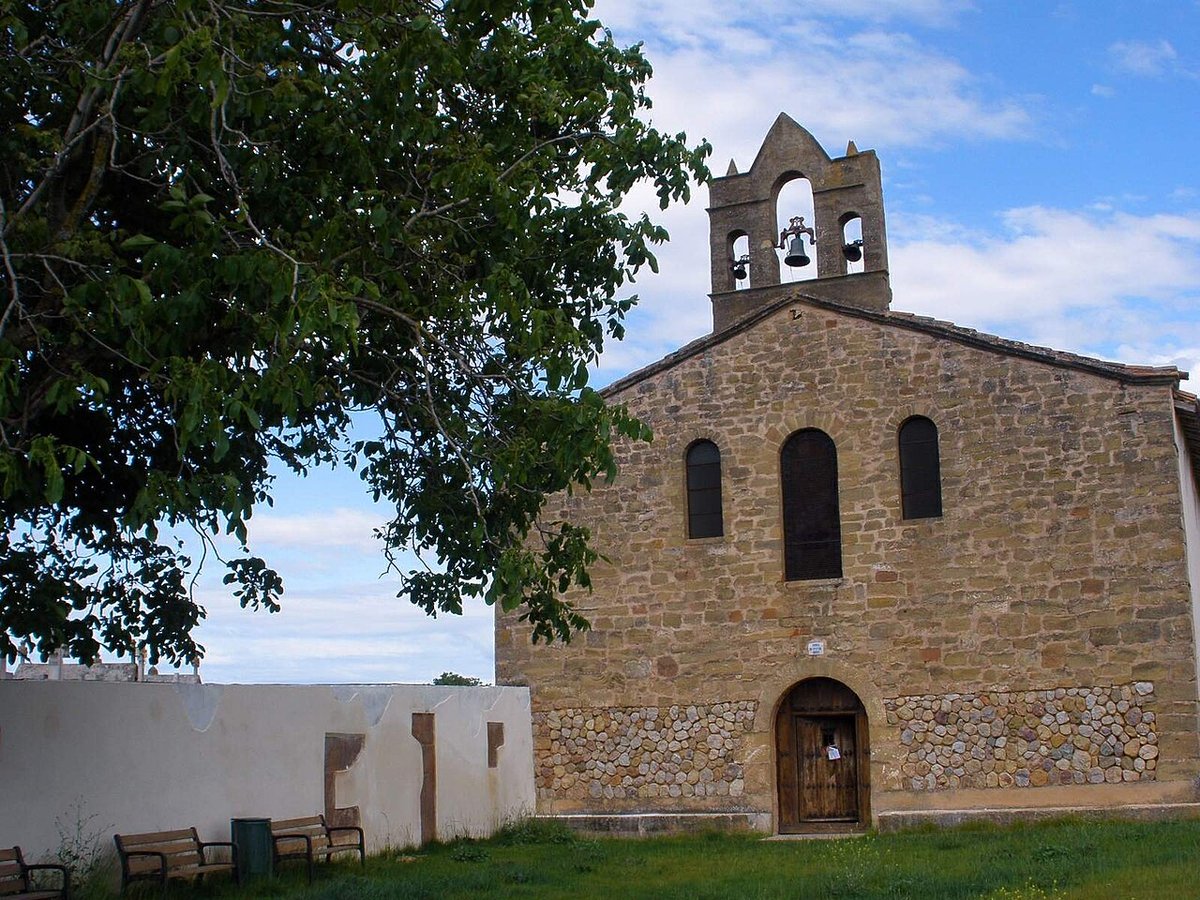
Every building here predates the NHS. Granite footings, timber eaves, clay roof tiles fired in nearby Autol; balconies just wide enough for a geranium pot and a pair of elbows. The architectural code is simple: if it can’t be lifted by two men and a mule, it isn’t used. Even the parish church, rebuilt piecemeal after a 19th-century lightning strike, looks apologetic—its bell-tower barely taller than the cypress guarding the entrance.
There is no ticket office, no interpretation board, no gift shop. The church door stays locked except for Saturday evening mass; peer through the keyhole and you’ll catch a flash of gilded altar but little more. The real museum is the fabric of the place: iron knockers shaped like clenched fists, wine-cellars tunneled under living rooms, a stone bench outside Number 12 where the same three old men occupy the same three spots at 11 a.m., 4 p.m. and 7 p.m. sharp. Their timetable is more reliable than the hourly bus that supposedly links the village to Nájera.
Walk the perimeter in twenty minutes and you’ll pass three working bodegas. They are family outfits—plastic curtains instead of oak doors, stainless-steel tanks visible through garage openings. Ring a week ahead and someone’s cousin will pour you a 2021 tempranillo straight from the vat, €4 a bottle if you bring your own. Don’t expect labelling compliance; the back label might still say “Produce of EU” in Comic Sans.
Paths That Reward the Half-Hour Rebel
The GR-190 long-distance trail skirts the village, but the smarter move is to ignore waymarks. Pick any farm track that angles uphill; within forty minutes the cereal terraces fall away and you’re on a limestone lip looking south over the whole Rioja DOC stripe—vineyards stitched like corduroy, the A-12 a faint hum. Spring brings wild tulips and the smell of bruised fennel; October smells of damp earth and wood smoke. In July you need water, a hat and the realisation that shade is theoretical up here.
Mobile coverage vanishes after the last house. Download an offline map or, radical thought, practise map-memory. The tracks loop back reliably; if you hit a tarmac lane you’ve gone too far north and will emerge at the neighbouring hamlet of Arenzana de Abajo (pop. 92, practically a metropolis). Total ascent rarely tops 250 m—more a strut than a slog.
What to Put in Your Mouth (and Where to Sit While Doing It)
The village itself offers zero food outlets. Zero. The last grocer closed when the owner retired in 2008; the bar followed during the 2012 crisis and never reopened. Bring sandwiches or time your exit. A five-minute drive down the col delivers you to Navajún—one café doing weekend menú del día at €14, chorizo stew and pepper-stuffed trout, wine included. Vegetarians get tortilla or... tortilla.
If you’re staying overnight (and you should, because rushing off defeats the point) the nearest beds are in Nájera, twelve minutes by car. Hostal El Faro has doubles from €55, rock-solid Wi-Fi and a bakery underneath that fires up at 5 a.m.—ask for a rear room if morning clatter bothers you. Back in Arenzana, the ayuntamiento rents out the old schoolhouse as a rural apartment: two bedrooms, wood stove, patio with barbecue, €70 a night. The catch? You collect the key in Villanueva de Arnedo, twenty minutes west. Plan accordingly.
Seasons, or Why August Might Break Your Heart
April and late-September are gold. Temperatures hover around 18 °C, vines are either budding or flaming red, and the weekend influx from Logroño hasn’t begun. May can throw in a biblical hailstorm—check the forecast and pack a pac-a-mac.
August is hot, 32 °C by late morning, and the village empties further as families head to the coast. Walking after 11 a.m. is masochistic; siesta culture here is survival, not cliché. Winter brings proper frost; the LR-204 is routinely gritted but snow can still isolate the ridge for a day. Bring chains if you’re driving a hire Fiat 500 that thinks it’s a Defender.
The Things People Get Wrong
Assuming somewhere will sell water. They won’t. The public fountain at the entrance is potable—locals fill jerry cans there—yet visitors still march in clutching lukewarm Evian like it’s the Sahara.
Parking in front of barn doors. Tractors need clearance; a Peugeot 308 does not qualify as “I’ll only be five minutes.” Use the widened lay-by by the cemetery wall—thirty seconds on foot saves angry knocking later.
Treating the place as a selfie backdrop. Residents tolerate photographers who nod; they freeze out anyone climbing on wine presses for the ‘gram. Basic courtesy: ask before framing anyone over seventy—most remember the village when it had two hundred souls and electricity arrived only in 1967.
Leaving Without the Checklist Tick
Arenzana won’t give you cathedral wow or Michelin stars. What it offers is deceleration: the moment you realise you’ve spent an hour watching a single cloud shadow slide across cereal rows, phone still in the car, no push-notification pang. If that sounds like wasted time, stay in Logroño and enjoy the tapas circuit. If it sounds like the antidote to Saturday supermarket chaos, fill the tank, download the map, and arrive before the bell tolls three—someone’s cousin might still have a bottle left.