Full Article
about Azofra
Key stop on the Camino de Santiago; welcoming village with pilgrim services and farming roots.
Hide article Read full article
A Small Stop on the Camino
The square is still half in shadow when the first bells ring out. In winter the air carries the scent of damp earth and old firewood, in high summer it smells of hot dust. Tourism in Azofra often begins here, in this modest centre where pilgrims on the Camino de Santiago pass through at an unhurried pace and someone waters a line of plant pots beside the fountain.
Azofra is a small village in the comarca of Nájera, in La Rioja. There are only a handful of streets, open fields on all sides and the steady flow of walkers following the Camino Francés, the most popular stretch of the Camino de Santiago route across northern Spain. There are no major detours or headline monuments. What defines the place is everyday village life, visible in small details: a half open door, the sound of a tractor returning from the fields, a brief exchange between neighbours who stop to talk in the middle of the street.
This is not somewhere that overwhelms with sights. It works at a slower rhythm, shaped by the land around it and by the route that crosses it.
The Church That Sets the Pace
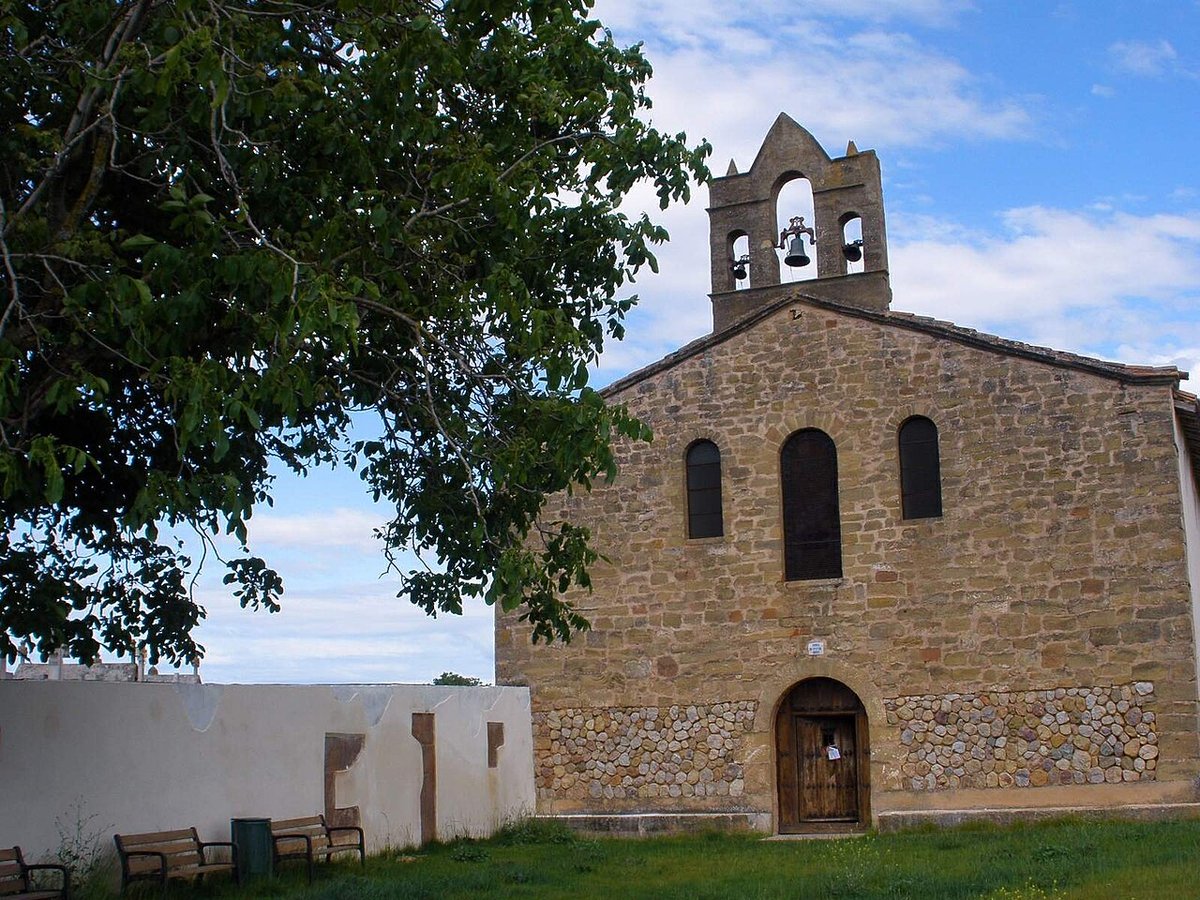
Before reaching the centre, the tower of the Iglesia de Nuestra Señora de los Ángeles comes into view. Built in grey stone with simple lines and little decoration, it appears taller from a distance than it really is, perhaps because the surrounding land opens out into fields.
The church marks the hours with its bells. Their sound carries easily across the low rooftops and out towards the farmland. Inside, the light filters gently through the windows. On quiet days the only noise is the echo of footsteps across the floor and, occasionally, the solid thud of a closing door. It is one of those buildings that has accompanied village life for centuries, even if many parts have been altered and restored over time.
There is no sense of spectacle here. The scale is modest and the atmosphere restrained. It feels closely tied to the daily life of the village rather than set apart from it.
Short Streets, Stone Walls
The historic centre can be walked in a matter of minutes. Streets are narrow and the façades alternate between older stonework and more recent renovations. Some doors still have worn iron fittings. Others show off fresh paint that has yet to fade.
Wandering without a plan suits Azofra well. Distances are short and sooner or later the route leads back to the main square. In mid to late afternoon the light slips in sideways between the houses, bringing out the ochre tones of many of the walls. It is a calm time to walk, when the heat begins to ease.
There is little traffic and few distractions. The focus settles on textures: rough stone, wooden doors, the uneven rhythm of façades that have been adapted over generations. The village feels compact, contained, with the countryside always close at hand.
La Fuente de los Pilares
In the square stands the fuente de los Pilares. It is built in plain stone and the water runs continuously. For years this was one of the places where locals filled their pitchers and caught up on the day’s news.
It remains a natural pause point. Pilgrims lower their packs and sit for a moment. Residents cross the square carrying shopping bags. Someone leans on the edge of the fountain, watching the water fall. The scene changes slightly with the seasons, but the function of the space is much the same: a shared centre in a small community.
Because Azofra lies directly on the Camino Francés, the presence of walkers is constant. They arrive in ones and twos or in small groups, following the yellow arrows that mark the route across Spain towards Santiago de Compostela. For many, Azofra is a brief stop. For the village, that steady passage has become part of daily life.
Fields, Vines and Open Ground
Step beyond the last houses and the fields begin almost immediately. Neat rows of vines stretch across the landscape, alongside plots of cereal and dirt tracks linking Azofra with nearby villages. The soil has a dark reddish tone, typical of this part of La Rioja.
One of these routes is the Camino de Santiago itself. From Azofra, the path continues towards Cirueña across open ground with very little shade. On clear days the gentle hills of the comarca can be seen in the distance and the landscape feels fully exposed to the wind.
It is worth carrying water when heading out on foot. In summer the sun falls directly onto the fields from midday onwards and there is little shelter along the more open stretches. The terrain is not complicated, but the combination of heat and exposure can be demanding.
Even so, there is a clarity to the surroundings that defines this section of La Rioja. The wide sky, the low hills and the ordered lines of vines give the area a sense of openness. The village sits within that space rather than dominating it.
When to Pause in Azofra
Azofra changes noticeably over the course of the day. Early in the morning the village is almost silent, apart from the first pilgrims setting off. The light is softer then, and the square can feel suspended between night and day.
By mid afternoon there is a little more movement around the plaza. Conversations resume, doors open and close, and the fountain becomes a meeting point again. In summer it is best to avoid the central hours of the day. There is limited shade along the more open streets and heat gathers between the stone façades.
Towards evening the light turns warmer and settles into a clean, golden tone that softens the outlines of buildings and fields. The temperature drops, the pace slows and the village regains its quieter rhythm.
Reaching Azofra by car is straightforward from the N‑120, following the signposted turnings towards the village. The usual approach is to leave the car in the open areas around the perimeter and walk into the centre. In a place of this size, any stroll begins and ends within minutes. Yet even on a short walk, some small detail often encourages a longer pause: the sound of bells across the fields, the steady flow of water in the fuente de los Pilares, or the sight of pilgrims moving steadily on towards the next stage of the Camino.