Full Article
about Badarán
Town in the San Millán valley, known for its wineries and proximity to the monasteries.
Hide article Read full article
A slow start beneath San Esteban Protomártir
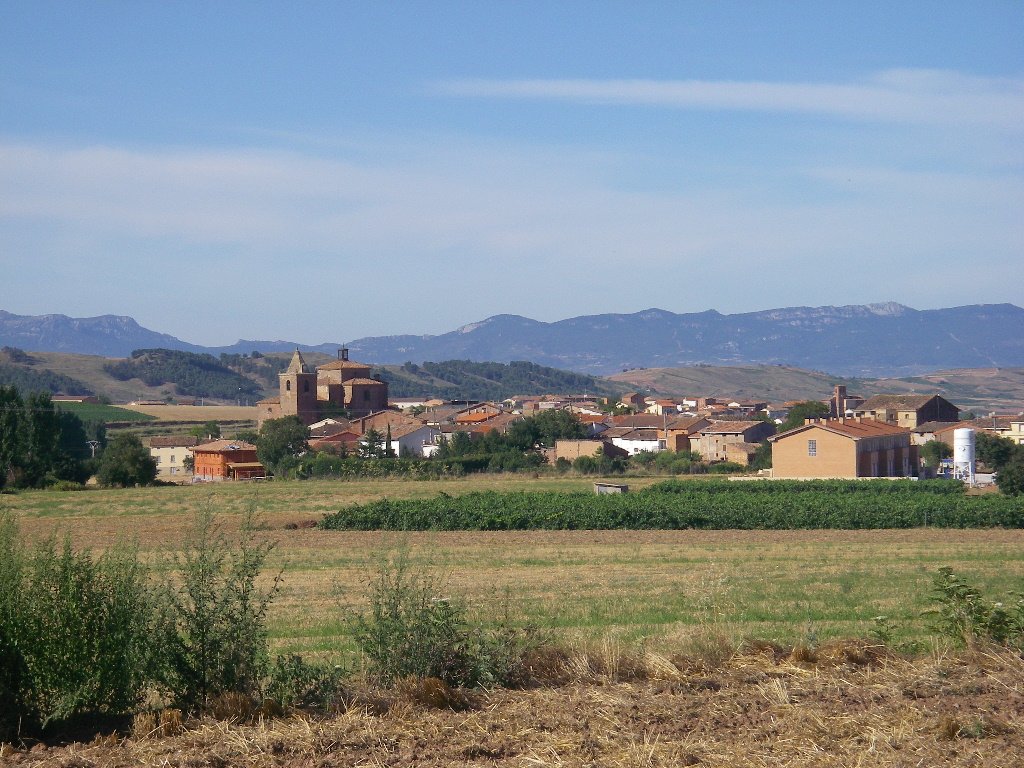
At nine in the morning, the square in front of the church of San Esteban Protomártir is still half quiet. Light falls diagonally across the pale stone façade and returns almost white. A shutter lifts somewhere nearby, a garage door rattles open, and from a side street comes the sound of a car starting up. This is how the day usually begins in Badarán, a small village in the comarca of Nájera, where movement gathers pace slowly.
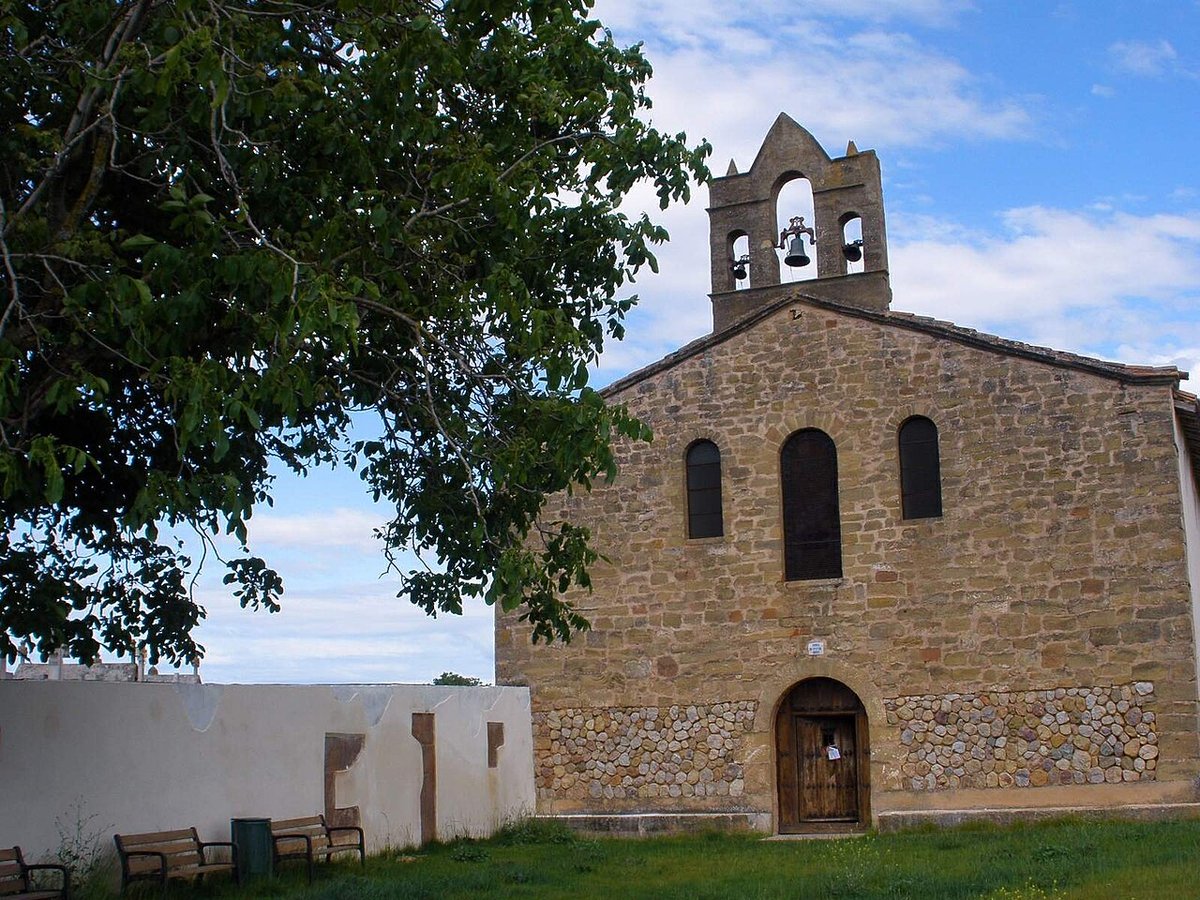
The church dominates the centre. The current building dates from the 16th century and, although its façade is restrained, the volume of the temple can be recognised from almost anywhere in the village. Inside, it preserves older elements such as a stone baptismal font and several later altarpieces, reminders of the role the parish played in local life for centuries.
Directly in front lies a simple square with few adornments: a handful of benches, a fountain, and houses built in stone and brick. Some façades are whitewashed, others leave the raw material exposed. By mid-morning the space becomes a little livelier. Neighbours cross from one street to another, short conversations unfold by the railing around the fountain, and daily routines settle into place.
Streets shaped by agriculture
A short walk from the square leads into narrow streets where older houses stand beside more recent builds. Many doorways still have iron knockers and wooden frames darkened by time. It is common to see trailers, farm tools or small open garages used to store equipment.
Badarán remains closely tied to agriculture, especially vine growing. The link between village and land is not decorative or nostalgic. It is practical and present. Walk towards the edge of the built-up area and the change comes quickly. The last houses give way to plots of vineyard and cereal, stretching across the gentle hills that surround the village.
There are no grand viewpoints or designed promenades. Instead, the setting feels functional and lived-in. Tractors pass along the same routes used by walkers. The agricultural calendar shapes the pace of work and, in turn, the rhythm of the village itself.
Along farm tracks between vines and grain
Badarán does not have a marked network of hiking trails like other areas more geared towards tourism. Here, the usual option is to follow the agricultural tracks that begin at the edge of the village. These are wide dirt or gravel paths used by tractors. Within a few minutes they leave behind the last houses and the faint sounds of the centre.
In summer it is wise to avoid the middle of the day. Shade is scarce and the sun falls hard on the open fields. Early morning or late afternoon offers a different experience. Lower light draws out the lines of the vines, and the landscape takes on golden tones that extend towards the nearby hills.
On clear nights the sky often appears remarkably clean. Street lighting in the village is limited, and just beyond the final row of houses the stars become visible with striking clarity. It is a reminder of how rural this part of La Rioja Alta remains.
A small village in La Rioja Alta
Badarán has around five hundred inhabitants and keeps a calm atmosphere for much of the year. There are no major monuments beyond the parish church, and no monumental old quarter. What you find instead is a working agricultural village. Tractors come and go, neighbours know each other by name, and daily life depends largely on what is happening in the fields.
The main festivities are usually held in August in honour of San Esteban Protomártir. During those days many former residents return, and the square fills far more than usual. There is also ongoing devotion to the Virgen del Rosario, with religious events and gatherings that form part of the local calendar. For visitors unfamiliar with Spanish village life, these celebrations are not simply symbolic dates. They mark moments when the community gathers in a more visible way and when the quiet rhythm of the year briefly changes.
For much of the remaining time, Badarán moves at its own steady pace. Shops and services are limited, and the village does not reshape itself around visitors. That simplicity is part of its character.
Close to Nájera and San Millán de la Cogolla
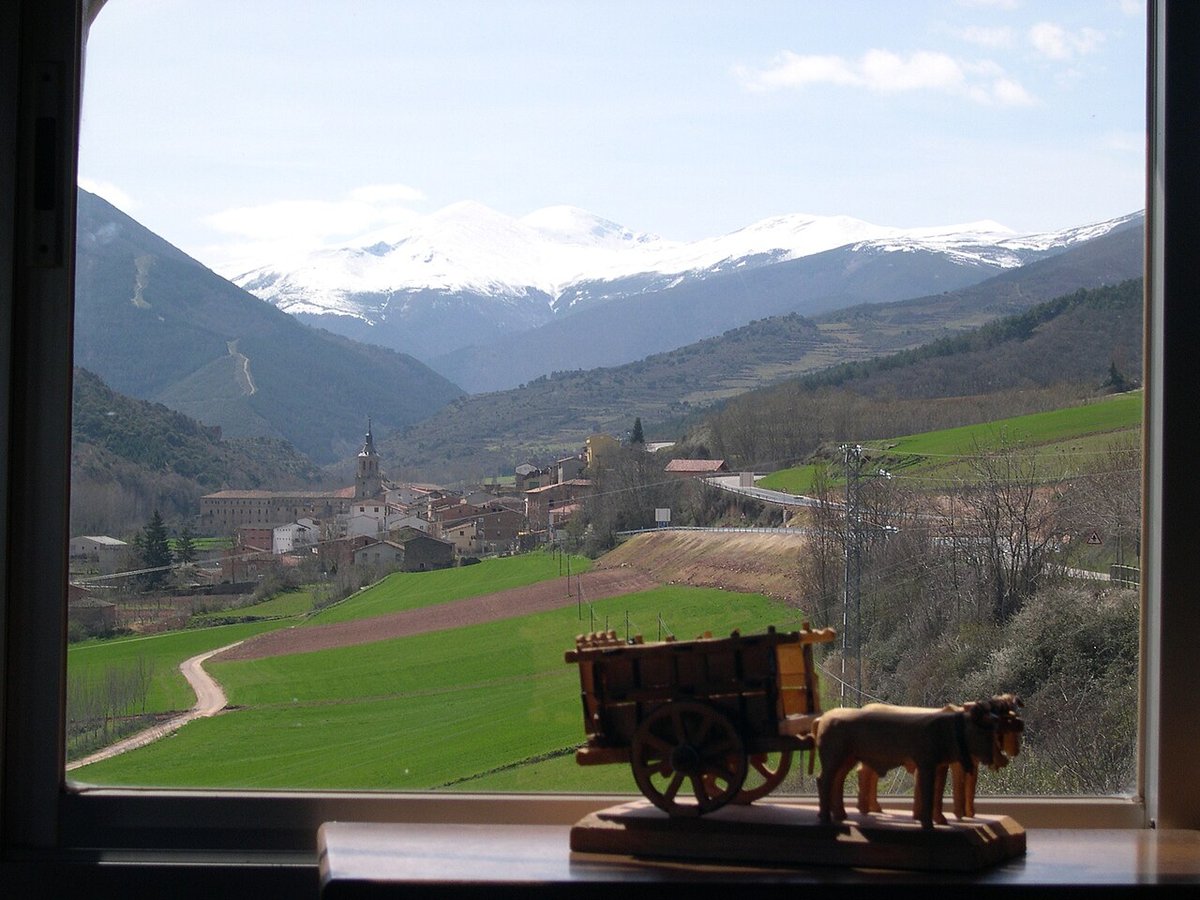
One of the advantages of coming to Badarán is its location within La Rioja Alta. A few kilometres away are well-known places such as Nájera and the monasteries of San Millán de la Cogolla. Many travellers pass through the village while moving between these points.
In that sense, Badarán works well as a short stop. A walk through the centre, a look inside the church of San Esteban Protomártir, then a few minutes along the farm tracks are enough to understand the landscape that sustains this part of La Rioja. Vineyards and cereal fields are not a backdrop but the foundation of local life.
The surrounding countryside helps to place the better-known sites in context. After visiting larger towns or historic monasteries, arriving in Badarán shifts the focus back to everyday rural reality.
Before you go
Badarán is small and services are limited, so it is best not to rely on finding everything open, especially outside usual trading hours. Planning ahead makes sense, particularly if visiting at a quieter time of year.
In summer, starting early is worthwhile if you intend to walk the surrounding tracks. The heat builds quickly once the sun rises high. If arriving by car, parking is normally straightforward in streets near the centre, provided access to homes and garages is kept clear.
This is not a place for long urban itineraries. Badarán can be covered slowly in one or two hours. The interest lies in small details that might otherwise go unnoticed: the sound of swallows on overhead wires, the scent of a winery carried on the breeze from the outskirts, or the late afternoon light settling over the vineyards that encircle the village.
Badarán does not present itself as a headline destination. It offers instead a glimpse of La Rioja Alta at ground level, where agriculture, routine and landscape remain closely connected.