Full Article
about Baños de Río Tobía
Birthplace of La Rioja’s charcuterie industry, known for its sausages and hams in the Najerilla valley.
Ocultar artículo Leer artículo completo
The thermometer on the bank drops six degrees between Logroño and the last bend into Báños de Río Tobía. At 650 m the air thins just enough to make the first sip of crianza taste sharper, and the Sierra de la Demanda suddenly feels close enough to touch. This is not the Rioja of grand bodega architecture and coach parks; it is a working scatter of stone houses, 1,500 souls, and vineyards that roll right up to the back door.
A church, a river, and a lot of grapes
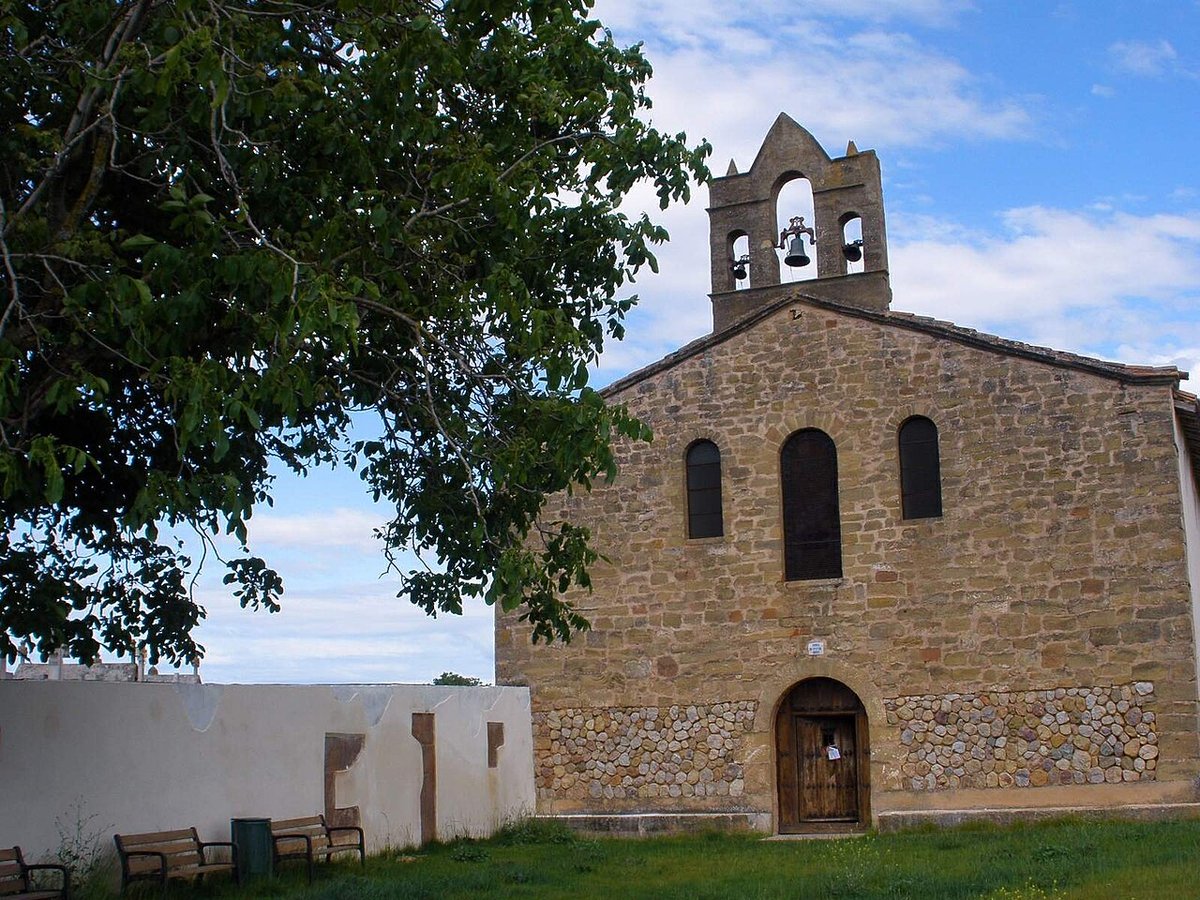
Start in the obvious place: the plaza where the 16th-century Iglesia de San Miguel keeps watch. The building itself is plain, almost severe, but the portico shelters a Romanesque tympanum that survived an 18th-century rebuild. Step inside and the temperature falls another three degrees—welcome relief if you have arrived on one of those July afternoons when the Duero plateau shimmers. Opening hours follow the priest’s schedule rather than any posted timetable; if the doors are locked, wander the perimeter instead. You will see timber eaves warped by centuries of sun, iron balconies painted the colour of rioja wine, and the occasional stork’s nest balanced on the bell-tower.
From the church it is a three-minute walk down Calle Mayor to the river. The Tobía is modest—more a stream than a river in dry years—yet the poplar line gives shade and the water smells of wet stone rather than irrigation run-off. A five-minute amble upstream brings you to the old public laundry, its stone slabs still stained with indigo from decades of washing denim. Turn back when the path narrows or when the farmer’s dogs start barking; the route is not way-marked and phone signal dies under the poplars.
Wine without the glossy brochure
Serious drinkers make the appointment first, then choose the day. Juan Carlos Sancha’s micro-bodega sits on the western edge of the village, identifiable only by a stainless-steel chimney and the smell of crushed black fruit. Sancha resurrected the near-extinct Maturana Tinta grape, and the resulting ink-dark wine has begun appearing on London wine-bar lists at £70 a bottle. Here you taste it in the barrel room for €15, glassware rinsed with the wine itself rather than water—decadent, but standard practice when production is 18,000 bottles a year. Email works, yet a WhatsApp message (+34 646 73 84 55) is more reliable; allow 24 hours for a reply and do not turn up unannounced—his dogs are not visitor-friendly.
If you prefer your tastings with labels you can recognise, head six km south to the cooperative in nearby Tricio. It lacks the cult cachet, but you can buy 5-litre plastic cubos of young tempranillo for €12 and fill your boot.
Paths, mud and tractors
The GR-99 long-distance path skirts the village, following the river east until the canyon walls tighten into the Sierra de Monterreal. Most walkers tackle the 12-km loop to Turruncún and back; the outward leg is gently uphill, gaining 300 m through holm-oak and kermes oak. After rain the clay sticks to boots like brick mortar—trainers are a rookie error. Late October turns the route into a carpet of chestnut husks; carry a stick if you do not fancy extracting prickles from your ankle.
Mountain-bikers use the same tracks, so keep ears open for the whirr of knobbly tyres. Farmers drive their tractors at walking pace and will halt if you stand aside; block the track and you will be greeted with a polite but firm “¿nos deja?”
When to come, when to stay away
April and late September own the sweet spot: daylight lasts until 20:00, the vineyards glow either bright green or copper, and midday heat stays below 24 °C. August is a furnace—35 °C is routine—and most locals seal their shutters after 11 a.m. Winter brings sharp frost; the road from Nájera can ice over and chains are occasionally required. Snow itself is rare, but the wind that barrels down the valley makes a mockery of the thermometer. Pack layers and a pair of shoes with grip; the stone streets are slippery enough even without snow.
Accommodation is limited to three self-catering flats above the bakery, booked via the town-hall tourist office (open Tuesday and Thursday mornings only). Anything smarter means staying in Nájera, 18 km away, and driving up after dinner. That is no hardship—restaurants down in the valley serve until 23:00—but the last stretch is unlit and deer wander across the tarmac.
Feeding yourself
Bar La Plaza opens when the owner finishes his own vineyard work. If you find the metal shutter half up, you have a fifty-fifty chance of a toasted cheese sandwich made with camerino, a mild ewe’s-milk cheese that melts like mozzarella but tastes of meadow rather than barn. Order a “tosta” and a caña of beer for €3.50, then retreat to the plastic tables outside. The bar closes at 16:00 and may not reopen in the evening; plan accordingly.
Buy picnic supplies at the Mini-Mas on Calle San Juan: local chorizo riojano is smoked over holm-oak and carries almost no heat, ideal for children or anyone who finds andouille too aggressive. If you need meat for a barbecue, Carnicería Alonso on Calle Virgen del Rosario will vacuum-seal a chuletón (rib-eye the size of a steering wheel) while you wait. Expect €28 a kilo—cheaper than Borough Market, pricier than Tesco.
The practical grit
There is no railway within 35 km. Logroño’s regional airport receives the odd summer flight from Stansted, but Burgos (90 min) offers more reliable car-hire desks. From either, you need wheels—taxis are scarce and Uber does not operate. Fuel in the village is 8 céntimos dearer than on the Logroño ring-road; top up before you climb.
Cash still rules. The lone ATM inside Caja Rural rejects most UK cards after 20:00 and imposes a €200 daily limit. Bring euros or withdraw in Logroño. Sunday lunchtimes everything except the church and the river shuts; carry water and a snack if you are staying beyond 15:00.
Parting shot
Báños de Río Tobía will not keep you busy for a week. It might not even fill a day unless you walk, taste, and eavesdrop on village life. What it does offer is the chance to see Rioja without the gift-shop gloss: a place where wine is made rather than marketed, where the church bell still dictates the afternoon, and where the land rises high enough to cool your skin but not so high that you run out of oxygen—or wine. Come prepared, lower your pace to agricultural speed, and the village repays with detail: the smell of fermenting grapes drifting through an open cellar door, the sound of a tractor in low gear at dusk, the sight of snow on the sierra while you stand in shirt-sleeves among the vines. Just remember to fill the tank—and the wallet—before you leave the lowlands.