Full Article
about Bezares
One of the smallest villages; set in the Yalde valley with a quiet natural setting.
Ocultar artículo Leer artículo completo
The thermometer reads eight degrees cooler than Logroño, even though Bezares sits only half an hour away by car. At 755 metres, the village rides the first ripple of the Sierra de Moncalvillo, high enough for the air to sharpen and for the Ebro valley to spread out like a rumpled counterpane below. Twenty-five permanent residents, one church bell, and a lattice of stone walls: that is the inventory. Everything else is altitude, sky, and the sound of wind combing through cereal fields.
A village that ends where the slope begins
Bezares has no centre in the British sense—no market square flanked by a pub and a war memorial. Instead, the houses nudge the road until the gradient becomes unreasonable, then stop. The adobe walls, the colour of dry biscuits, taper into vegetable plots and threshing circles still used for drying chickpeas. Walk five minutes in any direction and tarmac gives way to ochre tracks that fracture into private parcels of wheat and vines. The boundary between settlement and farmland is so permeable that a misplaced foot can land you in someone’s alfalfa.
Winter re-draws these edges. When snow settles on the Sierra, the access road from Nájera is salted but never priority; locals keep a shovel by the door and a bag of ash from the hearth for traction. Visitors in February should carry snow socks even if the forecast yawns blue—Atlantic storms can slither over the ridge without warning. April reverses the drama: almond blossom flickers against black rock, and the temperature gradient between valley and village makes afternoon clouds billow like rising dough. Photographers arrive chasing the contrast, only to discover that Bezares has no cafés in which to wait out a shower. Shelter is the church porch or the lee of a tractor shed; both work, provided you ask first.
Paths that remember medieval drovers
TheGR-93 long-distance footpath clips the village before climbing to the 1,350-metre Puerto de Nieva. Medieval shepherds used the same col to drive flocks from Soria to winter pastures along the Ebro, and the stone waymarks—cairns the size of a Yorkshireman’s terrier—still appear every kilometre or so. A two-hour circuit from the church drops to the abandoned hamlet of Livién, where swallow nests clog the windows of a slate-roofed manor. Return via the ridge and the descent gives a lesson in micro-climate: on the south face almond trees fruit; on the north face they merely survive. The path is obvious in May, overgrown in August after the first threshing, and can be slick clay after October rains. Footwear that copes with both limestone scree and ploughed earth saves embarrassment; the nearest shop selling blister plasters is 18 kilometres away in Nájera.
Mobile reception flickers along the ridge—enough for a WhatsApp ping, insufficient for a doom-scroll—so walkers relying on GPS should download the IGN 1:25,000 map tile before leaving the valley. Locals still navigate by landmark: “Turn left at the threshing floor where the lightning split the oak.” The oak is long gone, but the stone circle remains, now sprouting wild fennel.
Stone, adobe, and the politics of a new roof
Vernacular architecture here is a palimpsest. Sixteenth-century ashlar frames ground-floor doorways; upper storeys grew in adobe during the wheat boom of the 1800s; 1970s concrete balconies cling on like afterthoughts. Planning rules have tightened since La Rioja’s wine tourism boom, so owners face a choice: restore with terracotta tiles and wooden balconies (grant-aided) or watch the roof collapse and the walls return to earth. One house on Calle de la Iglesia has been “under restoration” since 2014; scaffolding has become a permanent pergola for a vigorous white wisteria. Passers-by assume it is a deliberate garden feature.
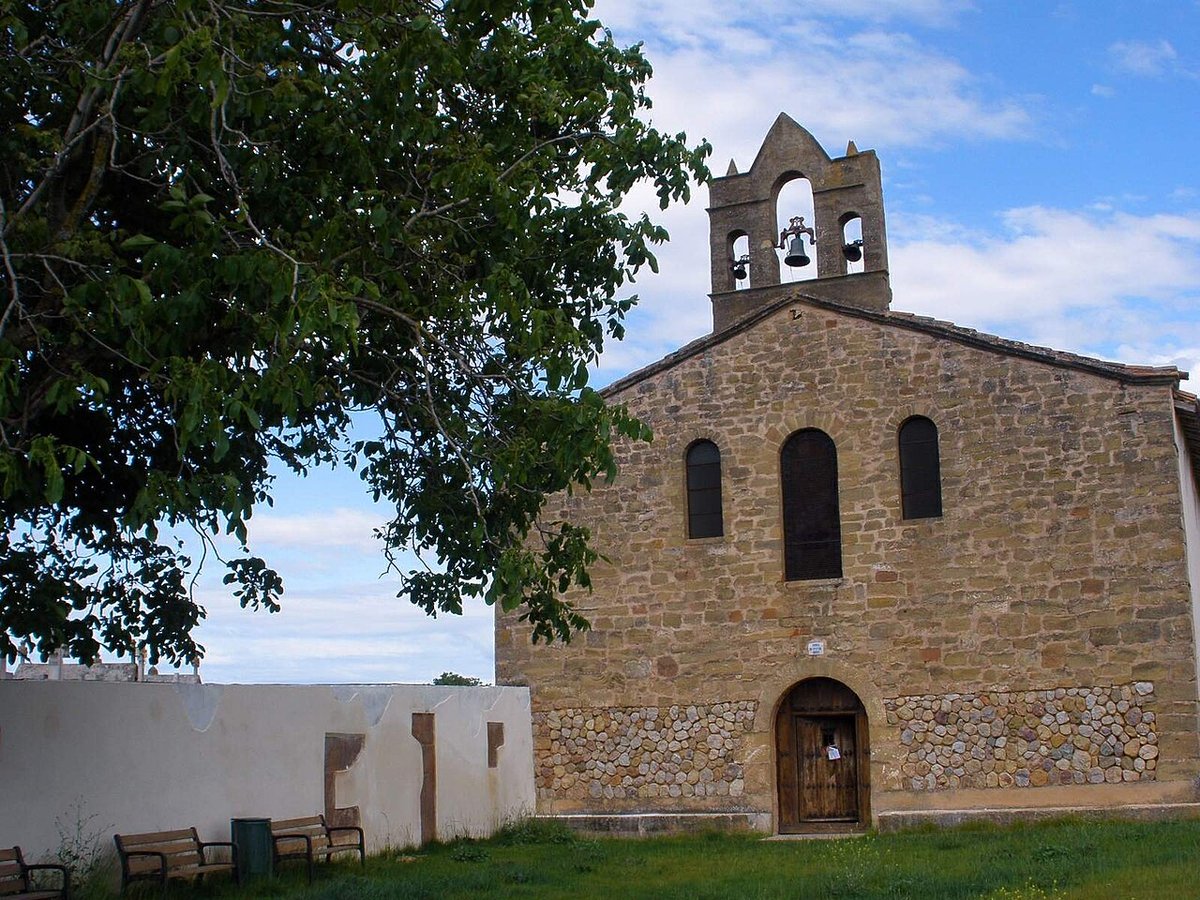
The church of San Millán keeps the same footprint since 1185, though the bell tower is a nineteenth-century add-on paid for with profits from the phylloxera-free harvest of 1893. The oak doors open only for Saturday-evening mass; arrive earlier and you will find the key under a flowerpot whose plastic marigolds never fade. Inside, the air smells of beeswax and damp stone. A single bulb dangles above a Romanesque font so shallow it could barely wet a baby’s forehead—baptisms here were symbolic rather than immersive.
When to come, and when to turn back
May and late-September offer the kindest compromise: daylight until eight, temperatures in the low twenties, and tracks firm enough for a normal walking shoe. July and August deliver cloudless skies but also the Cierzo, a furnace wind that rises from the Meseta and can nudge 40 °C by mid-afternoon. There is no public fountain; the solitary bar opens at irregular hours advertised on a scrap of cardboard. Bring at least a litre of water per person for any walk longer than thirty minutes.
Autumn colour peaks during the last week of October, when beech woods on the northern escarpment turn copper and the valley vineyards stripe red against lime-white soil. It is also mushroom season, and locals sweep the slopes at dawn. A basket of horn of plenty (known here as “trompetas”) can fetch €18 a kilo in Logroño markets, so wandering off-path with a rucksack may invite polite suspicion. Ask permission if you intend to forage; the answer is usually yes accompanied by directions to a “better” hollow.
Winter daylight shrinks to five hours, but the compensation is silence so complete you can hear a fork clink in a kitchen two streets away. The village Christmas fair consists of a single stall selling artisanal honey and chorizo; organisers insist on calling it a “mercadillo” anyway. January snow rarely lies more than three days—just long enough to photograph terracotta roofs wearing white mufflers—yet ice lingers on north-facing tracks well into March. A telescopic walking pole turns an ankle-saving third leg.
Logistical realities for the self-driver
From Bilbao airport, the fastest route is the AP-68 to Logroño, then LR-123 through Nájera to Bezares—134 kilometres, mostly motorway, €13.45 in tolls. The final 12 kilometres twist through sandstone gorges where stone falls are common after rain; proceed, as the Spaniards say, “con precaución extrema.” Petrol stations are plentiful until Nájera; after that, the last pump closes at 20:00 sharp and does not reopen on Sundays.
Parking is not signed, yet gravity provides: nose the car against the uphill verge on Calle Nueva and engage first gear; handbrakes relax in sub-zero temperatures. The Guardia Civil patrol sporadically and will ticket any vehicle blocking a field gate, however briefly. There is no charging point for electric vehicles; the nearest is a 22 kW unit outside the Nájera health centre, 17 kilometres back the way you came.
Public transport requires patience and a working knowledge of Spanish. A twice-daily bus (line 303, “Nájera—Bezares—Uruñuela”) leaves Nájera at 07:15 and 14:45, returning at 07:30 and 15:00. The timetable shrinks to once daily on Saturdays and disappears entirely on Sunday, feast days, and during the grape harvest when the driver is requisitioned for tractors. A single ticket costs €1.20; pay the driver. Bicycles are carried only if the rack is empty, which it never is.
Where to sleep (and why you might not)
Bezares has no hotel, hostel, or officially registered casa rural. The ayuntamiento in Nájera keeps a list of three villagers who occasionally rent rooms—expect crocheted bedspreads, a kettle but no kitchen, and a bathroom shared with a shy cat. Rates hover around €35 per night, cash only, no invoices. Book by ringing the village shop (open 09:00–11:00, Tuesdays and Fridays) and asking for “la señora de las habitaciones.” If she is visiting grandchildren in Vitoria, the answer is a polite no.
Most visitors base themselves in Nájera, where the three-star hotel San Camilo has doubles from €65 including a garage that actually fits a British hatchback. The ten-minute drive to Bezares then becomes a pre-breakfast jaunt, ideal for catching dawn light on the ridge without committing to a mountain dawn start.
A parting shot, honestly framed
Bezares will not change your life. It offers no epiphany, no Instagrammable plunge pool, no artisan gin distilled from local juniper. What it does provide is a calibrated sense of scale: how small a settlement can be and still function, how lightly twenty-five people can tread on 755 metres of limestone, and how quickly the modern world thins when you walk ten minutes uphill. Come for the altitude, stay for the quiet, leave before you need lunch—because lunch, like everything else here, is exactly where you left it: half an hour down the road in the valley.