Full Article
about Camprovín
Town known for its outdoor murals; set on the mountainside.
Hide article Read full article
A Small Village Near Nájera
Camprovín sits in the comarca of Nájera, in La Rioja, around a 20-minute drive from the town that gives the area its name. It is a very small place, with just over 150 residents, and it does not take long to get around.
The easiest way to approach a visit is simple: arrive, leave the car near the entrance, and continue on foot. Within half an hour you will have passed through almost the entire village. Parking is usually straightforward. Most people leave the car at the edge or along one of the wider streets, as space is rarely an issue except on very specific days. The streets themselves are narrow, so it makes sense not to drive too far in.
Camprovín is not somewhere that demands a long itinerary. It works best as a short stop while travelling through this part of La Rioja, particularly if you are already exploring the surroundings of Nájera or the Najerilla valley.
Walking Through the Village
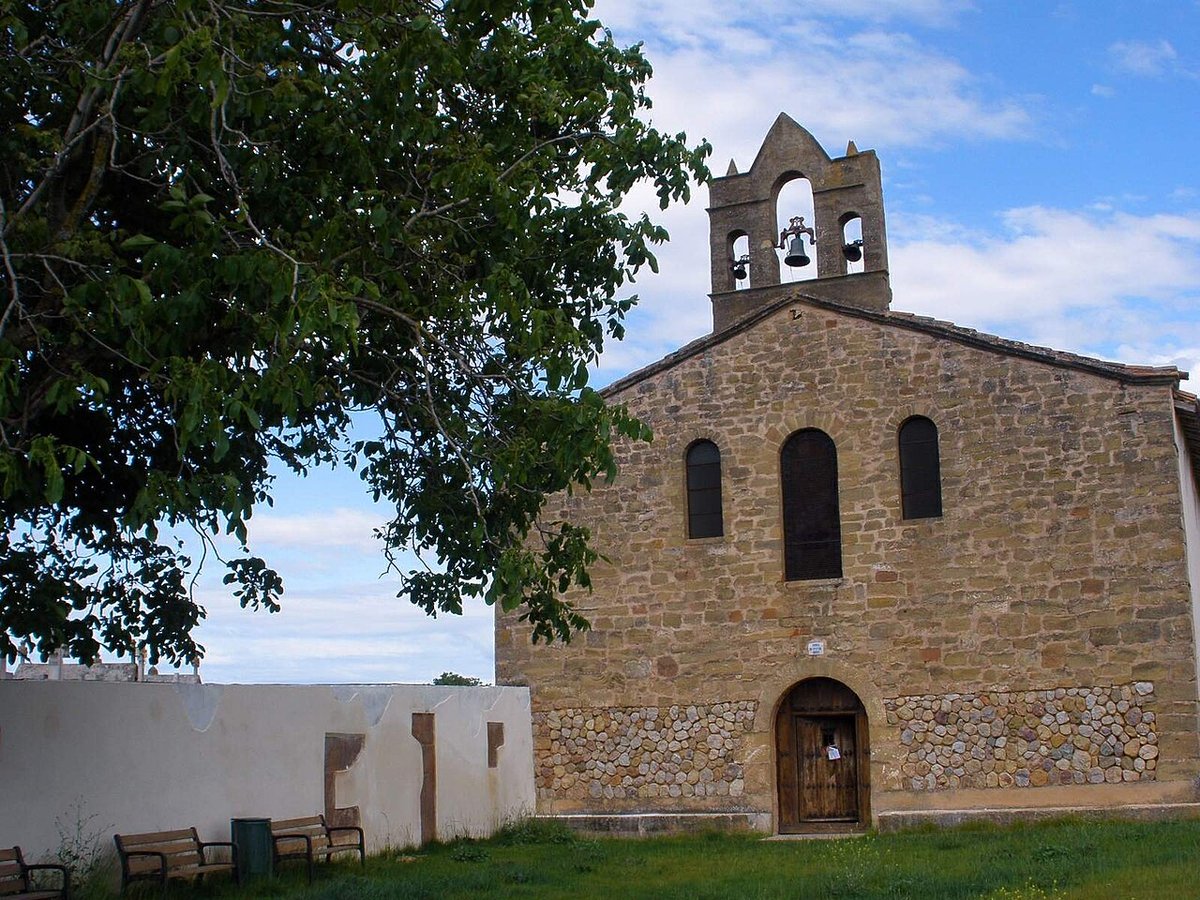
There is no single monument here that defines the visit. The Iglesia de San Martín is the most visible building from the outside. It is a restrained structure, with a tower rising above the rooftops. If the church happens to be open, it is worth stepping inside briefly, but there is no need to plan around it.
What matters more is simply walking the streets. Many of the houses still preserve traditional features such as stone walls, large wooden gates, and old iron grilles. These details appear as you move around rather than being gathered in one spot.
There is no marked route to follow. It does not really matter where you begin. Within ten minutes you will already have crossed from one side of the village to the other. The layout encourages wandering without much thought, turning corners and passing through small stretches of street that feel unchanged.
In the upper part of Camprovín, the setting opens up slightly. From certain points, especially where the buildings thin out or where you can look between them, the landscape of the Najerilla valley comes into view. These are not formal viewpoints. There are no platforms or signs. The views appear naturally as you move, or if you step just a little outside the built area.
Paths, Fields and Open Ground
Once you leave the village, rural tracks begin almost immediately. They run between vineyards and cereal fields, forming simple paths that are easy to follow for a short walk. These are not demanding routes. They are suitable for a gentle stroll rather than a long hike.
The ground conditions depend on the weather. After rain, mud forms quickly, so it is sensible to wear appropriate footwear if you plan to walk beyond the streets. In dry conditions, the tracks are straightforward.
Some of these paths rise slightly, and with that small change in elevation the wider surroundings come into view. In the distance, you can see the Sierra de la Demanda. There is no signage marking these as official walking routes. The idea here is uncomplicated: head out for a while, take in the setting, and return the same way.
There is little in the way of infrastructure or interpretation. That simplicity is part of how the area is experienced. The landscape is present without explanation, and the paths serve practical purposes as much as recreational ones.
How Long to Spend
Time in Camprovín is naturally limited by its size. Around an hour is enough to walk through the village at a relaxed pace. If you add a short walk along the surrounding tracks, that can stretch to two hours without difficulty.
There is not much tourist activity, and the village does not present itself as a destination filled with attractions. Instead, it functions as a pause within a wider route. It fits easily into a day spent exploring the Nájera area or moving through the Najerilla valley.
Because of this, expectations matter. Camprovín is not about ticking off sights. It is about passing through a small rural setting, seeing how it is laid out, and then continuing on.
Getting There and When to Go
From Logroño, the usual approach is to take the N-120 towards Nájera and then continue along a local road. The final stretch is calm, and it is best driven without rushing.
Season and time of day make a difference if you plan to walk outside the village. In summer, the central hours of the day can be harsh, as there is very little shade on the surrounding paths. It is better to head out early or later in the afternoon, when conditions are more comfortable.
Within the village itself, the short distances and narrow streets mean you are never far from where you started. That makes timing less critical once you are inside. The main consideration is the open ground beyond it.
Camprovín does not try to hold your attention for long. It offers a brief look at a small settlement in La Rioja, a few quiet streets, and the chance to step out into farmland for a short while. Seen in that way, it fits neatly into a wider journey through this part of northern Spain.