Full Article
about Cordovín
World-famous for its clarete wines; a village devoted to viticulture in the Najerilla valley.
Hide article Read full article
A slow start in a small Rioja village
Early in the morning, when the only sound is the occasional car on the road to Nájera, tourism in Cordovín begins with something very simple: the crunch of gravel underfoot and the damp scent of nearby vineyards. Light slips in low between the houses and leaves stone and adobe façades in a pale, almost cool grey. For a while, the village seems paused, as if the day has not quite begun.
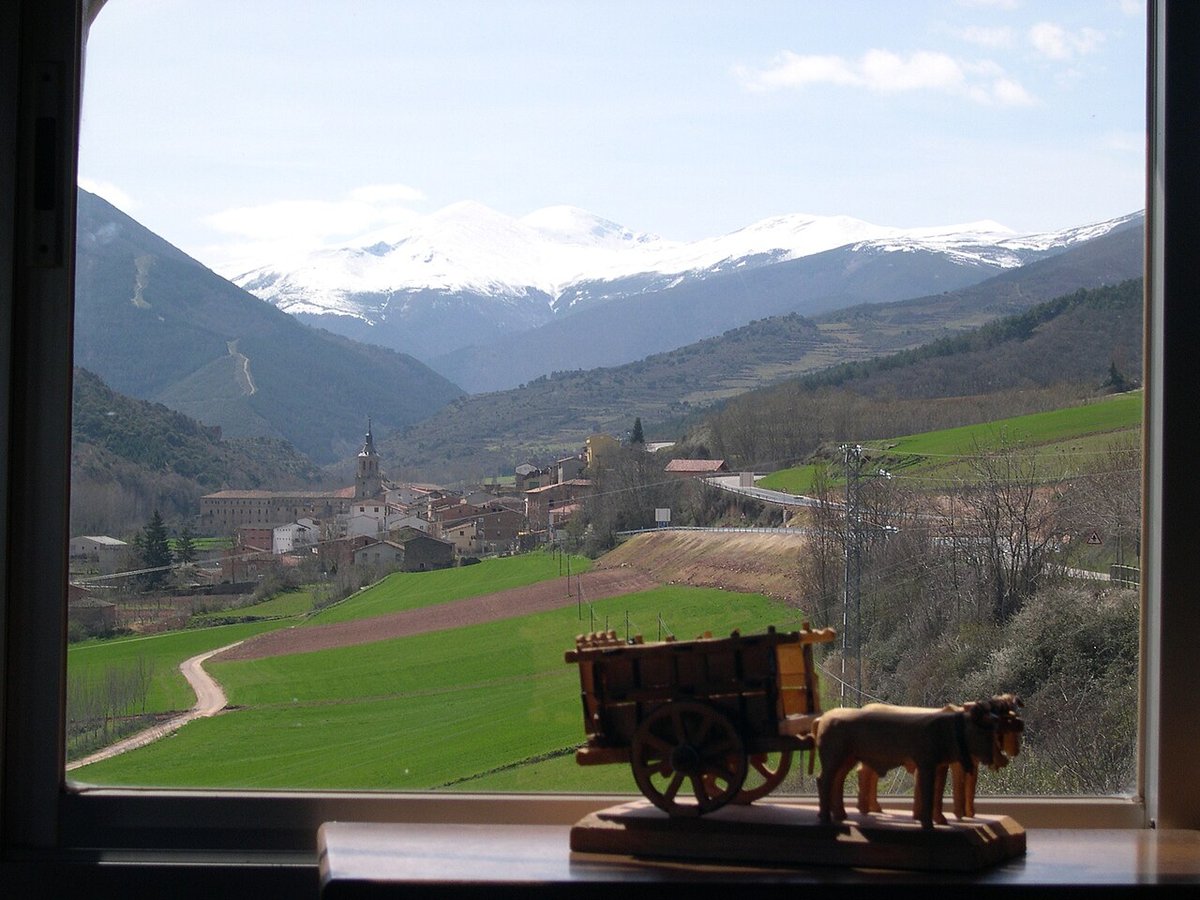
Cordovín has just over 150 inhabitants, and that calm rhythm is clear as soon as you walk its streets. Houses combine rough masonry with timber darkened by age, along with large doors built for storing tools and farm equipment rather than for display. The architecture does not try to impress. It reflects the climate, agricultural work, and a way of life still tied to the land.
Streets shaped by everyday life
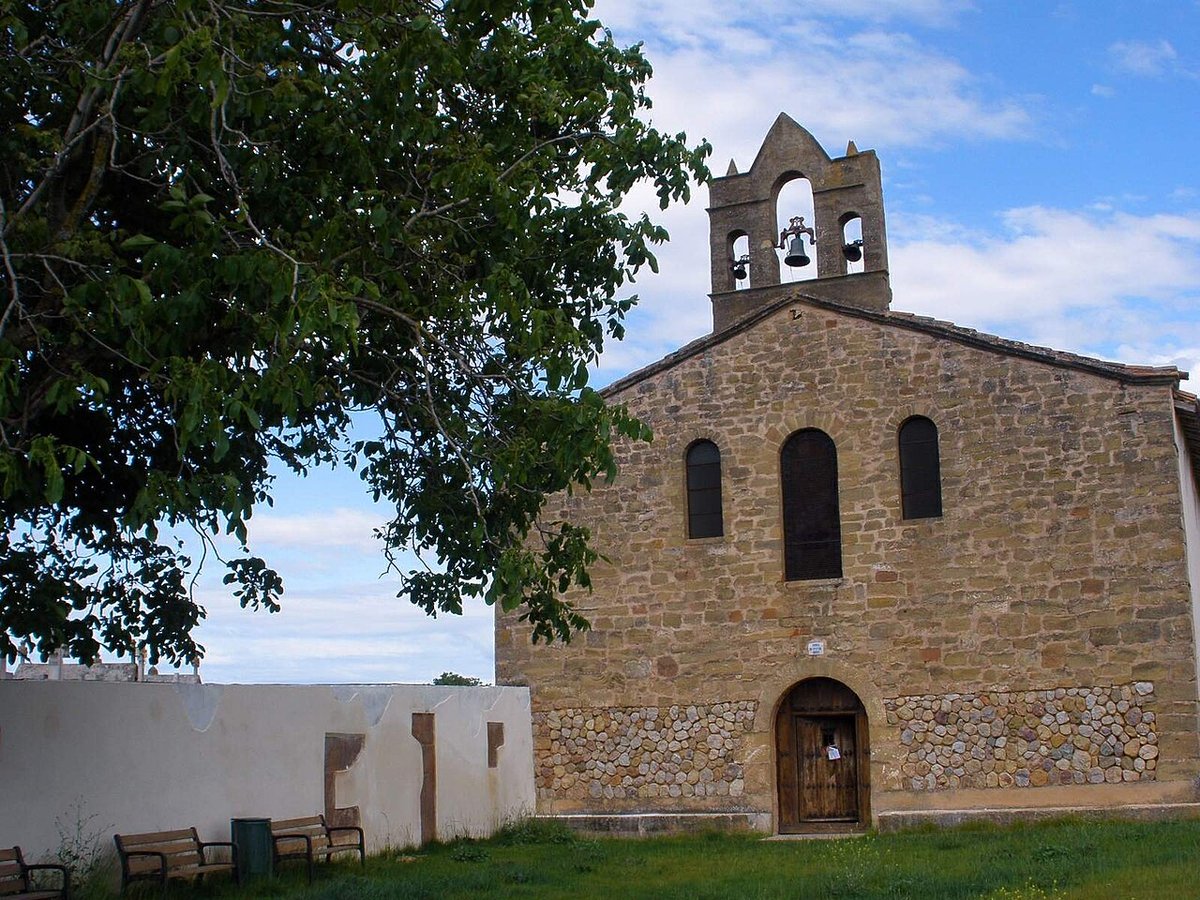
The small centre is arranged around the church of San Andrés. It does not dominate through size, yet it marks the point from which several short streets branch out. At certain times, especially mid-afternoon, the stone on the façade takes on a warmer tone and shadows stretch across the uneven ground.
Details repeat as you walk at an unhurried pace. Windows are small, designed to keep out the winter cold. Iron balconies creak slightly when they move. Thick walls show a mix of stone and areas of adobe. Some doorways still reveal old beams, and wood marked by years of use with tools.
On the edges of the village, almost tucked into low hills, there are old underground wine cellars. In this part of La Rioja, these calados were once a central part of daily life. Many are now closed or privately used, yet their entrances remain visible. Sometimes it is no more than a low door set into a slope, but it is enough to show how closely wine was tied to the landscape.
Out towards the fields
It takes very little effort to leave Cordovín on foot. Within minutes, agricultural tracks appear, running between vineyards and cereal fields. A light breeze carries the soft brush of grain heads and the distant, dry sound of tractors at work.
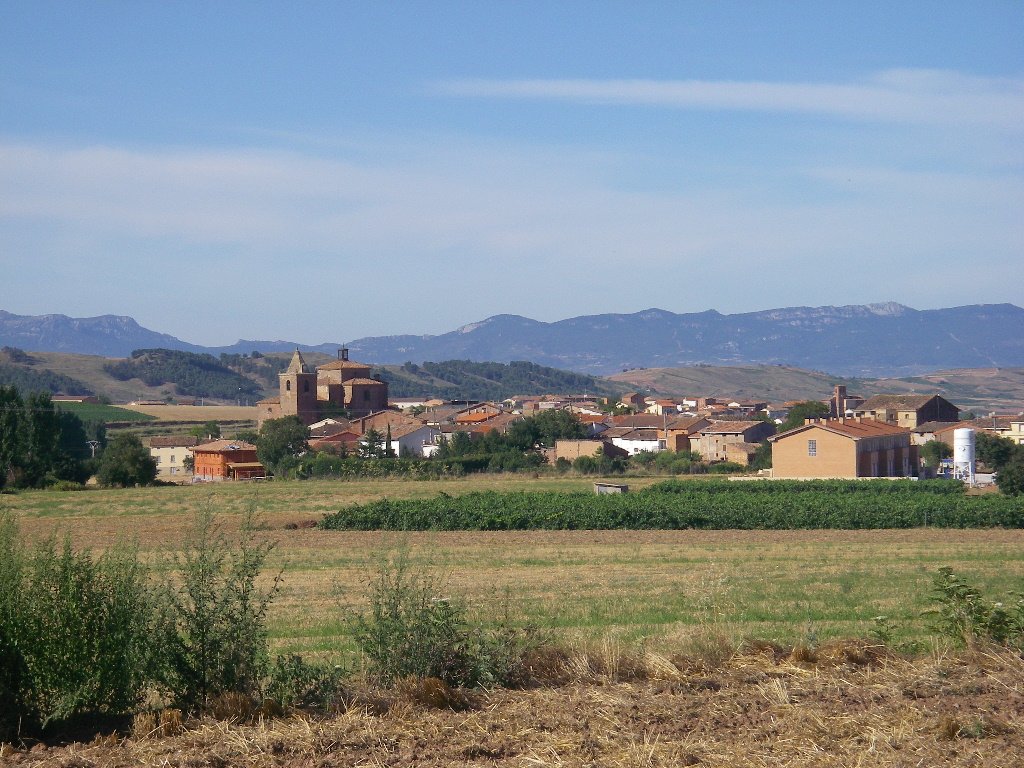
After ten or fifteen minutes of walking, the view opens out across the valley around Nájera. There is no marked viewpoint or prepared platform, just a slight rise in the land. From there, the village appears gathered in among cultivated plots, with the wider landscape stretching beyond.
The atmosphere changes noticeably during the grape harvest. Activity increases on the paths, and it is worth taking care and giving way to machinery moving through the fields.
Practical notes for an easy visit
Summer brings strong sun over the open land. The central hours of the day can feel intense, as there is very little shade outside the built-up area. Morning light or the end of the afternoon tends to be more comfortable for walking.
Cordovín is small and easy to explore in a short time. Visitors usually leave the car in one of the open spaces at the entrance and continue on foot. Inside the village, several streets are narrow, and residents still use garages and doorways for daily work or to store vehicles.
A brief pause near Nájera
Cordovín is often visited as part of a wider route through the Nájera area. In less than an hour, it is possible to walk its streets, step out onto the surrounding paths, and get a sense of the agricultural landscape that supports this part of La Rioja.
There are no large monuments or long lists of attractions here. The village works more as a short pause between vineyards and open fields, the kind of stop that fits well into an unhurried journey through the region.
Getting there and what to keep in mind
From Logroño, the usual approach is to take the A-12 towards Nájera and continue along local roads. The final stretch is short, though some bends and narrow sections mean it is best to drive steadily.
Closed footwear is a good idea if you plan to walk in the surrounding area, as many paths are made of loose earth or gravel. After rain, the mud in this area tends to cling to shoes.