Full Article
about Hormilleja
Small village at the confluence of the Najerilla and Tuerto rivers; an area of orchards and vineyards.
Hide article Read full article
A place you grasp in minutes
Some villages require a map. Hormilleja does not. You arrive, park wherever there is space, and within minutes the layout makes sense.
Tourism in Hormilleja does not revolve around major landmarks. The interest lies in something quieter: seeing how a small village of vineyards and open fields is organised in this part of La Rioja Alta. Streets are short, the number of blocks is limited, and there is a noticeable calm, the kind that comes from fewer cars than expected.
Getting here is straightforward from Logroño in the direction of Nájera, then along local roads. As soon as you enter, it feels as though the village ends almost where the countryside begins.
A compact and practical layout
From the outside, Hormilleja appears reduced to a handful of straight streets. Stone houses line the way, many with large gates. Some façades still show signs of extensions added over time.
There is no monumental old quarter. Instead, the layout is simple and logical. Narrow streets run between homes, small kitchen gardens sit beside some properties, and underground cellars appear behind certain gates. These are the kind of family bodegas that have been used for generations to store wine, potatoes or preserved food.
Orientation comes quickly. Walk for five minutes in almost any direction and the vineyards or fields come into view.
The church at the centre
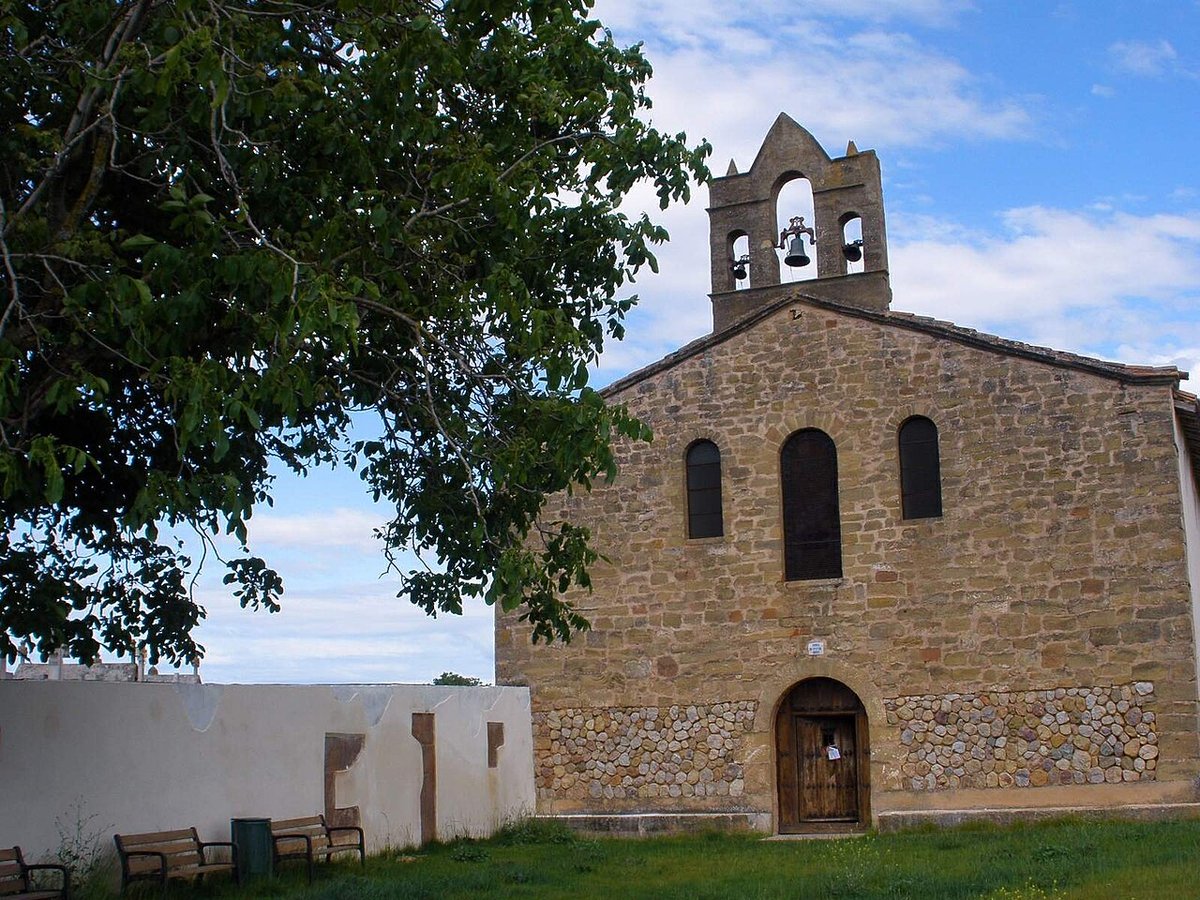
The most recognisable point in the village is the church of Santa Catalina. It is not a large building, yet its bell gable can be seen from several streets and works as a reference point when walking around.
The construction is sober, with exposed stone and small windows. Inside, there is a single, simple nave with some older arches. The church still acts as a meeting place during religious celebrations and local events, something typical in villages of this size.
The square and daily rhythm
A short distance away lies the Plaza Mayor. It is less a formal square and more an open, quiet space with a few benches and trees.
Towards the end of the day, there is usually some movement. Residents come out to sit for a while, children cross the space on bicycles, and conversations drift from one corner to another. Spending a little time here quickly reveals the pace of the village.
This is not a place where many things happen at once. That is precisely why everyday life is easy to observe.
Walking out towards the vineyards
Leave the built-up area and agricultural tracks begin almost immediately. Fields of cereal, wheat or barley depending on the season, mix with plots of vines.
These paths are easy to follow and not technical. The interest lies in what surrounds them: dry stone walls marking plot boundaries, small enclosures, and the occasional isolated holm oak.
After about half an hour on foot, the agricultural landscape around Hormilleja becomes clear. Silence dominates, broken mainly by the wind or the bark of a dog from a nearby property.
How long to spend
Hormilleja does not take long to see. That is simply how it is.
In one or two hours, it is possible to walk the streets, pass by the church, sit for a while in the square and take a short stroll along the nearby tracks. After that, most visitors continue on to larger villages in the area.
Nájera is very close and has more activity. Other wine-producing villages such as Huércanos, Uruñuela or Ventosa are also within easy reach.
Practical notes before visiting
It helps to arrive with the basics already sorted. In a village with just over a hundred inhabitants, services are limited and many everyday needs are handled in nearby towns.
The local road is usually in good condition and the journey from Logroño is short. Even so, if travelling around the area, it makes sense to prepare in advance before heading onto these secondary roads.
Hormilleja works best as a brief stop within a wider route through La Rioja Alta. A pause along the way, a short walk among vineyards, and then onward. That kind of stop often fits well between busier destinations.