Full Article
about Huércanos
Town with a strong musical and winemaking tradition, strategically located near Nájera.
Hide article Read full article
A village shaped by its landscape
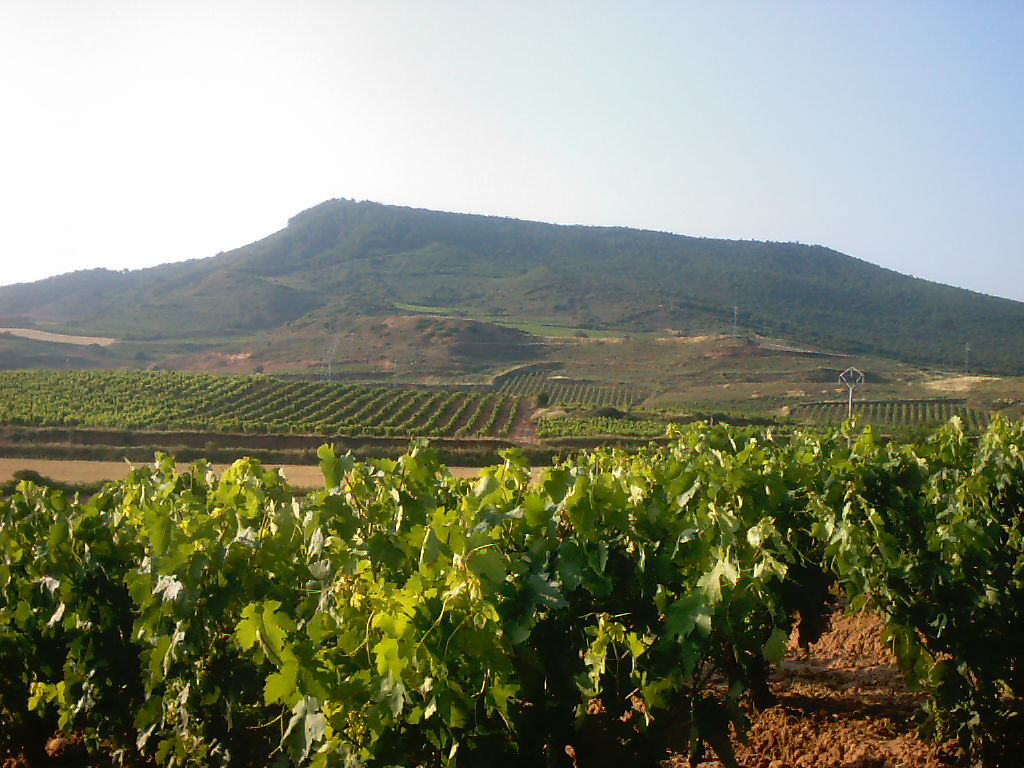
Any look at Huércanos has to begin with its setting. The village sits in the Najerilla valley, not far from Nájera, in an agricultural strip clearly defined by the river and by vineyards. The landscape explains much of what the place is: a compact settlement surrounded by vines, cereal fields and small vegetable plots.
With a population of just over eight hundred, Huércanos is not about grand landmarks or streets designed for sightseeing. Its interest lies elsewhere, in understanding how a village in La Rioja still functions with strong ties to the land. Farming is not a backdrop here, it is part of daily life, and that shapes both the rhythm and the appearance of the place.
San Juan Bautista and the village centre
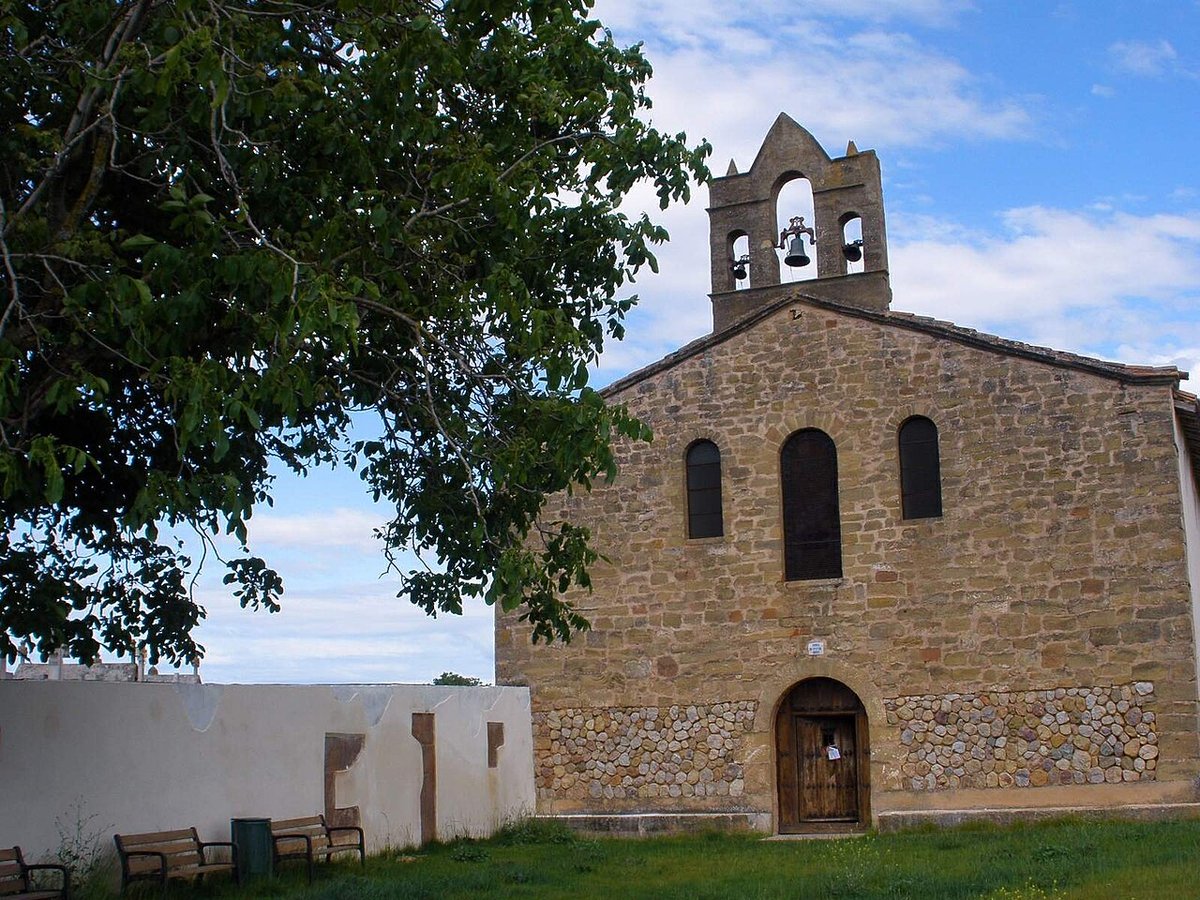
The clearest reference point in the village is the church of San Juan Bautista. The main structure dates from the 16th century, with later alterations, particularly in the 18th. From the outside, it stands out thanks to its stone tower, which rises above the surrounding houses.
The entrance features restrained vegetal decoration. Inside, attention often turns to the main altarpiece, in Baroque style, similar to others found across La Rioja Alta. It is not an imposing church, but it helps explain the role these parish buildings once played in organising local life.
Around it, the centre of Huércanos takes shape. Streets are short and the layout is compact. Some stone façades and coats of arms still appear, reminders of former houses belonging to well-off families linked for centuries to agriculture and the wine trade.
The main square works less as a historic showpiece and more as an everyday space. It is where daily life gathers: conversations, errands, people moving through at different times of day. The atmosphere comes from use rather than from design.
Paths through vineyards and fields
Step beyond the built-up area and agricultural tracks begin almost immediately. These are not marked as formal walking routes, but they are used regularly to reach the surrounding land.
Walking along them offers a clearer sense of the middle stretch of the Najerilla valley. Plots alternate between vineyards, cereal crops and small vegetable gardens. In autumn, when vine leaves change colour, the valley takes on reddish tones that are typical of this part of La Rioja.
There is no need to go far. Within minutes, the village fades behind you and the working landscape takes over. The focus shifts from buildings to cultivation, from streets to open land shaped by seasonal cycles.
Local festivals and the rhythm of the year
The main festivities are dedicated to San Juan Bautista and usually take place in August. As in many villages in La Rioja, they combine religious events with activities organised by residents.
Another key moment is the grape harvest, or vendimia. During these weeks, activity in the vineyards increases and the pace of the village changes. Sometimes events linked to grape picking are organised, although the format can vary from year to year.
Easter, or Semana Santa, is observed more quietly. Celebrations centre on the parish, with participation mainly from local residents rather than visitors.
A short visit or a longer stop
Huércanos is easy to explore in a short time. One or two hours are enough to walk through the centre, visit the church and wander a few streets around the square.
For those who want to stay a bit longer, the most natural option is to head out along one of the surrounding tracks. In less than half an hour, there are open views over the Najerilla valley and the patchwork of crops that defines it.
Many visitors treat Huércanos as one stop within a wider route through the Nájera area. Nearby villages and the valley itself make it easy to extend the day without travelling far.
Practical notes before you go
The centre is small, but some streets are narrow. It is often more convenient to leave the car on the edge of the village and continue on foot.
Outside the village, shade is limited, especially in summer. Anyone walking along the agricultural tracks should carry water and some form of sun protection.
It also helps to arrive with the right expectations. Huércanos does not revolve around tourism. Its appeal lies in its agricultural landscape and in the everyday life of a village in the Najerilla valley.
Getting there
From Logroño, the journey is usually made via the N-120 towards Nájera, followed by local roads that connect to the village. The distance is roughly thirty-something kilometres.
Access by car is straightforward, and there is usually space to park on the outskirts. From there, the entire village can be explored easily on foot.