Full Article
about Pedroso
Mountain village ringed by walnut trees and woods; real rural feel.
Ocultar artículo Leer artículo completo
The road climbs steadily from Nájera, leaving the river valley and its motorway behind. Within twenty minutes, the vineyards give way to walnut groves—thousands of them, their silver trunks catching afternoon light like a regiment of ghost soldiers. Then, suddenly, Pedroso appears: a cluster of stone houses huddled at 773 metres, looking as if someone has pressed pause on the 1950s.
Seventy-seven souls live here year-round. On an average Tuesday, the village makes almost no sound except for the wind riffling through cereal stubble and the occasional clatter of a farmer's van bouncing over the single cobbled street. Visitors who arrive expecting a bar on every corner learn quickly: Pedroso is not that sort of place. The nearest espresso is twelve kilometres away, and the last public telephone box vanished sometime around 2008.
A village measured in metres, not monuments
The entire urban core stretches barely 300 metres from end to end. You can walk it in five minutes, yet most people linger longer because the stone façades demand attention. Walls are built in two textures: rough limestone blocks at ground level, tapering up to adobe brick under the eaves. Timber balconies, painted ox-blood red or left to weather grey, project just far enough to shade the doorway but not to snag a passing tractor. Many houses still have the family name chiselled above the lintel—"A. Martínez 1923"—a reminder that property here passes down the generations, not through estate agents.
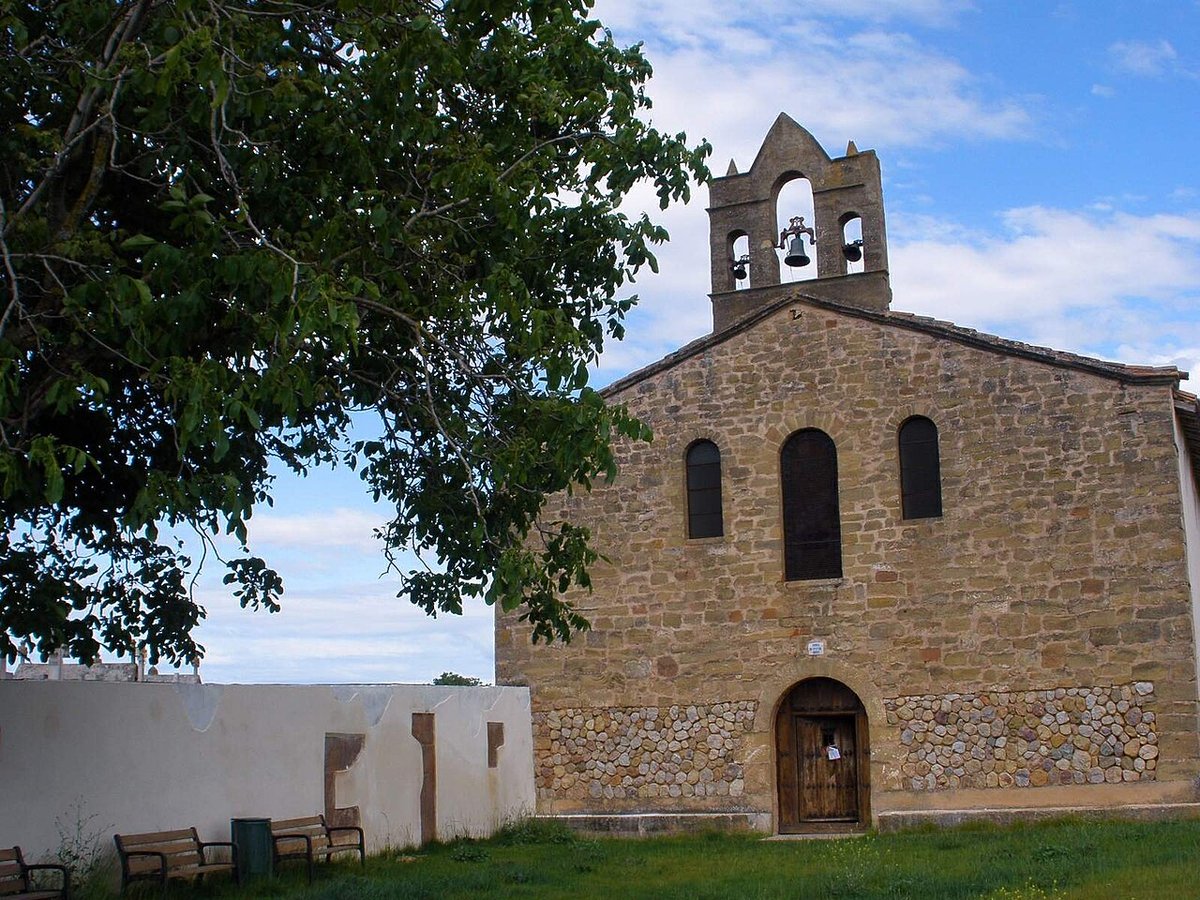
The parish church anchors the highest point. It is locked more often than open; the key hangs in the presbytery house whose doorbell may or may not be answered. If you are lucky, the sacristan will show you inside for a single Euro donation. The interior is plain, almost Presbyterian: whitewashed nave, a single Baroque retablo gilded a little too enthusiastically in 1780, and a roof truss that still smells of resin. Nothing spectacular, yet the proportions feel honest, built for a congregation of fifty rather than five hundred.
Behind the church, a grassy lane squeezes between vegetable plots and leads straight into the walnut belt. There is no interpretation board, no gift shop, just a hand-painted sign that reads "Cuidado con los perros"—though the only dog visible is asleep on a tractor seat. The track is level for two kilometres, ideal for stretching legs after a morning of Rioja tastings at lower altitudes. In May, the walnut leaf is the size of a two-pound coin and lime-green; by late October it turns the colour of burnt toffee and drifts across the path like discarded bus tickets.
November's one-day population explosion
If you must pick a date, make it the second Sunday of November. That is when Pedroso hosts the Fiesta de la Nuez, a walnut fair that triples the village head-count for six hours. Growers set up trestle tables in the plaza offering paper cones of locally roasted nuts, still warm enough to steam in the chill mountain air. A tractor-driven stone mill demonstrates how walnut oil was pressed before electricity; children queue for walnut-cake samples while their parents queue for the one portable cash machine installed specially for the occasion.
Coaches start arriving at ten o'clock. By eleven, the single through-road is grid-locked and the mayor—doubling as traffic cop—directs drivers onto the football field that becomes a car park for the day. The fiesta winds down around four, when the sun slips behind the Sierra de la Demanda and temperature plummets. By dusk, silence returns, along with the sense that the village has exhaled after a brief but satisfactory cough.
Eating, sleeping and other practicalities
There is no hotel. The only accommodation is Casa Rural Monte el Carrascal, three rooms above the walnut-drying sheds. Rates hover around €70 a night including breakfast: toasted brioche, local sheep's cheese and a thimble of walnut honey that tastes like liquid marzipan. Evening meals must be ordered twenty-four hours ahead; the set menu (chorizo stewed in Rioja, pork cheek with walnut crumbs, walnut cake with PX cream) costs €22 and finishes when the cook runs out of ingredients. Otherwise, pack sandwiches or drive back to Nájera where bars serve pinchos until half past nine.
Mobile reception is patchy. Vodafone works on the church steps; EE gives one bar if you stand on the picnic table by the fountain. Download offline maps before leaving the main road, and do not trust Google to route you across the stone bridge—it was swept away in 2017 and has not been rebuilt. Sat-nav will cheerfully direct you into the river.
Snow arrives earlier here than in the valley. Between January and March the final three kilometres can be closed after dusk; chains are compulsory and nobody clears the road before nine in the morning. Spring, by contrast, arrives two weeks late: almond blossom is still out in mid-April, and the night temperature can dip to 4 °C even when Logroño is balmy. Bring layers, even in May.
Why bother?
Pedroso will never compete with Laguardia's medieval walls or Haro's famous wine battle. That is precisely its appeal. It offers a slice of working Rioja that tour buses skip: a place where agriculture, not tourism, pays the bills, and where the loudest noise at midnight is a tawny owl negotiating the walnut branches. Spend an hour, maybe two, then drive on to Santo Domingo de la Calzada or the monasteries of Suso and Yuso. Think of the village as a palate cleanser between fuller-bodied Rioja experiences—an unoaked, low-alcohol interlude that sharpens the appetite for whatever comes next.