Full Article
about San Millán de la Cogolla
World Heritage Site and birthplace of Spanish; home to the Suso and Yuso monasteries.
Ocultar artículo Leer artículo completo
The minibus grinds uphill in low gear, tyres crunching on gravel as it climbs 200 metres above the valley floor. Through the window, medieval stone presses against rock-hewn caves where sixth-century monks once scratched marginalia into Latin manuscripts—graffiti that would become the earliest written words of the Spanish language. This is San Millán de la Cogolla, population 216, where two UNESCO-listed monasteries preserve what most of Spain has bulldozed.
At 728 metres, the village sits high enough for Atlantic weather to muscle through the Sierra de la Demanda. Spring arrives two weeks late; autumn lingers into November with morning mists that burn off by coffee time. Winter brings proper frost—thermometers dip below zero most nights from December through February—and snow can block the LR-205 for half a day. Summer walkers assume Rioja means heat, yet altitude keeps afternoons bearable; you'll still want a jacket after seven o'clock.
Suso: The Hilltop Time-Capsule
Suso, the upper monastery, admits only 20 visitors per slot. Park at Yuso, buy the combined ticket (€10), then wait for the shuttle. Guards check bags—no rucksacks larger than A4—and the driver insists on seatbelts for the three-minute ride. What looks like overkill makes sense once inside: the building is essentially a stone corridor widened in the tenth century. Ceilings are low, floors uneven, and the Mozarabic chapel smells of wax and cold rock. Guides speak serviceable English but favour slow, reverent monologues; if your attention drifts, study the carved Visigothic capitals—each one unique, none matching the textbook examples you'll see in Madrid's archaeology museum.
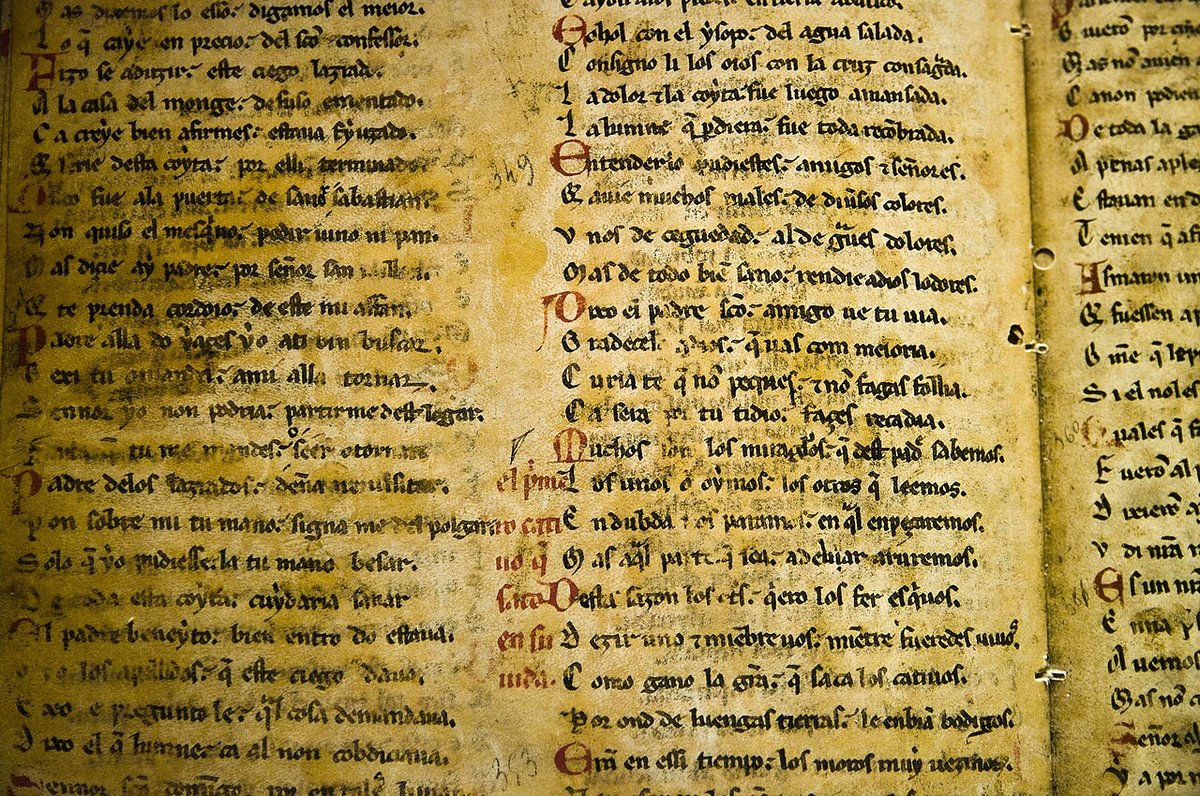
The Glosas Emilianenses hide in a dimly lit cabinet, two sentences scrawled beside a Latin prayer around 964 AD. Translated, they're glorified margin notes: "Help me, Lord, and protect me from evil men." Hardly Cervantes, yet philologists treat the scratched parchment like the Rosetta Stone. Photography is forbidden; security guards have zero sense of humour.
Yuso: Renaissance Grandeur Below
Back downhill, Yuso spreads across a terrace big enough for a royal palace—which, in effect, it was. Ferdinand and Isabella funded the sixteenth-century rebuild, importing Flemish choir stalls and Italianate frescoes. The library holds 15,000 volumes, including a 790-page missal that takes two people to lift. Tours run on the hour; English versions depart at 11:00 and 15:00 only. Arrive late and you'll join a Spanish group, given a laminated A4 sheet of translated captions that miss every joke.
The monastery hotel occupies part of the west wing. Rooms have stone floors, underfloor heating, and Wi-Fi that flickers whenever the router overheats. Dinner is a fixed €28 menu: roast lamb chops (chuletillas) the size of a child's hand, served with piquillo peppers and a glass of house Rioja crianza. Vegetarians get menestra de verduras—essentially tinned veg in tomato sauce—so manage expectations. Breakfast is 8–10 a.m.; ask the porter for butter if olive oil on toast feels too Mediterranean.
Walking the Valley
The two-kilometre footpath linking Suso and Yuso takes 25 minutes if you're fit, 40 if you stop to photograph wild rosemary. Gradient averages 8%, manageable in trainers but grim in flip-flops. The GR-93 long-distance trail also passes through, heading north-east towards the ruined Ermita de San Torcuato—another 90 minutes across scrubland where goats outnumber people. Carry water; the only fountain is outside Yuso's gift shop and it's often padlocked in drought.
Cyclists use the valley road as a training loop; Sunday mornings echo with carbon-fibre whooshes. Drivers must weave past them on bends where stone walls leave centimetres to spare. If you hire a car, remember the clutch—gradients exceed 12% on the final approach.
Eating and Sleeping (or Leaving)
Apart from the monastery hostal, San Millán offers three casa rurales, total capacity 38 beds. Book early during Easter and the September harvest; tour buses from Bilbao block-book months ahead. There is no albergue, so don't arrive with a rucksack expecting dorm beds. The single ATM inside the bakery broke in 2022 and hasn't been repaired; bring cash for coffee, and note that most guesthouses prefer bank transfer on departure.
Lunch options are Bar Suso (opposite the ticket office) and Restaurante el Monasterio beside the river. Both serve patatas a la riojana—paprika-heavy potato and chorizo stew mild enough for British palates. A half-ration (media ración) feeds two modest appetites for €9. House wine comes in 250 ml carafes; start there before ordering a €28 bottle of reserva you'll struggle to finish.
Getting There (and Away)
Public transport is patchy. Jiménez buses leave Logroño at 13:00 Monday–Friday, reaching San Millán at 14:15. The return departs 19:45, giving you four hours—tight for both monasteries if tours are full. Weekends have no service. A taxi from Nájera costs €22; phone numbers are taped inside the bus shelter, but signal fades in the valley, so book before you set off.
Drivers should approach from the A-12, exiting at Nájera and following the LR-205 for 18 km of curves. Petrol stations are scarce; fill up in Nájera or risk the single pump in Azofra that closes for siesta. In winter carry snow chains—guardia civil turn cars back at the first flake.
The Honest Verdict
San Millán is not a chocolate-box village. Most houses are 1970s brick, satellite dishes angled skyward. The cultural weight sits almost entirely within monastery walls; once the tours end, silence descends by 19:00. Come for the manuscripts, the mountain air, and a brisk valley walk. Stay longer than one night only if you're tracing the Camino de la Lengua or need somewhere quiet to finish a novel. Otherwise, check out by ten, drive 25 minutes to Santo Domingo de la Calzada, and rejoin a world where tapas bars stay open past nine.