Full Article
about Santa Coloma
Overlook village above the Yalde valley; known for past UFO sightings.
Hide article Read full article
A quiet start in the Nájera area
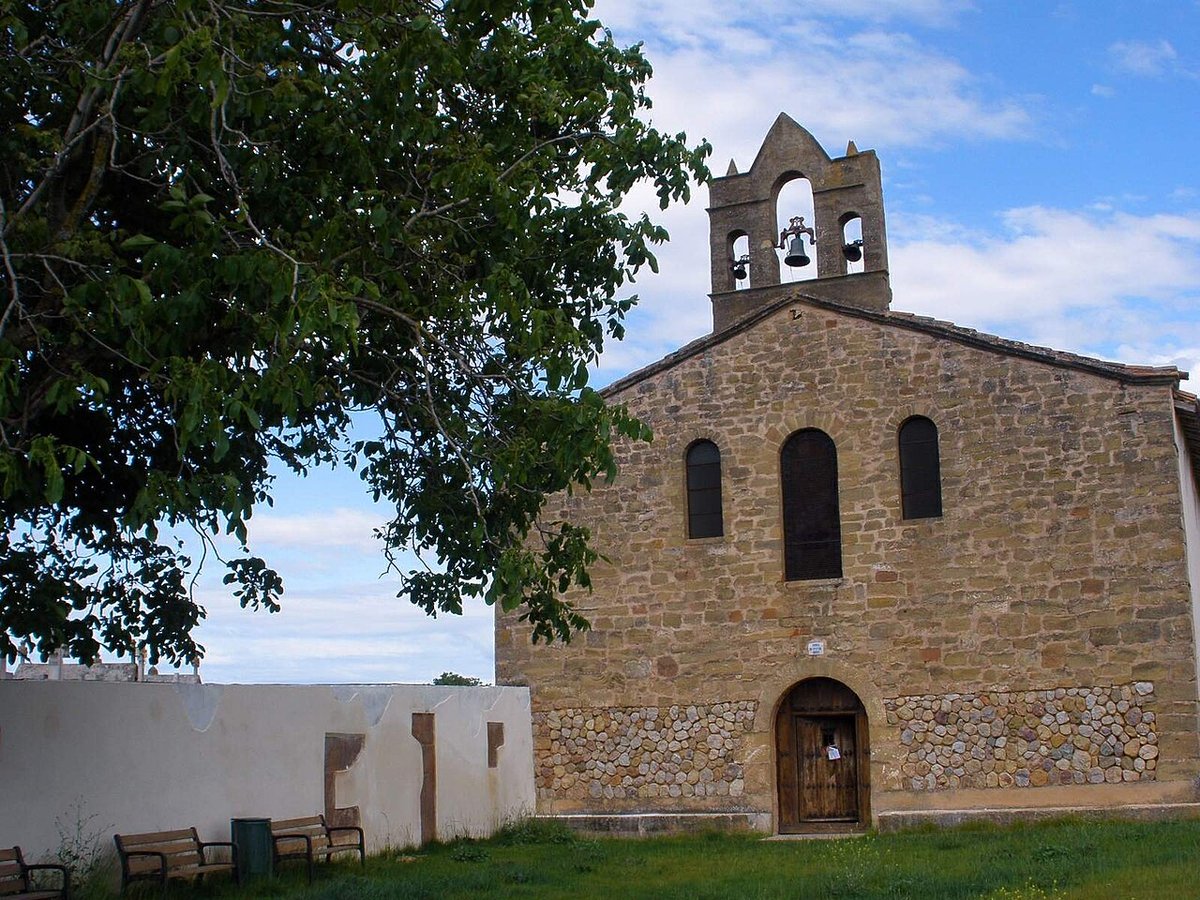
Early in the morning, as sunlight begins to slip between the houses along Calle Mayor, the church of Santa Coloma casts a long shadow across the uneven ground. Many shutters are still closed and there is barely any sound, perhaps a car starting, a door opening carefully. In Santa Coloma, in the Nájera area, the day tends to begin slowly. The village is small, just over a hundred residents, and that scale shows at once in the layout of the houses, set close together, with stone walls and sections of adobe shaped by many winters.
At around 760 metres above sea level, the climate plays a clear role in daily life. Winters are cold, summers bring strong sun on to the façades. Wooden eaves projecting shade above doorways are common, along with thick iron bars on windows. These details appear as you walk: worn lintels, large doors with old fittings, small vegetable plots visible behind some houses.
The parish church dedicated to Santa Coloma acts as a visual reference point. Built in pale stone, its façade is restrained and sits naturally among the surrounding buildings. It is not a monumental structure, rather part of everyday life, a place around which the village has been organised for generations.
Short streets, long pauses
It does not take long to walk through Santa Coloma. In fifteen or twenty minutes the whole centre can be crossed at an unhurried pace, though it rewards moving slowly. Some streets are paved with slabs that creak slightly underfoot, and at corners there are ivy-covered walls or faint mason’s marks that have nearly disappeared.
By mid-morning, more activity can be heard: a conversation from a window, the sound of tools in a yard, a dog barking somewhere in the distance. It is not a place with constant movement. Life happens in intervals, with long quiet stretches in between.
It makes sense to leave the car at one of the access points and continue on foot. The streets are narrow, and the village is easier to understand at walking pace.
Open fields beyond the houses
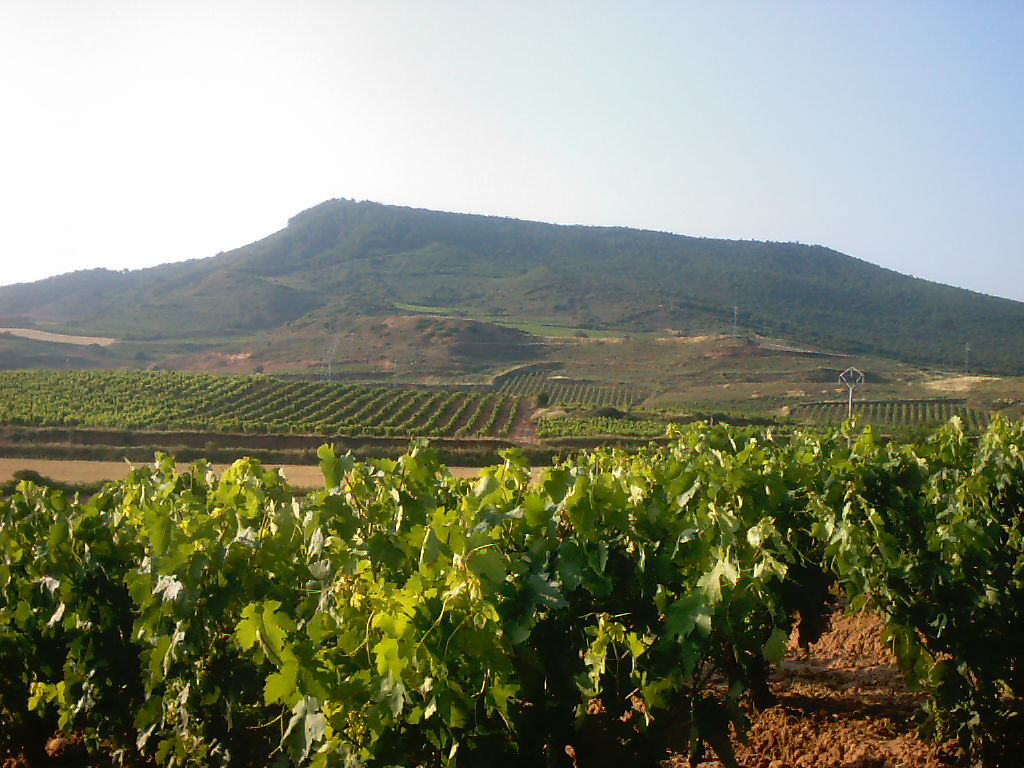
As soon as you step beyond the built-up area, the land opens into cereal fields. These are broad, mostly flat plots where the landscape changes noticeably with the seasons. In spring, green covers almost everything. At the start of summer, wheat and barley begin to turn golden. By autumn, stubble remains and colours soften.
The view extends a long way here. There are no nearby mountains closing off the horizon, only occasional lines of trees, often poplars, marking paths or small watercourses.
Unpaved agricultural tracks run through the surrounding land. They are not marked walking routes in a formal sense, but they are easy to follow if you keep your bearings towards the village. A gentle loop along these paths can take about an hour.
After rain, the ground can become difficult, with mud making walking slower and more awkward. Sturdy footwear helps.
Evening light across the fields
Later in the day, the landscape shifts again. Light falls low and sideways across the crops, and the heads of grain reflect tones that move between yellow and copper. From certain points just outside the village, the sun can be seen dropping behind the soft hills of the Nájera area.
Once night settles, the sky is usually very clear. There is little artificial lighting around, so on cloudless nights many more stars are visible than in nearby towns or cities.
Festivities and everyday rhythms
The patron saint festivities dedicated to Santa Coloma are usually held in August, when people who have family homes here return to the village. During those days there is more movement in the streets, along with events linked to religious tradition and gatherings among neighbours.
In winter, some families still keep the custom of the domestic matanza, the traditional preparation of pork products carried out privately at home, part of the rural culture of the area.
Outside these periods, the rhythm of the village returns to its usual calm.
Timing a visit
Spring and autumn are often pleasant times to come. Temperatures are milder, and the countryside shifts in colour. In summer, it is better to be out early in the morning or later in the evening, as midday sun can be intense in this part of La Rioja.
Winter can be cold, with frequent frosts on some days, and the village becomes especially quiet.
Santa Coloma does not have many services open on a continuous basis, so visits are often organised from nearby places such as Nájera. From Logroño, the route first follows the N-120 and then continues along local roads that cross the agricultural landscape.