Full Article
about Torrecilla sobre Alesanco
Small farming village on a hill; clear views over the valley.
Ocultar artículo Leer artículo completo
The thermometer drops three degrees between the valley floor and Torrecilla sobre Alesanco. At 744 metres, the village sits just high enough to catch the breeze that slices across the cereal plateau, carrying the scent of dry barley and distant pine. Forty-eight residents, one church, no traffic lights. Mobile signal flickers in and out like a hesitant conversation.
A horizon drawn with a ruler
Approach from the LR-123 and the landscape flattens into a chessboard: ochre squares of stubble, green strips of irrigation, the occasional wind-bent oak. Then the village pops up—a short, square tower and a cluster of terracotta roofs—exactly the height needed to break the monotony without challenging the sky. Park on the rough apron before the first houses; the single street is too narrow for confident three-point turns.
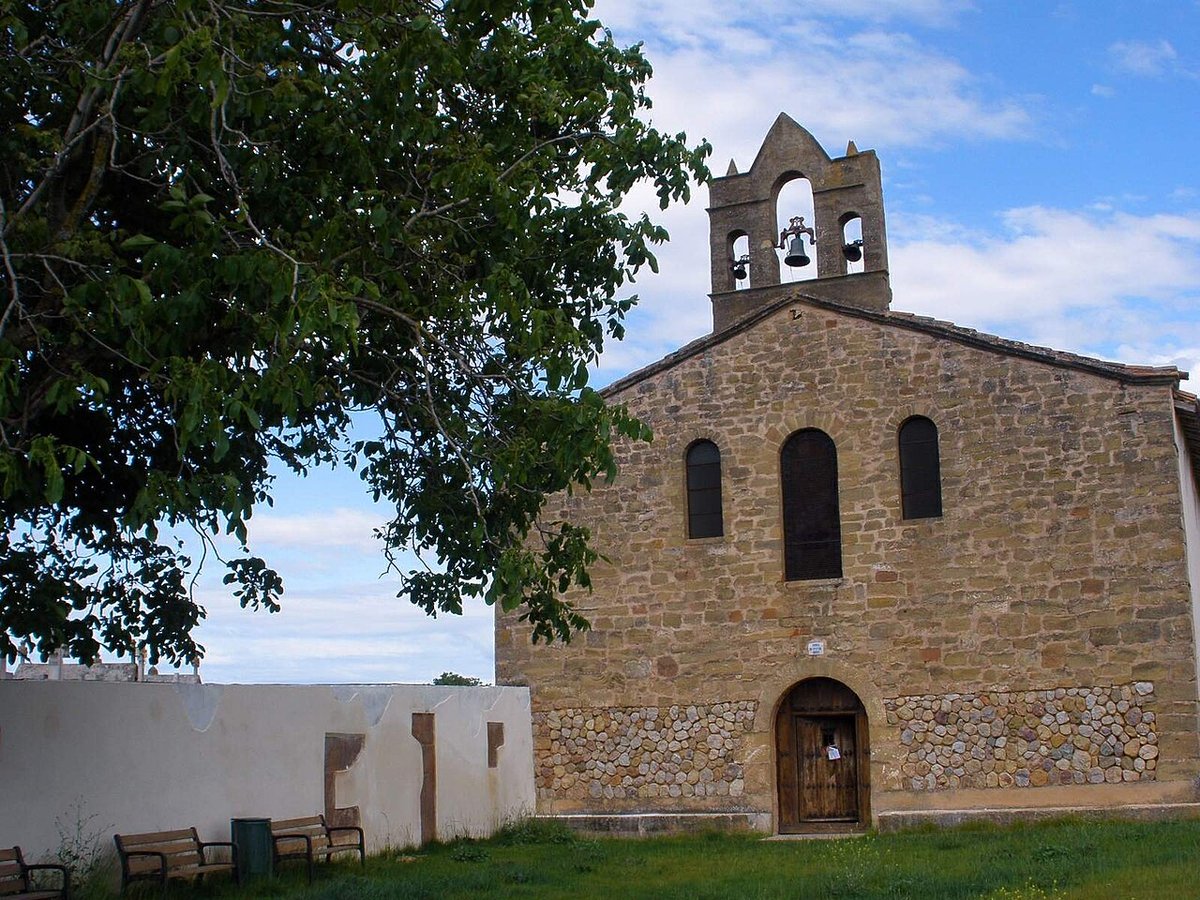
Stone and brick houses line the only paved lane. Their wooden balconies, painted the traditional burgundy of La Rioja, project just far enough to shake hands above your head. Peer through the gaps and you’ll see back gardens that merge seamlessly into wheat fields, no fence required. The parish church of San Andrés, rebuilt piecemeal since the sixteenth century, keeps its door bolted most weekdays; the key hangs in the third house on the left, but few visitors stay long enough to ask.
Walking without waymarks
Torrecilla doesn’t do signed trails. Instead, farm tracks radiate towards the hamlets of Alesanco and Sojuela, their surfaces graded by tractors rather than councils. A thirty-minute amble south drops you to the river Alesanco, a modest watercourse shaded by poplars and loud with chiffchaffs in spring. The temperature shift is immediate—cooler, greener, the air suddenly tasting of mint. Retrace your steps uphill and you’ll feel the altitude in your calves; that three-degree difference now feels like ten.
Serious walkers can stitch together a 12-km loop that swings past the ruined monastery of San Julián. There is no café, no fountain, no phone coverage for long stretches. Carry water, a sunhat and the conviction that the horizon will eventually deliver a village with a working tap.
Calendar of the few
The annual programme fits on a single poster taped to the church door. Late November belongs to San Andrés: mass at eleven, procession at twelve, cocido stew served in the communal hall by one. Spring brings a low-key romería: locals drive to a meadow three kilometres away, unpack folding chairs, grill sardines over vine cuttings, then return before dusk. Outsiders are welcome but not announced; turn up with your own plate and someone will fill it.
Winter access can be theatrical. The plateau catches the tail-end of Atlantic storms; snow drifts across the fields and cuts the electricity faster than you can say “log burner”. When that happens, the village functions on butane heaters and paraffin lamps until a council tractor clears the road. Summer, by contrast, is relentless. Shade is confined to the riverbank; the stone houses exhale heat like bread ovens after 3 pm. May and late September offer the kindest light and the least risk of either froststroke or sunburn.
What you won’t find (and where to find it)
There is no shop, no cash machine, no petrol station. The nearest loaf of bread waits nine kilometres away in Alesanco; the nearest hotel with Wi-Fi sits in Nájera, 17 km east along the A-12. Plan accordingly. The village bar closed in 2018 when the owners retired; their front window still advertises Cruzcampo beer, the metal letters fading to rust. If you need caffeine, knock on door number 15—María keeps a thermos for neighbours and will sell you a cup for fifty cents, provided you pronounce “gracias” convincingly.
Meals follow the same rule. Torrecilla offers silence and stars; lunch happens elsewhere. Drive twenty minutes to Nájera and you can choose between modern Riojan tasting menus (€45 with wine) or a no-frills menú del día at Bar Sotés (€12, three courses, bread included). Vegetarians struggle; even the salad arrives topped with tinned tuna. Ask for “sin atún” and the waiter will shrug, remove it with a fork, then present the same plate.
Getting here, getting out
From Bilbao airport, the fastest route is the A-68 south to Logroño, then the A-12 towards Burgos. Exit at Nájera and follow the LR-123 west for 14 km. The whole journey takes ninety minutes on a quiet day, two hours if the lorries are queueing at the Logroño ring road. Public transport is theoretical: a school bus passes at 7 am on term-time weekdays, returning at 2 pm. Miss it and you’ll need a taxi (€30 from Nájera) or a convincing thumb.
Car hire remains essential. The plateau’s beauty lies precisely in its emptiness; that emptiness refuses to accommodate timetables. Fill the tank in Logroño—rural pumps close at 6 pm and all day Sunday.
The honesty clause
Torrecilla sobre Alesanco will not change your life. You will not discover a secret Michelin-starred grandmother, nor a cryptic Roman mosaic behind the altar. You will walk for an hour, take the same photograph of grain silos everyone takes, and wonder what comes next. The answer is usually: drive on. But if you linger until the sun flattens against the western fields, the village silhouette starts to look like a paper cut-out resting on gold leaf. The only sound is the hum of power lines and, somewhere beyond sight, a dog reminding the plateau it still belongs to people. Ten minutes of that quiet is worth the detour—provided you remembered to buy petrol.