Full Article
about Villarejo
Small farming and livestock village; known for its quiet and rural setting.
Hide article Read full article
A slow start to the day
Early in the morning, when there is still a hint of coolness even in summer, the air in Villarejo carries the smell of dry earth and old wood. A door opens somewhere, slowly. A chain clinks against metal in a yard. Not much else happens. Tourism in Villarejo begins like this, without signs or marked routes, and with the sense of having arrived somewhere that moves at a rhythm older than the visitor.
Just outside Nájera, among cereal fields, patches of vineyards and low hills dotted with holm oaks, this small settlement comes into view. Around thirty people live here. The houses gather without much order along a main street and a few adjoining yards. Pale stone, weathered adobe and low roofs that collect a fine layer of dust in summer define the look of the place.
A village you can cross in minutes
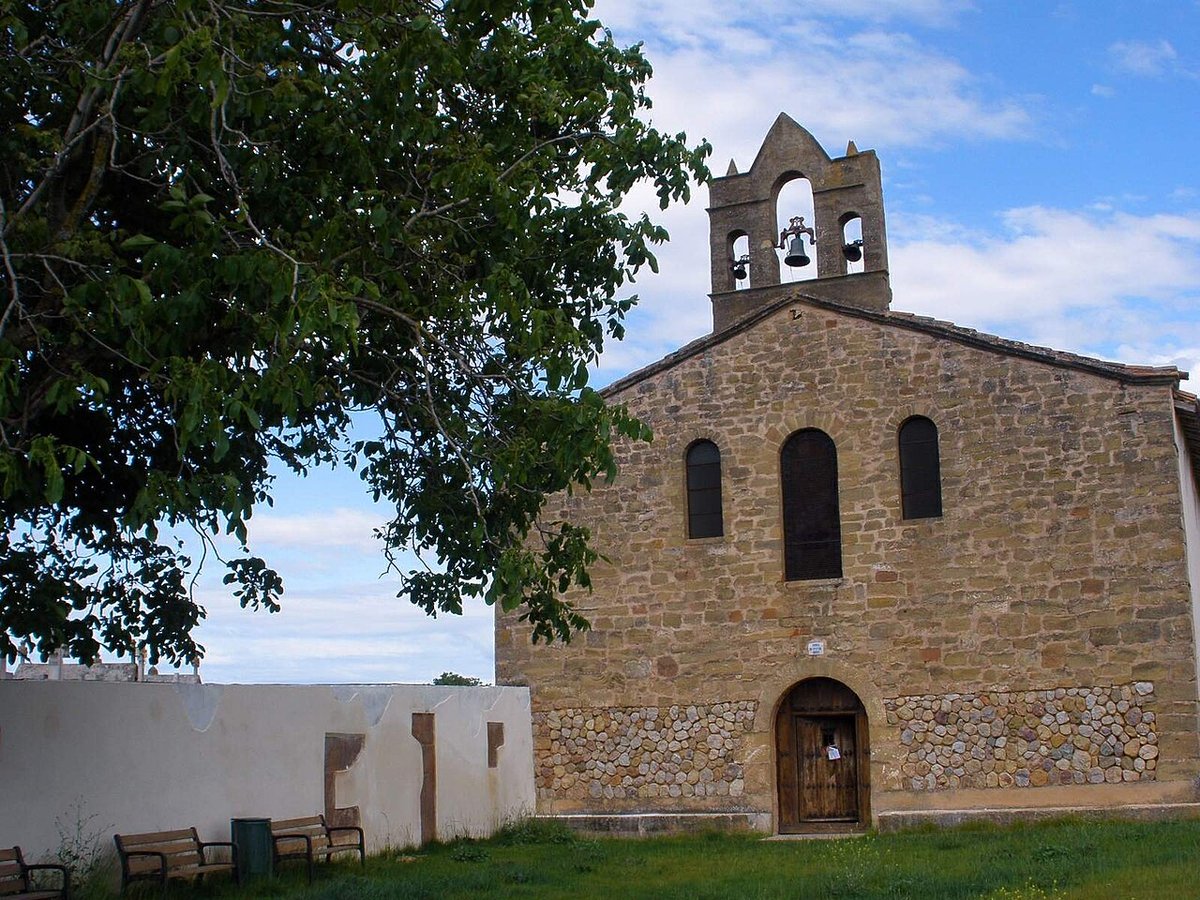
Villarejo is small enough to walk across in very little time. Calle Mayor leads to the parish church of Santa María, a limestone building usually dated to the 16th century. Its entrance keeps simple Gothic forms, and the square bell tower, not especially tall, rises just above the rooftops.
The houses are built with thick walls and small windows. Many still have wooden shutters, the kind that rattle when the wind blows in from the west. Between one house and the next, wide gates open into old yards or small agricultural stores.
There is no traffic and barely any movement. Most of the sound comes from a tractor passing along a nearby track, or birds shifting between wires and scattered trees. It is the kind of place where quiet is not an exception but the default.
Tracks through vineyards and open fields
Leaving the village, several agricultural tracks branch out between plots of vines and cereal fields. These are simple dirt paths, compacted by use, mainly travelled by farm vehicles.
Along the edges stand isolated holm oaks, the occasional Pyrenean oak, and stretches of low scrub. In spring, the green does not last long. By July, the landscape turns towards yellows and ochres, with dust lifting under wheels and footsteps.
Some of these tracks descend into small ravines, usually dry in summer. After heavy rain, a little water runs through them for a few days. From the nearby hills, it is possible to see other villages in the area and the patchwork of fields surrounding Nájera.
Life shaped by the land
Here, the calendar is set by agriculture. At the end of summer, activity increases with the grape harvest in the surrounding vineyards. During those weeks, more cars and trailers move along the tracks, coming and going throughout the day.
At other times of year, it is more common to come across flocks of sheep or machinery working the cereal fields. Outside these periods, the village can remain silent for hours at a time.
This rhythm is visible in small details. The condition of doors and walls reflects years of agricultural use. The yards attached to houses still suggest their original purpose. Everything points back to the land as the main organiser of daily life.
A low hill with a wider view
Crossing the small square and following a path that rises gently towards a nearby hill, it takes only a few minutes to gain some height. The climb is short, but it changes the perspective.
From the top, the whole village comes into view: four streets, several yards, and red roofs set against the surrounding fields. In spring, the area appears green; in summer, gold tones and pale خاک dominate. The shift is clear and immediate.
There are also smaller details that stand out from above. Old stone enclosures, some partly collapsed, sit at the edges of fields. Boundary markers still divide plots, tracing lines that have been in place for years.
Before arriving
It is worth knowing that Villarejo has no shops or bars. Anyone planning to walk around the area for a while should bring water and something to eat.
In summer, the sun becomes intense from midday onwards. Early morning and late afternoon are the most comfortable times to be outside. The light softens, and the wind moves through the leaves of the holm oaks with a dry, steady sound.
The simplest way to reach the village is from Nájera, following the marked tracks. Cars are usually left at the entrance, and from there everything can be explored on foot without difficulty or the need to enter the narrowest streets.
A brief but revealing stop
Villarejo does not offer large monuments or organised attractions for visitors. The entire village can be walked in under an hour.
Even so, pausing for a moment reveals details that say a great deal about the place. Layers of repair on adobe walls, old yards attached directly to houses, and the marks left by years of agricultural work on doors and stone surfaces all contribute to a quiet narrative.
This is not somewhere for quickly collecting photographs. It is a place to look slowly, to notice how stone, earth and open countryside come together in a village that continues to function much as it always has.