Full Article
about Villaverde de Rioja
Mountain village near San Millán; quiet setting with good views.
Hide article Read full article
Tourism in Villaverde de Rioja begins almost without announcing itself. On the edge of the village, along Calle Mayor, morning light cuts straight between stone walls, pale and cool. There is barely any sound yet. A door opens somewhere, a bucket hits the ground, an engine turns over. This is how the place introduces itself: a handful of narrow streets, a church, and façades where wood and stone have aged side by side for decades. Nothing feels arranged or staged. The air carries a faint smell of old firewood and damp earth, familiar across many small villages in the Rioja highlands.
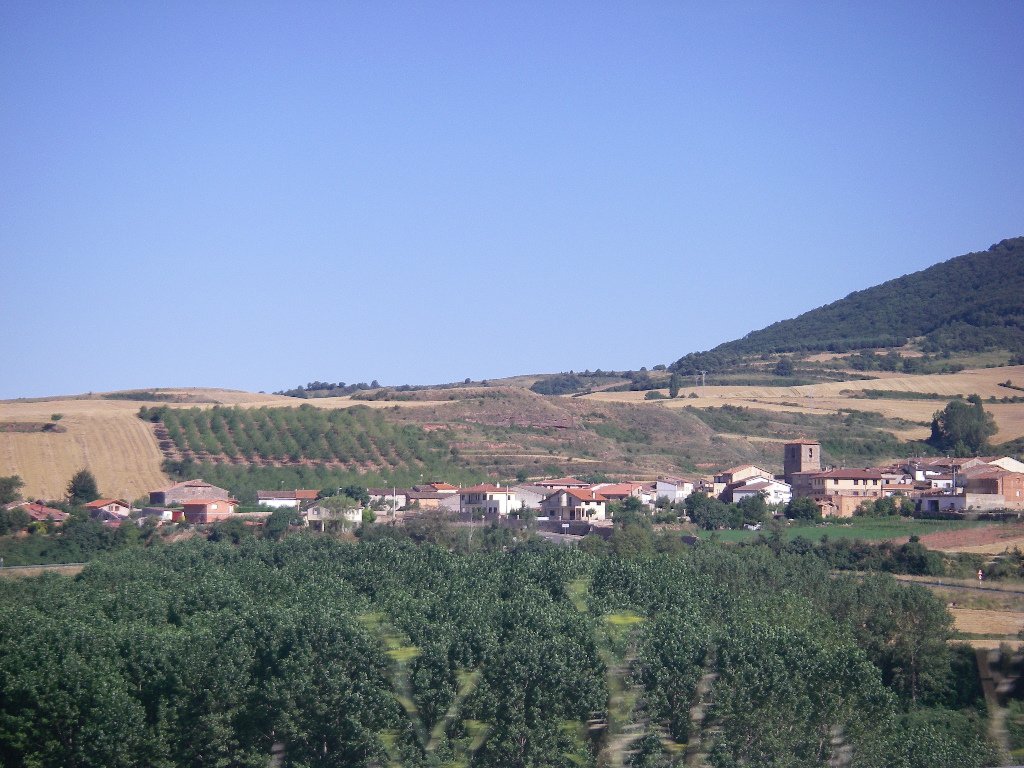
Villaverde de Rioja has around 65 residents and sits at roughly 800 metres above sea level, not far from Nájera. It lies slightly away from the busier routes, surrounded by scattered vineyards, open meadows and patches of oak woodland. The landscape shifts noticeably through the year. In autumn, the edges of the Najerilla valley turn red and ochre. In summer, when the midday sun becomes intense, the shade beneath the oaks is almost essential for walking.
The church and the village centre
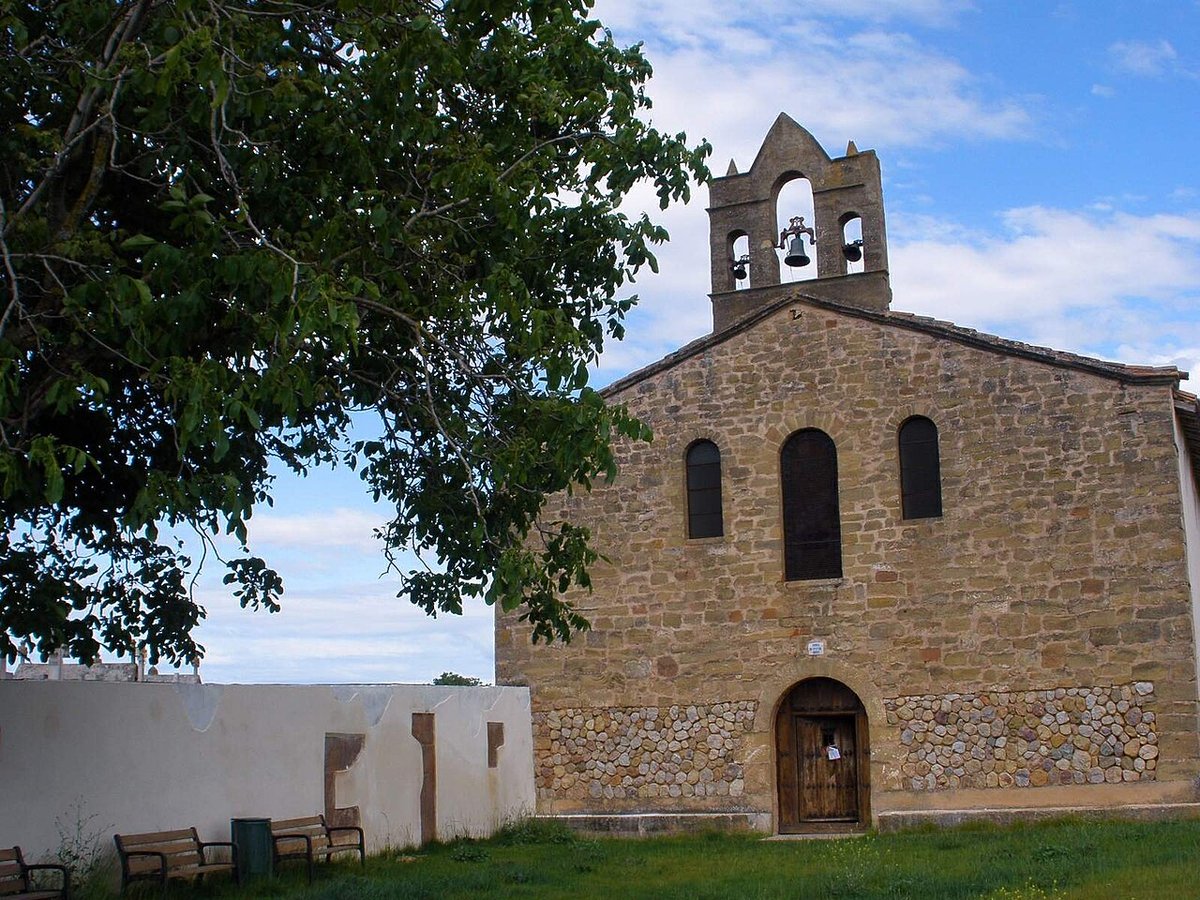
At the heart of the village stands the parish church of the Asunción. Its origins are usually placed in the Middle Ages, although the building has been altered over time. The stone bell tower rises above the rooftops and acts as a clear point of reference when approaching by road.
The entrance is simple, with plain archivolts, slightly worn stone and small pointed windows. Inside, whitewashed walls reflect the light that filters through narrow openings. Dark wooden benches show the soft sheen that comes from years of use. In a place of this size, the church remains one of the few shared spaces, still opening for certain celebrations or gatherings.
Stone houses, timber beams and enclosed yards
Walking through Villaverde reveals houses built from stone, adobe and darkened wooden beams. Some still have first-floor galleries, sheltered from the wind. Large gateways hint at an earlier time when agricultural work was more intense, wide enough for carts or machinery to pass through.
In several enclosed yards, old ovens or small stone fountains can still be seen. They are not always in use, yet they remain part of the everyday setting. Roofs are covered with curved tiles and tend to be steeply pitched, a reminder that winters here can be long and cold.
Paths through oak woods and meadows
Beyond the village centre, dirt tracks lead out into meadows and oak groves. Not all of these paths are marked, so it helps to have a map or a route app if planning to walk for more than half an hour.
On quiet days, the sounds are subtle but constant: woodpeckers tapping against trunks, dry branches cracking underfoot. Signs of wildlife appear now and then, such as wild boar rooting through the soil. Roe deer are sometimes visible at dawn or dusk, especially if movement is slow and quiet.
Close to the Sierra de la Demanda
A short distance away, the terrain begins to rise towards the Sierra de la Demanda, a mountain range that shapes this part of La Rioja. From certain higher points near the village, usually clearings or the edges of tracks, there are views over the Najerilla valley stretching westwards.
The contrast is easy to read. In one direction, slopes covered in woodland. In the other, hills dotted with vineyards and open fields. During the milder months, it is common to come across walkers linking rural tracks between nearby villages. Some of these routes head towards the monasteries of San Millán, a well-known cultural area in the region.
Things worth knowing before arriving
Villaverde de Rioja is small and does not function as a destination designed for a steady flow of visitors. Services are limited, and shops are not always open during the week.
If coming from Nájera or other nearby towns, it is sensible to bring water or something to eat, particularly when planning to walk in the surrounding countryside. After several days of rain, the paths can become muddy. In winter, early frosts may leave patches of ice on secondary roads in the morning.
When it feels at its best
Spring and autumn are often the most rewarding times to visit. Temperatures are suitable for walking, and the landscape changes noticeably. Spring brings intense green tones, while autumn introduces a mix of ochres and reds as the oak woodland begins to lose its leaves.
In summer, the heat builds around midday, so earlier or later hours are more comfortable for moving around. In winter, when fog or snow appears, something that happens in some years, even a walk through the village itself offers enough to take in: white rooftops, smoke rising from chimneys, and a stillness that seems to linger between the houses.
Villaverde de Rioja keeps a sense of distance that still exists in parts of inland La Rioja. Time passes slowly here. A brief exchange in the street, the sound of bells marking the hours, and the surrounding landscape always present, as if little has changed over generations.