Full Article
about Bañares
Historic town on the Oja plain; noted for its Gothic church and Romanesque chapel.
Hide article Read full article
A village shaped by farmland
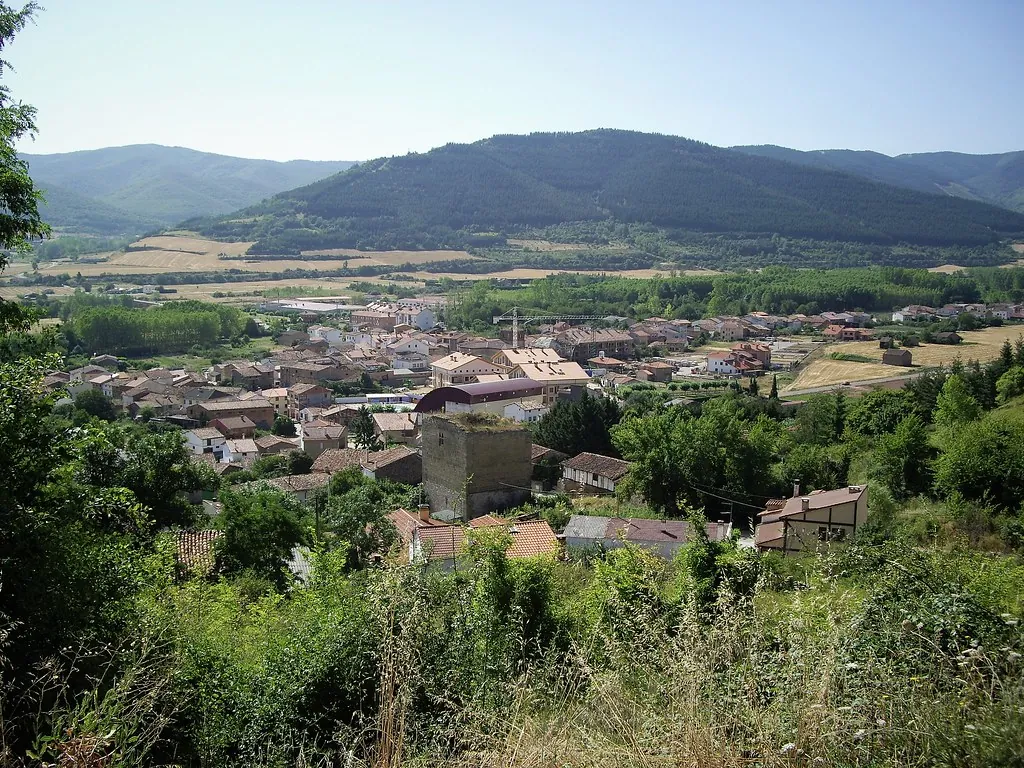
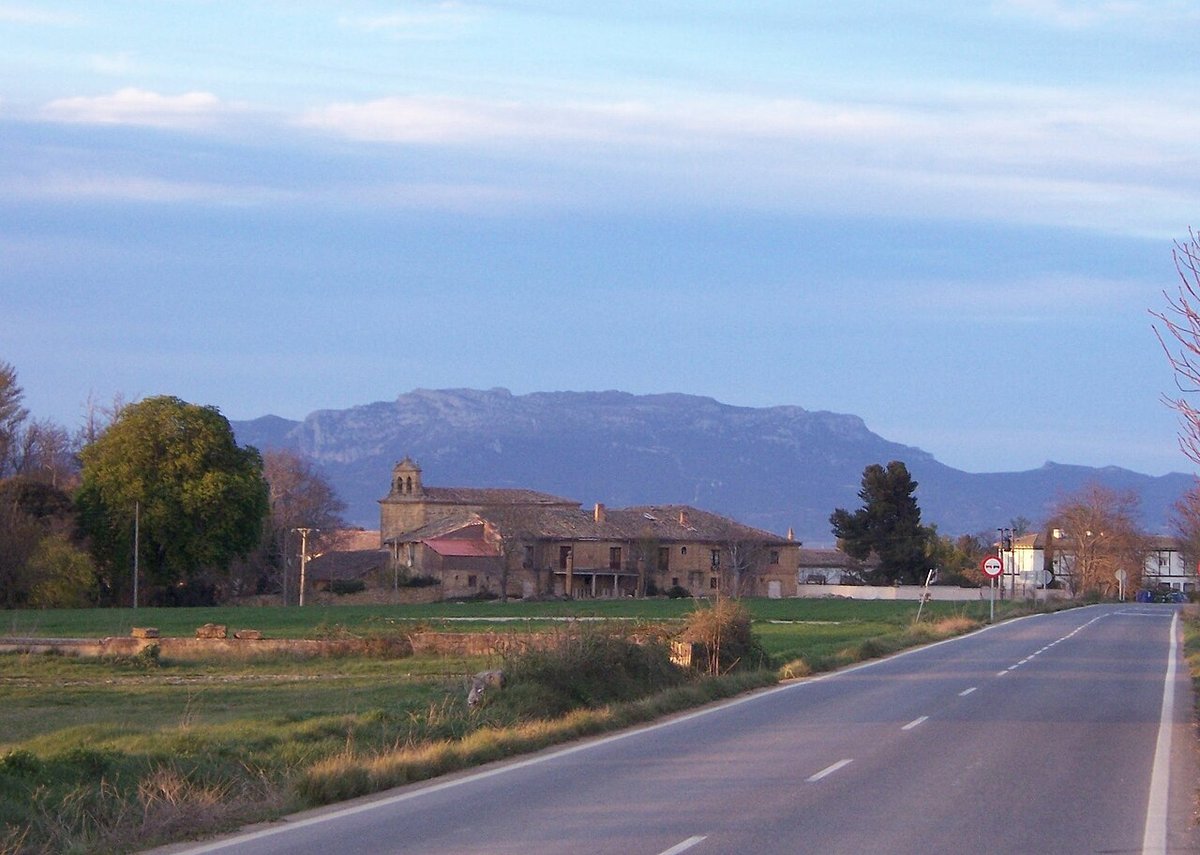
Tourism in Bañares is closely tied to its agricultural setting. The village lies within the comarca of Santo Domingo de la Calzada, in a stretch of La Rioja Alta where cereal fields dominate the horizon. With just over a hundred residents, Bañares keeps the scale typical of settlements built around farming: clustered houses, short streets and a central square that acts as a point of reference.
Wheat and barley crops continue to define the rhythm of the surroundings. Around the built-up area, open plots spread out alongside service tracks that link one field to another. This direct relationship with the land explains much of the village’s layout and character.
The church of San Juan Bautista
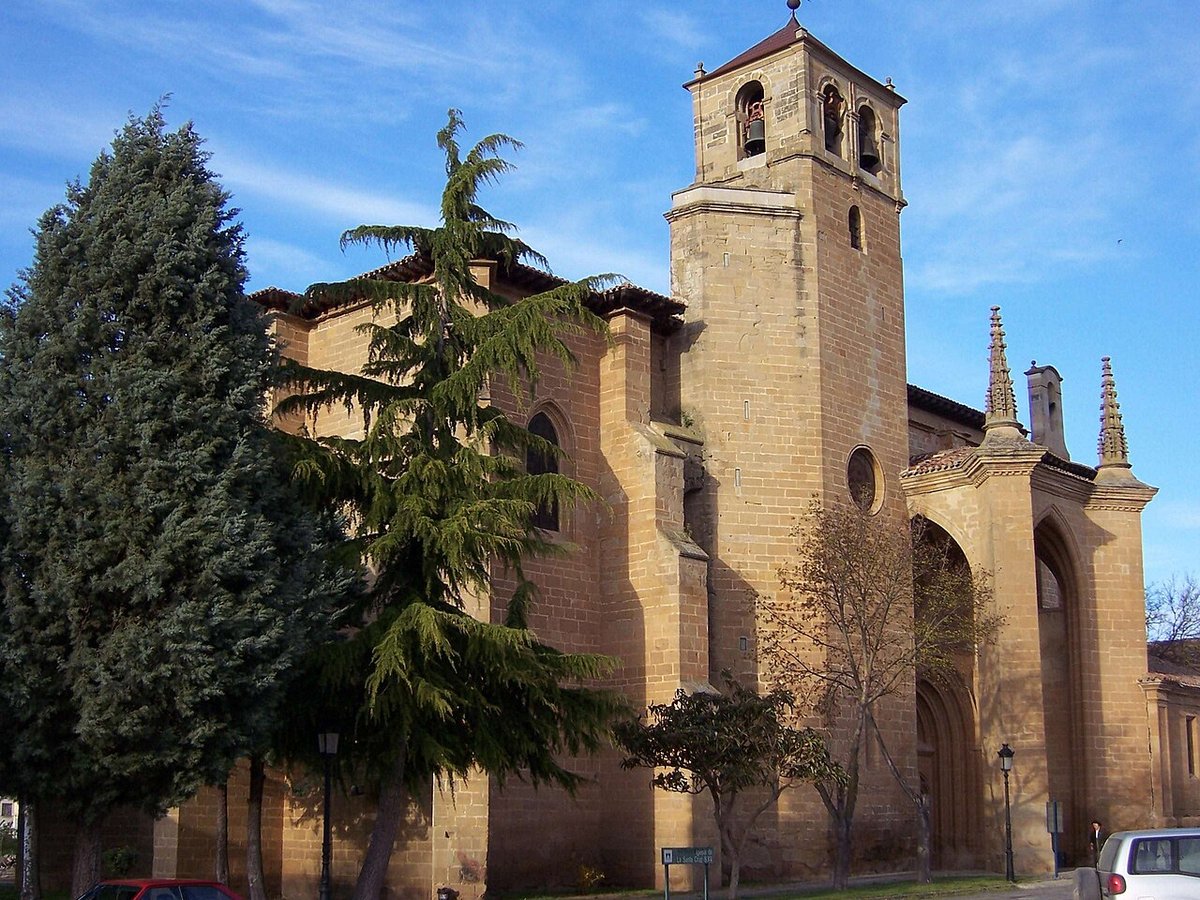
The parish church of San Juan Bautista is the most prominent building in Bañares. Its origins date back to the 16th century, although its current appearance reflects later alterations, a common feature in rural churches across this part of La Rioja.
The entrance, built in ashlar stone, is formed by a semicircular arch. Above it sits a small rose window that brings light into the interior. It is not a monumental structure, yet the different phases of construction can be clearly read in the walls and in the upper sections of the tower.
From the area around the church, the scale of the village becomes especially clear. Nearby houses combine stone, adobe and wood, materials typical of domestic architecture in La Rioja Alta.
Everyday architecture and village life
The centre of Bañares is compact and easy to walk through. Most homes have one or two storeys, with wide entrances designed for agricultural use. Some still retain wooden eaves and simple iron grilles.
The street layout does not follow a strict plan. It developed gradually, through successive extensions as the village expanded around its original core. In certain sections, adobe walls and older outbuildings can still be seen, linked to grain storage or farming equipment.
There are no large civic buildings or monumental ensembles. Interest lies instead in these small details, which reflect a place shaped by generations of agricultural life.
Paths through the fields
Just a short distance beyond the last houses, agricultural tracks begin. These routes are used by tractors and machinery, but they also serve as walking paths for anyone wanting to understand how the landscape is organised.
The terrain is open, with views stretching across cereal fields. At different times of the year, the contrast in colours becomes very noticeable: the green of young shoots, the golden tones of harvest, and the more muted shades after the crops have been gathered.
These walks reveal something simple but telling. Bañares cannot be separated from its land. The village and its surrounding plots form a single unit.
A brief stop in the comarca
Bañares does not concentrate major monuments or organised tourist activity. It works better as a short stop within the comarca of Santo Domingo de la Calzada, where many villages share a similar agricultural history.
A visit is usually brief. Walking through the centre, heading to the church and continuing a little way along the paths that surround the village is enough to form a clear impression of the place.
What to see in Bañares
A stroll along the main streets allows a closer look at traditional houses and how they have been adapted for farming life. If the church is open, the interior reflects the simplicity typical of many rural parishes in La Rioja.
From the square or from one of the access points to the village, paths lead directly out to nearby fields. These are short, unmarked routes, yet they help make sense of the setting.
Getting there and practical notes
Bañares is located near Santo Domingo de la Calzada, along the axis followed by the N-120 road. From there, local roads cross cultivated land to reach the village.
The village itself is small and easily explored on foot. Cars are usually left at the entrances or along wider streets. For those walking along the agricultural tracks, sturdy footwear is advisable, as mud can build up quickly in wet periods.
To extend the visit, Santo Domingo de la Calzada is around ten kilometres away. Its historical heritage is much more extensive and offers a way to round off time spent in this part of La Rioja.