Full Article
about Tres Cantos
Modern, high-tech planned city; wide avenues and well-kept parks
Hide article Read full article
A city that started with a blueprint
Tres Cantos feels a bit like that brand‑new flatmate who arrives with furniture still smelling of fresh varnish. Everything works. Everything looks recently assembled. And yet you half wonder whether real life has properly settled in.
Located north of Madrid, Tres Cantos is a relatively recent city when compared with almost any other municipality in the region. There are no layers of centuries pressed into its façades, no medieval squares shaped by time. Here, the plan came first. Streets, parks and roundabouts were drawn up before they existed. And that is not necessarily a drawback.
The city took shape in the 1970s, part of the large urban development projects of that era. The idea was straightforward: build from zero and do it in an orderly way. Put green spaces where they are needed. Design roundabouts so traffic keeps moving. Avoid streets that end in confusing dead ends.
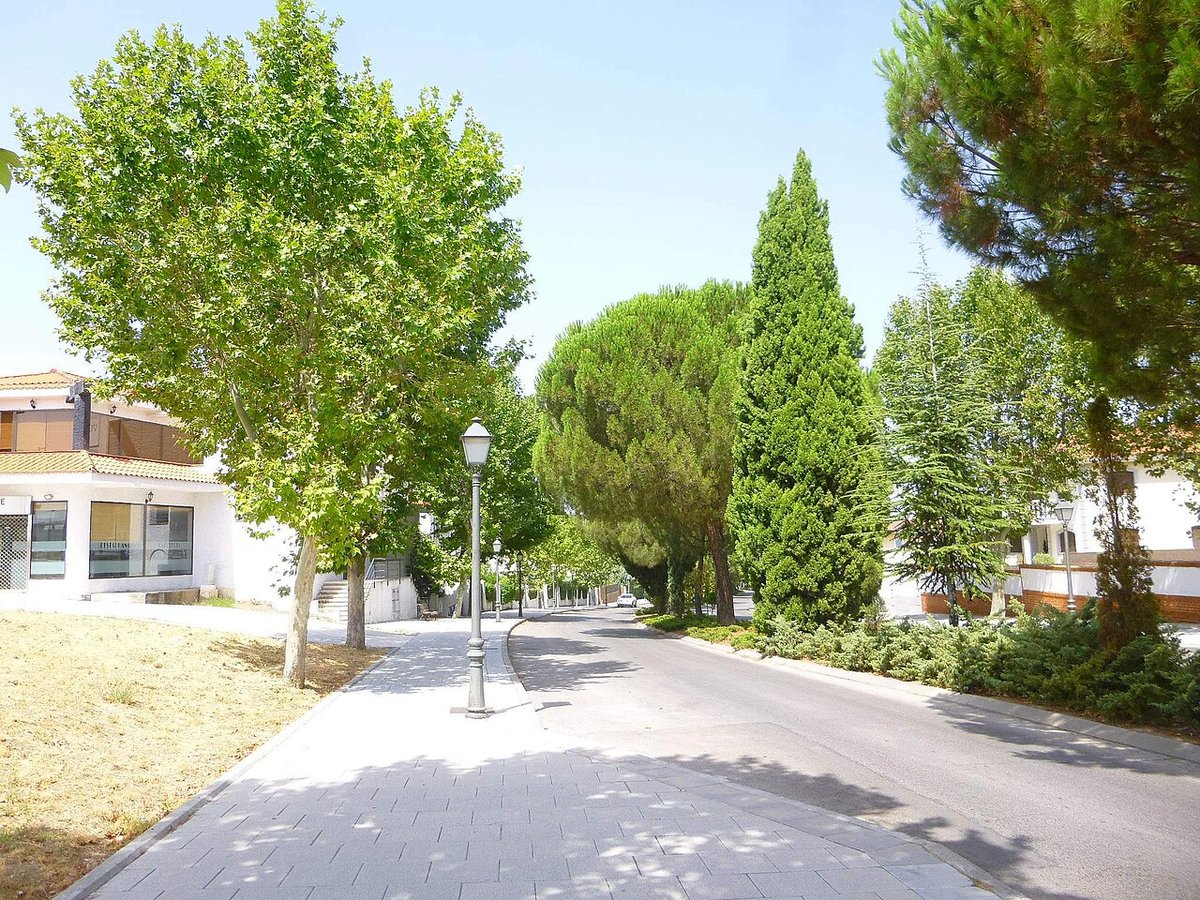
Step off the train and the first impression is quiet. Not rural silence with a cricket soundtrack, but the subdued calm of a residential area where things appear organised. Along Avenida Central, everything seems to sit exactly where it should. Traffic lights function. Pedestrian crossings do not feel like a leap of faith. Cycle lanes are actually used. It can feel like walking through a life‑size model.
Of course, the population grew far beyond what was originally envisaged. Today Tres Cantos is a large city with tens of thousands of residents. It no longer resembles an experimental housing development from the 1970s. There is more traffic, more activity and more daily movement than the label “planned city” might suggest.
Parque Central, where the grid softens
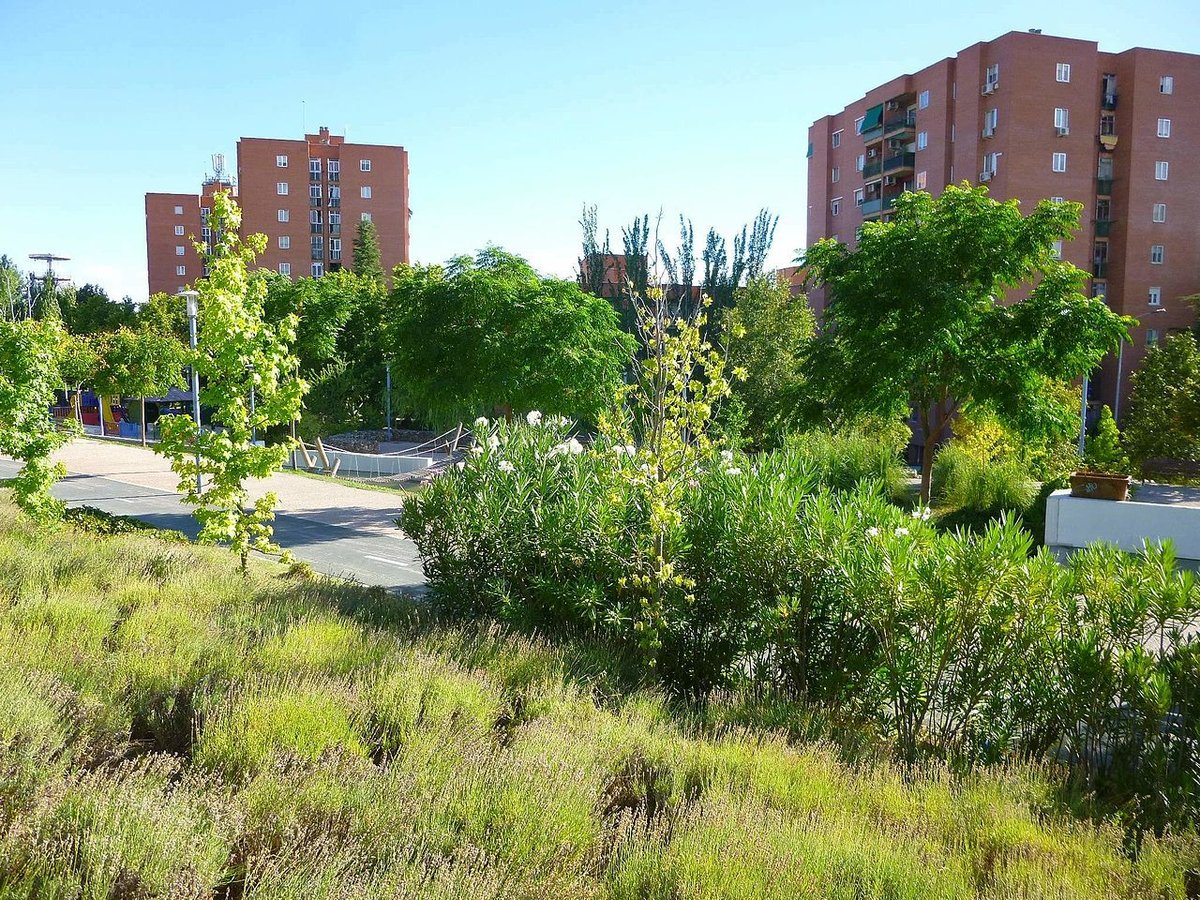
Within all this order and symmetry, Parque Central is the place where the straight lines loosen slightly. The landscaping varies from one area to another. Paths curve more than you might expect in such a geometrically minded city. There is an artificial lake that many locals refer to as “el de los cisnes”, the one with the swans, even though the swans are not always there.
This is where Tres Cantos gathers at the end of the day. After work, runners circle the paths. Children practise riding their bikes. Grandparents move at their own steady pace. Groups of teenagers occupy benches as if they were their personal sitting rooms. During summer, municipal events and celebrations often take place around the park, and it can become busier than you might anticipate.
There is something distinctive about spending time here. Sit on a bench and everything feels resolutely ordinary. A man who has likely left an office nearby. A grandmother pushing a buggy that may or may not belong to her grandchild. A pair of teenagers debating something that seems urgent to them. There are no queues of visitors waiting for photographs. Just daily life unfolding.
After travelling through places where every corner appears curated for visitors, that ordinariness can be refreshing.
The Camino that begins at the edge of town
One detail surprises many people. From Tres Cantos, routes connect with the Camino de Santiago de Madrid, the branch of the famous pilgrimage route that heads towards the Sierra de Guadarrama mountain range and continues in the direction of Segovia.
The starting point is usually near the train station. Very quickly, the route links up with wide paths that leave the city heading north. The first stretch still carries the feel of a metropolitan cycle lane, but as you move further out, waymarkers for the Camino appear and the surroundings become more rural.
This is not the Camino crowded with pilgrims that many imagine. Here, most people are out for a walk, trying a short stage, or testing what it feels like to set off on a longer journey. It is an unusual beginning. Behind you, the commuter trains run back towards Madrid. Ahead, there are kilometres of open countryside.
It is like discovering a side door to the landscape in the middle of a modern city.
Everyday calm
Tres Cantos often appears well placed in safety statistics within the Community of Madrid. Beyond the numbers, the sensation on the streets is one of calm.
Teenagers move around the parks by bike. People stroll at night without much noise around them. Terraces have that relaxed neighbourhood atmosphere where many recognise each other. Tourism does not dominate daily life here. Ordinary routines do.
That sense of stability has an impact on housing. Property is not especially cheap. Many who work in Madrid have chosen to settle here, looking for a balance between proximity to the capital and a degree of quiet at the end of the day.
What to expect from Tres Cantos
Is it worth coming? That depends entirely on what you are hoping to find.
If the aim is to wander through medieval houses, crooked alleyways or historic squares shaped by centuries, Tres Cantos will not provide that. It plays a different game. The interest lies in seeing how a modern, well‑organised and fairly green city functions.
A simple plan works best. Take a long walk through Parque Central. Stroll along one of the main avenues to understand how the city has been laid out. If stretching your legs further appeals, join a section of the Camino de Santiago de Madrid as it heads north and watch the urban landscape give way to open ground.
You can see it all in a relatively short time.
And what remains afterwards is a clear sense of what Tres Cantos represents: a place designed on paper, adjusted by growth, and ultimately defined less by monuments than by the rhythm of everyday life.