Full Article
about Campo Real
Known for its olives and cheese; a farming town amid olive groves and crop fields.
Hide article Read full article
A Village Shaped by the Land
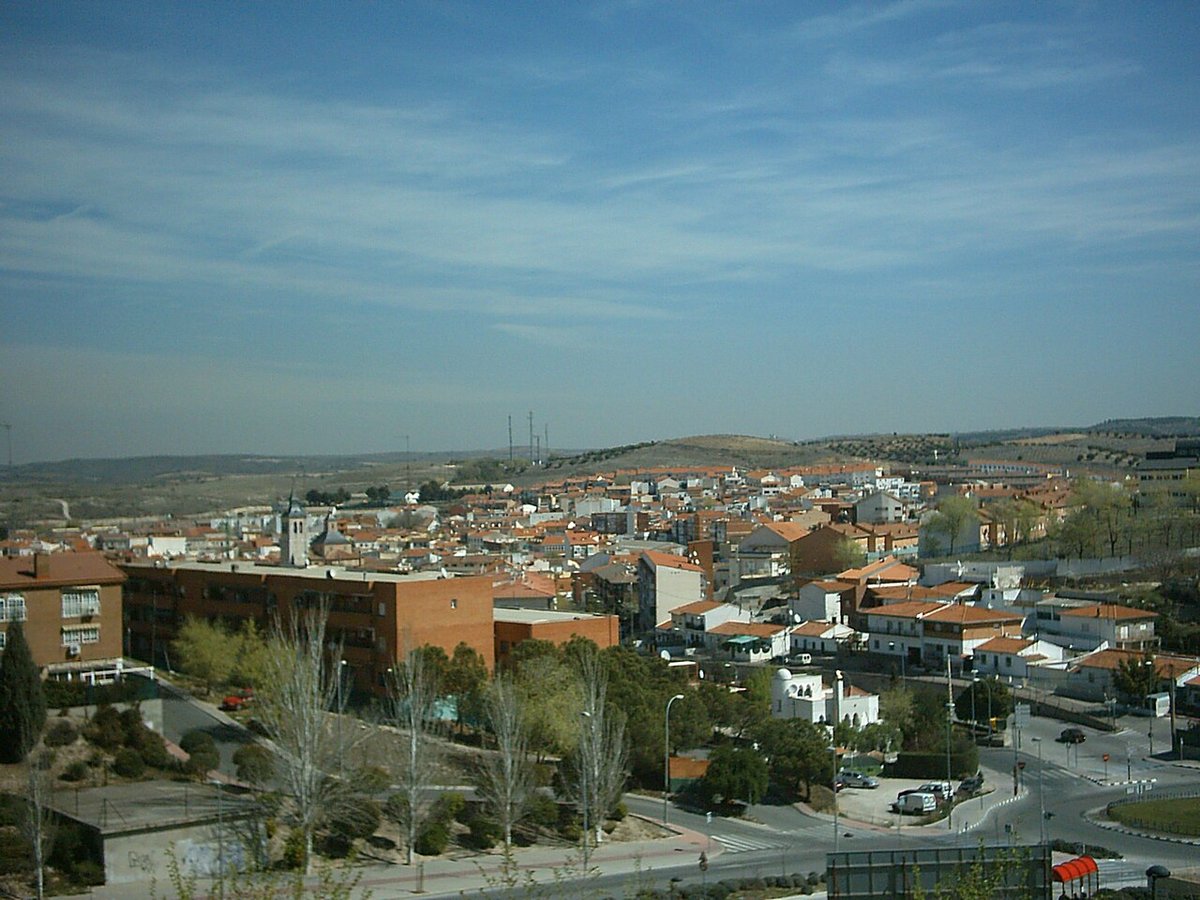
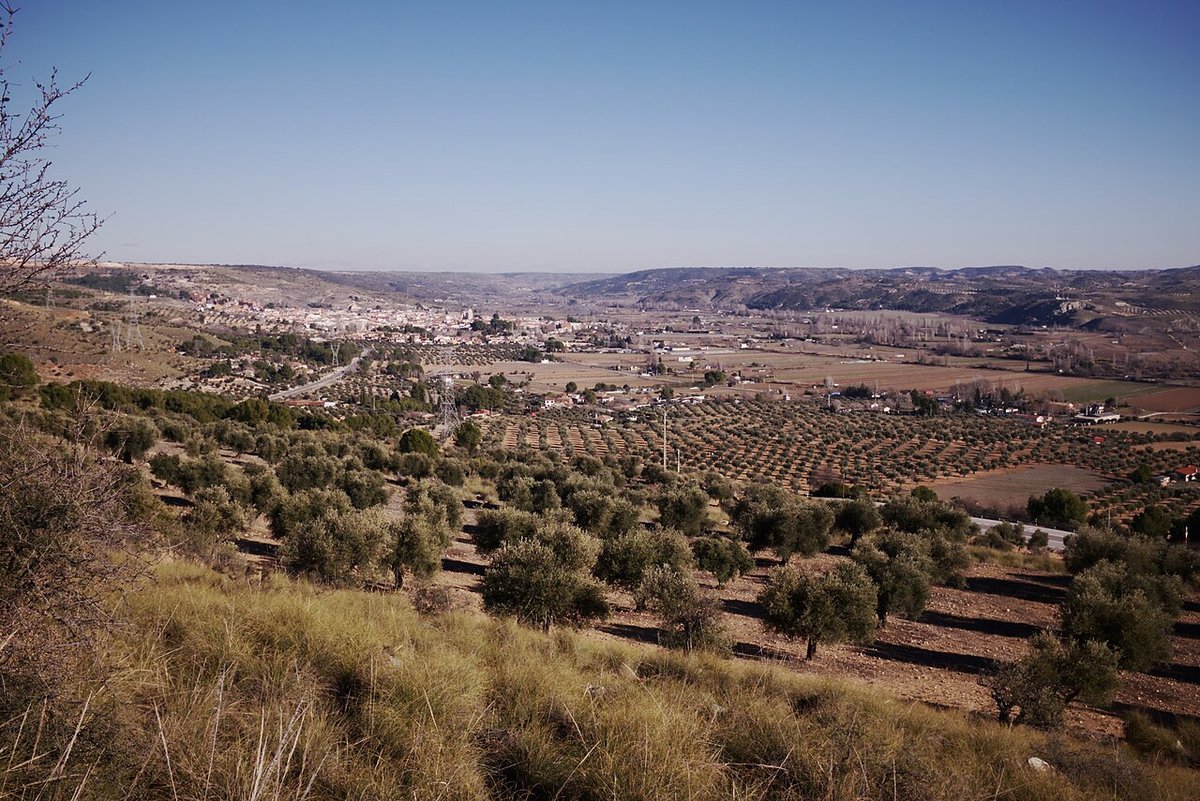
Campo Real lies in the comarca of Las Vegas, to the south-east of Madrid, in a landscape of gentle hills where olive trees have defined the view for centuries. The present name is relatively recent in historical terms. For much of the Middle Ages the settlement appears in documents as Aldea Real, under the jurisdiction of Madrid. It was only at the end of the 16th century that it was granted the title of villa and adopted the name Campo Real, a change linked to its growing agricultural weight at the time. Wheat, vines and oil left these fields bound for the capital.
That dryland farming economy still explains much about the shape of the municipality. Historic paths follow the lines of cultivation and old transhumance routes used by moving flocks. Even today, the landscape around the village makes more sense when seen through that lens: herds crossing open ground, olive groves stretching over the slopes, and small family holdings working scattered plots.
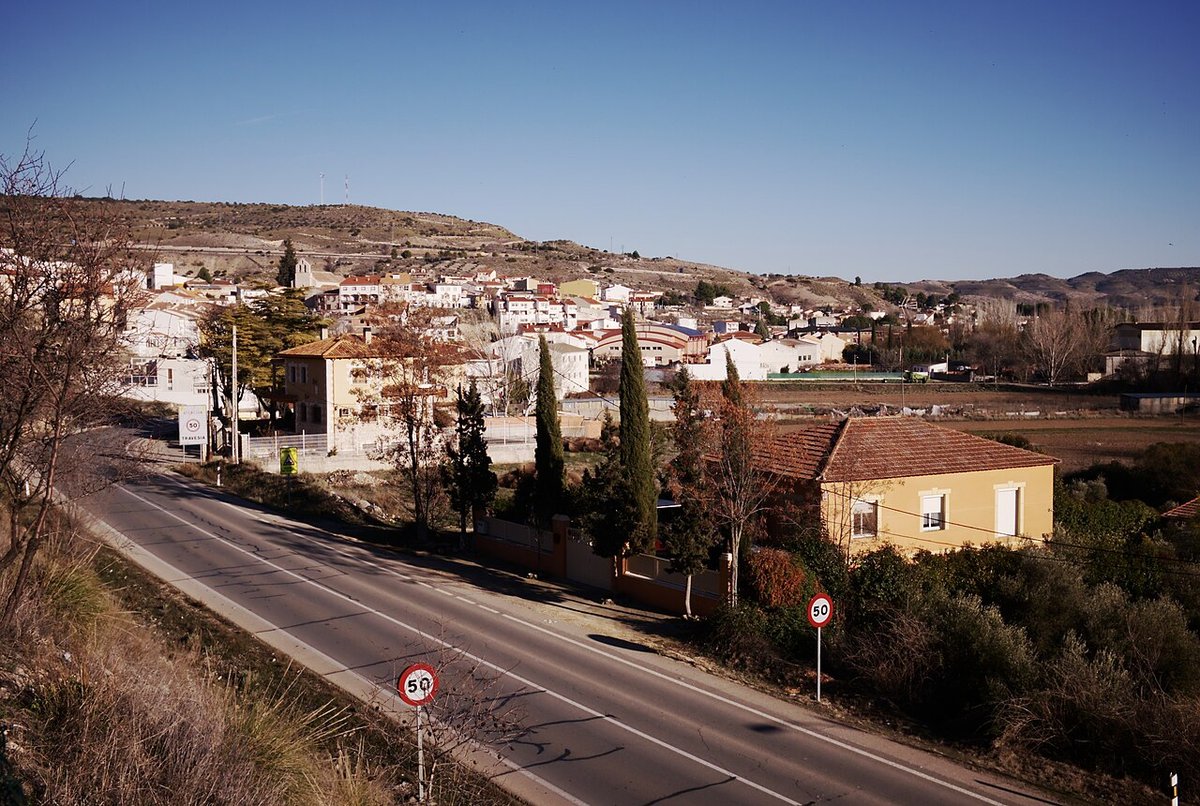
Campo Real remains compact. The surrounding countryside begins almost at the edge of the houses, and the relationship between village and field is immediate rather than decorative. It is a place best understood by walking out towards the groves and tracks that have long structured daily life.
Ombligo Alto and Santa María del Castillo
The highest point of the old centre is known as the cerro del Ombligo Alto. At its summit stands the church of Santa María del Castillo, looking out over the tiled roofs below and across the plain that opens towards Arganda and Perales de Tajuña. The name Ombligo Alto, literally “High Navel”, hints at its position at the centre and highest part of the settlement.
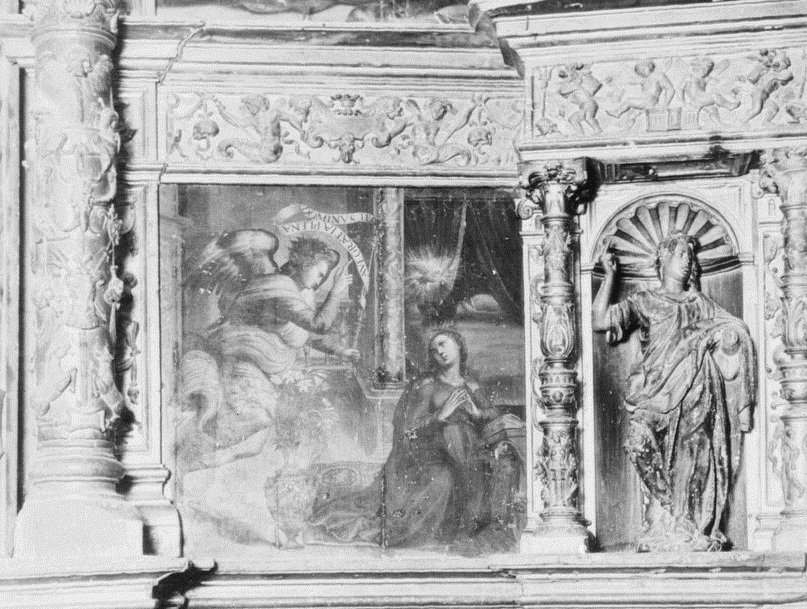
Tradition places an earlier fortification on this hill, although no visible remains of a castle survive. What stands today is the result of several building phases. In the 17th century the church suffered a fire and had to be largely rebuilt. The reconstruction followed the plans of an architect active in the region at the time. As a result, the building combines elements from different moments: details that recall late Gothic sit alongside later additions closer to the rural Baroque that spread through many villages in this part of Madrid.
From the atrium the structure of Campo Real becomes clear. Streets slope down from the height of the church, forming a compact cluster of houses. Many of the older façades make generous use of stone, a reminder of local building traditions. Beyond the last houses run several historic drove roads, or cañadas, used for centuries by transhumant livestock moving between seasonal pastures. Some of these routes remain broad tracks cutting through cultivated land, still readable in the landscape even if their original function has faded.
Olive Groves and Sheep’s Cheese
Agriculture is not a relic here. Olive groves occupy much of the land surrounding the urban centre, and the manzanilla variety, closely associated with this area, is used both as a table olive and for oil. Cornicabra, common across south-eastern Madrid, is also grown.
Alongside the olive tree, sheep farming has long been another local pillar. Sheep’s cheeses are still produced in small family batches, often using raw milk. This is less a staged tradition than part of an agricultural economy that has adapted over time without entirely breaking with what came before. Sheep frequently graze among the olive trees and make use of the stubble left in the fields after harvest, maintaining a link between crops and livestock that shapes the countryside as much as any boundary line.
During the year there are events connected to these products. A fair dedicated to artisan cheese is usually held, and around the olive harvest there are also gatherings and open days related to the groves. They are largely local occasions, geared more towards exchange and direct sales than towards large-scale tourism. Visitors encounter producers and products in a straightforward setting, with little ceremony and few layers between field and table.
For those interested in taking oil or cheese home, the most practical approach is to head to agricultural facilities or points of sale linked directly to local production. The goods are presented much as residents consume them, without elaborate packaging, with the advantage of coming straight from the source.
Hermitages in the Fields
Around the village stand several hermitages that create a small route through the surrounding farmland: San Isidro, San Roque and Nuestra Señora de los Remedios. These are simple constructions, built as places of devotion closely tied to agricultural work and rural life.
The hermitage of Nuestra Señora de los Remedios sits on a nearby hill and traditionally hosts a romería in spring. A romería is a popular pilgrimage and outdoor celebration, common in many parts of Spain, combining religious observance with a day in the countryside. In Campo Real, neighbours walk or drive up along the track that climbs from the village. It is a gathering closely linked to local life, where festive clothes and muddy boots mix without much fuss.
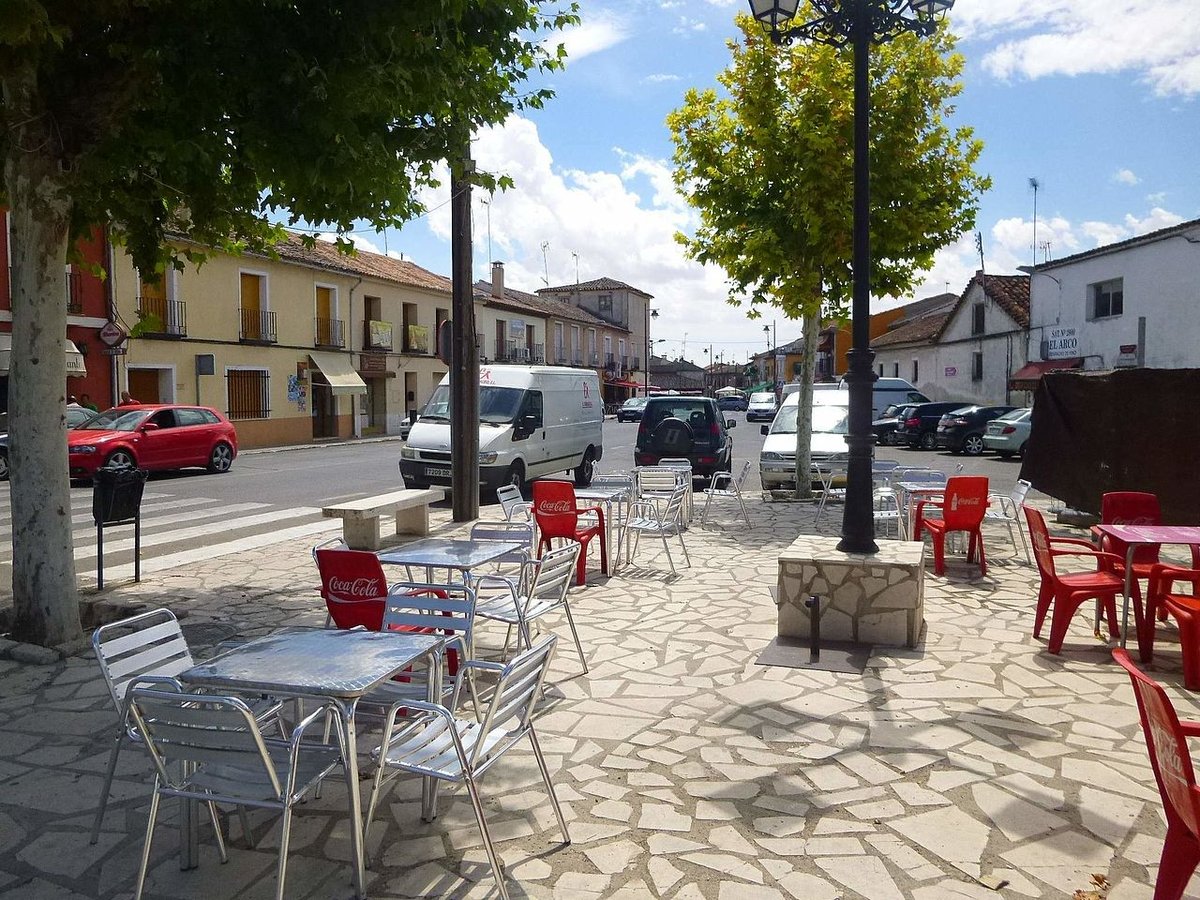
Patron saint festivities take place in August and follow a pattern familiar across the region: religious acts, evening dances known as verbenas, and community activities. There are no large stages or elaborate productions. The focus remains firmly on the main square and the surrounding streets, where much of village life continues to unfold.
Visiting Campo Real
Campo Real is just over half an hour by car from Madrid. The usual route follows the Valencia motorway before turning onto regional roads that wind between olive groves and farmland. Access is straightforward, and once there the village can be explored on foot without difficulty.
The church is usually open in the morning, although times may vary. If it is closed, asking in the houses near the square is often effective. In small towns this informal approach still tends to work.
Several signposted paths begin within the urban area and cross the olive groves and old drove roads. These are simple walks rather than demanding hikes. Shade is limited in summer, and after rain the tracks can become muddy.
Campo Real does not present itself as a showpiece. Its appeal lies in continuity: a hilltop church with layers of rebuilding, olive varieties that have long defined the local economy, sheep grazing between trees, and seasonal gatherings that remain rooted in the agricultural calendar. Within easy reach of Madrid, it offers a clear view of how the countryside south-east of the capital has been shaped, above all, by the steady rhythms of wheat, vines and oil.