Full Article
about Sevilla la Nueva
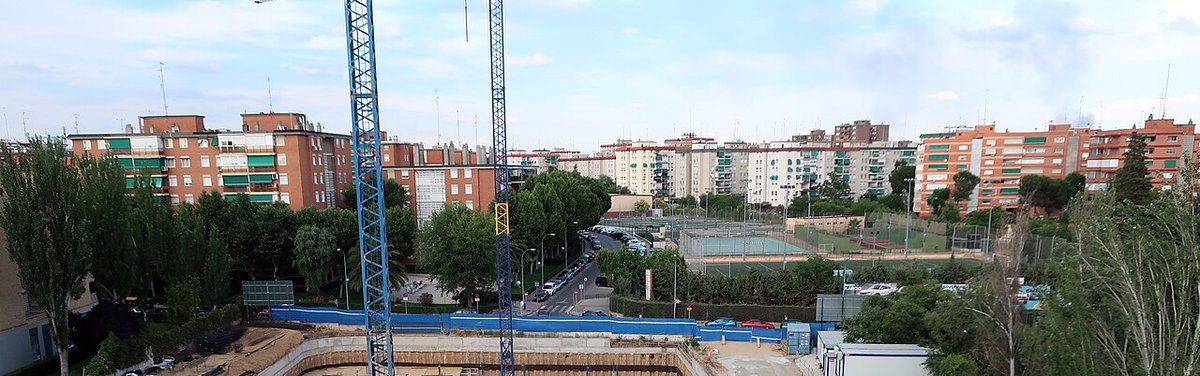
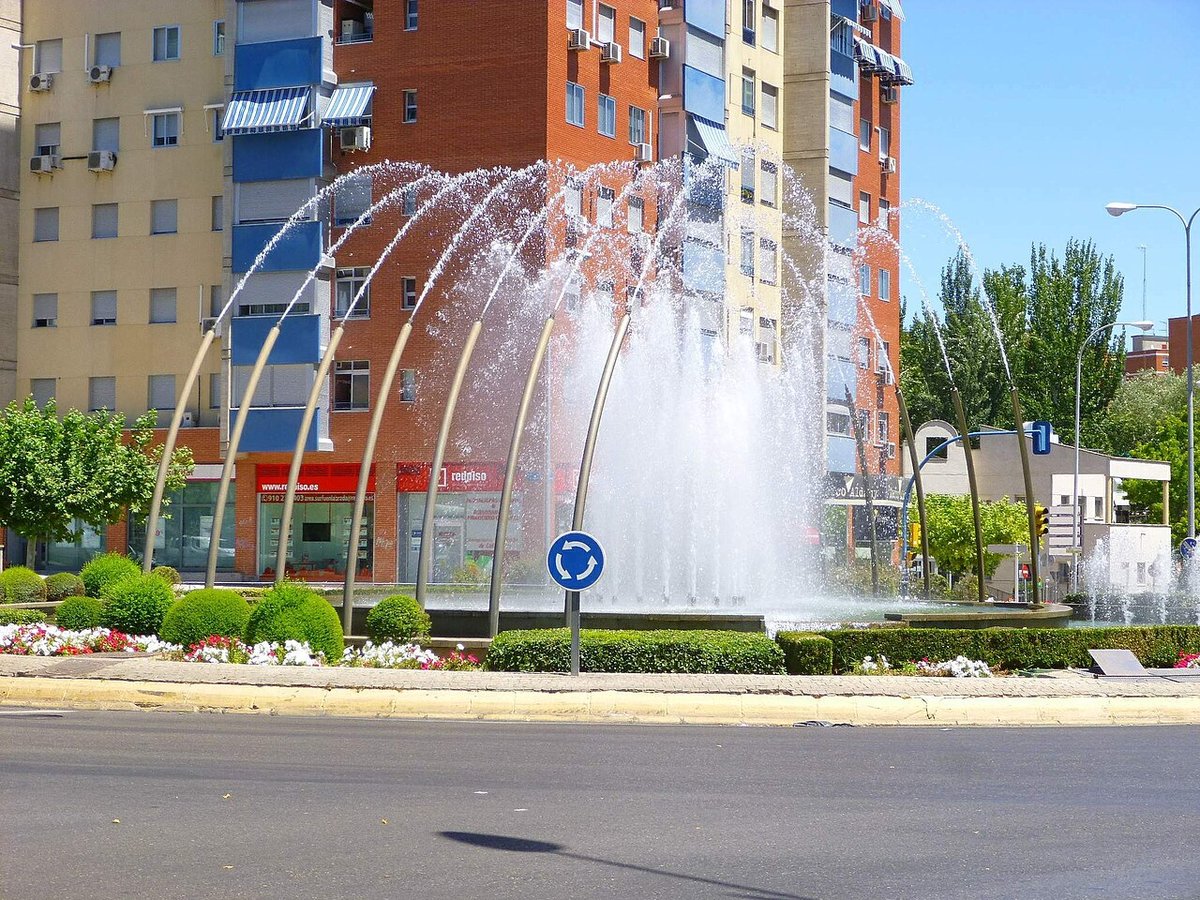
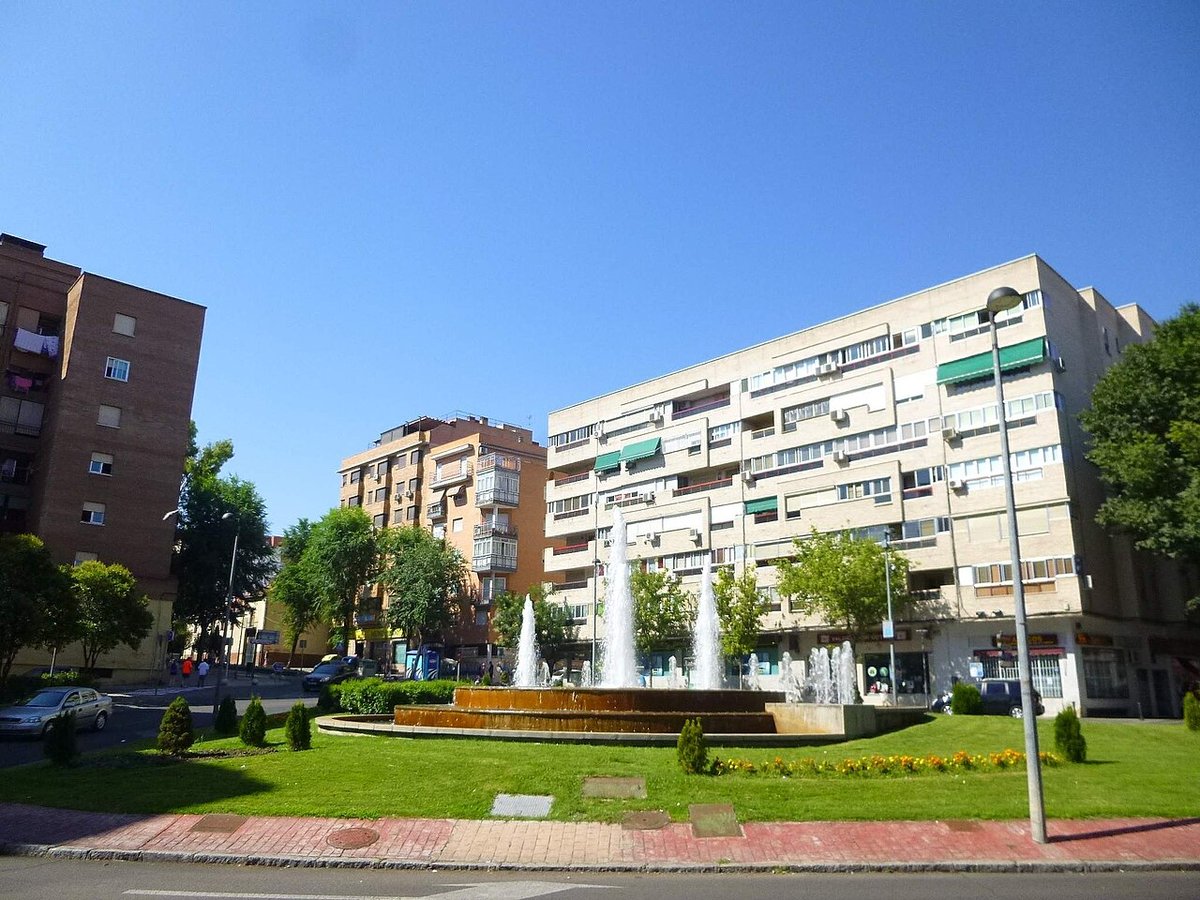
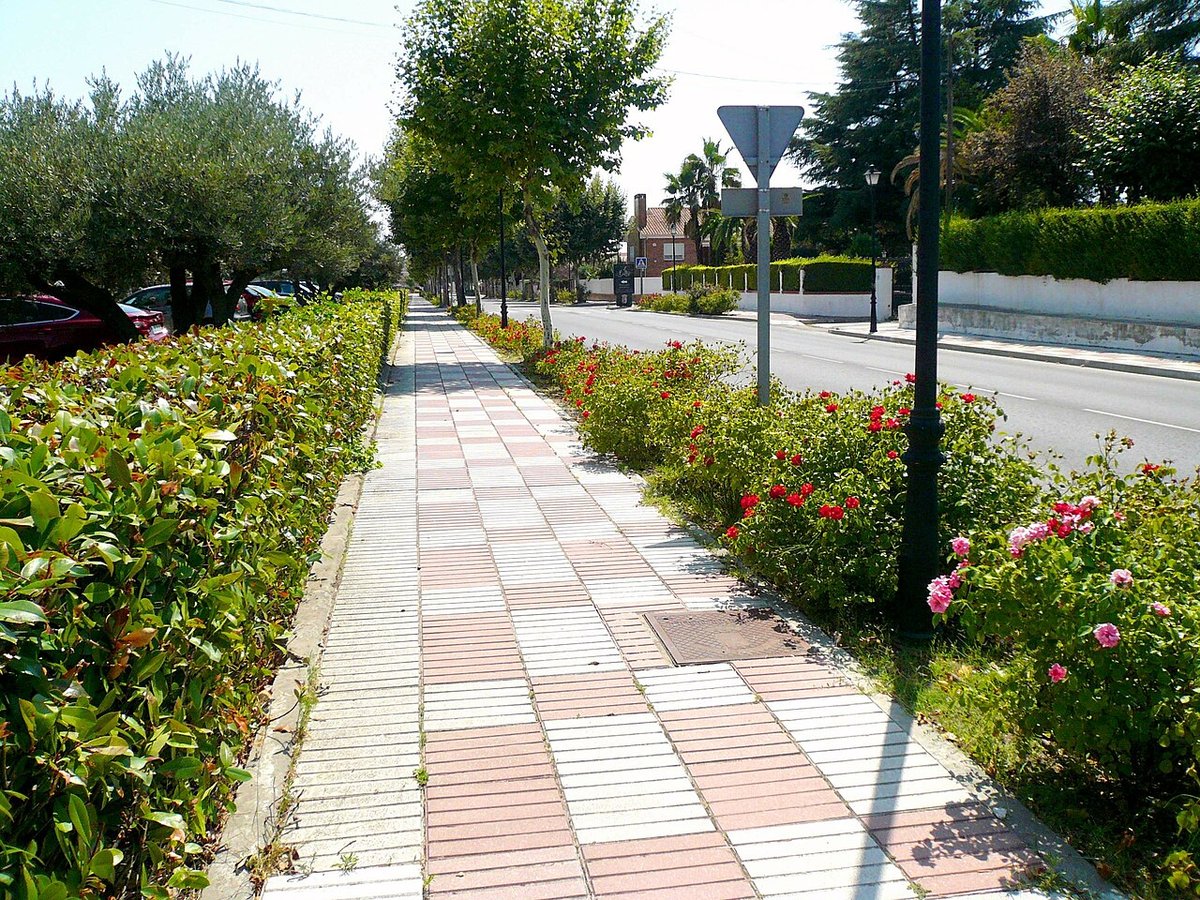
Modern town with plenty of green space; its palace and urban layout stand out.
Hide article Read full article
A village created by design
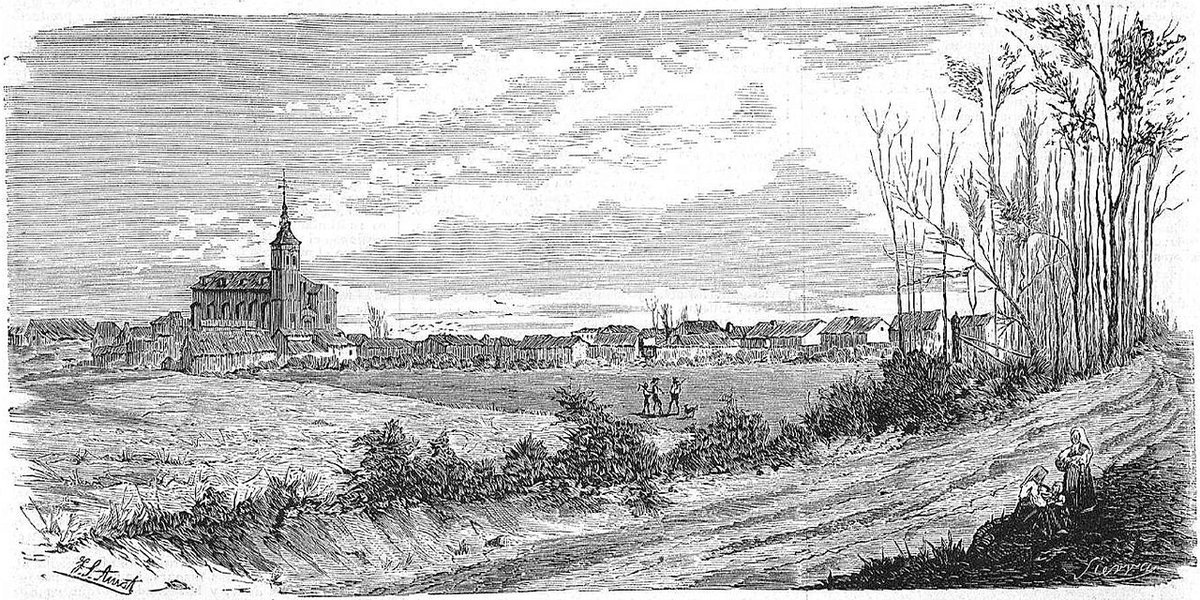
Tourism in Sevilla la Nueva begins with an unusual origin story. On 23 December 1544, Antón Sevillano, a man from Extremadura who had previously spent time in Seville, formally established a new settlement here. He signed the foundation before a notary, setting out the boundaries of a town on the plain of the Alberche.
He had purchased around 5,500 hectares of land, then only lightly used, less than forty kilometres from Madrid. His intention was clear: to create his own lordship. Sevilla la Nueva did not grow gradually from an older village or crossroads. It came into being through documentation and defined borders, something that was uncommon even in the sixteenth century.
That origin still shapes how the place feels today. The layout and its early buildings reflect a settlement that was planned, organised and controlled from the outset.
Power in stone: palace and church
Just behind the parish church stands the Casa Grande, now known as the Palacio de Baena. There is little sense of transition between the two. The palace appears almost abruptly, built in stone with a restrained, sober look that follows the Herrerian style associated with much of Madrid’s architecture in the period.
Construction is usually dated to the seventeenth century, when the settlement had already taken shape as a functioning lordship. The façade features two square towers and a large noble coat of arms. It was not designed as a comfortable residence in the modern sense. Its purpose was more direct: to make clear who governed these lands.
Inside, the layout centres on a square courtyard supported by stone columns from the quarries of Colmenar. This material was widely used in Madrid’s buildings during the sixteenth and seventeenth centuries, and it gives the structure a sense of continuity with the broader architectural traditions of the region.
A few metres away is the church of Santiago Apóstol. Work began in the second half of the sixteenth century, when the town was still new and expanding gradually. The structure is simple, reflecting the limited resources of a recently founded community.
One of the most distinctive elements inside is the wooden ceiling, built in the Mudéjar tradition. The pieces are fitted together without nails, an example of craftsmanship that connects Christian and Islamic building techniques in Spain. The baptismal font includes an early inscription linked to the town’s first years.
The tower came later, added in the eighteenth century. It appears slightly tilted, something that becomes noticeable when viewed from certain angles. The clay-rich soil in this part of the region shifts with changes in moisture, and several older buildings in the town show similar signs of movement.
Open land and the dehesa
The landscape around Sevilla la Nueva is still shaped by agriculture. Cereal fields dominate the surroundings, stretching across the plain in broad, open expanses. On the outskirts lies the dehesa boyal, a traditional communal grazing area that continues to preserve scattered holm oaks and cork oaks.
From the Cerro de San Juan, a modest rise reached by rural tracks, the geography of the area becomes clear. The terrain is largely flat, interrupted by seasonal streams that cut through the farmland. It is a setting that encourages a slower pace and a wider view.
Parts of this dehesa fall within protected areas for steppe birds and birds of prey. With some patience, it is possible to spot kites, kestrels or larger raptors circling above the fields. Sightings are never guaranteed, yet the openness of the landscape naturally draws attention upwards.
Returning towards the town, a more recent feature stands out. The municipal water tower has been transformed with a large mural in shades of blue that wraps around the entire structure. It is visible from the road and contrasts sharply with the surrounding cereal fields. The colours and imagery give it a distinctly marine feel, and among residents it has picked up a nickname that alludes to sharks.
Literary echoes and boundary crosses
Sevilla la Nueva has a loose literary connection with Benito Pérez Galdós, one of Spain’s most important nineteenth-century novelists. Towards the end of that century, he travelled through several villages in this part of Madrid while preparing his novel Nazarín.
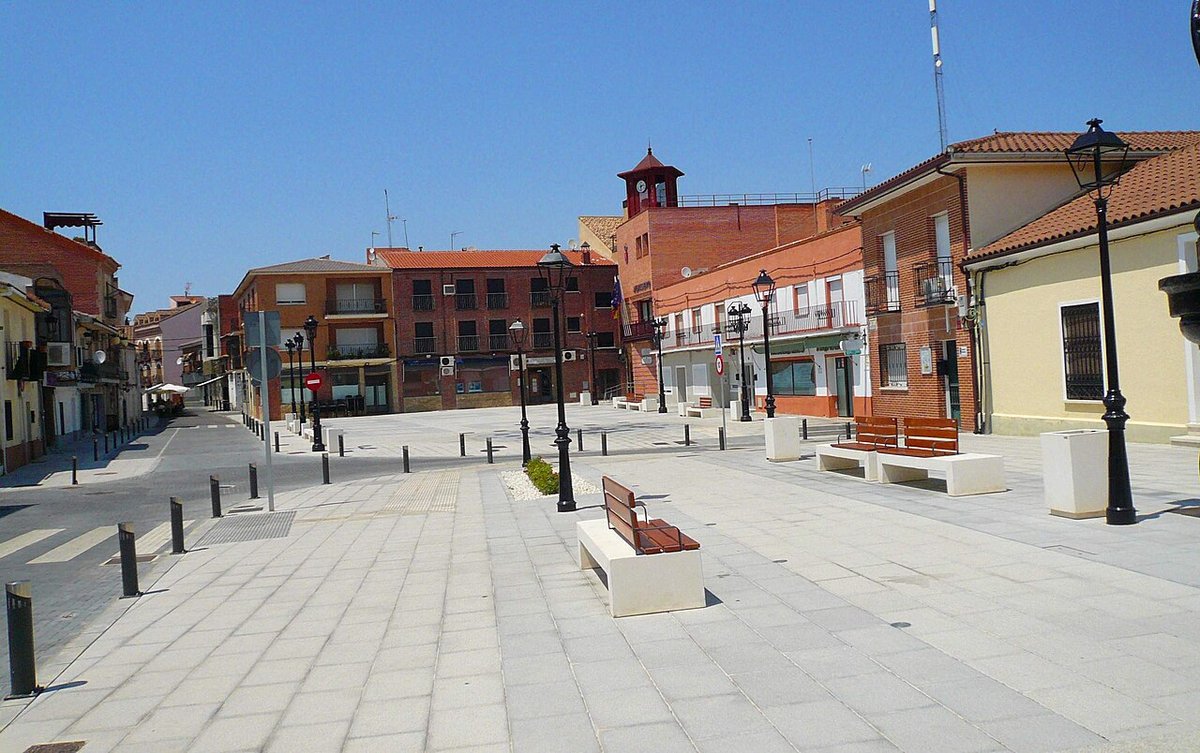
It is not entirely clear how directly the town appears in the book, yet local tradition maintains that some scenes were inspired by this setting. In the main square, a sculpture recalls the wandering priest who is the central character of the novel, keeping that association alive in a tangible way.
Beyond the urban centre, along the rural paths that mark the edges of the municipality, several stone crosses remain. These once served as boundary markers, indicating jurisdictional limits as well as offering a place for prayer before entering or leaving a settlement.
One of the best known is the Cruz de las Polainas, located to the north in the direction of Chapinería. It appears to date back to the sixteenth century. Another, the Cruz de Retamosa, stands to the south and shows clear signs of erosion after centuries of exposure. Together, they reflect an older way of organising territory, when such markers had both practical and symbolic meaning.
Reaching Sevilla la Nueva and moving around
Sevilla la Nueva lies in the south-west of the Community of Madrid, within what is known as the Comarca Sur. It sits less than forty kilometres from the capital. The town can be reached by road via connections with the A-5, and there are also interurban bus services from Madrid.
The urban area is compact and easy to explore on foot. The church and the former palace form the core of the historic centre, and from there several paths lead out towards the dehesa and the surrounding fields.
Spring and early autumn are usually the most comfortable times for walking in the area. Summer heat can be intense, while in winter the wind moves freely across the plain with little to break it. Anyone heading out along the rural paths should carry water. Distances between villages can be deceptive, and shade is limited.
Towards evening, from the northern paths, the town comes into view as a tight cluster of reddish roofs set in the middle of the cereal landscape. The bell tower rises above them, slightly tilted, a small reminder of the ground beneath and the long history that began here with a signature on paper.