Full Article
about Torrejón de Velasco
A town with a noble past; it still has the ruins of a major medieval castle.
Hide article Read full article
A Castle Over the Plain
The castle of Puñoenrostro has watched over the plain since the 15th century. It stands where the plateau opens wide with barely any obstacles: cereal fields stretching out, straight tracks cutting through them, and a wind that rarely settles. Its design follows that defensive logic. Thick walls, several semicircular towers and a keep rising above the houses below. It was less a noble residence and more a strategic point for controlling territory at a time when Castile was far from stable.
Like many fortresses of that period, it passed through shifting hands and disputes between rival lineages. Over time it became linked to the nearby Trinitarian convent. After the 19th-century confiscations of church property in Spain, known as the desamortizaciones, the complex lost its purpose and entered a long phase of decline.
Today the castle still stands and can be seen from much of the surrounding area. It often shares its space with kestrels, which nest among the gaps in the stonework. The structure remains a strong visual marker in a landscape where little interrupts the horizon.
The Parish Church and a Local Story
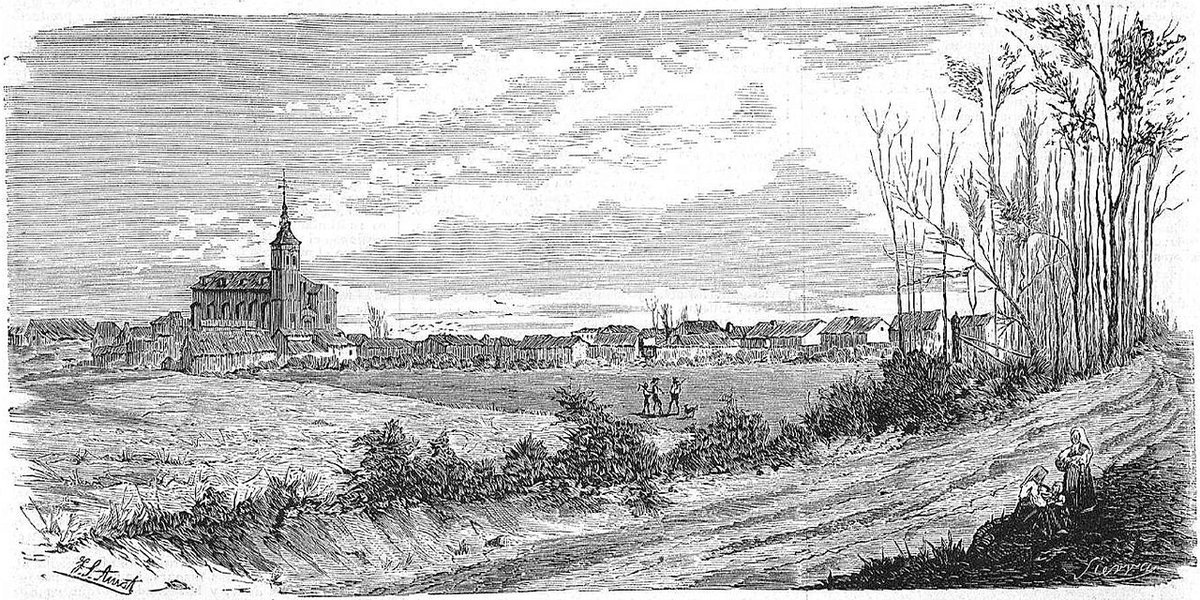
The church of San Esteban Protomártir belongs to the oldest part of the town. Construction began towards the end of the Middle Ages and continued in later centuries, something common in small agricultural communities that expanded gradually over time.
Inside, there is a baptismal font tied to a curious local tradition. According to this story, a child baptised here would later become Pope Clement VIII. It is not an easy claim to verify and tends to be repeated more as a piece of local memory than as a firmly documented fact.
The tower was added later, in the early modern period, and still shapes the outline of the main square. The church remains the central meeting point for religious celebrations in the municipality, continuing a role it has held for generations.
Cerro de los Batallones: A Different Landscape, A Different Time
A few kilometres from Torrejón de Velasco lies Cerro de los Batallones, a site well known in palaeontological circles. Several Upper Miocene fossil deposits were discovered here, revealing remains of animals that lived in the area millions of years ago.
Research began in the late 20th century and uncovered fossils of large carnivores, including sabre-toothed cats, alongside sizeable herbivores such as rhinoceroses and proboscideans, a group that includes ancient relatives of elephants. The concentration of remains is explained by natural cavities in the ground that once acted as traps.
The site continues to be used for scientific study. It is not set up as a visitor park, but it offers a way to understand how different this now agricultural plain once was. What is today open farmland was once home to a very different ecosystem, populated by species that no longer exist in the region.
The Romería of San Isidro
On the edge of the municipal area stands the hermitage of San Isidro, a relatively recent construction. It does not attempt to appear older than it is. Its purpose lies in the annual romería, a traditional rural pilgrimage that brings residents together each spring.
The custom involves walking from the town to the hermitage, accompanying the image of the saint. Along the way there are carts, music and shared food. It is a celebration rooted in agricultural life rather than architecture, tied to the farming calendar and the beginning of the working season in the fields.
Near the hermitage there is a fountain that for many years served as a watering place for livestock and a stopping point along rural routes. Today it mainly plays that same role during the pilgrimage, offering a place to pause along the way.
Approaching the Town and What It Feels Like
Torrejón de Velasco lies to the south of Madrid, in the zone where the city gradually gives way to the open plain of La Sagra. The journey by road from the capital takes less than an hour.
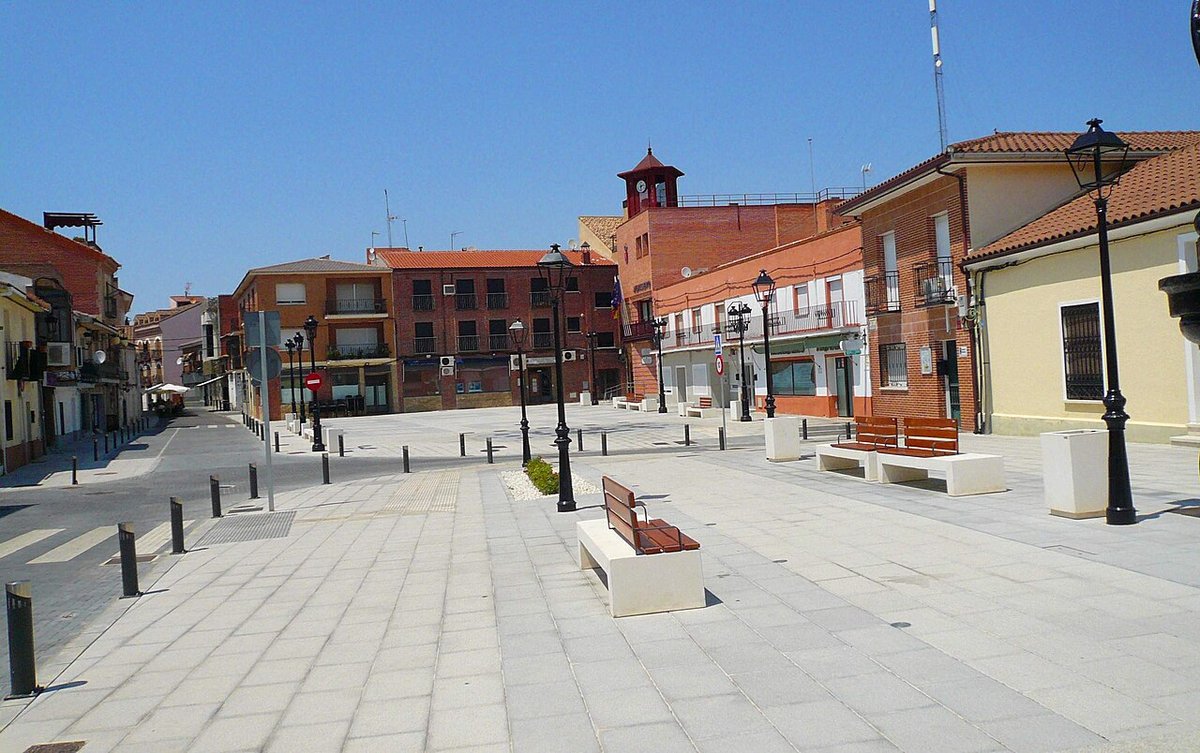
The town itself can be explored at an unhurried pace in a short time. The main square, the parish church and the streets that gather around the castle form its core. The fortress is not usually open for regular interior visits, so most people experience it from the outside, walking around it and taking in its structure against the sky.
The interest here is less about major monuments and more about understanding the landscape. From the outskirts, the plain stretches out with little interruption. On clear days, the mountains to the north appear faintly on the horizon. In summer, cereal crops cover everything in sight. In winter, the wind sweeps across the fields and the castle once again looks like what it was built to be: a watchpoint set in the middle of a vast, exposed territory.