Full Article
about Colmenar Viejo
A sprawling livestock and residential municipality; it boasts an impressive basilica and is the gateway to the sierra.
Hide article Read full article
First Impressions in the Morning Air
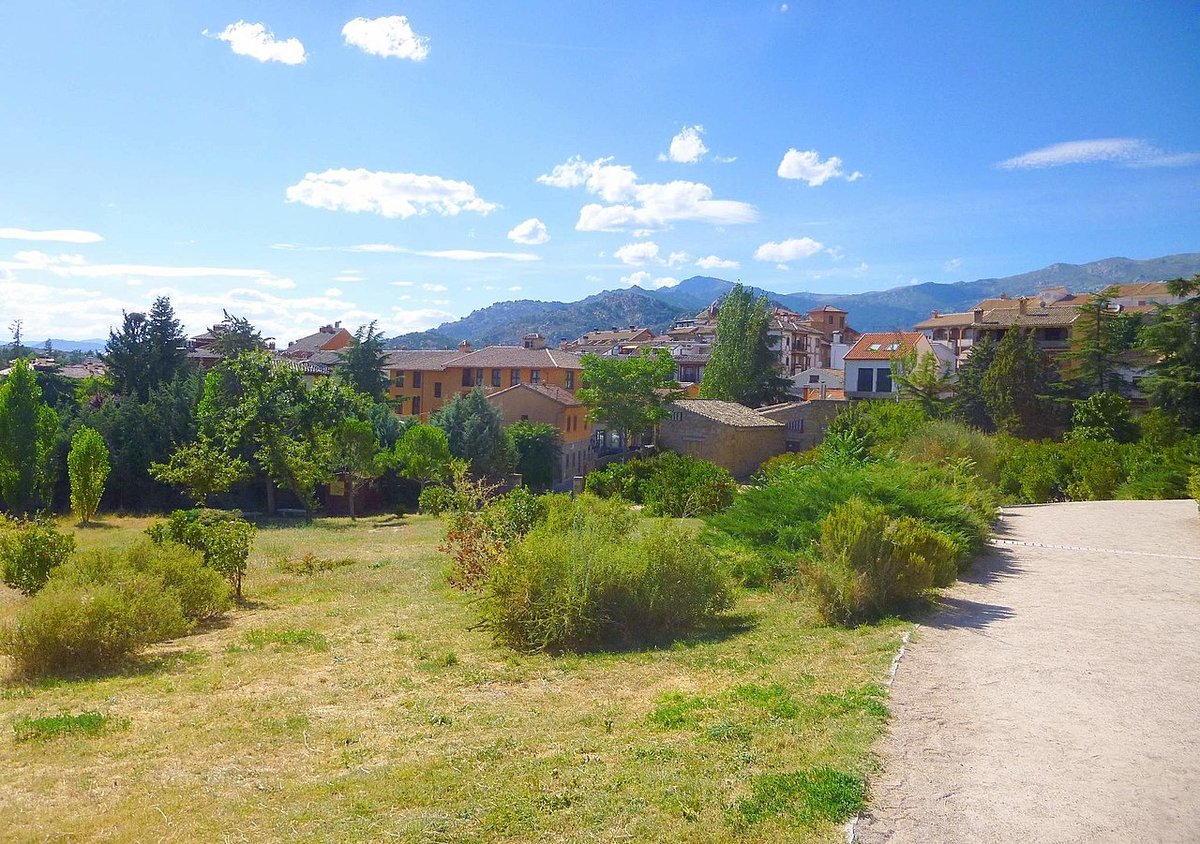
Early in the day, before most shutters are up, tourism in Colmenar Viejo begins with smell. Wood smoke from a chimney, toast coming from a nearby kitchen, and that dry, open scent drifting in from the dehesa, the grazing land that surrounds the town. About thirty kilometres north of Madrid, the place reveals itself gradually. First come scattered holm oaks, then loose residential areas, and finally older streets that lead into the Plaza Mayor.
It is not somewhere that makes an instant statement. Colmenar Viejo is understood by walking it. A worn stone corner, a dim doorway, a quiet conversation on a bench. Each detail adds a layer.
Midday and the Cocido
On a winter Saturday, close to midday, some of the bodegas in the centre begin to fill. Many are dug into the rock, with low brick ceilings and that steady coolness typical of underground spaces. On the tables appears cocido madrileño, a traditional chickpea stew, served in vuelcos, meaning in separate stages as custom dictates.
Conversation often turns quickly to meat. Beef from the Sierra de Guadarrama, which has its own designation of origin, is as much a part of the landscape as the holm oaks. These animals graze on the surrounding slopes, and locals say that makes all the difference on the plate.
At a nearby table, an older man spreads lard mixed with paprika onto a piece of hard bread.
“This is what we ate after the matanza,” he says, almost to himself, referring to the traditional pig slaughter. “Now people come from outside and call it a ‘gastronomic experience’. For us, it was just food.”
A Historic Town in the Cuenca Alta del Manzanares
Colmenar Viejo has been an important settlement in this part of the Cuenca Alta del Manzanares for centuries. In the Middle Ages it formed part of the Real de Manzanares, a territory linked to the Crown, and the scale of some buildings still reflects that past.
The Basílica de la Asunción dominates the old town from above. Its outline appears several streets before reaching it. Inside, the stone carries a dark tone shaped by centuries of candle smoke and winter cold. In one of the chapels lies the tomb of Juan González del Real, a chaplain connected to the court of the Catholic Monarchs who chose this place for his burial.
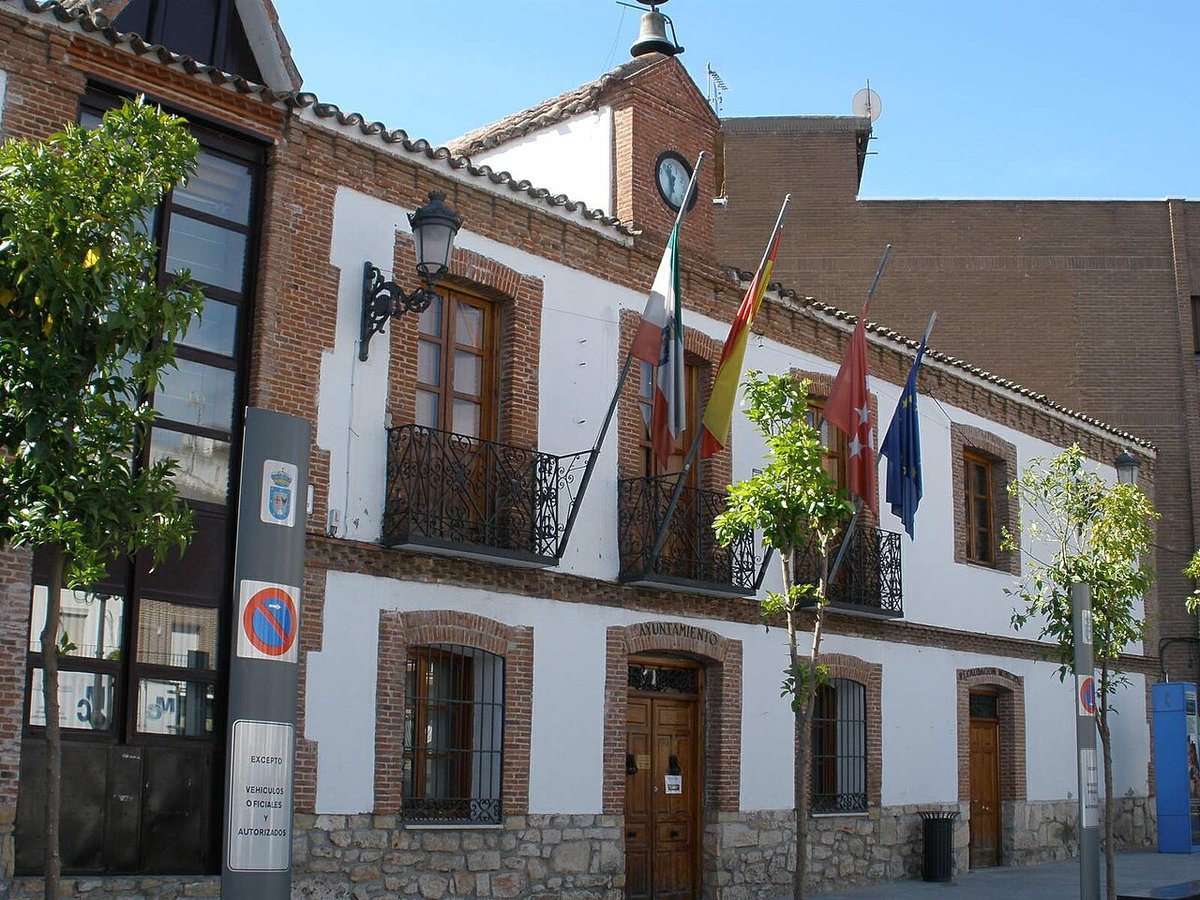
The Plaza Mayor keeps something of the time when transhumant flocks passed through on their way to the mountains. There are two-storey houses, uneven arcades, and the town hall with its clock tower. It is not a uniform square. Each façade seems to have followed its own path over time.
Out to the Ermita and the Open Land
The ermita de la Soledad sits about a fifteen-minute walk from the centre. The route climbs gently. Streets narrow, then give way to open land.
The building, dating from the 16th century, is made of stone that clearly shows age. Moss clings to the northern side, and fine cracks hold small plants that are hard to name. During Semana Santa, the image of the Virgin is carried from here down to the basilica in a procession. It takes time, and the pace is slow, marked by footsteps on the paving.
From the open ground nearby, the view stretches across the dehesa. Holm oaks stand apart from one another, pasture is divided into plots, and an occasional isolated house breaks the line of the horizon. In this same area lies the archaeological site of Navalvillar, where Visigothic remains over a thousand years old were found. Guided visits are sometimes organised at weekends, so it is worth checking in advance if they are taking place.
The tombs are simple. Flat stones, crosses carved without much precision. It is not striking in scale, but it conveys something direct: the sense that everyday life existed here fifteen centuries ago.
Bulls, Fairs and the Changing Pace
The bullring of Colmenar Viejo is large for a town of its size and holds a strong place in Madrid’s bullfighting calendar. On days with an event, the atmosphere is noticeable from a distance. Vans parked nearby, small groups talking on corners, people heading towards the ring at an unhurried pace.
During fair days, the smell of livestock mixes with that of sandwiches coming from nearby kitchens. Conversations revolve around cattle, the size of the bull, how it behaves in the arena. The mood is distinctly local.
At the end of August, the fiestas patronales of the Virgen de los Remedios are usually held. The rhythm of the town shifts. There is music in the square, streets stay busy late into the night, and many families return for these days even if they no longer live here.
Choosing When to Go
Colmenar Viejo is easy to reach from Madrid via the M‑607. By car, the journey usually takes around half an hour if traffic is light. There is also a Cercanías train from Chamartín. The station sits on the outskirts, and from there the centre can be reached on foot or by bus.
Timing makes a difference. For a quieter visit, it is best to avoid the main festival days or some spring weekends, when many people arrive from Madrid. In January, by contrast, the cold from the Sierra tends to empty the streets as evening falls, leaving the town quieter and more introspective.