Full Article
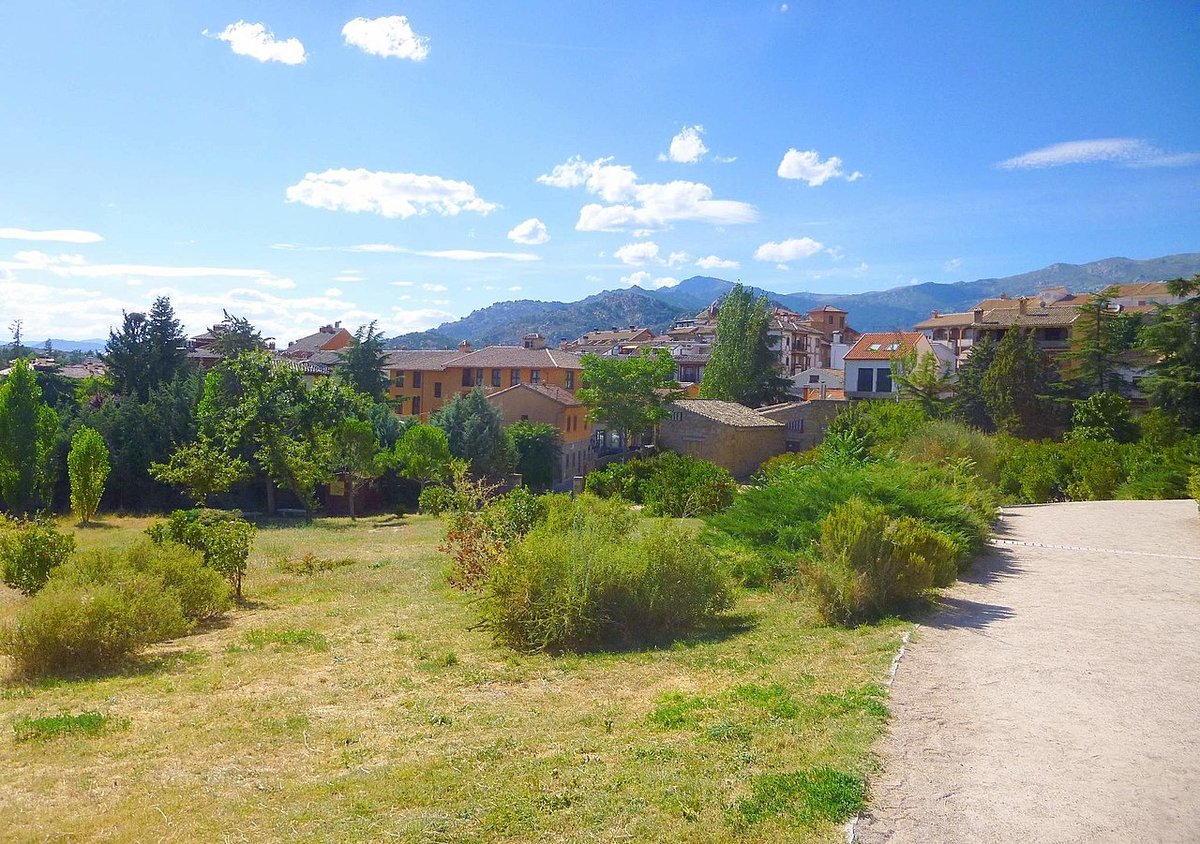
about Manzanares el Real
Sierra icon with its storybook castle beside the reservoir; gateway to La Pedriza
Hide article Read full article
The bells of the church of Nuestra Señora de las Nieves strike eight while the sun has yet to fully reach the valley. From the castle viewpoint, mist drifts over the Santillana reservoir like a loose wool blanket. Down in the village, there is the smell of freshly baked bread and woodsmoke from an early-lit fire. It is one of those moments when tourism in Manzanares El Real barely registers, before cars begin climbing the M‑608 from Madrid in search of mountain air.
Stone and silence at the Castillo de los Mendoza
The Castillo de los Mendoza is not quite a fairytale castle, even if it might look that way from afar. It is built from grey stone, solid and compact, designed to last rather than decorate. The Mendoza family commissioned it in the late 15th century, when this stretch of the sierra was both a place of power and a route through the mountains.
Inside, the purpose becomes clearer. The central courtyard holds a particular kind of quiet, as if the thick walls, several metres deep, absorb the outside world. When the wind rises, the only sound is the firm snap of flags against their poles.
On the ground floor there are usually panels and models explaining how the building was constructed. It is not a showy visit, but it reveals the logic behind it: stone laid upon stone, large buttresses, small windows designed for defence rather than views.
The climb to the main tower requires patience. The stone steps are worn and the passage is narrow. At the top, the landscape opens out. One side reveals La Pedriza, its granite formations stacked in improbable shapes; on the other, the Santillana reservoir, shifting between green and blue depending on the light. At weekends, especially by mid-morning, the castle tends to fill with visitors. During the week or later in the afternoon, it is easier to take it in at a slower pace.
Food shaped by the mountains
In Manzanares El Real, food is generous and slow-cooked, closely tied to the area’s livestock traditions.
Grilled meat appears on many menus, often served in large cuts that arrive still sizzling at the table. It is common for it to come from cattle raised in the sierra or nearby regions. When the temperature drops, spoon dishes remain firmly in place: callos a la madrileña, a traditional tripe stew, garlic soup served in clay bowls, and rich stews that call for bread to finish the plate.
In autumn and spring, wild mushrooms from the sierra are common, either scrambled with eggs or sautéed with garlic. Níscalos, when the season is good, bring with them a scent of damp earth that lingers on the fingers.
One detail that stands out is how dining rooms are scattered through side streets rather than clustered around a single square. It often pays to wander a little and read the boards outside. The atmosphere tends to feel local, particularly on weekdays.
When flocks pass through town
Autumn still brings a scene that reflects how this landscape has functioned for centuries: the movement of transhumant flocks. Some years, sheep pass directly through the centre of the village, following the traditional drove roads that descend from the sierra towards warmer areas.
You hear it before you see it: bells, barking dogs, and the steady murmur of the flock moving slowly along Calle Real. For a while, traffic pauses and the asphalt briefly feels like a rural track again.
There is the smell of wet wool and dust stirred by hundreds of hooves. Shepherds retain many older gestures, the heavy cloak and long staff, though today they also carry mobile phones and tracking devices for their animals.
In spring, the romería of the Virgen de la Peña Sacra usually takes place. Many people walk up to the sanctuary along paths that follow the river and then climb towards the rocky outcrop. Hiking backpacks mix with traditional dress, sandwiches wrapped in foil with rosary beads peeking out of pockets.
La Pedriza and a changing valley
La Pedriza begins almost at the edge of the village. It is a granite landscape that looks as if it has paused mid-collapse: rounded boulders, wind-smoothed surfaces, narrow passages between rocks.
The stone changes constantly with the light. Early in the morning, the granite takes on a golden tone. At midday it turns pale grey. As evening approaches, a brief pink hue appears, lasting only a few minutes.
One of the most common walks leads up to El Yelmo, one of the best-known formations in the area. The route is long but fairly clear, passing through pines, rockrose and strawberry trees. In shaded sections, the air carries the scent of resin and crushed thyme. The final stretch involves some scrambling over rocks, so footwear with a good grip is advisable.
On clear days, Madrid can be seen in the distance as a faint grey strip. Below, the reservoir lies almost still, while the village reduces to a handful of pale rooftops.
It is worth setting off early if heading out to walk here, s