Full Article
about Brunete
Historic town with a monumental main square, surrounded by farmland and residential areas.
Hide article Read full article
A place you pass, until you don’t
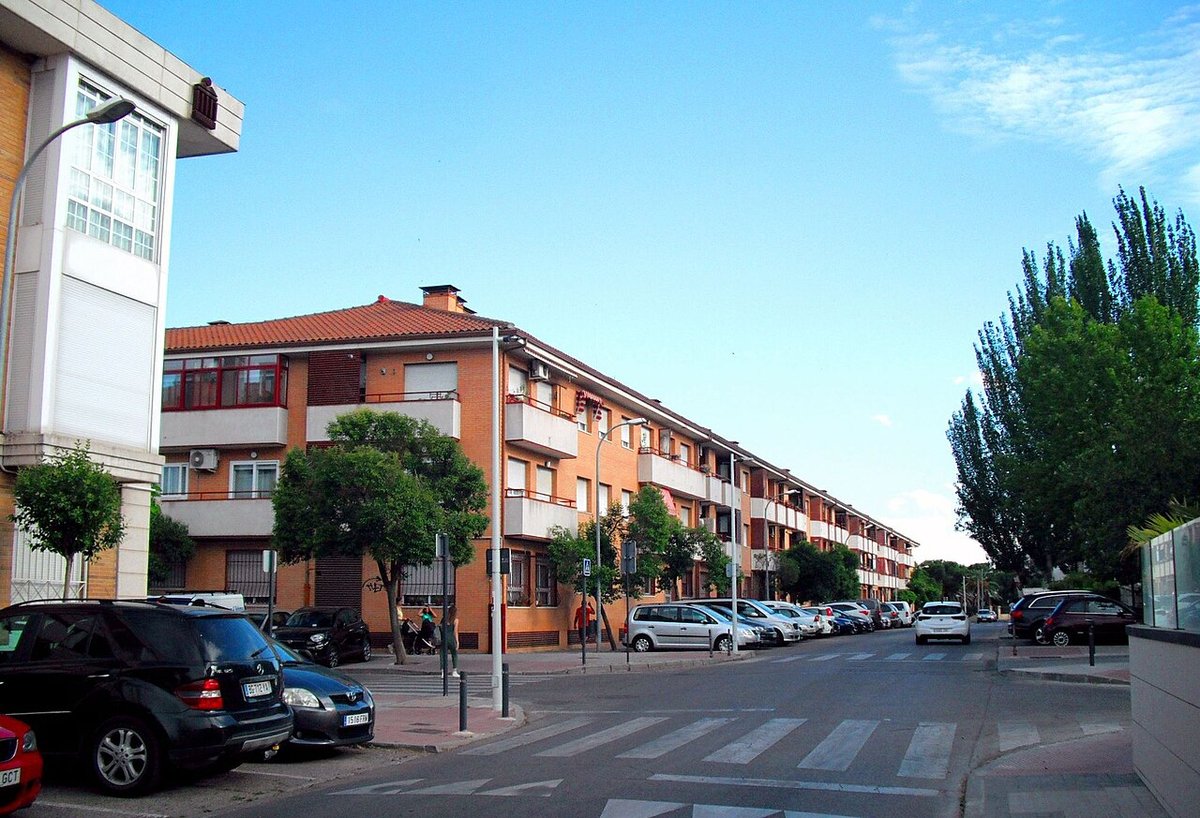
Around Madrid there are many towns you see again and again on road signs without ever thinking to stop. Brunete fits that pattern. It sits just over half an hour from the capital and is often filed away as another commuter town. Then one day you turn off, walk into the main square, and realise more has happened here than first impressions suggest.
The pace is different from Madrid, even though it is close. Life carries on steadily, without much fuss, and the town reveals itself in small details rather than big attractions. It is not somewhere that demands attention. It is somewhere that rewards a pause.
A square shaped by conflict and rebuilding
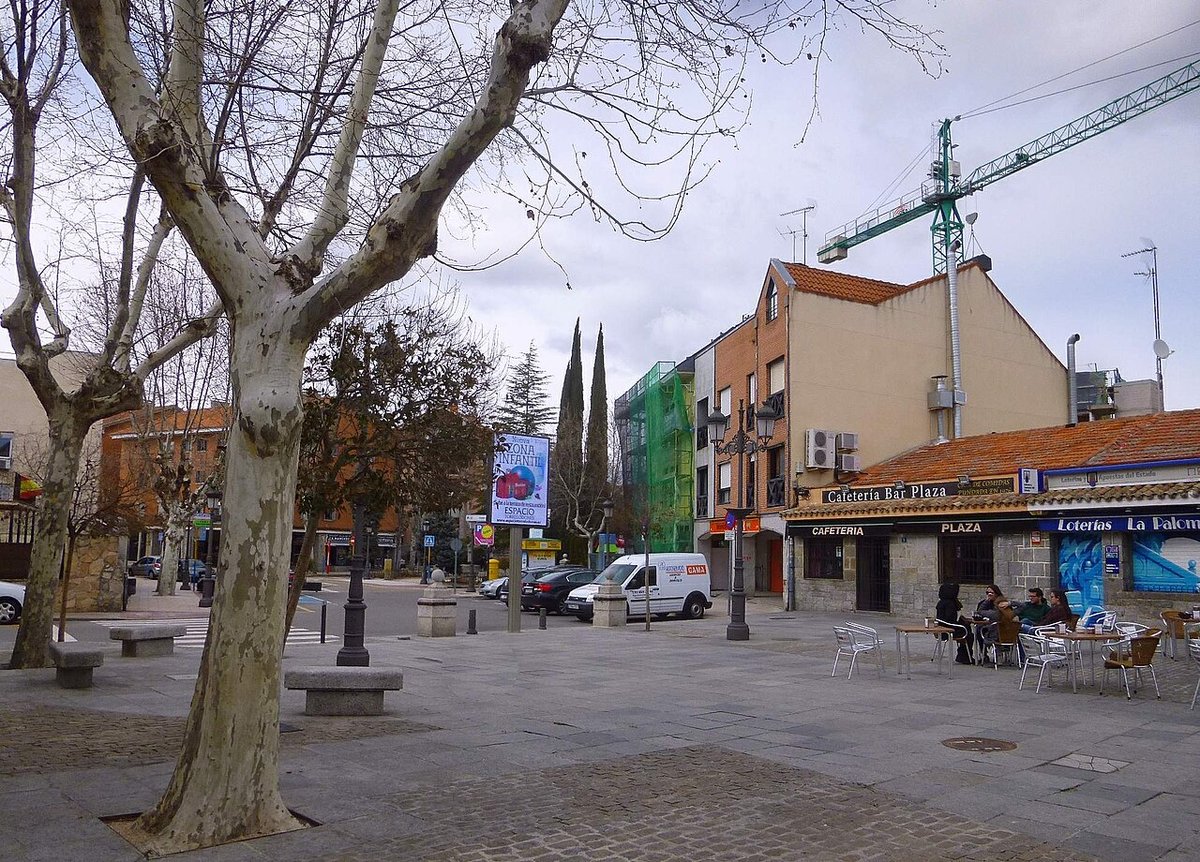
The centre of Brunete carries a particular atmosphere, as if it has seen its share of movement and change. The Plaza Mayor is square, lined with arcades and granite columns that give it the solid, restrained look common in many Castilian towns.
That appearance makes more sense when placed in context. In 1937, during the Spanish Civil War, the front line passed through Brunete and the town suffered heavy damage. Afterwards came a postwar reconstruction led by a state body responsible for rebuilding devastated settlements. As a result, the centre today is a mix. Some buildings seem older, while others clearly belong to that reconstructed “second version” of Brunete.
The church of Nuestra Señora de la Asunción reflects this layered history. Its origins go back to the 16th century, though parts had to be rebuilt after the war. It is not a grand monument, yet it helps explain what Brunete became after that summer of 1937. Walking through the square and nearby streets, the contrast between past and reconstruction becomes part of the experience.
Food that stays close to tradition
If something has remained steady in Brunete, it is the cooking. The food follows the traditions of the Madrid region without much reinvention. Hearty cocidos, garlic soups when the weather turns cold, and dishes made from offal that have largely disappeared elsewhere still have a place here.
This is the kind of cooking shaped by long mornings of work or walking, not by presentation or small portions. Meals are filling, direct and familiar, tied to habits that have not changed much over time.
Sweet things also have their place. Rosquillas, a type of traditional ring-shaped pastry, appear regularly during local celebrations and in family kitchens. It is not unusual to hear that someone’s grandmother still makes them “the usual way”. That kind of continuity says a lot about how daily life still works in Brunete.
Walking the quieter landscape
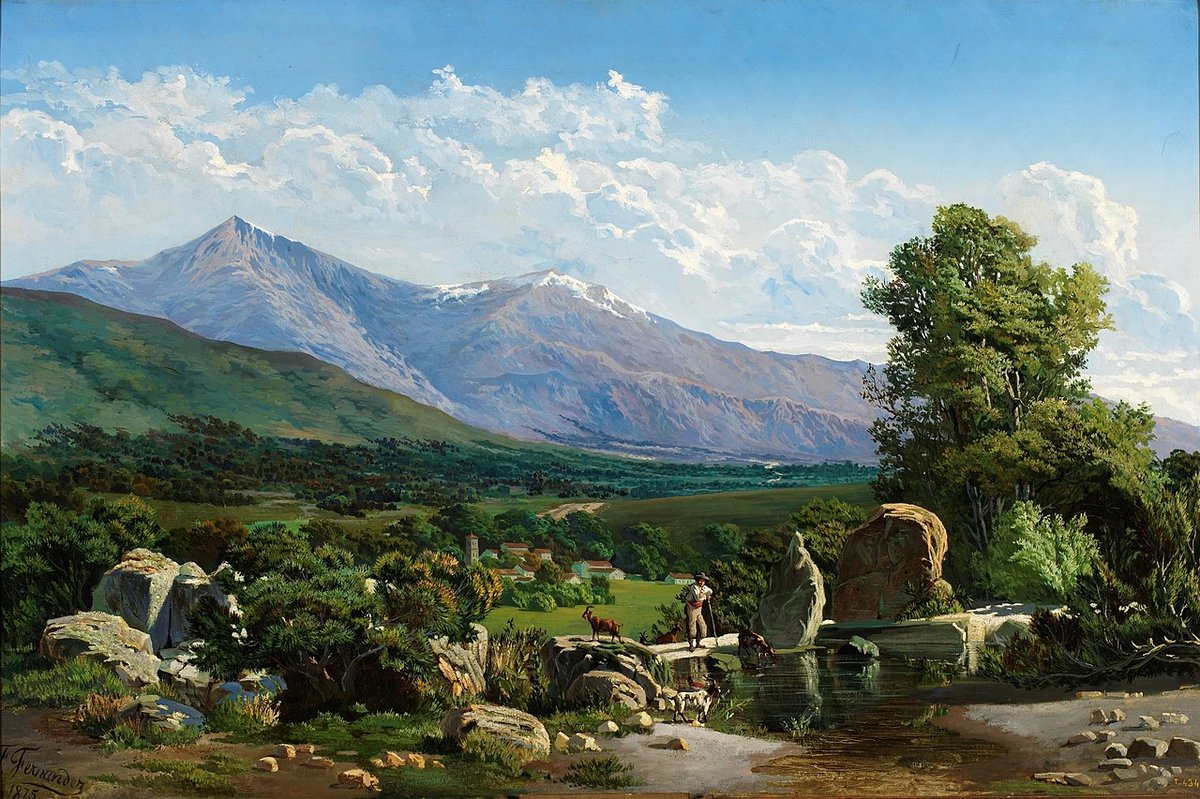
Brunete does not compete with dramatic landscapes. The surroundings are gentle, with farmland, scattered holm oaks and open fields. Yet that simplicity is part of the appeal. Walking here feels unhurried and calm.
There are several easy routes around the municipality, some passing old fountains, others linked to remnants from the Civil War. Bunkers and defensive positions can still be found in the countryside, although many are deteriorated and others are partly hidden by vegetation.
This is not a carefully signposted historical park. It is closer to a slow exploration, where understanding comes gradually by looking at the land and considering what took place there. The traces are subtle, but they are present.
When Brunete feels most alive
Spring and early autumn tend to be the most pleasant times to visit. The surrounding fields still hold some green and there is more life in the streets.
Local festivals, particularly those connected to San Isidro, bring together residents and people from nearby areas. During these days the town feels livelier than usual, with a stronger sense of community.
August shifts the rhythm. Heat and holidays quieten things down, and some activity fades. For those looking for atmosphere, other months are more rewarding.
How to approach a visit
Brunete is not a place designed for a packed itinerary. It works better as a calm stop rather than a full weekend of constant activity.
A typical visit might begin in the morning, with a walk around the Plaza Mayor, noticing how older structures sit alongside those from the reconstruction. If the church of Nuestra Señora de la Asunción is open, stepping inside adds another layer to that understanding. After that, time slows further over a relaxed meal.
Within a few hours, a clear impression forms. Brunete is a town marked by the Civil War, rebuilt as best it could, and now continuing at its own pace. It sits close to Madrid yet moves differently, and sometimes that quieter rhythm is exactly what is needed.