Full Article
about Collado Villalba
Capital of the sierra and service hub; it blends shopping areas with natural spots like La Dehesa.
Hide article Read full article
A Town Between Two Worlds
Collado Villalba sits on a geological and social border. To the north, the granite mass of the Sierra de Guadarrama rises sharply. To the south, the land flattens towards the Madrid basin. The town’s history is one of managing that transition, first as a mountain pass for livestock and later as a railway junction. Its size and constant movement feel distinct from the quieter villages deeper in the sierra, yet its foundations are still in that same grey stone.
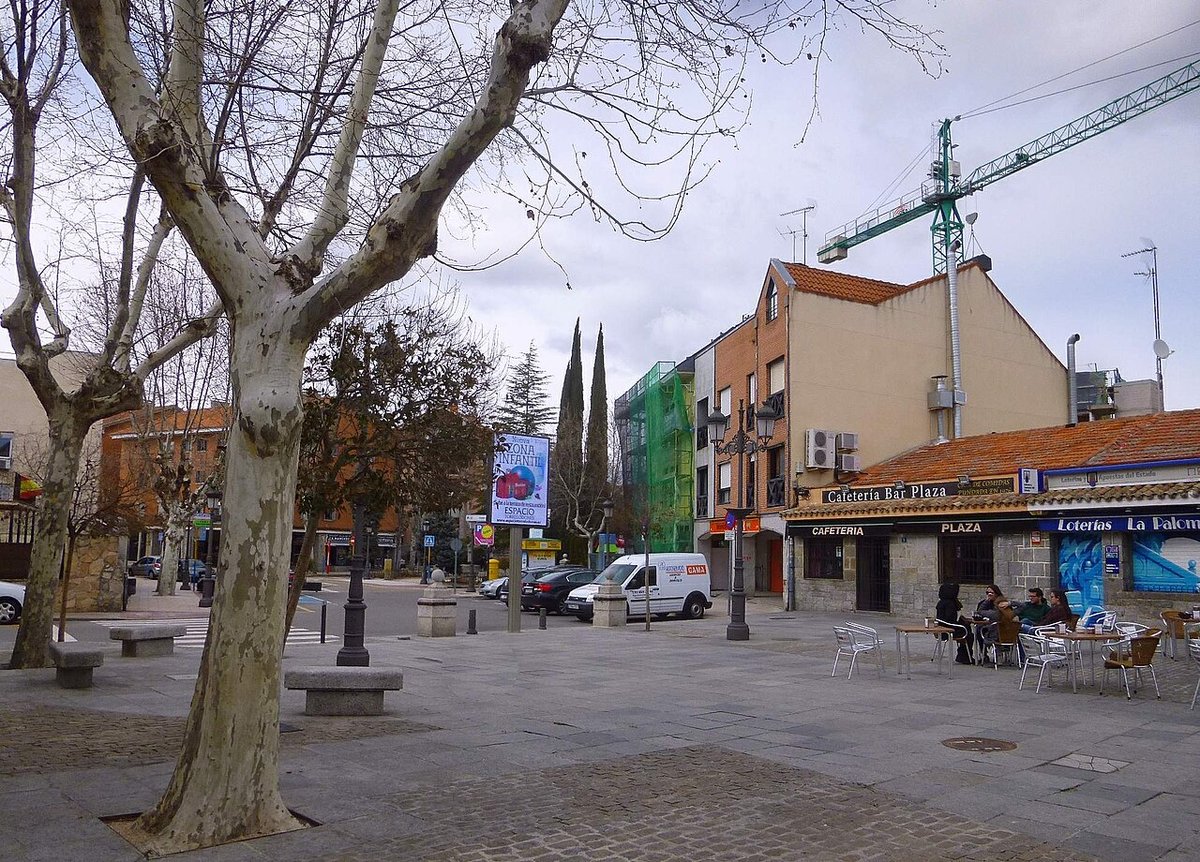
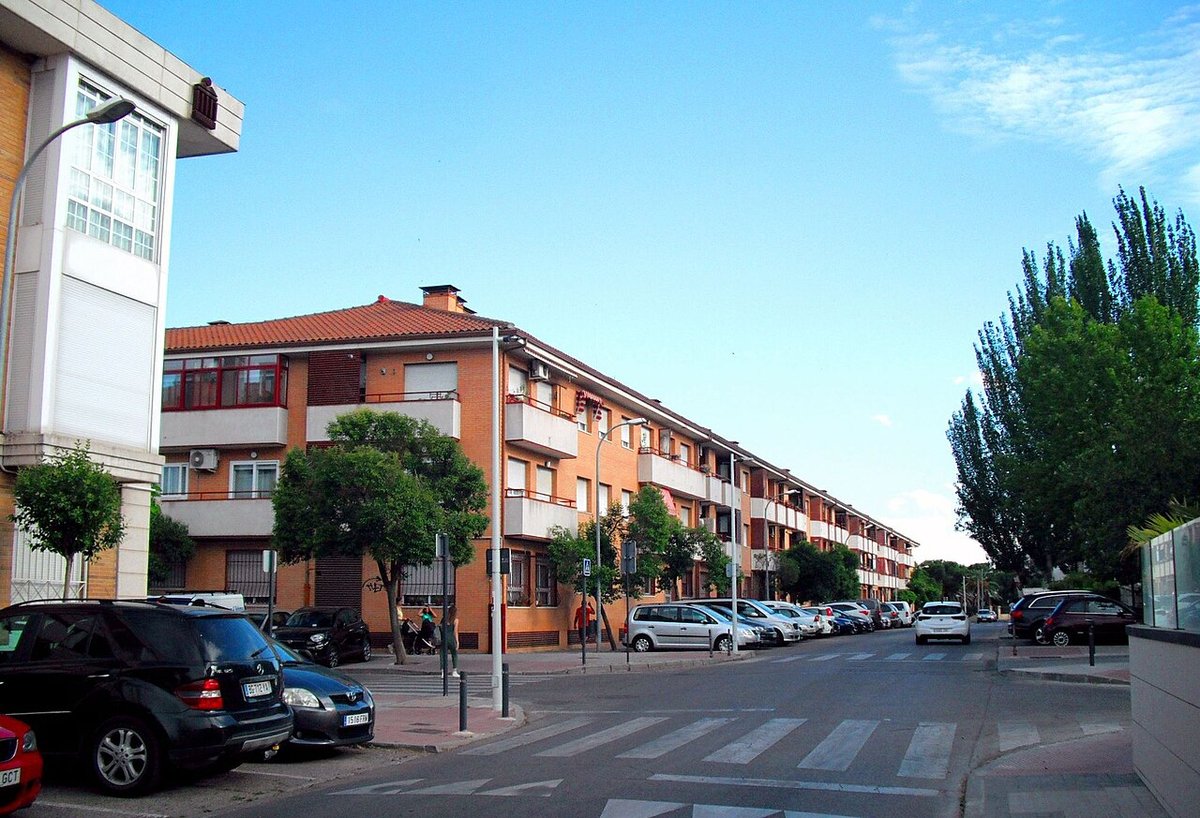
The old quarter, Villalba Pueblo, makes this clear. Granite appears in boundary walls, church façades, and the arcades of the main square. The 20th century expansion towards the railway station created a separate commercial centre, giving the municipality its current, dual rhythm. It functions as a practical base for the mountains while retaining the physical markers of its older origin.
Land of Drovers’ Routes
The name itself points to its original purpose: a collado is a mountain pass. For centuries, this was a crossing point for the seasonal migration of livestock. The main drove road, the Cañada Real Segoviana, passed through here, connecting the northern and southern plateaus. The economy revolved around that transit, with inns and watering points established along the route.
The Iglesia de Nuestra Señora del Enebral occupies the high ground of the old settlement. Built in phases during the 16th and 17th centuries, its position was strategic. From its atrium, one could observe movement through the pass. The building is sober, typical of rural Castilian churches of its period, and its importance lies more in its vantage point than in any grand ornamentation.
The Open Council and a Public Fountain
Two modest elements in the old quarter speak to its past civic life. On Calle Real, the Piedra del Concejo is a granite bench carved from a single block. Local tradition holds it was the meeting place for the town council when matters were discussed outdoors. Further along, the Caño Viejo is a historic public fountain. It provided essential water for residents and for the herds on the move, making it a natural spot for exchange and conversation.
These are not monumental sights, but they are direct physical evidence of how communal life was organised before modern expansion. They anchor the old town to a time when decisions were made in the open and daily routines centred on shared resources.
The Railway and a Shift in Scale
The character of Collado Villalba changed fundamentally with the arrival of the railway in the late 19th century. The Madrid–Segovia line established the town as a key transport node. This brought new residents, first for summer homes and later as permanent commuters to the capital. The station area grew into a separate nucleus of activity.
During the Civil War, this infrastructure held strategic importance for controlling access to the sierra front lines. Today, the station remains one of the busiest commuter stops in the region and a primary rail gateway for entering the Guadarrama. Its persistent utility underscores how the railway permanently redefined the town’s relationship with both Madrid and the mountains.
Granite and the Surrounding Terrain
The local landscape is built on and from granite. It is the material of older houses, agricultural walls, and church towers. It weathers to a pale grey that defines the colour of the sierra. A short walk to any of the surrounding low hills reveals the town’s layout: the dense older core, the later expansion along transport lines, and the open dehesa and scrubland that still press in from the north.
This setting makes the sense of transition tangible. You can stand on one of these paths and see the urban perimeter to the south, while to the north the land climbs decisively into wooded slopes. Collado Villalba exists in that space between.
A Practical Base for the Sierra
Collado Villalba is connected to Madrid by the A-6 motorway and frequent Cercanías trains on lines C-8 and C-10. The station is a practical starting point for journeys into the Guadarrama. The town itself can be walked thoroughly in a few hours, focusing on the contrast between the old quarter and the modern centre.
Many people use it as a logistical base for exploring the region or for accessing nearby towns like Guadarrama or Alpedrete. Spring and autumn are good times to visit, when walking the perimeter paths is more comfortable and the clear air sharpens the view of its position between two worlds.