Full Article
about San Lorenzo de El Escorial
World-famous tourist destination for its Monastery; stately town ringed by mountains and forests
Hide article Read full article
A town that doesn’t ease you in
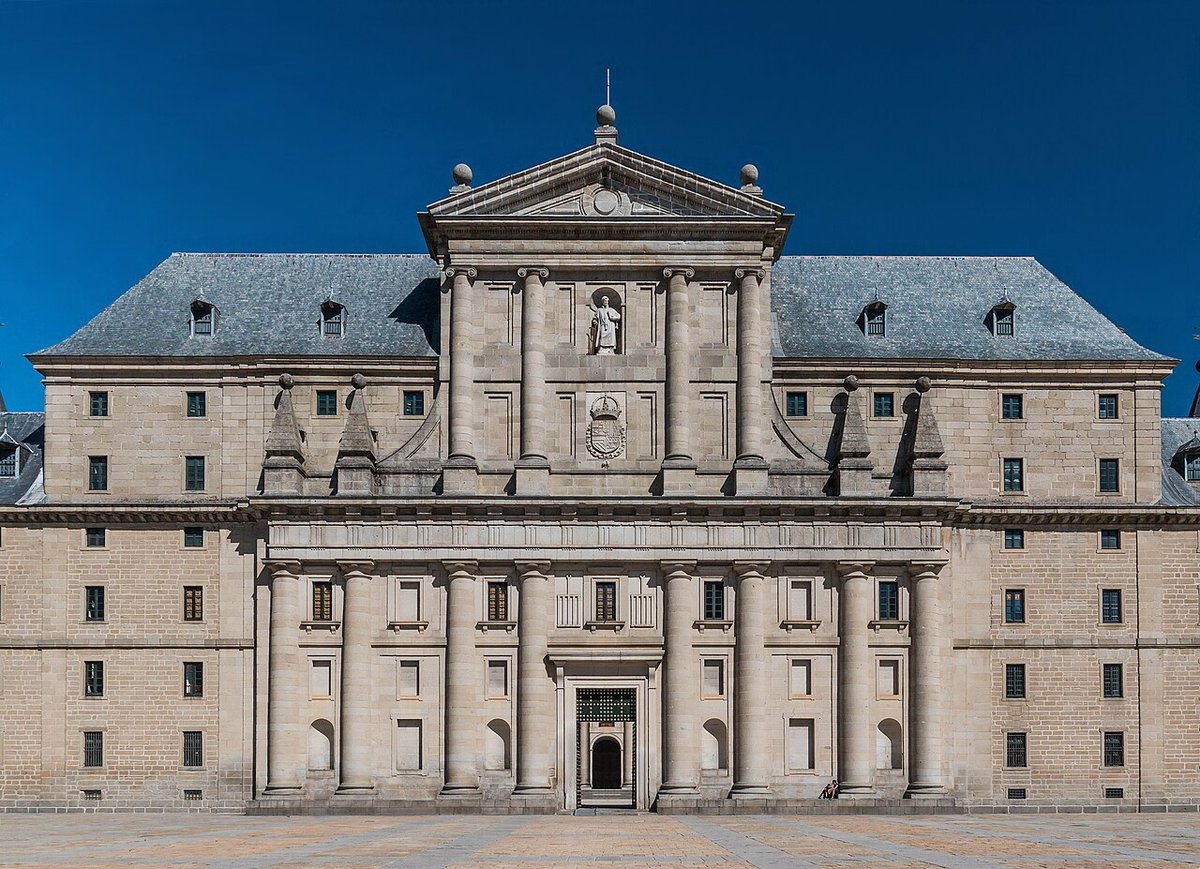
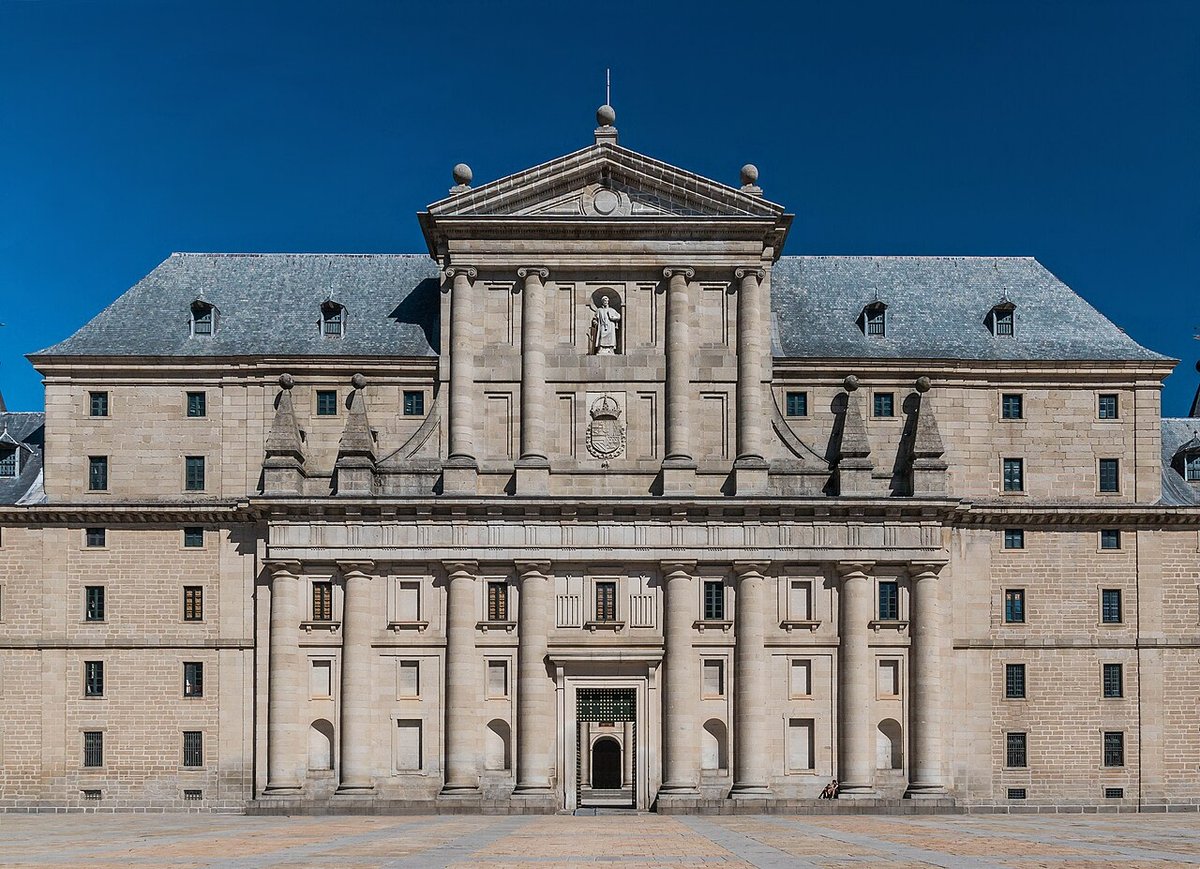
Some places welcome you gently. San Lorenzo de El Escorial does the opposite. You step out of the car and there it is straight away, a vast block of granite dominating everything around it. The Monasterio doesn’t bother with subtlety. It stands there with total authority, the kind that makes the rest of the town feel secondary at first glance.
That first impression sticks. The scale is hard to ignore, and it shapes how the place is experienced from the very beginning.
The stone project that changed everything
The story starts in 1557, when Felipe II won a battle and decided to mark it with something unusually ambitious. His idea was to build a monastery that would also function as a royal pantheon, a palace, a library and a centre of study. All of it in one complex. He chose a site on the slopes of the Guadarrama, where pine forests surround the area and winter cold rolls down from the mountains without much warning.
Construction ran from 1563 to 1584. The result is a building laid out in the shape of a grid. According to tradition, this design references the grill on which San Lorenzo, the town’s patron saint, was martyred.
Inside, the scale continues. There are courtyards, fountains, long corridors that seem to stretch on without end, and a pantheon where many Spanish monarchs are buried. The library stands out even within all of this. It is a long hall with ceiling frescoes and shelves filled with old volumes that feel almost cinematic. Even those who usually avoid museums tend to pause here.
When the town gained its own rhythm
In the 18th century, Carlos III stepped in. Known for his discipline and early mornings, he separated San Lorenzo from the rest of the nearby settlement and gave it its own identity. This shift brought new life to the area around the court.
One of the clearest signs of that change is the Real Coliseo. It is a small theatre, quite intimate in scale, and still in use today. Watching a performance there carries a certain curiosity. The building was already active at a time when many Spanish cities did not yet have a permanent theatre.
On the hillside, two lesser-known buildings sit quietly compared to the monastery’s presence: the Casita del Príncipe and the Casita del Infante. These are 18th-century leisure residences designed by Juan de Villanueva. They are not grand palaces but refined pavilions with carefully kept gardens. Just behind them lies the Bosque de la Herrería, a broad oak woodland where locals go to walk, cycle or simply spend time outdoors.
Food after the descent
Hunger tends to follow a visit to the monastery. The local food reflects the mountain setting, with a tradition of roast dishes and hearty meals that call for bread and time at the table.
Lechal lamb appears frequently, and when temperatures drop, spoon dishes become more common. You will also come across judiones de la sierra, large beans associated with the nearby Segovian side of the mountains. Sweets often echo convent-style baking, simple and familiar rather than inventive.
This is not a place aiming to surprise with new flavours. The food instead reinforces where you are. It feels rooted in the sierra rather than in the centre of Madrid.
Autumn brings another layer. If rainfall has been generous, mushrooms start appearing in the nearby pine forests. Locals collect them with care, though every season includes a few who head out without enough knowledge, which sometimes leads to problems. It has become part of the seasonal rhythm across much of the Madrid highlands.
Walks beyond the monument
The monastery draws most of the attention, which leaves the rest of San Lorenzo quieter by comparison. That creates an opportunity. While many visitors queue to go inside, it is easy to head out on foot towards the Silla de Felipe II.
The walk is straightforward, passing through pine woodland before reaching a granite viewpoint. From there, the monastery appears in full, almost like a scale model set into the landscape. The story says that Felipe II used this spot to oversee the construction works. Whether that is entirely accurate remains unclear, but the view explains why the location became associated with him.
Longer walks are just as accessible. Paths quickly lead into the surrounding hills, and the Bosque de la Herrería is one of the easiest places to experience that shift. Within minutes, the sounds of the town fade away.
Late afternoon changes the atmosphere again. Light hitting the stone of the monastery adds a different tone to the whole setting. It helps make sense of why this location was chosen in the first place.
When the town loosens up
For much of the year, San Lorenzo carries a formal, historical feel. Certain moments break that pattern. On 10 August, the day of San Lorenzo, the town hosts a procession followed by fireworks. The sound echoes off the monastery walls, turning the whole space into something close to a resonating drum.
Across the year, there are also concerts, craft fairs and cultural activities spread through the streets and squares of the centre. These events bring a different pace, even if the setting remains the same.
September introduces one of the more distinctive occasions: the Noche de las Velas. During this evening, the old town changes its appearance. Balconies are lit, electric lighting is reduced, and people move through the streets at a slower pace. The atmosphere stays calm, more like a quiet evening stroll than a busy celebration.
How long to stay
San Lorenzo de El Escorial works well as a day trip from Madrid. The monastery alone takes time, and adding a walk through the historic centre plus a short route into the surrounding woodland easily fills a full day without rushing.
Spending longer is also an option, particularly for those who enjoy walking or prefer a slower rhythm. The combination of history, open space and small-scale cultural life gives the town enough variety to stretch beyond a single visit without needing to complicate the plan.