Full Article
about Villanueva de la Cañada
Modern university and residential town; noted for its town-hall architecture and golf course.
Hide article Read full article
Where Madrid Starts to Loosen Its Grip
Some places are planned destinations. Others happen almost by accident. Tourism in Villanueva de la Cañada often begins in that second way. Someone suggests a day at the water park, a swimsuit goes into a bag, there is a short drive out from Madrid, and suddenly the city feels further away than expected.
The town sits just over half an hour from Puerta del Sol when traffic behaves. Many visitors arrive, spend hours in the water, dry off and head straight back. Yet a little extra time changes the picture. A walk through the centre or a short trip beyond it reveals a place with more background than it first suggests from the queue of a slide.
When It Was Still Called La Despernada
For centuries, Villanueva de la Cañada was known as La Despernada. The name tends to provoke the same reaction: a raised eyebrow and the question of what could have happened here.
The explanation usually comes as an old story. It appears in texts from the time of Philip II and tells of a woman, described in some versions as a princess and in others as a noble, who lost a leg in this very place. Like many stories passed down over time, the line between fact and repetition is unclear.
The name eventually changed, but the memory has not entirely disappeared. It still shows up in local references and on occasional plaques. It is one of those historical quirks that surfaces whenever someone asks where the name comes from, then lingers in conversation a little longer than expected.
A Town Rebuilt After War
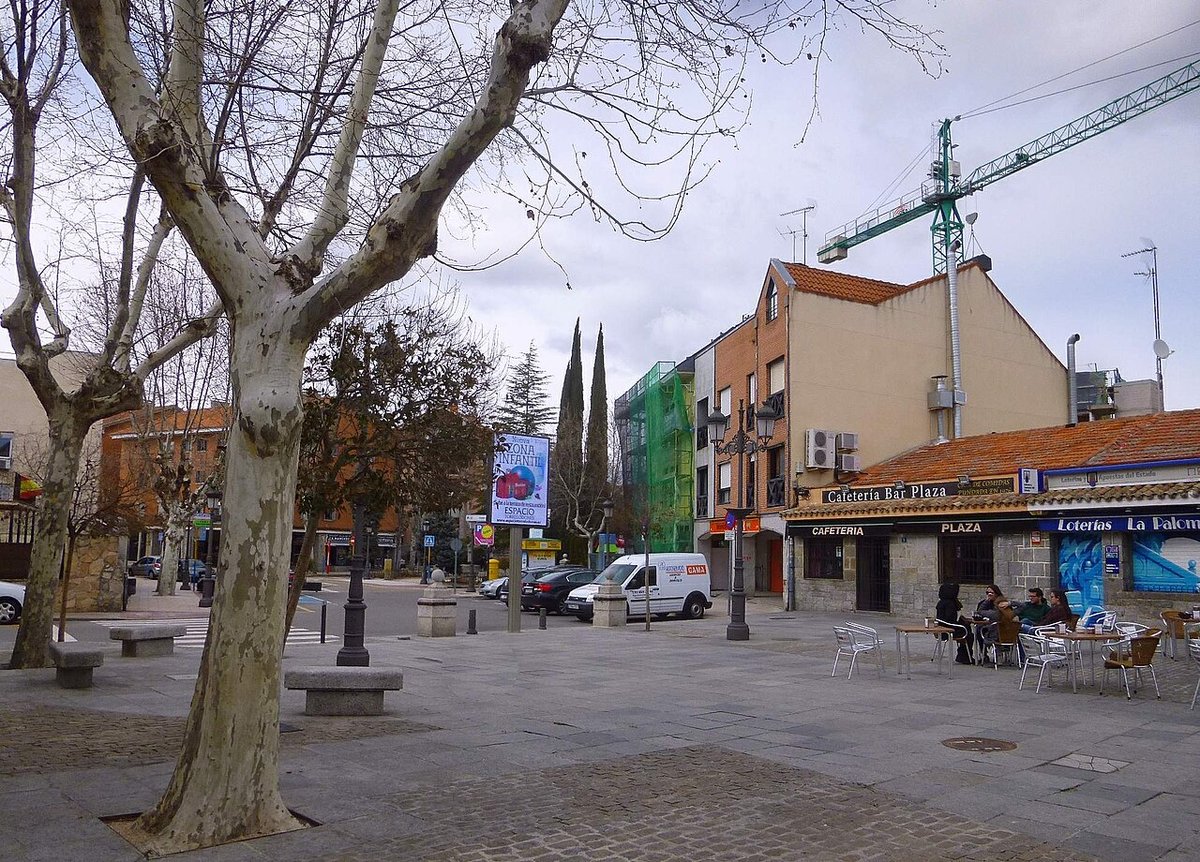
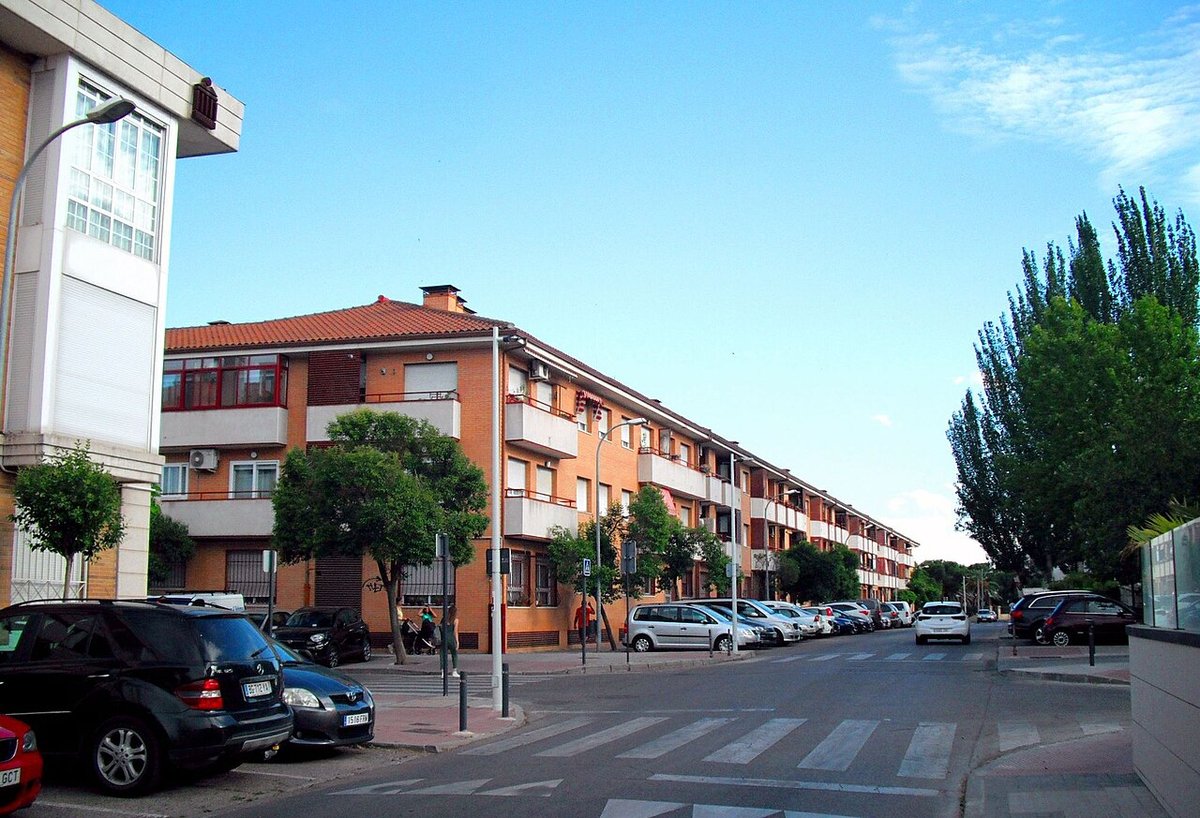
A walk through the centre brings an immediate impression. The streets are wide, the houses fairly uniform, and genuinely old buildings are hard to spot.
There is a reason for that. During the Spanish Civil War, this area lay close to the front line, near the Battle of Brunete. Villanueva de la Cañada suffered heavily, and much of it had to be rebuilt afterwards.
That history explains the absence of a traditional old quarter. What stands in its place feels consistent rather than reconstructed for show. The town does not come across as a staged version of the past. It feels like somewhere that started again and expanded gradually as Madrid grew closer and more connected.
Aquópolis and the Rhythm of Summer
The main draw for visitors is Aquópolis, the water park just outside the town. Its presence is impossible to miss once summer arrives. Cars stream in, families carry cool boxes, children often arrive already dressed for the day.
Peak days in July and August can be intense. Anyone who has been to a water park during a heatwave will recognise the atmosphere: long queues, flip-flops scattered everywhere, and the scent of sun cream hanging in the air.
Locals have a mixed relationship with it. On one hand, it brings seasonal work and a steady flow of people. On the other, it adds traffic and noise for several weeks. It has become part of everyday life here, the kind of presence that shapes the rhythm of summer whether one seeks it out or not.
The Half-Forgotten Castle by the River
A short drive from the town centre leads to a very different scene. Hidden among dirt tracks and holm oaks stands the castle of Aulencia. This is not a restored monument with ticket desks or modern displays.
What remains are the traces of an old fortification, worn down by time. The site also lay within the combat zone during the Civil War, and people still speak of marks and remnants from that period.
Reaching it feels like an unplanned excursion. A path leads up, the surroundings grow quiet, and the Aulencia river runs below. The landscape opens out in every direction. A pause here makes the location clear. There is a reason a tower once stood in exactly this spot.
Food, Daily Life and Getting Around
The food reflects the wider western area of Madrid. Meat, grilled dishes and hearty meals are common, especially when the weather turns cold. At weekends, long tables often fill with families or groups of friends who stretch lunch well into the afternoon.
Villanueva de la Cañada also has a shifting rhythm tied to its university population and to residents who live here but work in Madrid. Weekdays and weekends feel noticeably different. The pace changes, as does the atmosphere in the streets.
Reaching the town is straightforward by car from the north-west of the capital. There are also buses connecting it with Madrid and nearby municipalities, though the pace is calmer than in the city. Once there, it is easy to get around on foot.
Is It Worth Stopping?
Villanueva de la Cañada is not the kind of place that usually draws visitors from far away as a sole مقصد. It tends to be somewhere people arrive for another reason.
Still, if the journey brings you here, it is worth extending the visit a little. Walk through the centre, head out towards the castle, and let the afternoon unfold without rushing.
Places discovered by chance often stay in the memory longer than expected. Villanueva de la Cañada fits that pattern. It may begin as a practical plan, but it can end as somewhere that leaves a quiet, lasting impression.