Full Article
about Anchuelo
Small town in the Alcarria madrileña; known for its quiet and its historic church amid rolling hills.
Hide article Read full article
A village shaped by light and open land
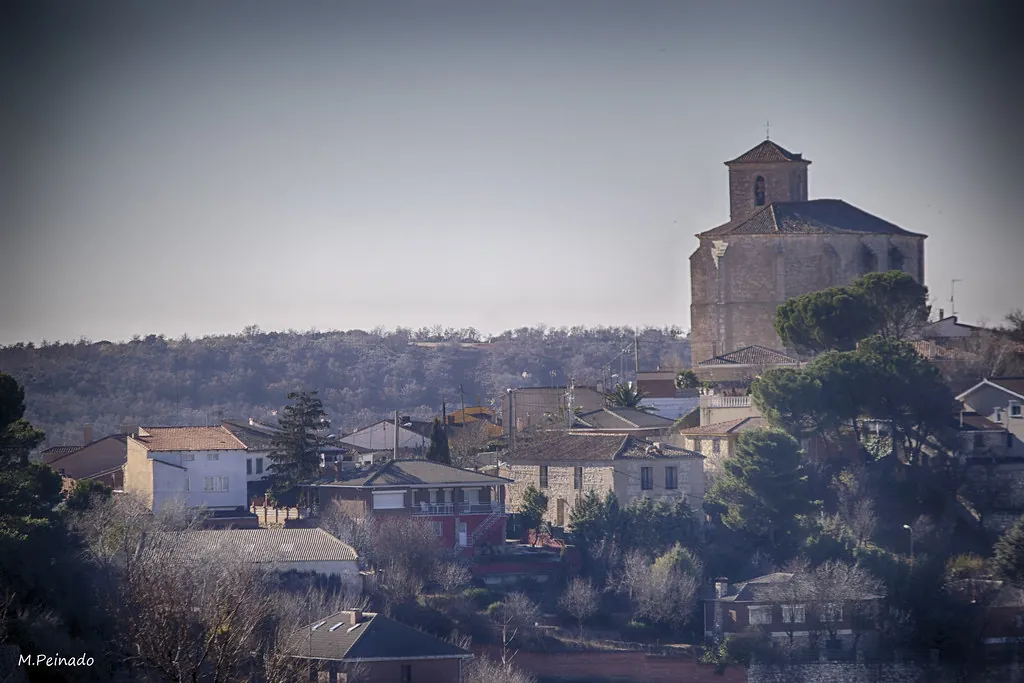
Early in the day, when the sun is still low in the eastern sky, the fields around Anchuelo take on an almost golden tone. The air carries the scent of dry earth and cut straw. Tourism in Anchuelo is, above all, this: an open horizon, long stretches of quiet, and a small cluster of houses resting on a gentle rise in the Cuenca del Henares.
The village lies around 35 kilometres from Madrid, and the shift in atmosphere is immediate. Roads narrow, cereal plots appear, and the landscape begins to roll softly. Anchuelo sits at roughly 750 metres above sea level, high enough for the wind to move freely and for the surrounding farmland to be clearly visible from its edges. These fields change colour with the seasons: green in spring, yellow in summer, and ochre tones as colder weather arrives.
In the centre, the streets are short and calm. Some sections are paved with uneven stone, and whitewashed façades reflect the strong midday light. A few windows still have old iron grilles, their surfaces dulled with age. By late afternoon, shadows from the rooftops stretch across the streets, and the pace of the village slows even further.
The tower that guides your way
The most recognisable landmark is the church of San Bartolomé. Its tower rises above the rooftops and becomes visible from any approach into the village. The building is not ornate. It is defined by pale stone, simple lines, and a clear presence, especially when the sun hits it directly.
Walking without a fixed route works well here, particularly in the streets around the church. Distances are short. Within a few minutes, it is possible to move from a small square to a sloping street or to a quiet corner where the only sounds are footsteps and the occasional door closing. At times, the smell of freshly baked bread drifts out from a house or a small local bakery.
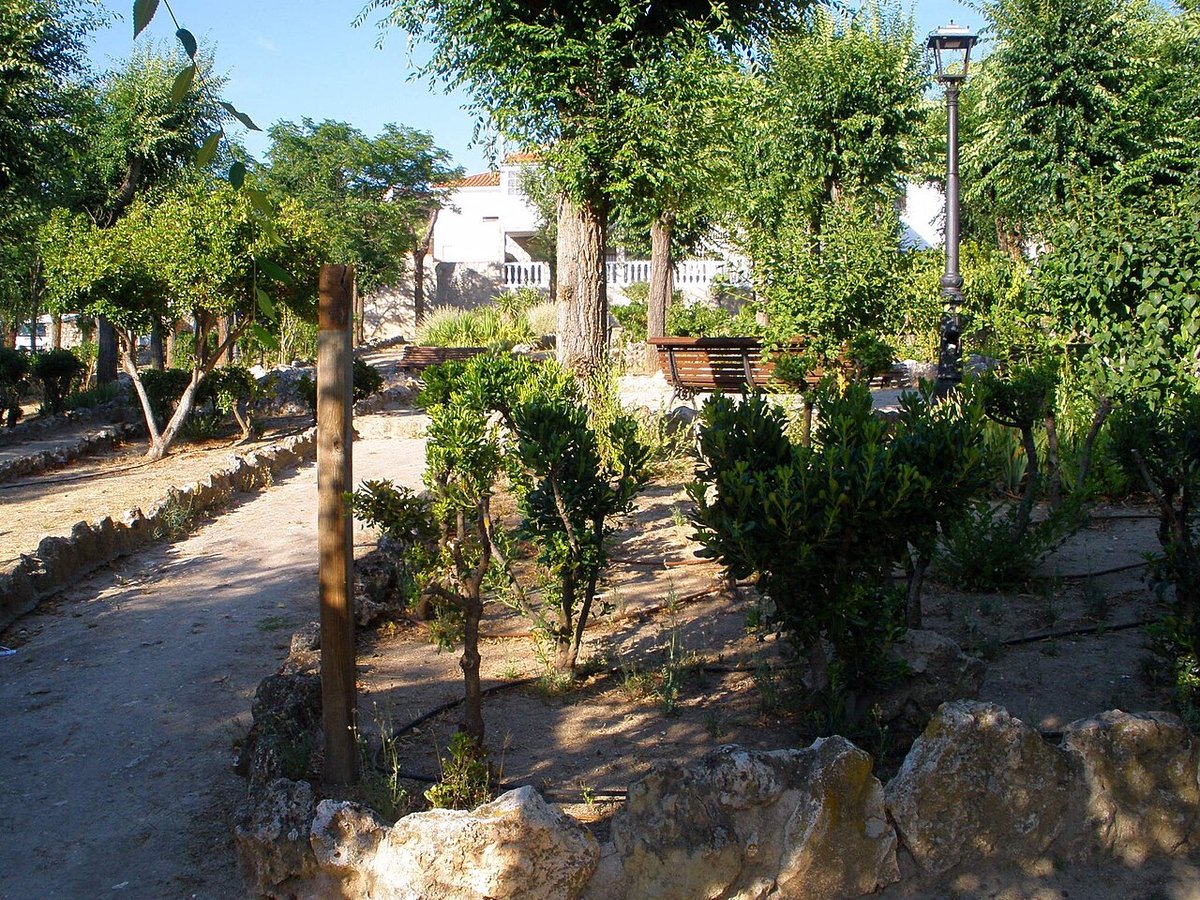
The main square is straightforward in layout. There are benches, patches of shade as the sun shifts, and neighbours stopping briefly to talk before continuing with their day. Nothing feels hurried.
Paths that lead beyond the houses
Once the last houses are left behind, agricultural tracks begin almost immediately. These are wide, pale dirt paths used by tractors and by people out for a walk. The view opens up quickly. Wheat and barley fields dominate nearly all the surrounding land.
There are no steep gradients, which makes it easy to walk at a relaxed pace for over an hour, circling the village while it gradually shrinks behind you. When the wind picks up, the cereal crops move in soft waves, creating a steady sound that feels like a continuous rustle.
In summer, the ground is usually very dry and dusty. After rainfall, particularly in autumn or spring, some stretches can become quite soft underfoot. Footwear with a good grip is useful, and carrying water is advisable if walking beyond the built-up area, as shade is limited.
Times of year and local rhythms
Towards the end of August, Anchuelo celebrates festivities linked to San Bartolomé. During these days, the atmosphere in the square shifts noticeably. People who live elsewhere but maintain ties to the village return, and the streets become livelier. The usual quiet gives way to activity that can continue late into the night.
Semana Santa, or Holy Week, also has a place in the local calendar. Religious events pass through some of the central streets. These celebrations are restrained in tone and closely connected to everyday life in the village.
Spring and autumn are generally the most pleasant seasons for walking in the surrounding countryside. The light is softer, and the agricultural landscape shows stronger contrasts in colour. In summer, heat settles heavily over the open fields, so it is better to head out early or wait until the sun begins to drop. Winter brings wind that can intensify the sensation of cold, particularly in exposed areas.
The village centre itself can be explored quickly. In about an hour at an easy pace, it is possible to cross it and return to the starting point. The more interesting option is to extend the walk towards the edges, where old animal pens, small vegetable plots and paths begin to stretch out between the fields.
Anchuelo is not a place of constant activity. It works more as a pause within the Cuenca del Henares: a small village where the focus is on walking slowly, watching the landscape shift with the light, and listening to the wind moving through the fields.