Full Article
about Olmeda de las Fuentes
Known as the village of painters for its light and white houses; bohemian, artistic atmosphere.
Hide article Read full article
The sun at midday falls straight onto the square, bleaching the stone and pale façades. Whitewash throws the light back with a dry brightness. A breeze from the fields carries a scent of turned soil and cereal crops, a dusty, sweet smell. Footsteps echo on the cobbles and then fade. Just over an hour from Madrid, in the Henares basin, Olmeda de las Fuentes moves at the slow rhythm of a place where open countryside sits two minutes from any front door.
The architecture of earth and silence
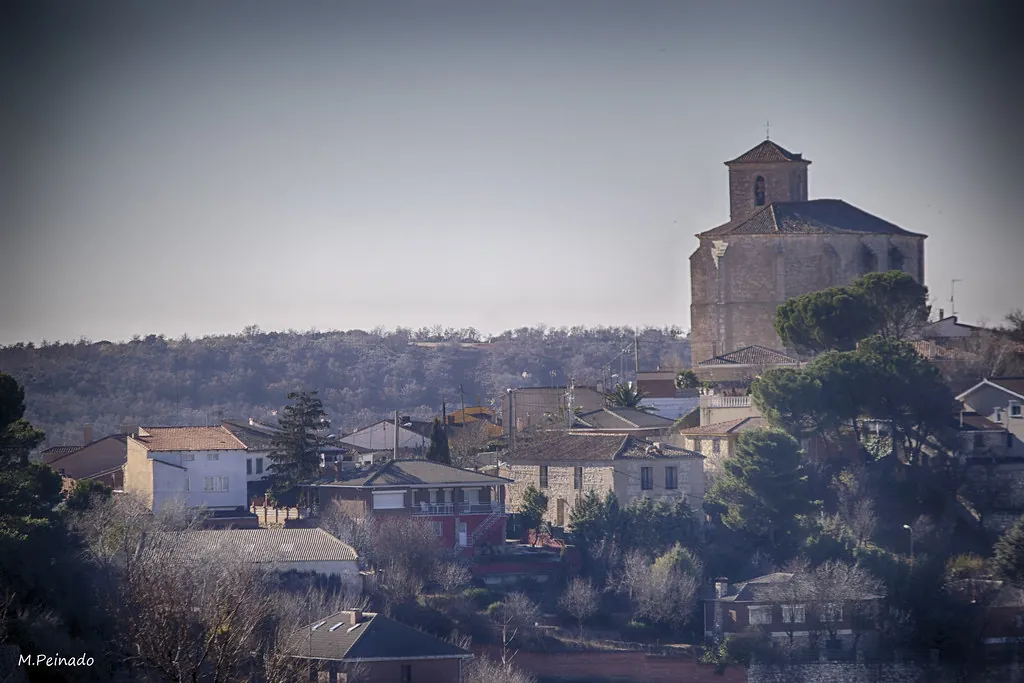
The houses are built from adobe and rammed earth, their lines soft and without pretence. Heavy dark iron grilles still guard some windows. Here and there, a façade shows a carved stone or a coat of arms worn smooth by weather. The streets are narrow and gently curved, following an old logic of need. At the centre stands the parish church of San Pedro, its pale grey limestone blocks cut in the 16th century. Its simple bell tower appears from almost any corner, shaping the skyline when you approach by road. Early morning brings a door opening, a van rolling past slowly, low voices crossing the square. By nine, the calm returns.
Tracks into the agricultural plain
Leave the last house behind and dirt tracks begin. Some are signposted toward old fountains or small springs that seep among terraces. Not all of them run year-round. The agricultural imprint is everywhere: threshing floors and low stone remnants of structures linked to cereal farming. They almost blend back into the land. From these paths, the horizon opens wide. Plots of wheat or barley shift colour with the seasons—green in spring, gold in summer, ochre after the harvest. Walking out towards sunset is worth it. The lower light turns everything warm, and the sound is just the wind moving through the grain. Birdlife is constant. Harriers sweep low across the fields; smaller birds of prey perch on posts. Keep binoculars in your pocket.
The texture of quiet hours
For long stretches, the square is empty. Leaves brush softly in the trees. A conversation drifts out from an open window upstairs. This is a place for noticing details: the grain of heavily worn wooden doors, old locks with simple mechanisms, ironwork rusted to a reddish tone. When a local festival happens, traditionally around San Pedro, the atmosphere shifts completely. Tables appear, music fills the space, voices rise and overlap. For a few hours, the village sheds its quiet character.
A note on seasons and footing
Spring is often the most pleasant season for walking here. The fields are green and the air stays fresh. Early autumn has its own appeal, with those ochre tones and a sharper light. Summer demands respect. The landscape is very open and shade is scarce beyond the village itself. Carry water, wear a hat, choose sturdy footwear—it makes a tangible difference. After rain, some paths become sticky or slippery; this is clay soil. If you plan to head far out, it’s wise to ask about the state of the tracks.
The drive from the city
From Madrid, you take the A-2 towards Guadalajara, then turn onto smaller roads that lead into the Henares basin countryside. The final stretch runs between open fields, a straight line under a big sky. Leaving early tends to work best, especially if you want to walk at a relaxed pace and return before evening. Park on the edges of the village; driving into the narrower central streets is more trouble than it’s worth.