Full Article
about Pozuelo del Rey
Small farming village in the Madrid Alcarria; noted for its monumental church.
Hide article Read full article
Early in the morning, when the air is still cool and only the occasional car passes along the road that cuts through the village, a kind of stillness settles between the low houses. That moment explains what tourism in Pozuelo del Rey is really about. It does not revolve around major landmarks or striking streets, but around a calm landscape where the countryside begins almost at the end of the pavement.
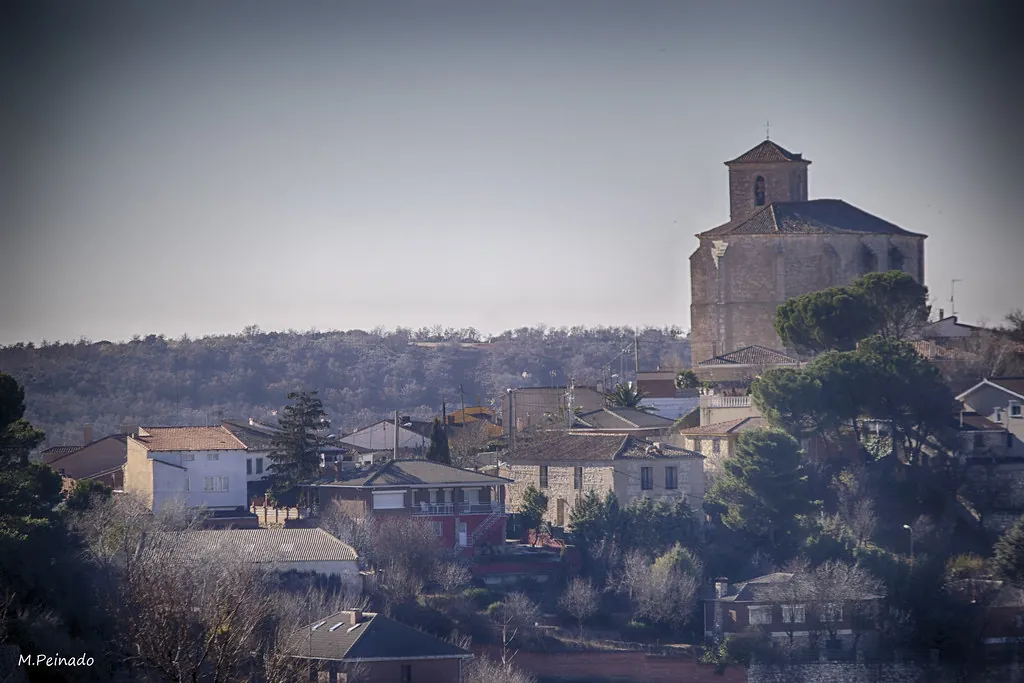
The parish church, dedicated to Santa María Magdalena, sits among trees and modest homes of one or two storeys. Its pale stone shifts with the light. In the morning it looks muted and grey, while towards evening it takes on a warmer tone. Like many village churches in the area, it is not always open, so it is worth expecting to see only the exterior unless your visit coincides with a service or local activity.
A small village in the Henares basin
Pozuelo del Rey lies within the Cuenca del Henares, a stretch of open farmland where the horizon feels wide and the terrain barely interrupts the view. From almost any street, the countryside is already visible or at least implied: cultivated plots, dirt tracks, and lines of trees marking long-standing boundaries.
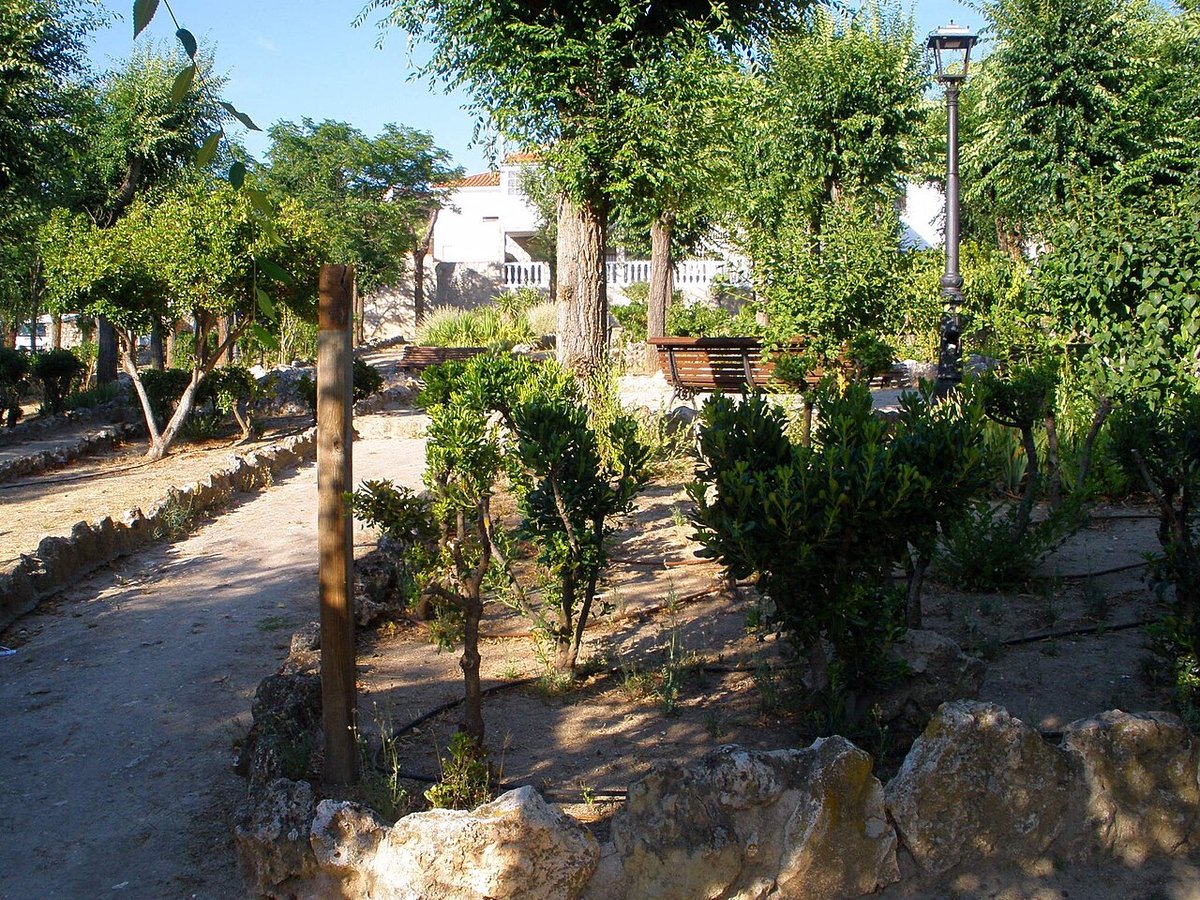
The centre of the village is compact. Some streets still feature houses with thick walls and interior courtyards hidden behind metal gates. In places, there are exposed stone surfaces or weathered plaster where the sun has left uneven traces over time. It is not a historic centre designed for long, continuous sightseeing. Instead, it suits a slower walk, paying attention to small details: a vine stretching across a façade, the sound of a rooster from a nearby yard, or the smell of firewood in winter.
There is a sense that daily life continues here without much adjustment for visitors. That is part of its character. Nothing is arranged for display, and very little tries to draw attention to itself.
Walking out into the fields
The most natural thing to do in Pozuelo del Rey is to head out on foot towards the tracks that surround the built-up area. Within minutes, the asphalt gives way to agricultural paths used by locals to reach their plots of land.
The landscape shifts noticeably with the seasons. In winter, earthy tones dominate and the air often feels clearer, with flocks of birds crossing the open fields. Spring brings bright greens as new growth spreads across the farmland. By summer, the prevailing colour turns to a dry gold typical of the central Spanish plateau, and the ground releases that dusty scent that builds after days of heat.
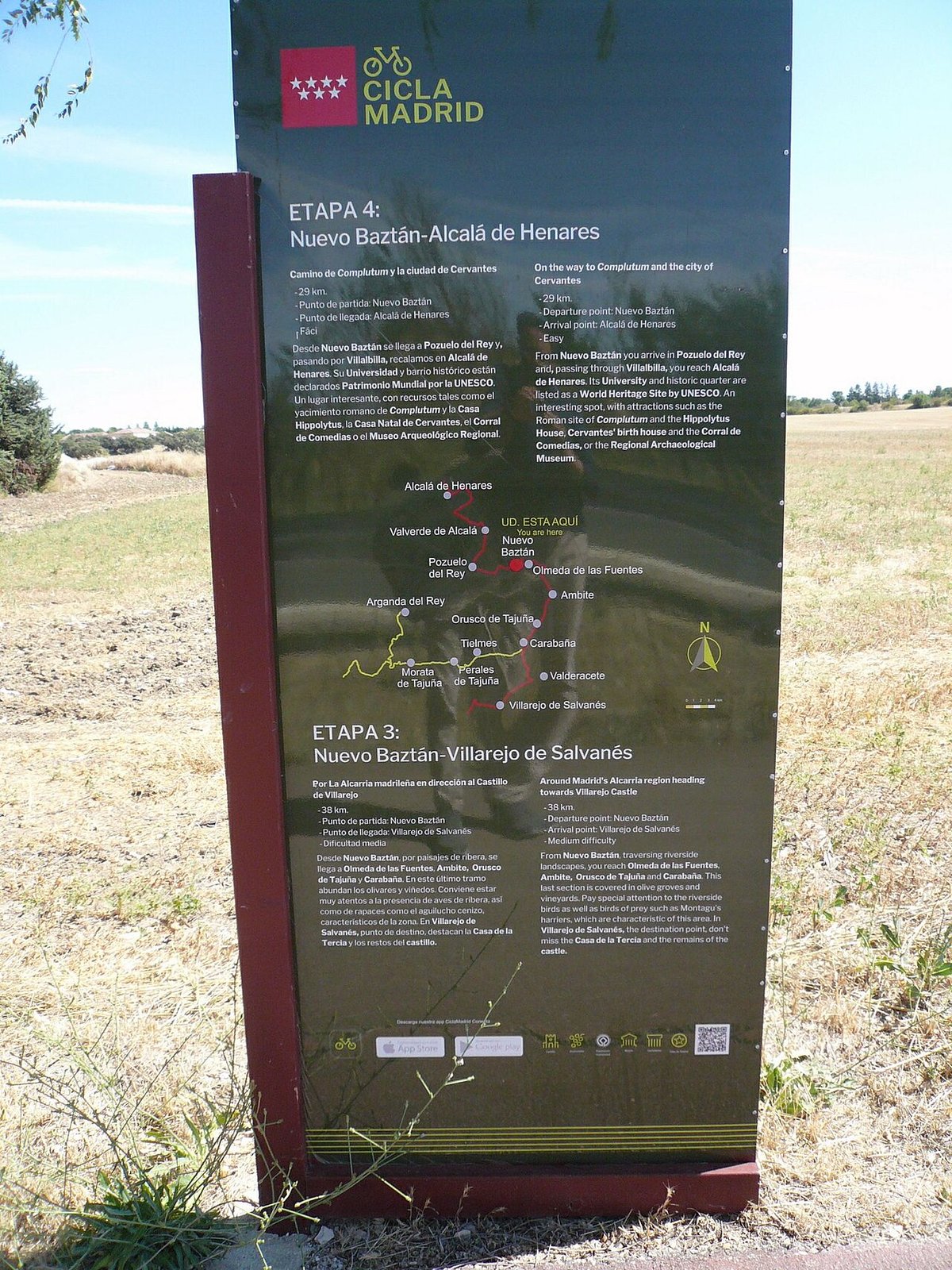
These are simple walks, without tourist signposting or official routes. For that reason, it helps to rely on basic common sense: stick to the main paths, respect the crops, and avoid entering private land.
There is no sense of spectacle here. What stands out is the continuity of the land, the way paths connect fields and the village without interruption. The experience is quiet and direct, shaped more by light and weather than by constructed viewpoints.
Summer festivities and local rhythm
The celebrations dedicated to Santa María Magdalena usually mark one of the liveliest moments of the year, around mid-July. During those days, the pace of the village shifts. There are more people out in the streets as evening approaches, music can be heard from the central square, and gatherings stretch on once the heat begins to fade.
Activities linked to agricultural traditions or local customs often form part of the programme. These are not events designed primarily for visitors, but for residents and those with family ties to the village. That atmosphere is noticeable, informal and close-knit, with a sense that people know one another and share the occasion rather than stage it.
For anyone arriving at that time, the experience will feel different from the rest of the year. The same quiet streets take on a more social tone, though without losing their scale or character.
When to come and what to keep in mind
Spring is often the most rewarding season for walking in the surrounding countryside. The fields are active with growth, and temperatures make it easier to spend time outdoors without much effort.
In summer, it is best to avoid the middle of the day. The sun falls strongly over the open farmland, and there is very little shade beyond the village itself. Setting out early or waiting until evening is the more sensible option, when the air begins to move and the landscape softens in tone.
Winter brings a different rhythm: cold days, shorter light, and very quiet streets. If visiting at that time of year, arriving in the morning helps make the most of the daylight hours.
Across all seasons, expectations matter. Pozuelo del Rey does not aim to fill a day with structured activities. Its appeal lies in how little is imposed on the visitor.
Getting there from Madrid
From Madrid, the journey is made by car through the Henares corridor, followed by smaller regional roads that lead into the countryside. The distance is not long, though the final stretch runs along secondary routes between open fields.
There are also bus connections from the metropolitan area. However, these tend to be designed for the everyday travel needs of residents rather than for a slow-paced visit, so planning around them may require some flexibility.
Pozuelo del Rey does not present major tourist attractions, and perhaps because of that it retains a sense of normality that can be difficult to find so close to Madrid. Within a few minutes of walking, the dominant sounds become the wind moving through the grasses at the edges of the fields and, occasionally, a tractor working in the distance.