Full Article
about Torres de la Alameda
Industrial and farming town; noted for housing a replica of the Holy Shroud.
Hide article Read full article
A village you see in one go
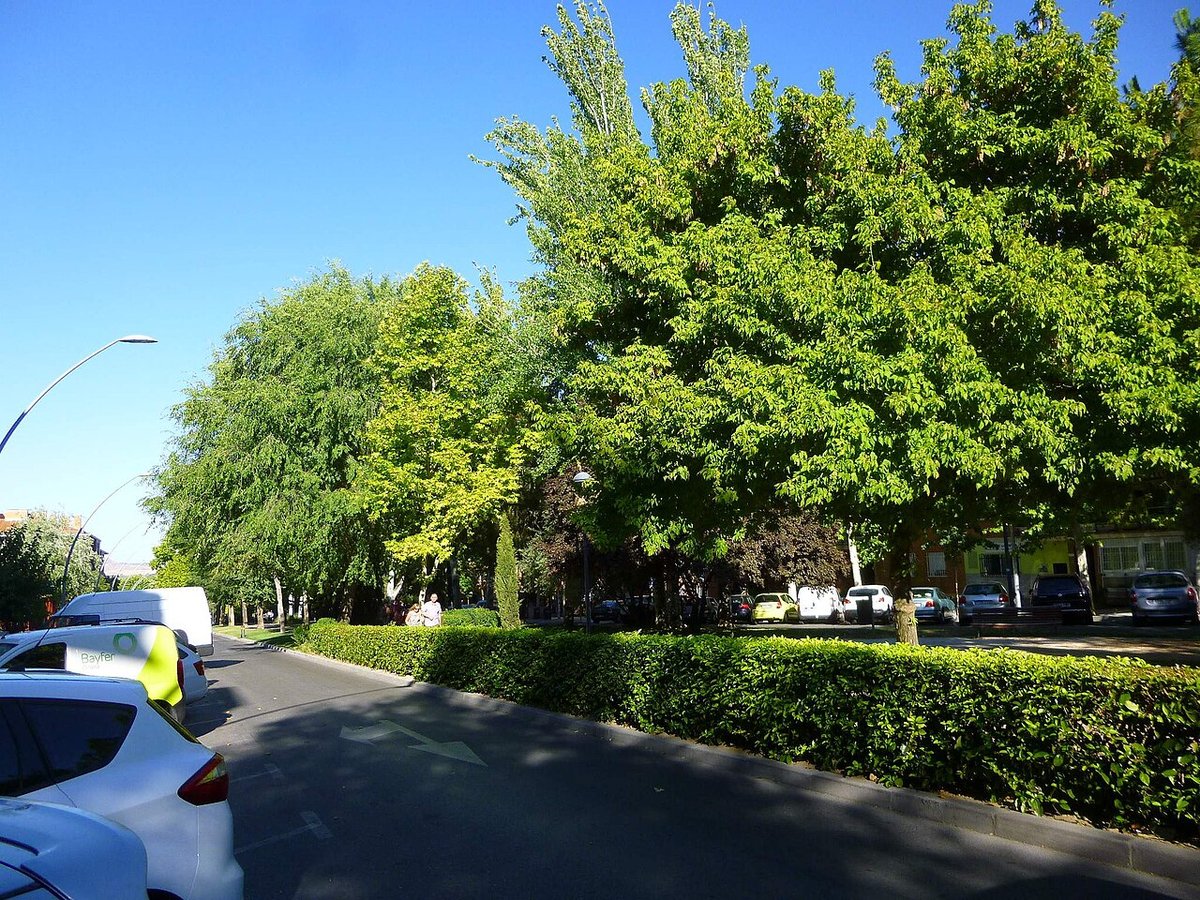
Torres de la Alameda is quick to get around. Parking is easy too: you arrive, take a short loop, and leave the car on any street. There are no paid parking zones or meters. By mid-morning things pick up slightly, though it still feels calm.
In summer, bring water. There are few trees and very little shade, so the sun hits directly.
This is not a place with a long historic centre or a long list of monuments. The visit is short and straightforward, more about a brief pause than a full day out.
Getting there and what to expect
Torres de la Alameda sits in the Cuenca del Henares, to the east of Madrid. The approach is along local roads that cross open farmland. The landscape already tells you what is coming: flat terrain, cereal fields, and, in the distance, several wind turbines.
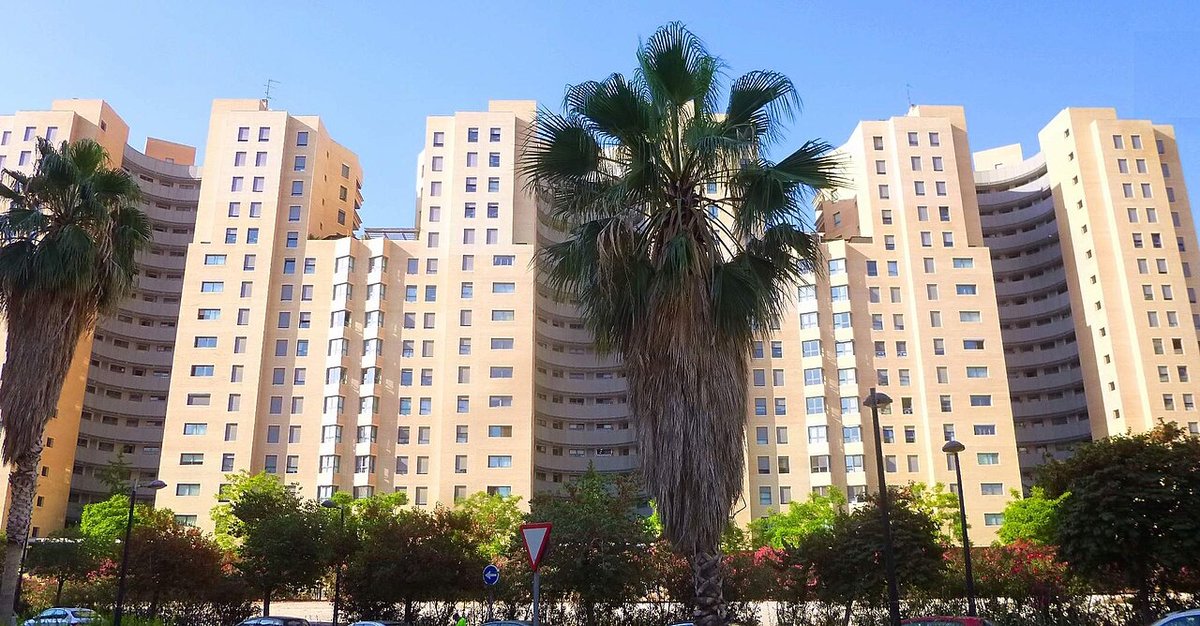
There is no grand entrance to the village. You arrive among low houses, agricultural buildings and a few newer developments. The layout is simple, organised around a main road with a handful of side streets branching off.
Everything feels practical and unpretentious, shaped more by daily life than by visitors.
The few landmarks that mark the place
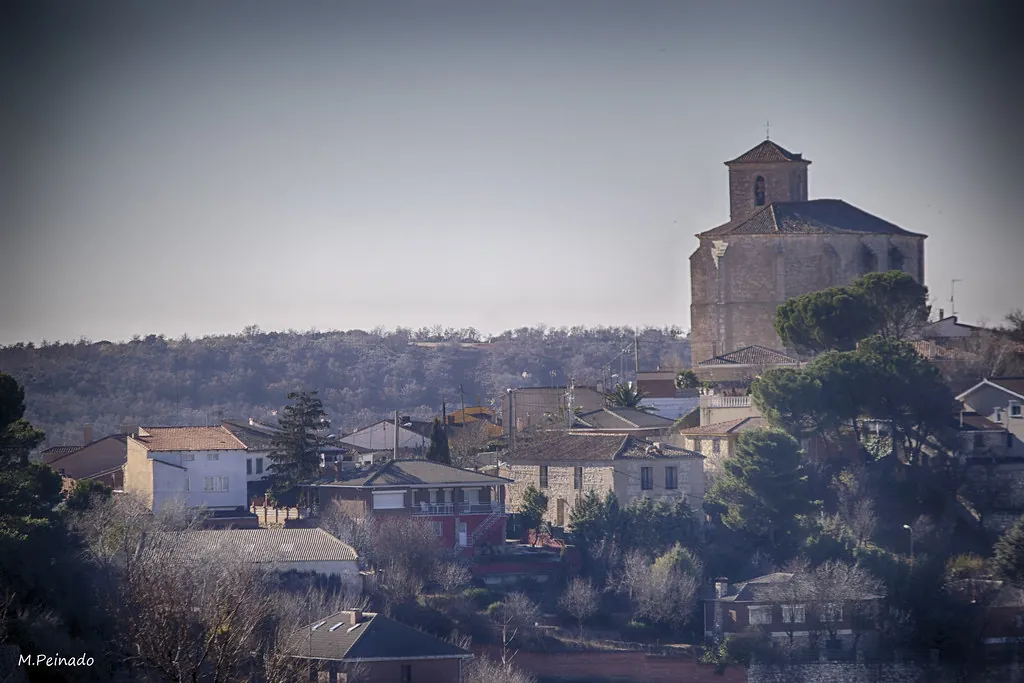
The parish church dominates the centre. It is an old building that has been altered several times over the centuries. It is well kept, but it is not the sort of place that justifies a journey on its own.
Nearby, there is often mention of an old picota, a historic pillar that once symbolised local authority and justice in many Spanish towns. Here it is not part of a large monument complex and it is not clearly signposted. Without knowing what to look for, it is easy to walk past. Even so, it is one of the few visible reminders that the village has a long history behind it.
At one edge of the village stands the Ermita de la Soledad. It is small and simple. The cemetery sits next to it, as is common in many towns in this part of Spain. From this point, the view opens out over the agricultural plain.
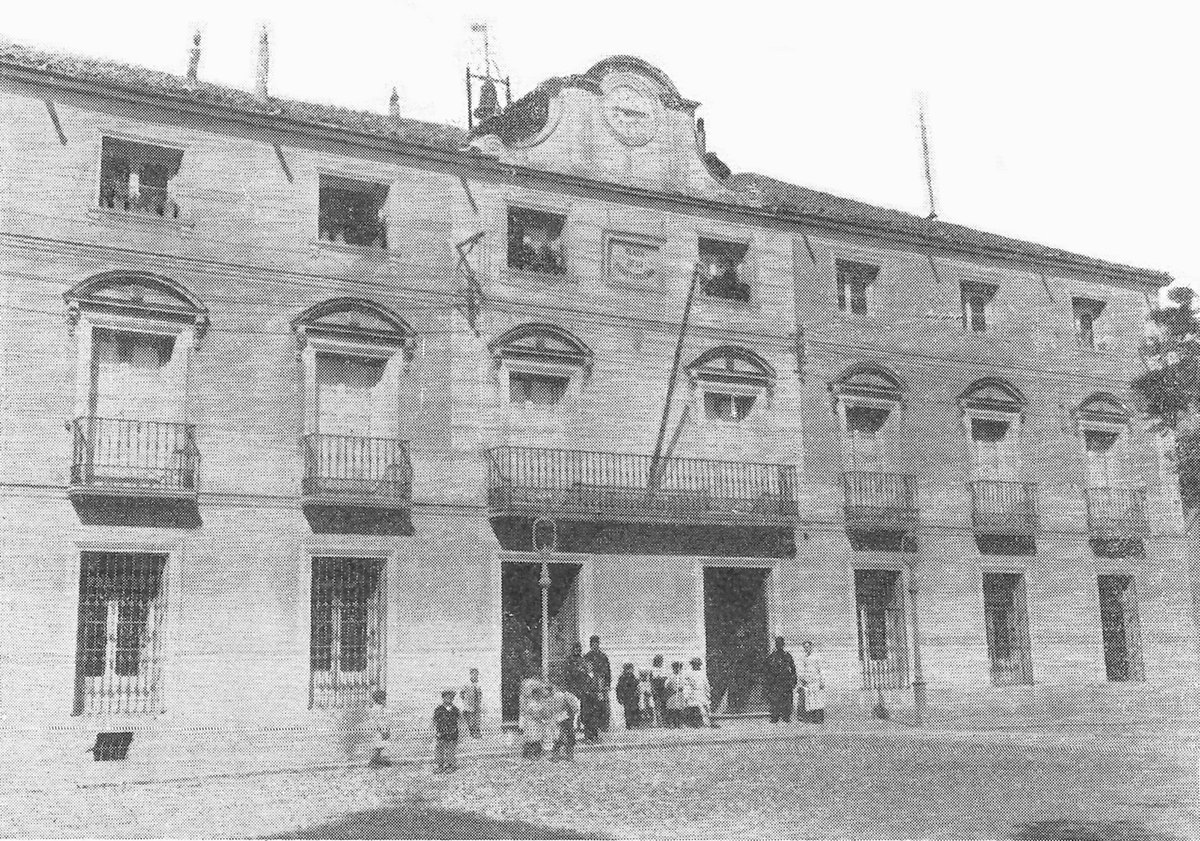
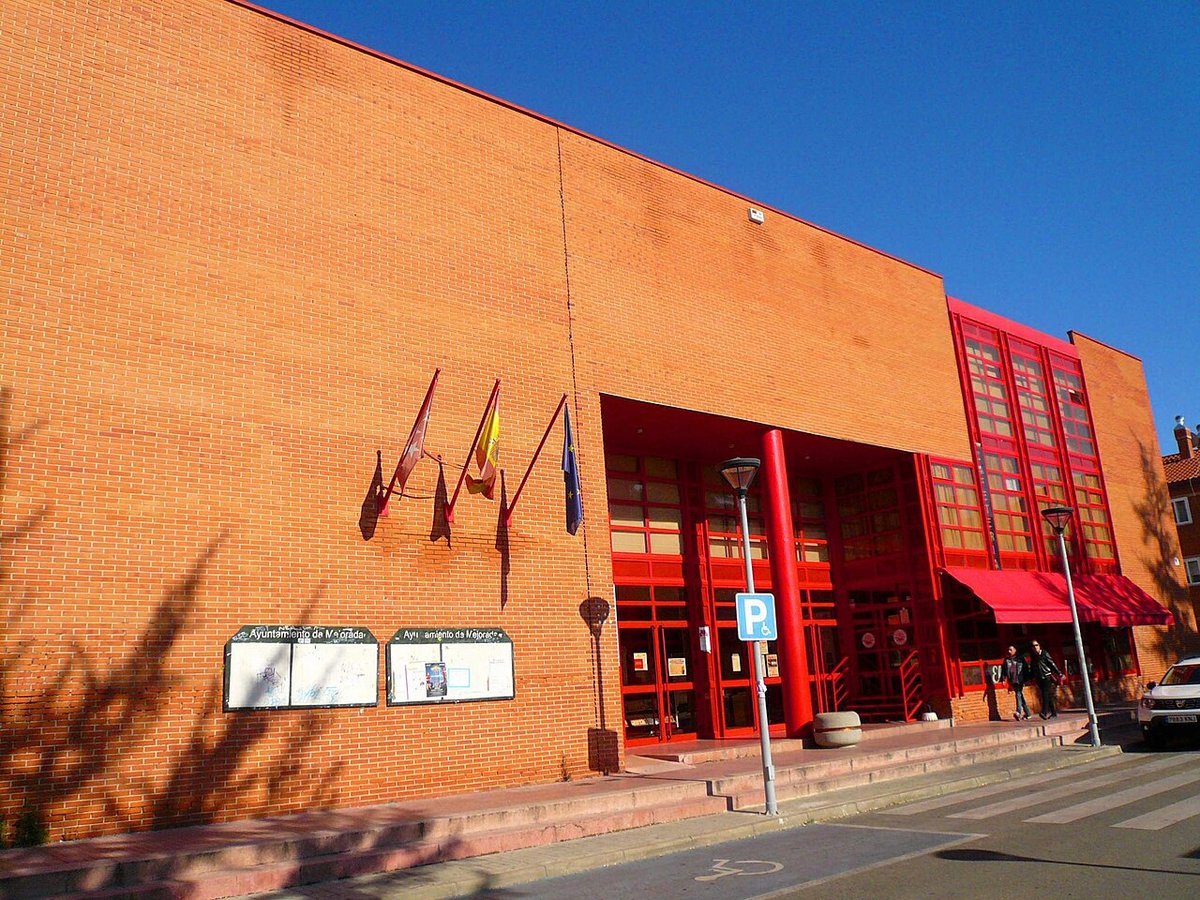
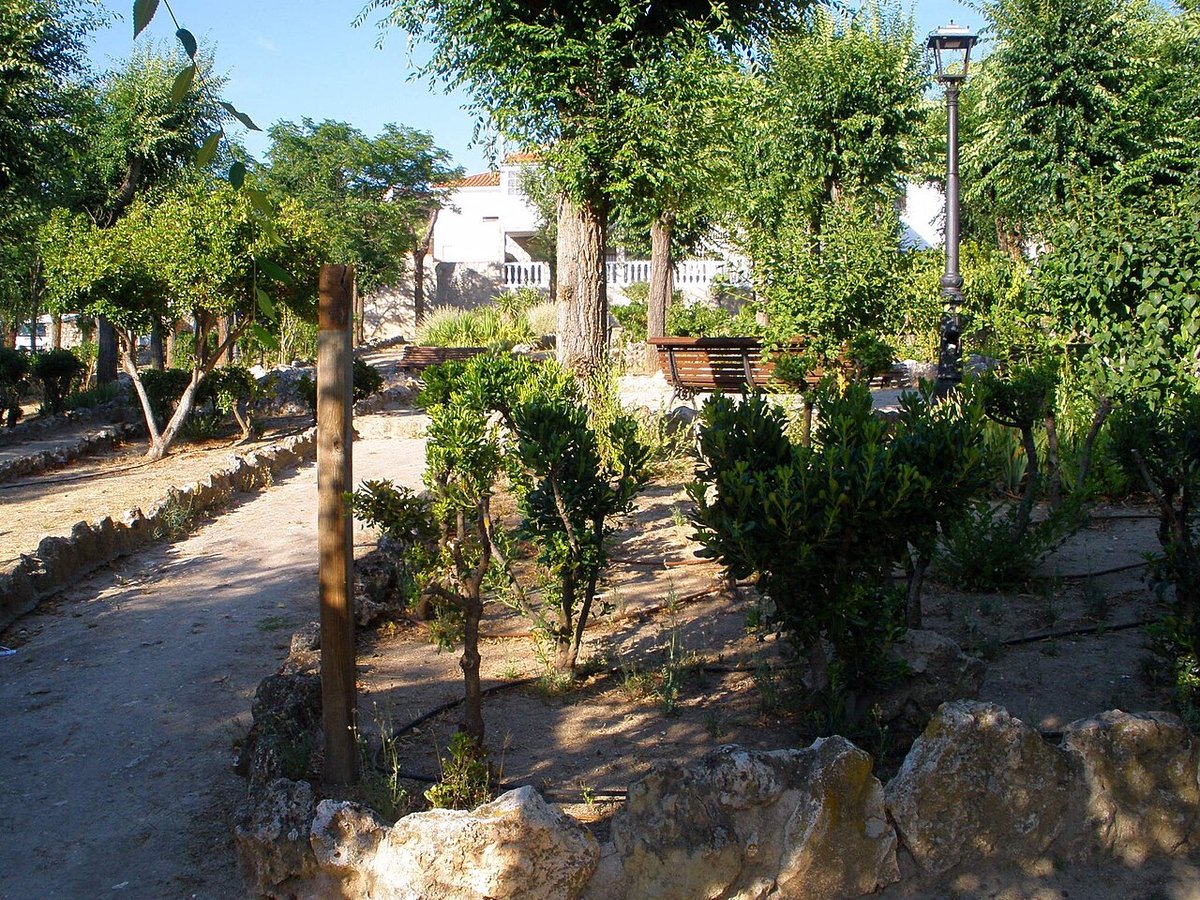
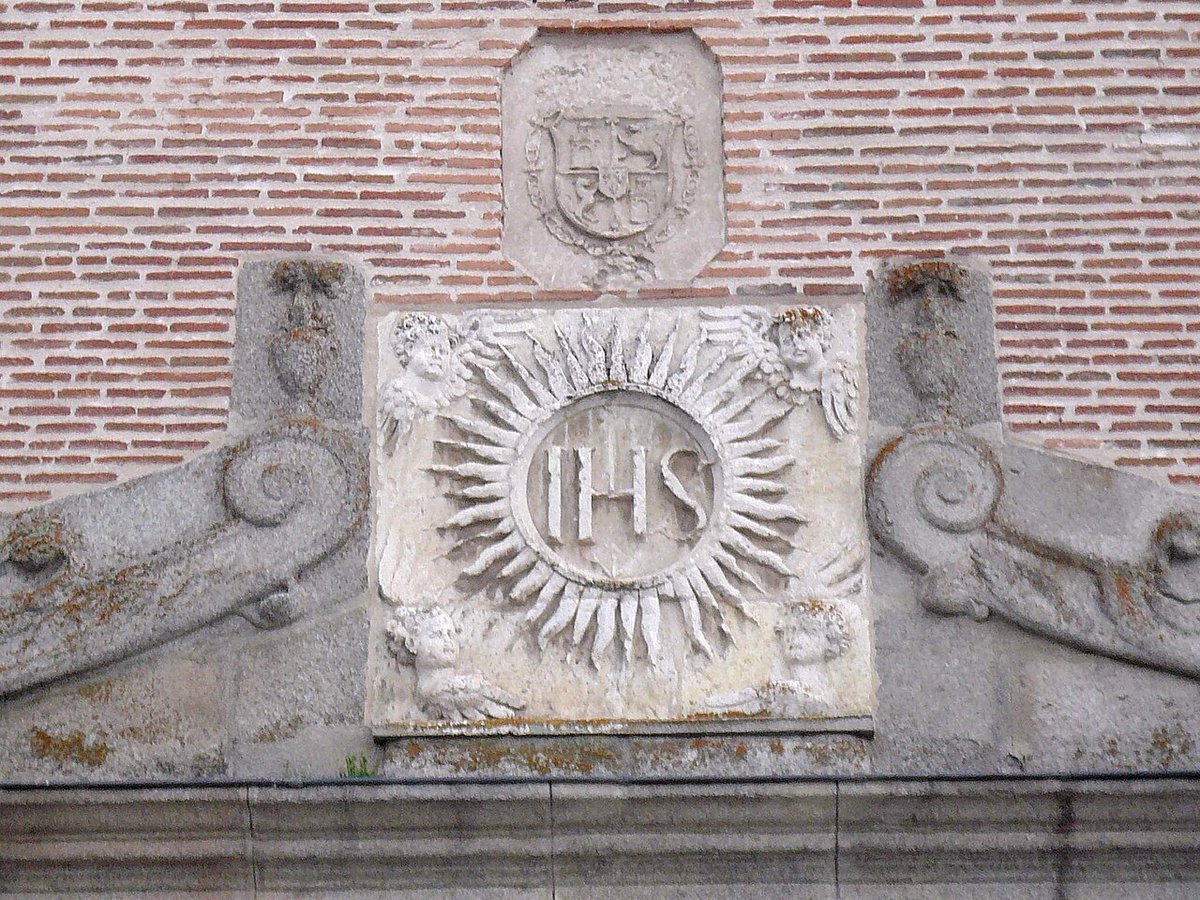
Beyond these spots, the town centre is what you would expect in a municipality of this size: low-rise housing, a few older homes with worn coats of arms on their façades, and a central square with the town hall.
Walking out into the fields
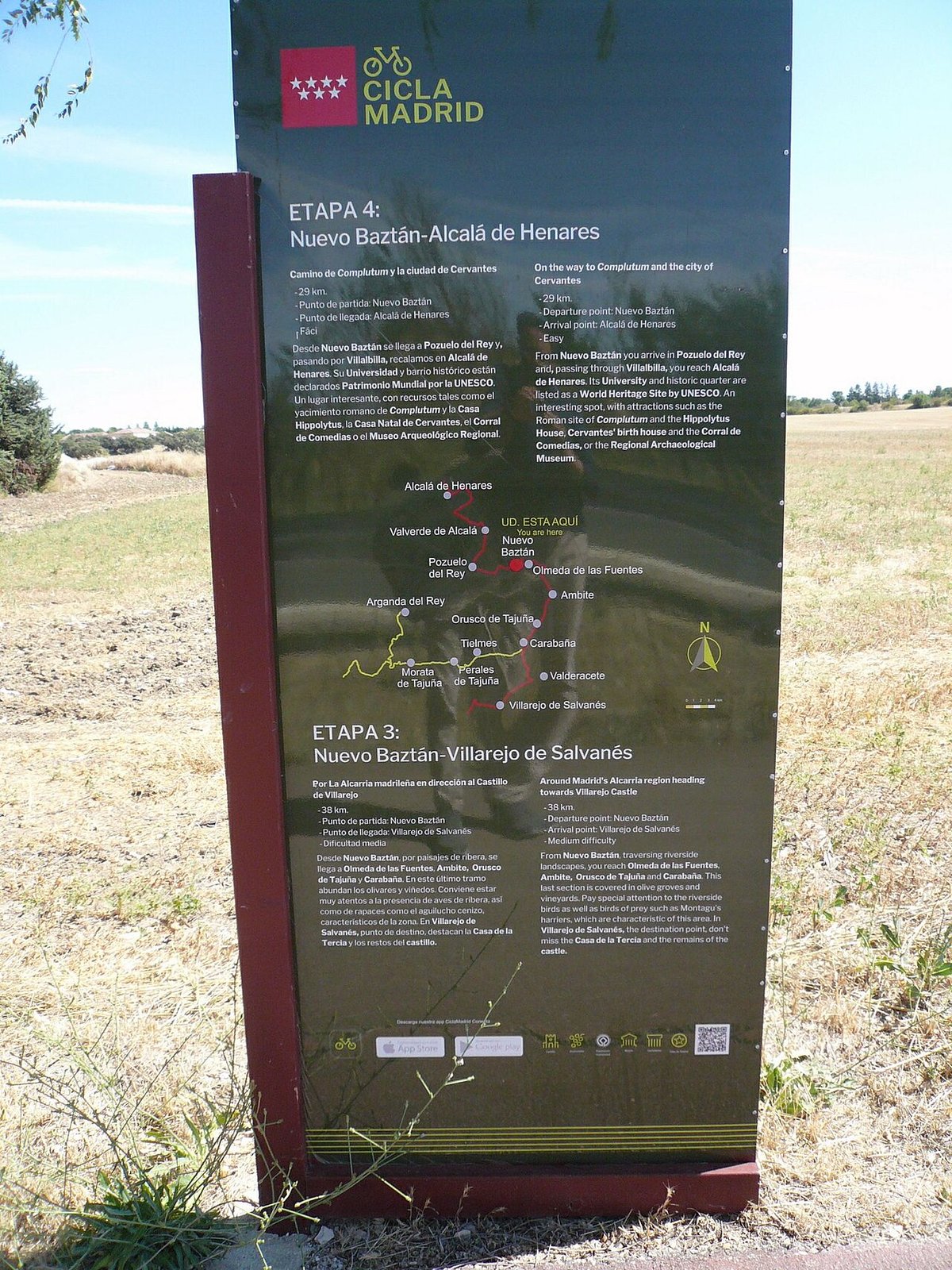
If there is time for a bit more than the centre, it is worth stepping outside the built-up area. Behind the sports facilities, several agricultural tracks begin. They are not always signposted, but they are easy enough to follow.
The landscape is open and wide. Cereal fields dominate, with the occasional olive grove. In the distance, wind turbines turn steadily. There is little to interrupt the horizon.
In spring, the area fills with common farmland birds. Larks and crested larks can be seen and heard, while kites circle above. It is not a formal walking route with marked paths or facilities. These are the same tracks used by farmers and locals for a short walk.
Bring water if you head out. There are no fountains once you leave the village.
Simple food and the right time to come
In the centre, there are traditional bars. Expect a long counter, coffee, and straightforward dishes served as raciones, the shared plates typical across Spain. In some places, lamb from the surrounding area appears on the menu when in season. The cooking is direct and unfussy.
It is also easy to find bread from traditional ovens and olive oil produced nearby. These are not presented as speciality products. They are simply what local people use day to day.
As for timing, spring and autumn work best. The fields are green and walking is more comfortable. In summer, the heat is intense and shade is scarce. In winter, the wind can be quite noticeable across this open plain.
Like any town in the region, Torres de la Alameda has its own festivals and celebrations throughout the year. If timing matters, it is worth checking the local calendar in advance.
Keeping expectations in check
Torres de la Alameda is not a destination for a long stay. It works better as a short stop if you are already in the Henares area or looking to leave Madrid for a while.
A coffee, a walk through the centre, a loop along the surrounding tracks, and that is about it. In one or two hours, you will have seen what there is to see.
For those after quiet and open countryside close to the capital, it does the job. For anyone expecting a place packed with historic landmarks, this is not it. Everything here is fairly ordinary, and that is part of its character.