Full Article
about Valverde de Alcalá
Small Alcarrian municipality; quiet, with simple rural architecture.
Hide article Read full article
A brief detour from Madrid
Tourism in Valverde de Alcalá tends to be just that: a short stop. This small village sits in the Community of Madrid, within reach of the capital by following the A‑2 past Alcalá de Henares and then continuing along secondary roads for the final stretch. The approach is straightforward, with no complicated turns or tricky access.
Once there, getting around is simple. As a small village, you can usually leave the car on a street near the centre without circling for long. There are no formal car parks aimed at visitors and no real sense of arrival infrastructure. Valverde de Alcalá does not present itself as a destination in the conventional sense. It feels more like a pause along the way.
The centre can be covered quickly. In half an hour you will have seen the main points. There are no grand landmarks or clusters of monuments to work through. The appeal, if there is one, lies in its modest scale and the surrounding landscape rather than in any headline attraction.
The village centre
The road that runs through the village, known locally as the road to Loeches, acts as the main axis. On either side stand low houses, many of them older, built with a mix of stone, brick and some adobe. There is no compact historic quarter and no imposing civic buildings. The layout is open and practical, shaped more by everyday needs than by any past ambition to impress.
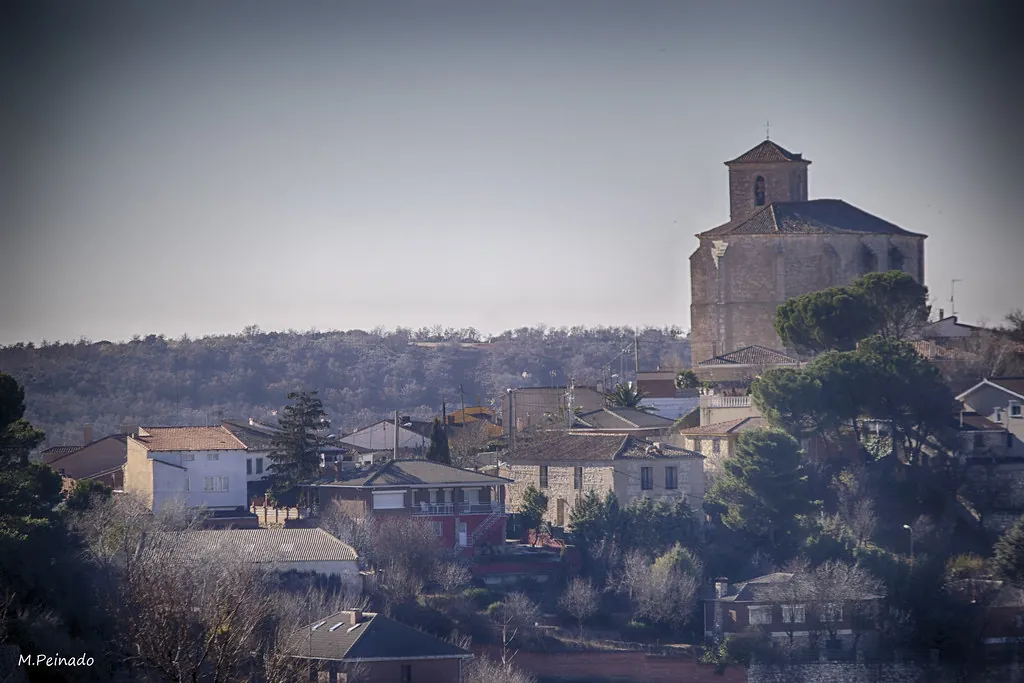
Close to the centre stands the church of Santo Tomás Apóstol. Its origins date back to the 16th century, although it has undergone alterations over time. From the outside it blends into the scale of the village. Inside, the decoration is simple. It preserves an old baptismal font and little else that draws particular attention. Those expecting elaborate altarpieces or dramatic interiors will not find them here.
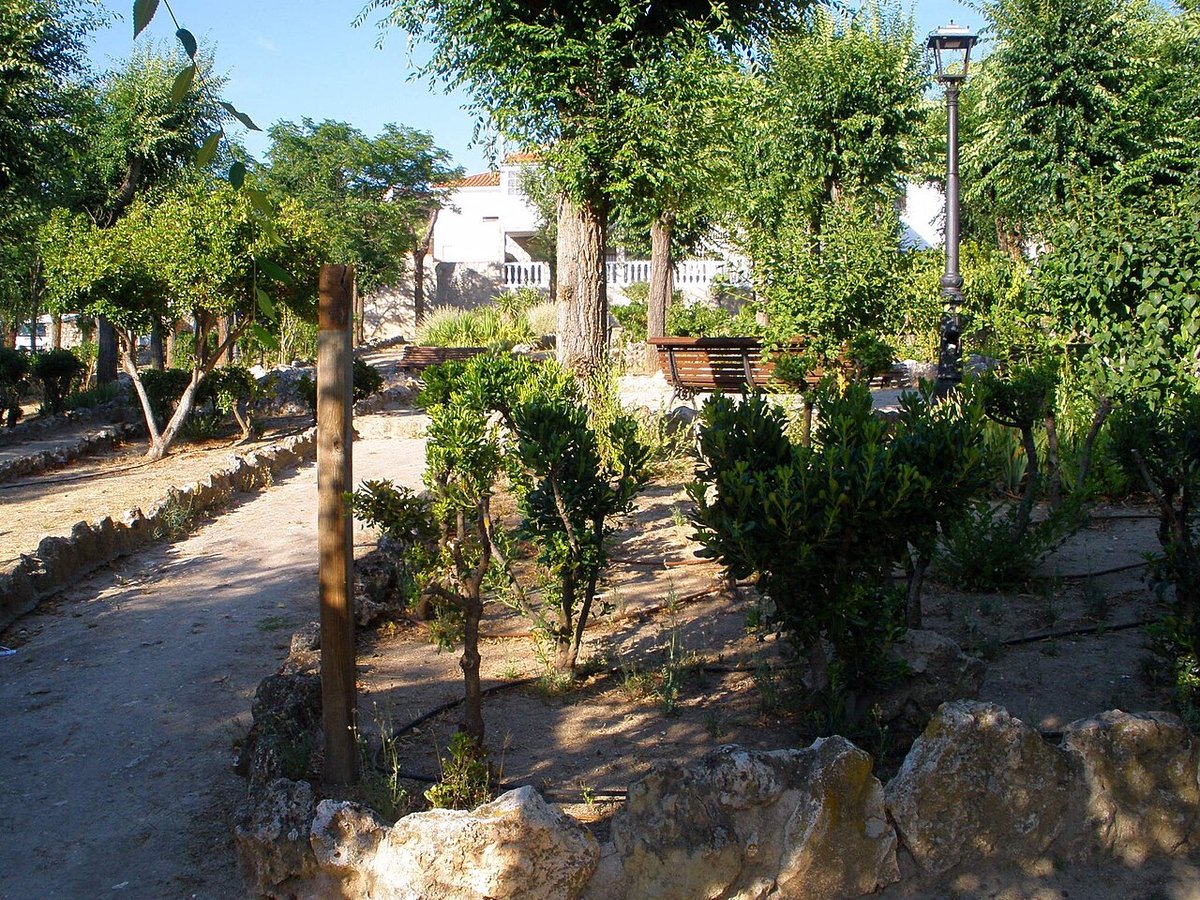
A few metres away lies the village square. It is small and fairly ordinary: a handful of benches, some shade and a couple of basic shops where you can buy water or something quick. There is little movement and nothing designed specifically with visitors in mind. Daily life carries on at its own pace.
The overall impression of the centre is one of understatement. There are no museums, no interpretation panels and no curated routes. The village does not attempt to repackage itself. What you see is what is there.
Fields in every direction
Beyond the last houses, the countryside takes over. Cereal crops spread out around the village, along with some plots of olive trees. In spring the landscape turns green for a few weeks, softening the view and giving the fields a fresher appearance. After that brief period, the colours return to the dry tones typical of this part of the campiña, the open farmland characteristic of central Spain.
This is not dramatic mountain scenery or dense woodland. It is broad, open terrain shaped by agriculture. The horizon feels wide and uncluttered. Outside the main farming seasons, little changes visually. There is a lot of land, few buildings and a noticeable sense of quiet.
From the edge of the village, several dirt tracks lead out between the fields. They are suitable for an easy walk without much difficulty, although the ground can be loose or stony in places. Closed shoes are enough. There is no need for specialist equipment, but it helps to be aware that these are working agricultural paths rather than marked recreational trails.
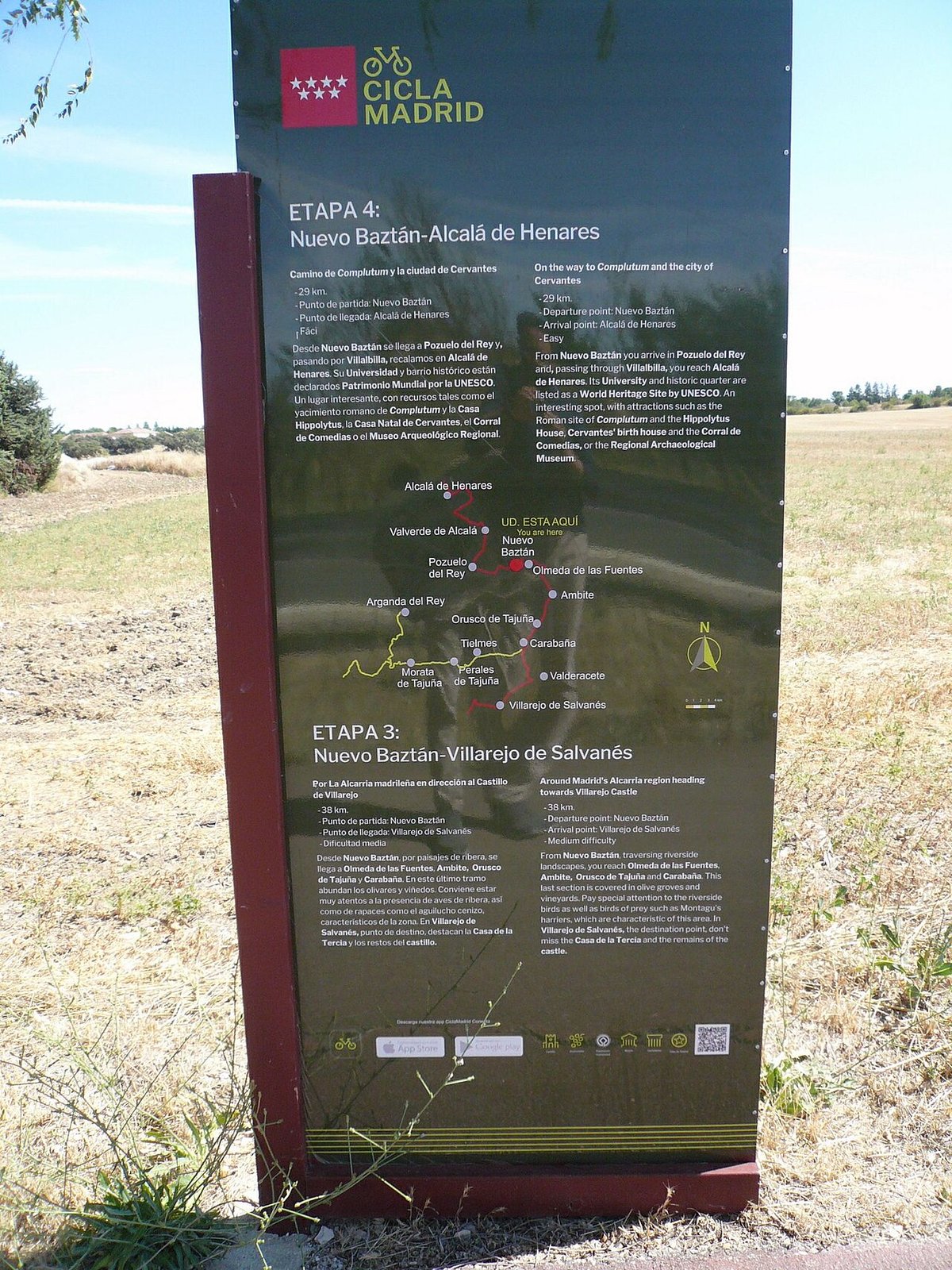
Some of these tracks connect with other villages in the area, such as Tielmes. Signposting is irregular, so if you have a specific route in mind it is sensible to check the course beforehand. The area does not function as a formal hiking destination with clearly waymarked circuits. Instead, it offers open access to farmland paths that locals use as part of daily routines.
Walking for the sake of it
The terrain is open enough to make wildlife easy to spot. Common countryside birds appear regularly: kestrels, buzzards and other small birds of prey that ride the air currents above the crops. For anyone familiar with this part of the Community of Madrid, the scene will feel typical rather than unusual. There is no claim here of rare sightings or protected reserves, just the ordinary rhythm of rural life.
The quiet is part of the experience. With few buildings beyond the village itself and little passing traffic once you leave the main road, the dominant sounds are wind and the occasional movement in the fields. In summer, heat shapes the day. Shade is limited outside the built-up area, and the sun can be strong at midday.
For that reason, it makes sense to come in the morning or later in the day during the warmer months. At noon in summer the heat can be intense and there is little natural cover. Timing matters more than planning a detailed itinerary.
There are no organised activities waiting to be booked and no structured visitor programme. A visit to Valverde de Alcalá is closer to a simple walk and a look at the surrounding farmland than to a conventional sightseeing trip. The village does not try to compete with larger towns nearby.
A short stop in the Henares area
Valverde de Alcalá works best as a brief halt within a wider route through the Henares area, the corridor that follows the Henares River east of Madrid. After passing through places with more architectural weight, stopping here offers a different pace. A short stroll through the centre, a glance at the church of Santo Tomás Apóstol and a wander along a dirt track into the fields are enough to understand it.
There is not much more, and it does not pretend otherwise. The absence of spectacle is part of its character. Valverde de Alcalá remains a small agricultural village in the Community of Madrid, with a modest centre and open land on all sides. As a quick stop on a countryside drive, it fits naturally. As a destination for a full day of sightseeing, it does not.