Full Article
about Cobeña
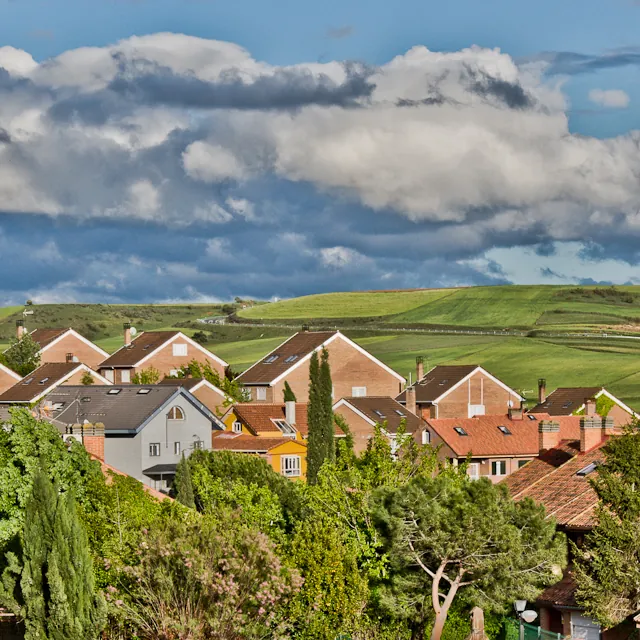
Residential town with good views over the Jarama; it has a well-kept, quiet historic center.
Hide article Read full article
A village under flight paths
Cobeña sits about 20 minutes from Madrid and very close to the airport. Planes pass low overhead. Sometimes so low that you hear the sound first, then see the shadow crossing the village.
It shapes the atmosphere more than anything else. The noise comes and goes throughout the day, starting early and continuing into the evening. For those who live here, it has long faded into the background. Visitors tend to notice it straight away.
Getting there and parking
The M-45 motorway brings you close. From there, a few kilometres of local road lead into the village. In the morning, tractors and farm vans are a common sight along this stretch.
Parking is straightforward, though not always immediate. There is a designated area next to the sports centre and another behind the church. On Saturday mornings, both fill up quickly. Many people come from Madrid to buy bread or rosquillas, and it shows.
If there is no space at first, a short loop usually solves it. Someone tends to leave before long.
What there is to see, and what there isn’t
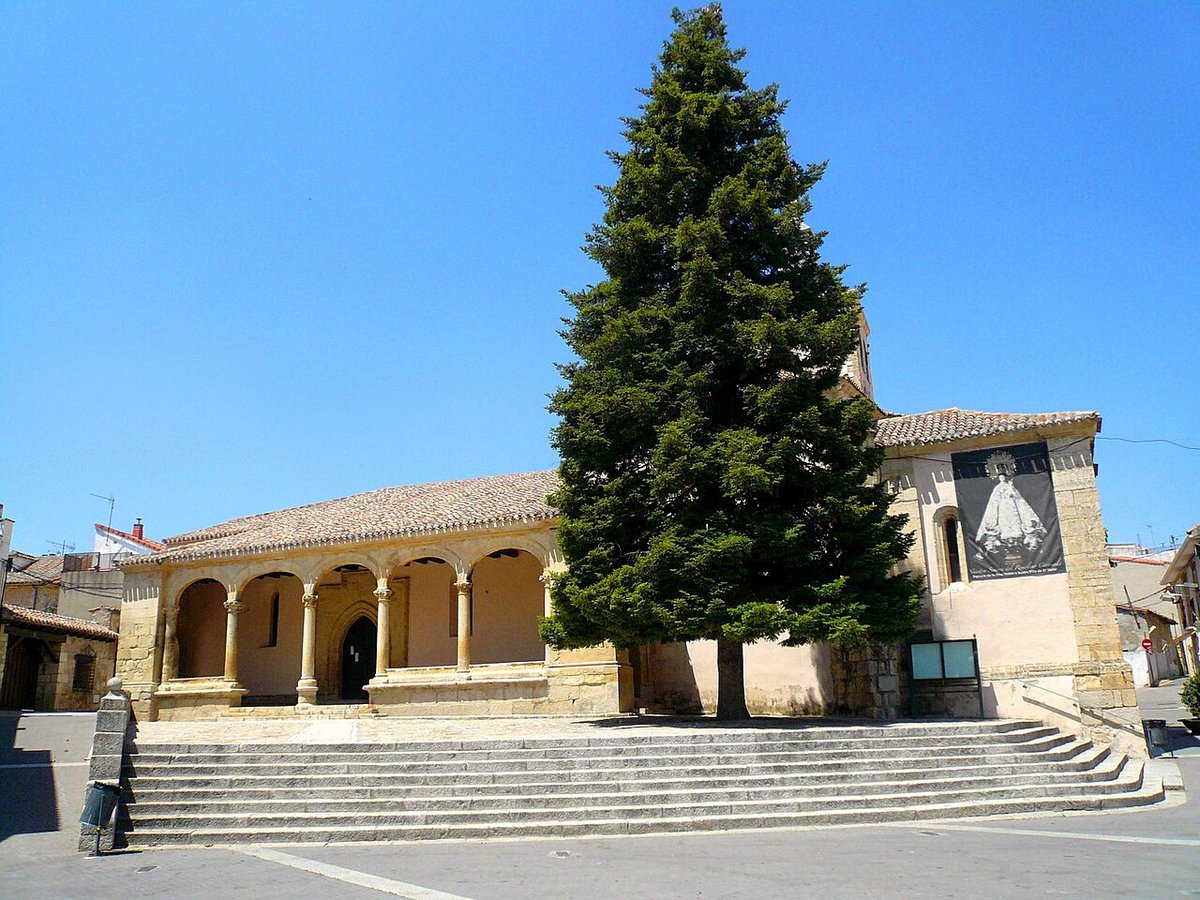
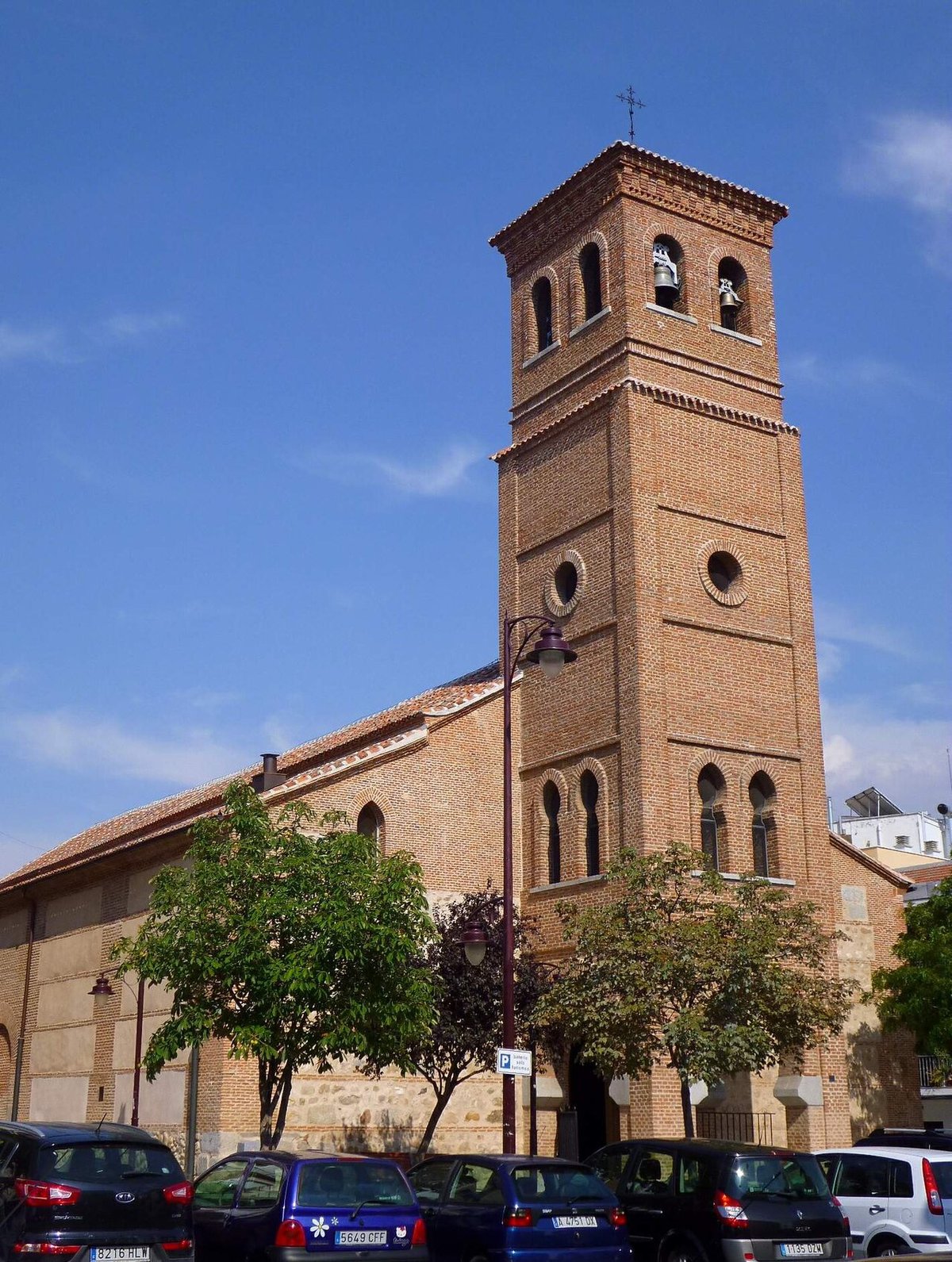
The Iglesia de San Cipriano is the only building that really stands out. It is built in warm-toned stone, with a size that feels slightly oversized for the village. The bell tower appears to lean just a little towards the south. It is generally said to date from the 16th century.
If it is open, stepping inside does not take long. Sundays bring a bit more activity around midday due to mass, otherwise it remains quiet.
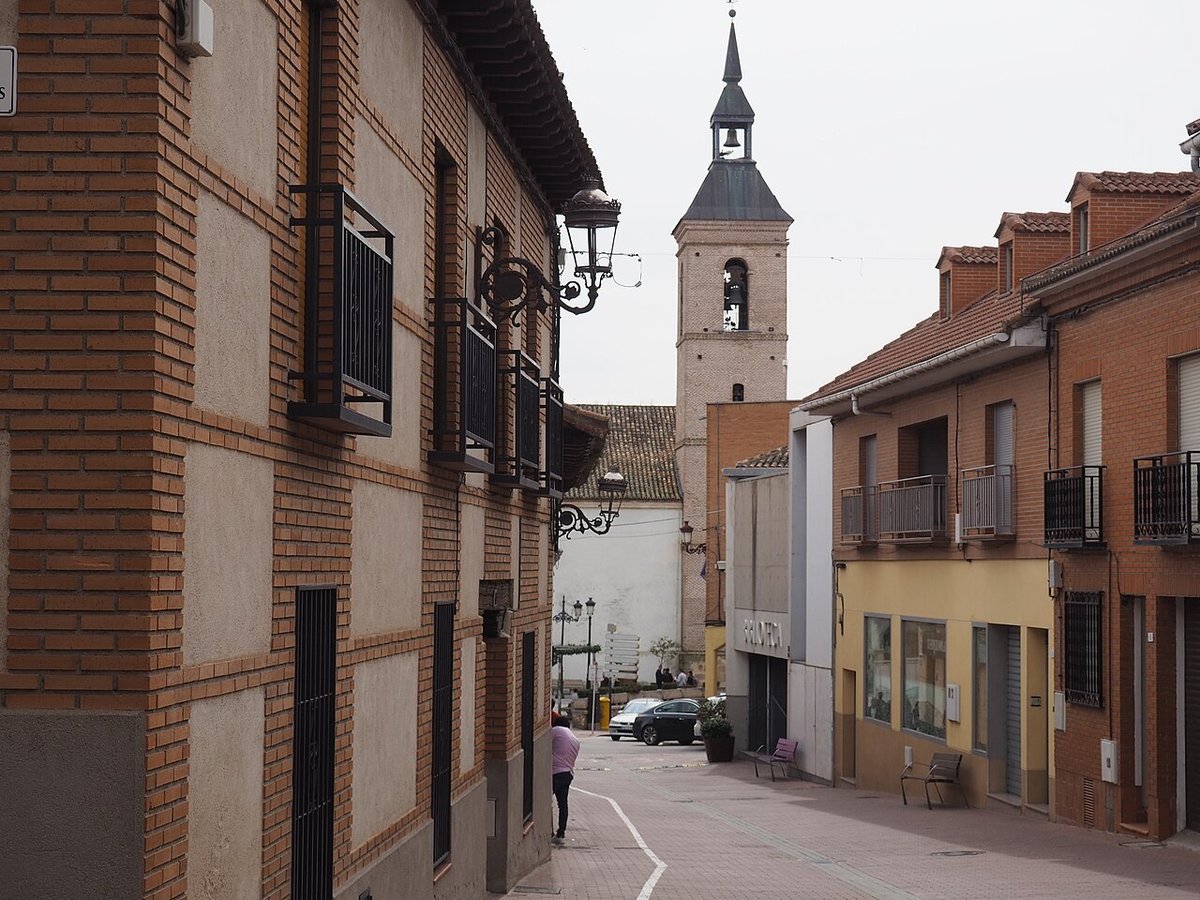
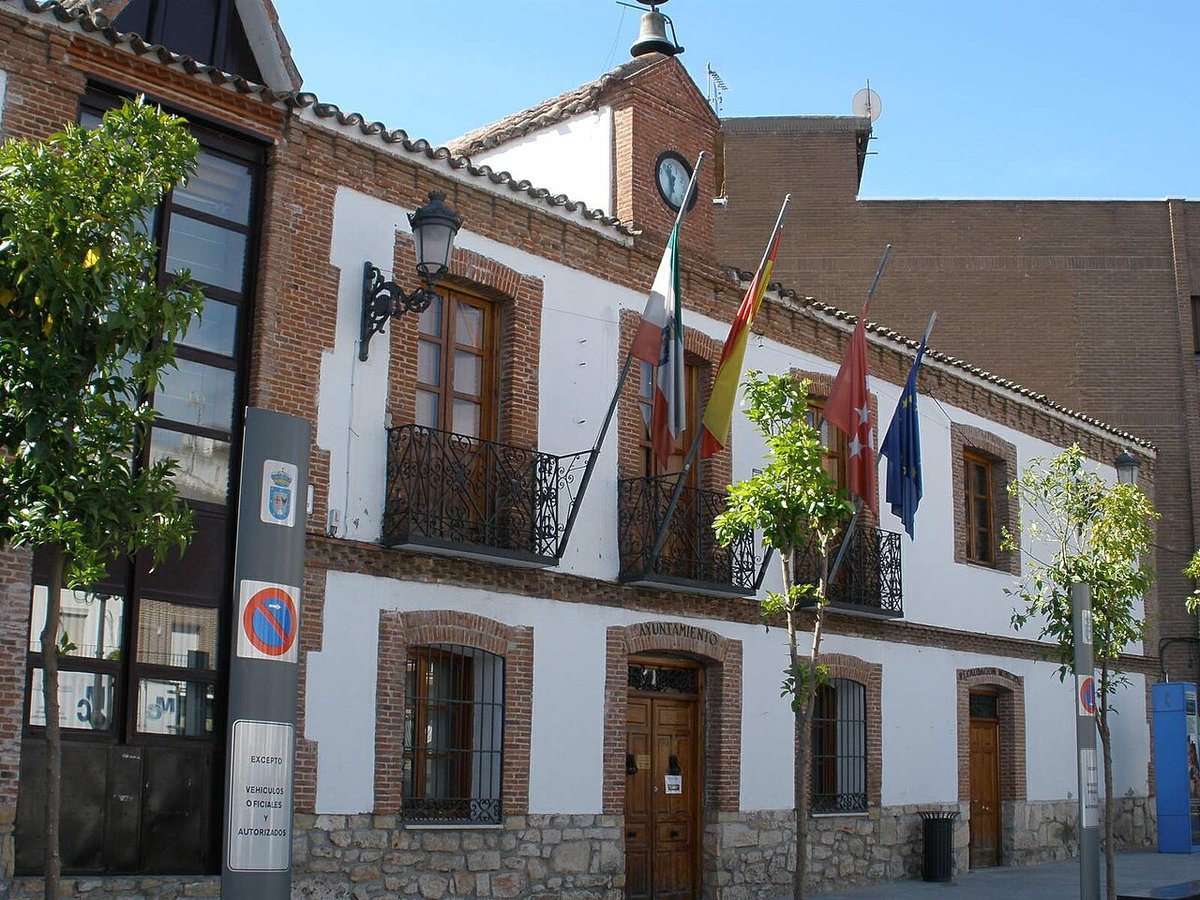
Beyond that, the town centre is simple. Streets run straight, houses are low, and newer residential blocks appear towards the outskirts. The town hall square has a fountain that works some summers and not others.
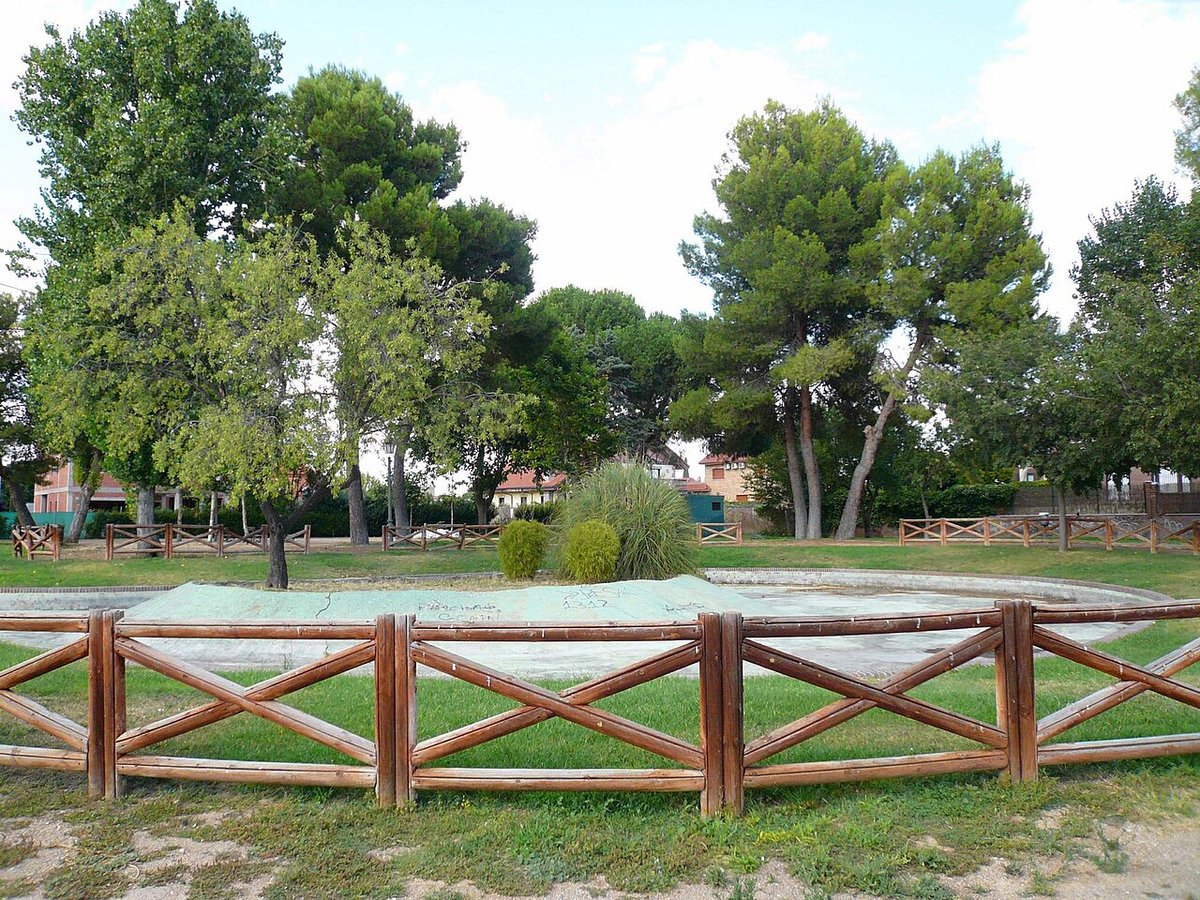
The Parque de la Alameda offers benches and young trees. There is also a kiosk, though it has been closed for quite some time.
Where the water has a taste
Behind the cemetery, a path begins that leads down towards the Barranco del Agua. It is not a long walk. The terrain is mostly dirt, with patches of scrub and open fields surrounding it.
A sign mentions “saludables” waters, suggesting some kind of beneficial quality. The spring does exist, though expectations should stay modest. Rather than a steady flow, it drips.
Anyone curious enough to try it will need a bottle and some patience.
In autumn, mushrooms appear in the area. Rosemary grows here for much of the year. It is not unusual to see locals collecting espliego, or lavender, carrying supermarket bags. Passers-by attract little attention.
Local celebrations
In May, the village usually celebrates the Cristo del Amparo. Temporary stalls are set up in the square, floats move through the streets, and the afternoons and evenings bring a noticeable increase in activity.
October brings the Virgen del Rosario. There are paella competitions, live music in the square and fireworks that can even be seen from the road leading into the village.
These are not events designed with outsiders in mind. They revolve around neighbours and family. Someone without local ties will likely watch for a while, then move on.
A few truths about Cobeña
Cobeña has a population of just over seven thousand, though it often feels smaller when walking through it. Cereal fields stretch almost to the roadside. In June, the air carries the scent of dry wheat.
The planes are a constant presence. They begin early and continue until night. The noise never quite disappears. Locals barely look up anymore when one passes.
On Fridays, a bakery in the village makes rosquillas de anís. They sell quickly. By mid-morning, they are often gone.
The surrounding area forms part of a protected zone for birdlife, although it is often easier to spot birds in the open fields nearby.
Visiting Cobeña works best without much planning. Park the car, take a short walk through the centre and head up towards the church. From there, the view of planes taking off is clear. In twenty or thirty minutes, you will have seen most of it.
After that, the choice is simple: continue exploring the wider area or return to Madrid. There is no pressure to stay longer. And that, in its own way, is part of the place.