Full Article
about Ribatejada
A town in the countryside with Mudéjar architecture; rural setting near the capital
Hide article Read full article
A village that wakes slowly
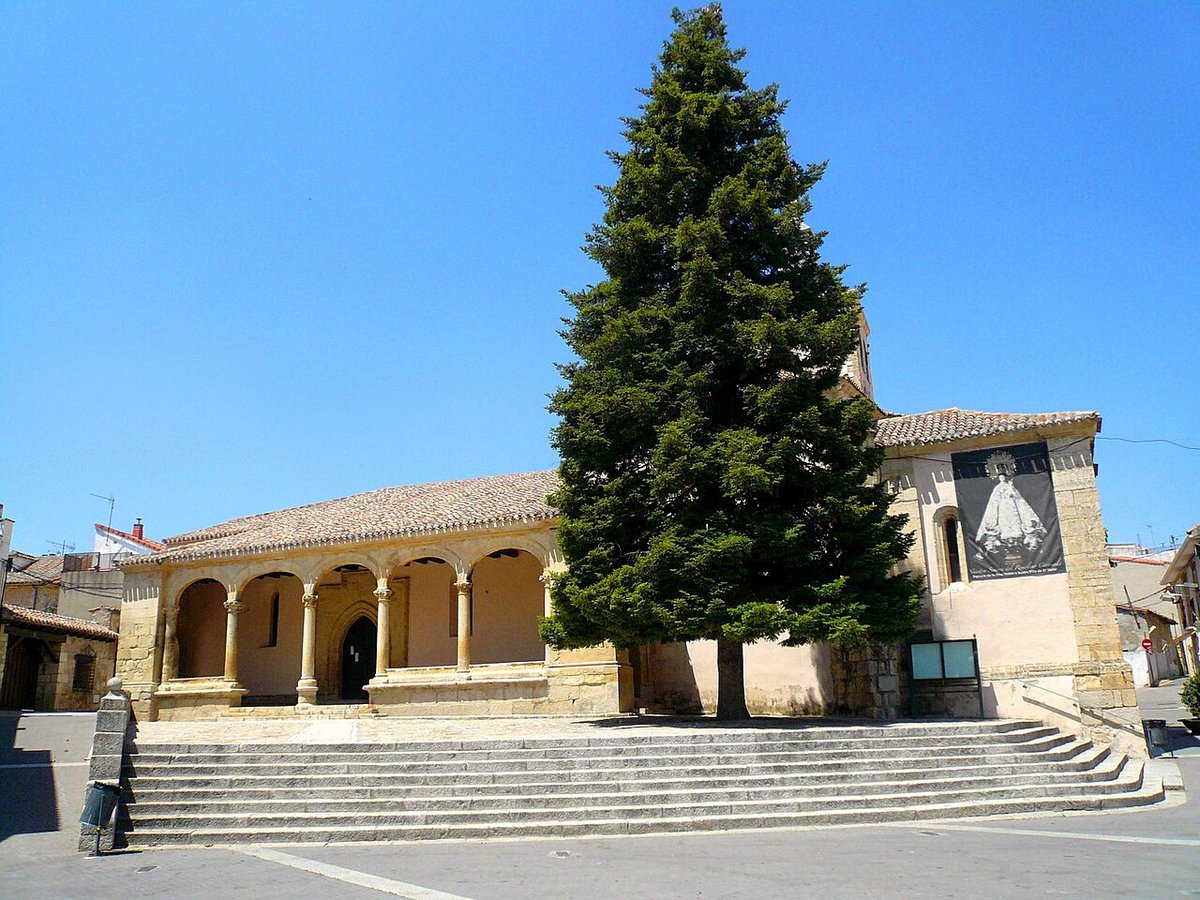
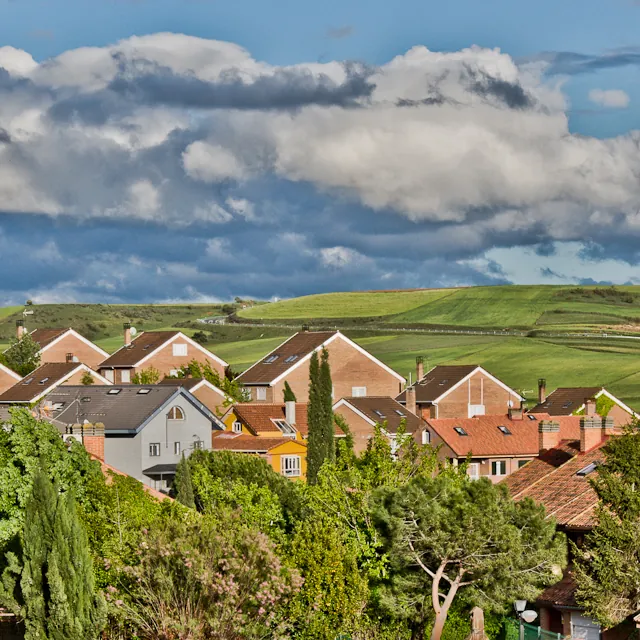
At eight in the morning, the tower of the church of San Pedro Apóstol rises above the low rooftops while the light still comes in at an angle. For a few minutes, the sandstone turns a warm honey colour before the sun fully clears the horizon. At that hour, tourism in Ribatejada barely registers. A shutter lifts somewhere, a broom scrapes against the pavement, a blackbird crosses the square.
The village sits at around 760 metres above sea level, and the air often feels a touch cleaner than on the surrounding plain. There is no rush to things here. The sense is of a place that moves at its own pace, largely unchanged by the rhythms of nearby Madrid.
Short streets and a tower to guide you
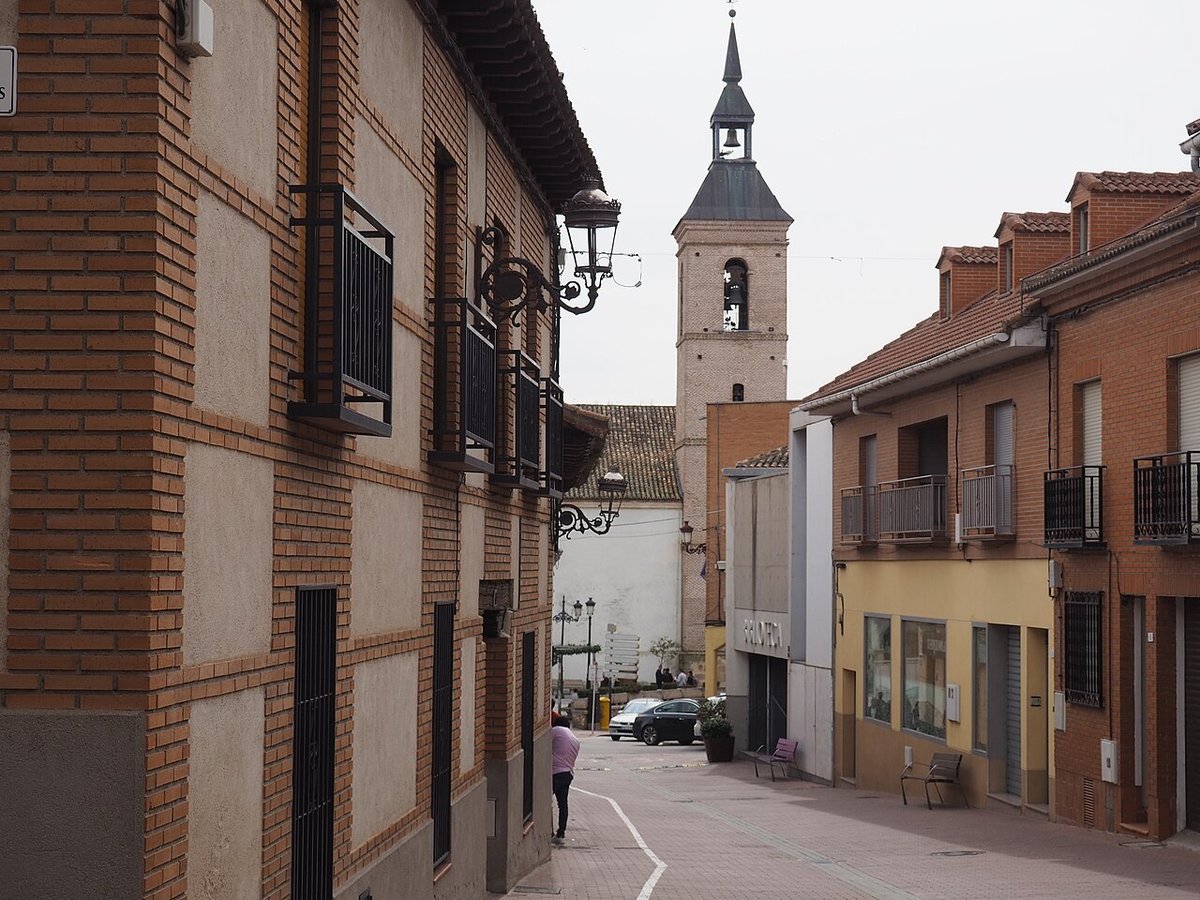
The centre is compact and easy to grasp within minutes. A small network of streets circles the church, without much need for detours or planning. Calle Mayor gathers many of the older houses, with masonry walls, wooden gates darkened by time, and simple iron grilles over the windows.
From almost any corner, the church tower remains in view, acting as a natural point of reference. If the door is open, which often happens during the day, the interior is plain: wooden pews, light-coloured walls, and an altarpiece without heavy ornament. It is a quiet space where, now and then, the echo of the bells slips inside as they mark the hour.
Beyond the church, small details fill out the walk: a traditional fountain, former animal enclosures now absorbed into homes, and small vegetable plots pressed up against walls. Nothing demands attention, but together they shape a clear sense of place.
Fields that change with the months
A short walk out of the village is enough for the asphalt to give way to dirt tracks. Ribatejada remains surrounded by cereal fields, and their appearance shifts noticeably as the year moves on.
In spring, the greens are at their most vivid, with patches of yellow breaking up the fields. By summer, the landscape turns flat and golden, the grain bending under its own weight. After the harvest, the ground looks barer, with ochre tones taking over for weeks.
Early in the morning, it is common to notice animal tracks in the damp soil or hear partridges moving through the stubble. The silence here feels different from the one in the village. It is broader, shaped by wind and the distant sound of a tractor rather than enclosed by buildings.
This agricultural setting defines Ribatejada as much as its streets do. The village does not feel separate from its surroundings, but rather an extension of them.
Paths towards the Jarama
The Jarama river runs not far from the municipality, although it is not always immediately visible. Reaching its riverside groves, known locally as sotos, requires some familiarity with the area or following the agricultural tracks that lead out from the village.
In the denser vegetation near the river, water birds tend to gather. Ducks and herons are common, and sometimes there is movement in the reeds without anything clearly coming into view. These riverside areas form part of protected natural spaces along various stretches of the Jarama valley, so it is worth bearing that in mind if heading deeper into them.
The transition from open fields to thicker riverside growth is gradual rather than abrupt. What begins as wide, exposed farmland slowly gives way to more enclosed, greener patches as the river approaches.
A short visit, without detours
Ribatejada is a small municipality, with fewer than a thousand inhabitants. The urban area can be covered in a couple of hours at an unhurried pace. There are no large monuments to organise a day around, and the appeal lies elsewhere.
It works best as a calm stop within a wider route through the middle Jarama basin or the villages of north-eastern Madrid. The scale encourages a slower rhythm: walking, looking, and allowing the surroundings to set the tone.
What happens in the streets is minimal, and that is part of the point. The experience is shaped more by what begins just beyond the last doorway than by what sits within the centre.
When to come and practical notes
In summer, the sun bears down strongly on the open fields. If visiting at that time of year, earlier in the day or towards the evening tends to be more manageable, when the air starts to move slightly and the light softens over the wheat fields.
From Madrid, the usual approach is by car via the A-1, continuing along local roads towards the area of Algete and Fuente el Saz. Public transport does exist, but it often involves considerable time and transfers, which may not suit a short visit.
Ribatejada is best understood on foot and at an unhurried pace. Not because of activity in its streets, which is limited, but because of the landscape that begins as soon as the last house falls behind. That is where the village really opens up.