Full Article
about Talamanca de Jarama
A film-set town with significant historic heritage; it keeps its walls, Romanesque apse and Roman bridge.
Ocultar artículo Leer artículo completo
The morning express from Madrid-Barajas drops its cargo of laptop bags and takeaway coffees at the A-1's kilometre-50 slip road. Forty minutes later, the same commuters who spend their days in air-conditioned offices are walking home past a tenth-century Moorish gateway, their heels clicking on limestone that predates the Spanish state. This is Talamanca de Jarama's daily paradox: a village that functions as a bedroom community for the capital while still keeping its medieval skeleton fully intact.
At 653 metres above sea level, the place sits just high enough to escape Madrid's thermal blanket. Summer evenings arrive three degrees cooler here, which explains why restaurant terraces fill with families who've driven up from the city after work. The altitude also delivers winter mornings sharp enough to frost the windscreens of the parked hatchbacks that line Calle Real—cars whose owners chose village life over suburbia, even if it means a daily 100-kilometre round trip.
Stone that outlasted kingdoms
Start where every invading force did: at the Puerta de la Villa, the sole surviving gate through walls first raised by the Caliphate of Córdoba. The masonry isn't pretty—it's functional, thick, and slightly lopsided where later builders patched breaches. Walk the perimeter in eight minutes and you'll piece together what archaeologists took decades to map: a triangular stronghold that once guarded the Jarama crossing, later expanded by Christians, then neglected by Bourbon kings who saw no threat from the north. English Heritage would have wrapped the whole thing in interpretation boards and gift-shop coffee; here, a single metal plaque gives dates and leaves you to join the dots.
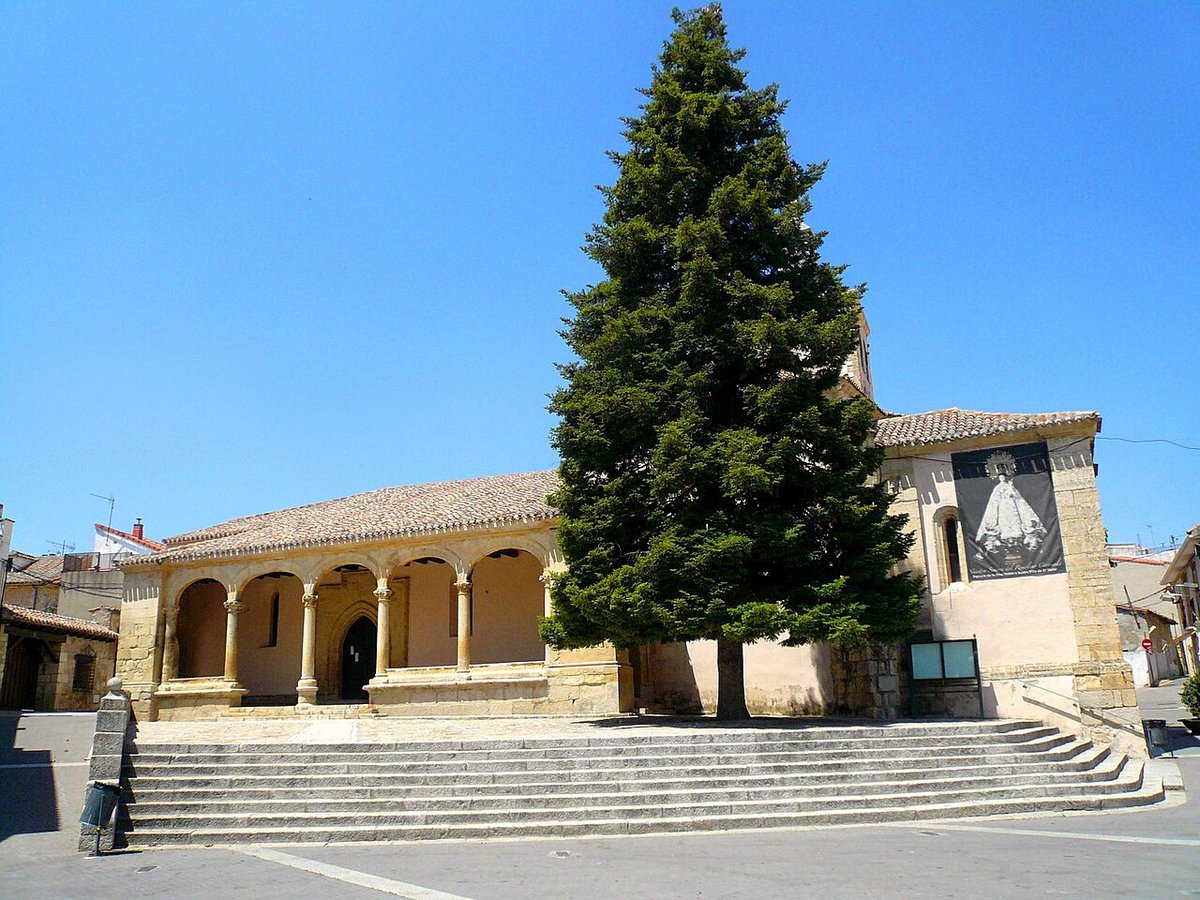
Inside the walls, the church of Santos Justo y Pastor rises like a geological layer cake. Romanesque stones form the base, Mudéjar brickwork climbs the tower, and Baroque flourishes appear where seventeenth-century priests had cash to spare. The interior stays locked unless mass is in progress—weekdays at 19:00, Sundays at 11:00—so time your visit accordingly, or content yourself with studying the corbels carved as human faces, each one grimacing at 800 years of weather.
Five minutes south, the Cartuja de Talamanca keeps its own gatekeeper's hours. The fifteenth-century Carthusian monastery survives as a roofless grid of chapels and cells open to the sky. Swallows nest in the clerestory; grass grows between flagstones where monks once walked barefoot. There are no audio guides, no rope barriers, just a hand-written sign asking visitors to close the metal gate against sheep. Stand in the chapter house and you can hear the A-1's distant hum—a reminder that contemplative silence ended here when the motorway arrived in 1967.
A river that shrinks and swells
Follow Calle del Río downhill and asphalt gives way to earth track. The Jarama at this point is a modest affair, more a large stream than the torrent its name suggests. Brown water slides past poplar plantations; herons stalk the shallows while Madrid's passenger jets lift off unseen beyond the ridge. A 45-minute circuit heads upstream to an old irrigation weir, then doubles back through vegetable gardens that supply the village restaurants. After heavy rain the path turns boggy—standard walking shoes suffice in summer, but autumn visitors should pack footwear they don't mind scrubbing clean.
Cyclists can extend the route along farm tracks to neighbouring villages: 12 km east brings you to Cobeña's bakery, 9 km west reaches the wine cooperative at Valdeolmos. Both roads are single-track with occasional tractor traffic; ring your bell early and pull onto the verge, because Spanish farmers assume right of way.
Roast lamb and Monday closures
Talamanca feeds day-trippers exactly twice a day: 14:00-16:00 and 21:00-23:00. Arrive outside these windows and every kitchen is closed—this is not the place for spontaneous late lunches. El Manjar de Talamanca, on Plaza de España, will sell you half a roast lamb (€18) if you ask; the full portion feeds four hungry builders. Locals drink house red from Valdepeñas, but the barman keeps a single bottle of Rioja for visitors who insist—he'll raise an eyebrow at the €24 price tag, so consider it a test of British resolve.
Across the square, La Calandria's Argentinian grill draws Madrid families on Sunday afternoons. Their churrasco de entraña (skirt steak, €19) arrives sizzling on a miniature wooden board with a side of chimichurri sharp enough to make your eyes water. Book ahead or queue with the pram-pushing cousins who treat lunch as their weekly family conference.
Vegetarians face slim pickings: most menus offer tortilla or salad, full stop. If you need plant-based protein, stop in neighbouring San Agustín del Guadalix where the health-food shop does takeaway falafel, then picnic by the river.
When to come, how to leave
Spring delivers the best compromise: almond blossom in March, temperatures in the low twenties by April, and daylight that stretches past 20:00. Autumn runs a close second—September evenings hover around 18 °C, perfect for terrace dining without the summer mosquitoes. August belongs to Madrid's escapees; expect full restaurants and cars parked on every pavement edge. Winter is honestly bleak: the wind whistles across the meseta, half the bars close, and the Jarama shrinks to a trickle between gravel banks. Photographers love the low sun and empty streets; everyone else should wait for March.
Access is simple if you drive: collect a hire car at Barajas Terminal 1, stay on the A-1 for 40 minutes, exit at kilometre 50, and follow signs for three kilometres. Public transport requires patience: bus 191 departs Plaza de Castilla at 11:00 and 16:30 weekdays only, returning at 07:00 and 14:00. Miss the afternoon departure and you're spending the night. Trains reach nearby Alalpardo, but that's 7 km of roadside walking with no pavement—taxi drivers know this and charge €20 for the hop.
Talamanca won't change your life. It will, however, give you a crisp sense of how Castile's past and Madrid's present negotiate elbow room on the same patch of limestone. Come for half a day, walk the walls, eat lamb, and leave before the commuters start their evening trek home. You'll carry away the smell of wood-smoke and a mental snapshot of medieval stone framed by Ryanair contrails—Spain's centuries, compressed into a single glance.