Buitrago del Lozoya - Flickr
@valdithrash_77 · Flickr 4
Madrid · Mountains & Heritage

Buitrago del Lozoya

Seventy-five kilometres north of Madrid’s Plaza de Castilla, the A-1 unravels into the Lozoya valley and most drivers keep their foot down. Those w...

2,034 inhabitants · INE 2025
975m Altitude

Why Visit

Mountain Arabic wall Walk the walls

Best Time to Visit

summer

Virgin of the Assumption (August) agosto

Things to See & Do
in Buitrago del Lozoya

Heritage

  • Arabic wall
  • Mendoza castle
  • Picasso museum

Activities

  • Walk the walls
  • Kayak the river
  • Medieval Fair

Festivals
& & Traditions

Fecha agosto

Virgen de la Asunción (agosto), Belén Viviente (diciembre)

Las fiestas locales son el momento perfecto para vivir la autenticidad de Buitrago del Lozoya.

Full Article
about Buitrago del Lozoya

Walled medieval gem encircled by the Río Lozoya; one of the most beautiful and visited villages in the sierra.

Ocultar artículo Leer artículo completo

The Village That Turns Its Back on the Motorway

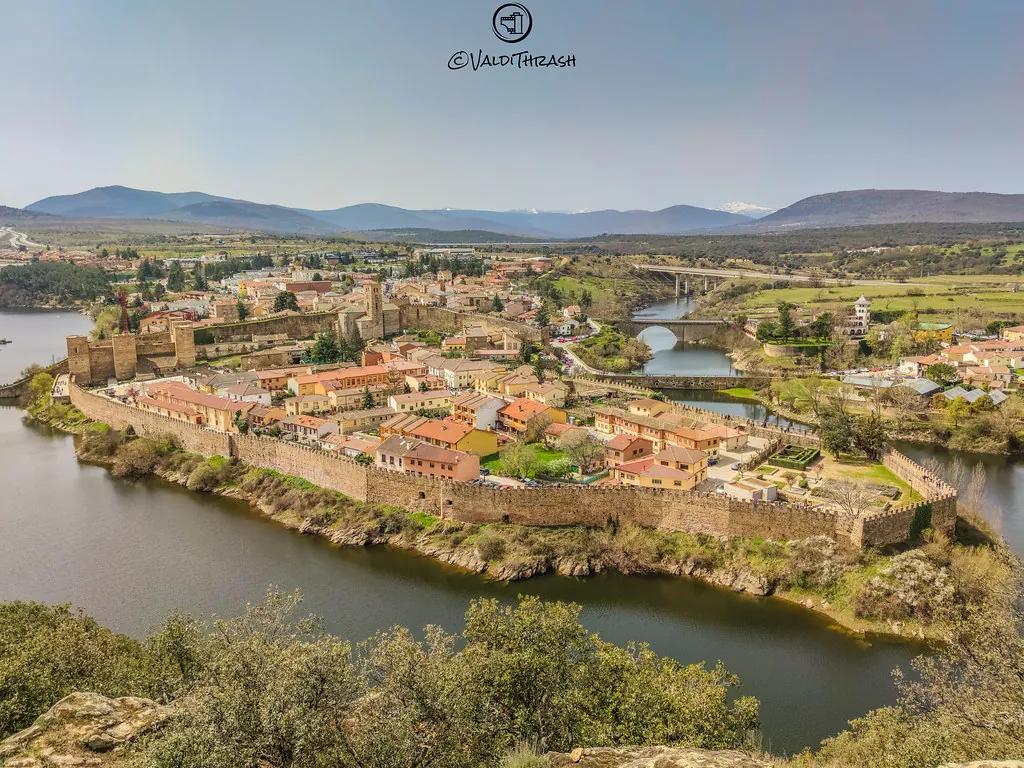
Seventy-five kilometres north of Madrid’s Plaza de Castilla, the A-1 unravels into the Lozoya valley and most drivers keep their foot down. Those who peel off at exit 76 discover a place that feels older than the capital yet sits inside the same comunidad. At 975 m above sea level, Buitrago del Lozoya curls inside a hair-pin bend of the river, its 11-century walls still intact and its micro-climate already two degrees cooler than the city you left behind.

The first thing you notice is the silence once the car doors slam shut. The second is the smell of pine carried on air that has done 60 km over the Sierra de Guadarrama without meeting another town. Weekenders arrive hunting the “medieval fix” they’d get in Toledo, minus the tour-bus ballet; what they find is a fortress village of barely 2,000 souls where the entire historic centre is walkable in the time it takes to finish a café con leche.

A Wall You Can Walk Under, Not On

Madrid province is not famous for its castles, so finding a complete Moorish circuit here is disconcerting. The wall predates most Spanish guidebooks: built by Berber troops in the 11th century, reinforced by Christians in the 15th, loopholed for Civil War rifles in 1936. You can’t strut along the ramparts à la Segovia; instead you circle the village on a grassy track that ducks through original gates—Santa María, la Cuesta, la Judería—each one angled to break the charge of anything angrier than a delivery van. Information boards give the engineering gist, but the real classroom is the view inward: red tile roofs stacked like theatre seating, the river glinting on three sides, and behind it all the granite bulk of the Sierra Norte already turning mauve by four in the afternoon.

Inside the walls the plan is simple—two parallel streets, one plaza, one church. Cobbles are genuine, not heritage replica, so bring soles with grip. Drop into the tiny Oficina de Turismo for a free map; the staff hand out photocopied walking leaflets and will warn you which tower sections are locked that day. (Opening times shift with the school calendar: always check before you commit the grandparents.)

A Picasso That Doesn’t Expect You

Nothing prepares you for the Museo Picasso–Colección Eugenio Arias. The artist’s lifelong barber came from Buitrago, and the pair traded sketches for haircuts. Result: twenty ceramics, two engraved sickles, one homely painted stool and a bronze dove the size of a Cornish pasty, all displayed in a former farmhouse. It’s free, donation box by the door, and you’ll be round it in 18 minutes—yet British visitors emerge grinning at the sheer improbability of seeing Guernica’s creator in a village where sheep still wander the allotments.

Opposite, the ruined Castillo de los Mendoza squats on its own rock. After a 2018 partial collapse the inner courtyard is off-limits, but you can climb the external stair for a postcard shot of the walls framing the sierra. Come on a Monday and you’ll have it to yourself; come on a Saturday afternoon and you’ll queue behind a Madrid youth group re-enacting Game of Thrones with selfie sticks.

River Paths and Bean Stews

The Lozoya is clean enough for kingfishers and wide enough for herons to take off without clipping the battlements. A five-minute footpath leads downstream to a gravel beach where families picnic on the flat stones; upstream, the Senda de las Cercas wriggles 3 km through poplars to the village of Somosierra. The route is way-marked, almost flat, and in April smells of wild mint. Mountain bikes can push further into the pine plantations—rentals available at the petrol station on the M604 for €18 a day, helmets included.

Back inside the walls, lunch options respect the altitude. Cocido serrano appears in individual clay pots: chickpeas, cabbage, a single chorizo and a slab of pancetta, lighter than the Madrid version and served with a half-bottle of local red for €12. At Asador Las Murallas the wood-fired lamb emerges crackling-brown at 14:30 sharp; order before 14:00 or you’ll watch the last leg marched to another table. Vegetarians survive on roasted piquillo peppers and the village’s own goats’ cheese, though the secret handshake is to ask for “pizzcolabis”, a micro-pizzeria hidden on Calle San Pedro that does prosciutto-and-rocket thin crusts and excellent coffee.

When the Sun Drops Behind the Wall

Altitude works both ways. July afternoons hit 34 °C on the open parapet, yet by 22:00 you’ll be grateful for a fleece. In January the cobbles ice over, the river smells of snow and the castle keep becomes a wind tunnel straight from Siberia. Spring and autumn are the sweet spots: wild roses on the ramparts or ochre poplars reflected in the water, and daylight long enough for a hike and a menu del día without racing the clock.

Weekenders should arrive before 11:00 or after siesta; coaches from the capital disgorge 50-somethings clutching Picasso museum tickets at 10:45 sharp and the single pedestrian lane jams solid. Mid-week you’ll share the church with the village choir rehearsing Zarzuela; their echo off the 15th-century rafters beats any audioguide.

Getting Out Alive

Bus 191 or 193 leaves Madrid’s Plaza de Castilla from the tiny upper-level bay marked “Intercambiador Exterior”. Buy on board—€4.20 exact change is appreciated—and settle in for 75 minutes of olive groves giving way to Scots pine. The last return is 20:30; miss it and BlaBlaCar usually has four drivers heading south for a fiver. Drivers take the A-1, but Friday evening tailbacks can add 40 minutes; allow margin if you’ve booked dinner back in town.

Parking is painless: two signed fields on the approach road cost €1.50 a day and are two minutes from the wall. Ignore the sat-nav tempting you down Calle Real—locals will be leaning out of windows before you scrape the hire-car mirror off a medieval jamb.

What Buitrago Doesn’t Do

There are no boutique hotels inside the walls, no flamenco tablaos, no artisan gin distilleries. Night-life shuts down after the last churros at 22:00. If you need souvenir fridge magnets you’ll find them at the petrol station, not on a craft stall. Some visitors, expecting a mini-Toledo, leave after two hours muttering about “not much to do”. Fair enough—Buitrago rewards curiosity, not box-ticking.

Stay longer and you’ll notice things: the way storks clap their bills above the clock tower at dusk; how the butcher closes early on Tuesdays because he plays saxophone in the municipal band; the fact that every house has a nameplate instead of a number, so Calle de la Rosa 2 becomes “La Huertona”. These are small observations, the kind that survive the journey home while castle battlements blur into every other photo on your phone.

Head back to Madrid as the sierra turns black against a peach-coloured sky and the city’s lights start to compete. An hour later you’re jostling for a seat on the Metro, but the pine smell lingers on your jacket, a reminder that the capital’s province still keeps one foot in the Middle Ages—provided you know which slip road to take.

Key Facts

Region
Madrid
District
Sierra Norte
INE Code
28027
Coast
No
Mountain
Yes
Season
summer

Livability & Services

Key data for living or remote work

2024
ConnectivityFiber + 5G
HealthcareHealth center
EducationHigh school & elementary
Housing~5€/m² rent · Affordable
January Climate3.7°C avg
Sources: INE, CNMC, Ministry of Health, AEMET

Planning Your Visit?

Discover more villages in the Sierra Norte.

View full region →

More villages in Sierra Norte

Traveler Reviews