Full Article
about Cabanillas de la Sierra
A way-stop to the sierra with rural architecture; set on a hill with open views.
Hide article Read full article
First steps into the village
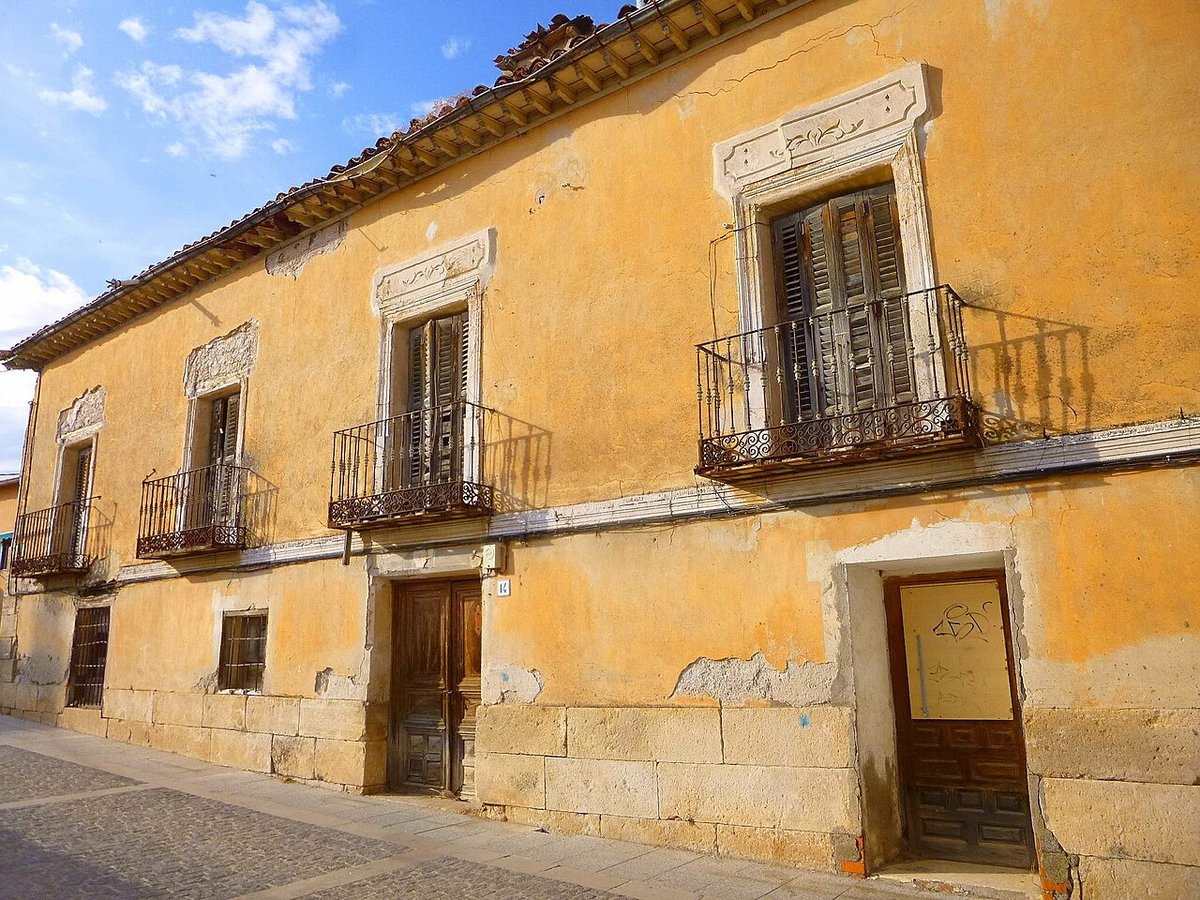
At ten in the morning, the square of Cabanillas de la Sierra still holds a trace of damp on its paving stones. Cold air drifts down from the nearby mountains. The church bell rings slowly, its echo bouncing off slightly darkened stone façades. Calle Mayor runs north between worn walls and wooden balconies that creak when the wind picks up.
Talking about tourism in Cabanillas de la Sierra means talking about a small place, with fewer than a thousand residents, where almost everything moves at an unhurried pace. There are no large buildings or grand squares. Instead, there are stone houses, old animal pens and streets that still carry something of the area’s agricultural rhythm.
The overall impression is simple and grounded. Nothing here feels arranged for display. The village unfolds in a straightforward way, shaped more by habit and weather than by any plan to attract attention.
The church and the square
The Iglesia de Nuestra Señora de la Asunción stands over the square. The building is old, although it has been repaired over time. Inside, everything is plain: somewhat rough wooden benches and an altarpiece without much decoration.
By mid-morning, sunlight slips through the narrow windows and forms bands of light across the floor. The interior remains quiet, broken only by the sound of footsteps on the tiles.
Outside, the square acts as the centre of daily life, though without any sense of bustle. People pass through rather than gather for long. The space reflects the wider tone of the village: modest, functional and tied to routine rather than spectacle.
Walking out to the Ermita de la Soledad
A street leads out from the square, rising gently towards the edge of the village. Before long, dry stone walls appear, dividing small plots of land. Some of the old animal enclosures still keep their conical roofs made from aged tiles.
After about ten minutes on foot, the Ermita de la Soledad comes into view. Part of the building shows signs of deterioration, but its position on a small rise opens up the landscape. From there, the reddish roofs of the village spread out below, with patches of pine forest beyond.
The wind tends to move strongly at this higher point. On warm days, there is a noticeable scent of dry rockrose in the air.
The setting matters as much as the structure itself. The hermitage does not dominate the view, but it offers a vantage point that helps make sense of the village and its surroundings.
Paths towards the mountains
Several dirt tracks leave the village and connect with other nearby places such as Miraflores or Guadalix. Many of these routes date back to old livestock paths. Some appear on older maps, while others are still used to reach farmland.
Not all of them are signposted. For longer walks, it is sensible to carry a map or use a route app. After rainy days, mud can make certain stretches difficult, especially on descents towards streams.
These paths form part of a wider network across the Sierra Norte, a mountainous area north of Madrid known for its rural character. Even so, the routes around Cabanillas de la Sierra keep a practical feel. They are not designed as formal trails, but as ways of moving through the land.
Walking here is less about reaching a specific viewpoint and more about following the terrain as it unfolds, with changes in surface, slope and vegetation marking the way.
Festivities and daily life
In August, the atmosphere shifts. The fiestas of the Asunción, linked to the church’s dedication, bring people out into the streets. There is a procession, music in the square and long tables where homemade food appears.
Outside these dates, the village returns to its quiet rhythm. During Semana Santa, or Holy Week, simple processions are still held. In autumn, conversations about the traditional pig slaughter can still be heard. In many cases, these have become more private gatherings among families rather than public events.
Daily life remains understated for most of the year. Activity rises and falls with the seasons, but without sudden changes. The sense of continuity is more noticeable than any moment of peak activity.
When to come
Spring and autumn are often the most pleasant times to walk in the surrounding area. The landscape appears more active, and the light softens towards the end of the day.
In summer, visitors arrive from Madrid in search of cooler air, especially at weekends. The village becomes livelier, although this also brings more cars and movement.
Winter is much quieter. Days are short, and the cold becomes more intense after sunset.
Cabanillas de la Sierra does not revolve around major monuments. What remains instead is something quieter: short streets, stone darkened by time and the sound of wind coming down from the nearby hills. It is a place where the pace and texture of a small village in the Sierra Norte can still be felt.