Full Article
about El Atazar
Small mountain village above the reservoir of the same name; offers stunning panoramic views and slate architecture.
Hide article Read full article
A village above the reservoir
Early in the morning, before the sun has warmed the stone, El Atazar moves at its own unhurried pace. The village sits above the reservoir, and from certain streets the water suddenly appears between rooftops and slopes. Its colour shifts with the wind, sometimes dark, sometimes almost silvery. On calm days there is little sound beyond pine branches brushing together and the occasional car climbing the road into the village.
El Atazar has just over a hundred residents and stands close to 1,000 metres above sea level in the Sierra Norte of Madrid. The centre is small and compact, with streets that rise and dip between pale stone walls and weathered wooden gates. There are no large monuments or expansive squares. What draws attention is the constant presence of the water just beyond the houses.
The church of San Juan Bautista occupies one of the most visible spots. It is a simple masonry building with a modest bell gable that rises just above the rooftops. Nearby, a few stone fountains remain, along with courtyards where old basins can still be seen. These details point to a past more closely tied to farming and livestock.
The reservoir as a constant backdrop
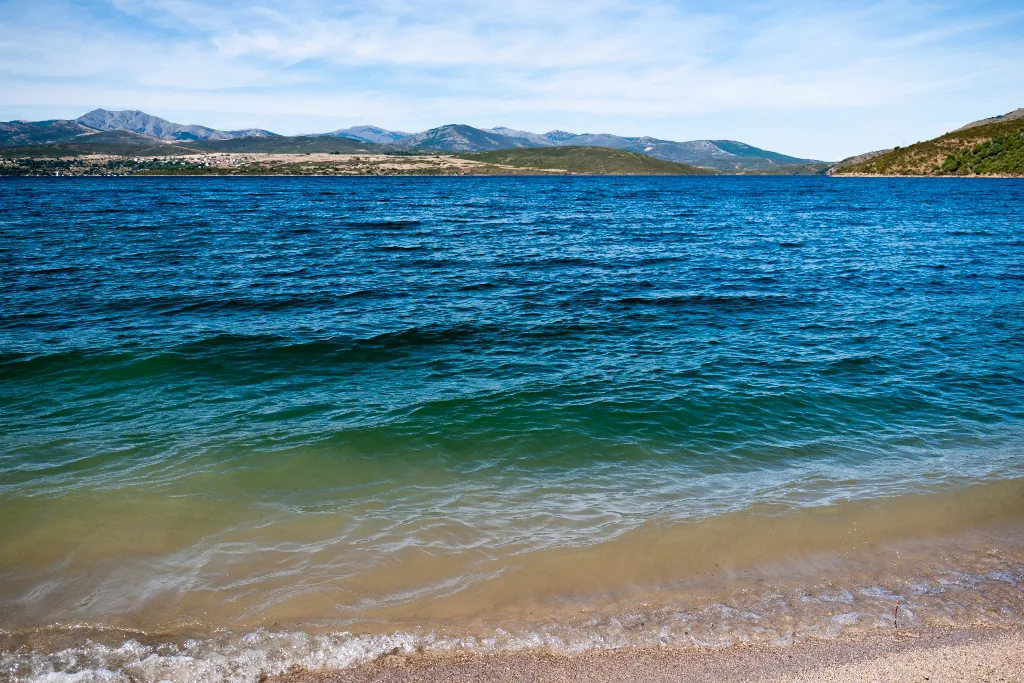
The El Atazar reservoir, the largest in the Community of Madrid, shapes both the landscape and the way the village is experienced. From several nearby viewpoints, the water opens out between slopes covered with scrub, scattered holm oaks and pines. As evening approaches, light comes in from the west and the rocks along the shore cast long shadows, clearly visible from higher ground.
Griffon vultures are often seen gliding above the surrounding rock faces. On particularly clear days, the highest peaks of the mountain range can be made out in the distance, faint but distinct.
Paths that trace the water
The area around El Atazar is crossed by old routes that once linked villages in the mountains. Many are now used for walking or cycling, though signage is not always clear. Anyone planning to go beyond the immediate surroundings of the village would be wise to carry a map or GPS.
Some tracks descend towards the reservoir, making it possible to walk close to the shoreline. Others climb the slopes and open up broader views of the water and nearby ranges. The terrain alternates between easier stretches and stony sections, so footwear matters more than it might seem when setting off downhill towards the water.
Birds, autumn and low scrub
With a bit of patience, the reservoir becomes a good place for observing birdlife. Ducks and grebes are often seen on the water, while birds of prey circle above the slopes, taking advantage of rising air currents.
Autumn brings a noticeable shift in atmosphere. Mushrooms begin to appear beneath the pines, and fallen chestnuts can be found along the paths. Anyone thinking of collecting them should check local regulations first and always respect private land, something that remains important in this area.
Seasons, traditions and everyday life
In August, El Atazar becomes livelier than usual. Many residents who live elsewhere return during these days, and the streets regain a level of activity that is otherwise more subdued throughout the year. Smaller celebrations linked to older rural traditions are also maintained.
Winter has a different feel altogether. As evening falls early and cold air descends from the mountains, the smell of firewood lingers between the houses. Some families still keep traditions such as the pig slaughter, a practice that is becoming less common but can still be seen in parts of the region.
Visiting El Atazar
With limited time, a simple wander through the village centre is enough, following the streets until a viewpoint opens out over the reservoir. Before reaching the village, there are small clearings along the road that help make sense of how the houses sit on the slope above the water.
A longer visit can be combined with other villages in the Sierra Norte or by planning a circular route along tracks that run around parts of the reservoir. Some paths are not signposted and others may be closed at certain times, so plans should remain flexible.
Spring and autumn are usually the most rewarding seasons to come. The light is softer and the landscape shifts in colour more easily. Summer brings strong midday heat, especially in exposed areas near the water. Winter is properly cold, and the wind can pick up on the viewpoints.
Access by car involves leaving the A-1 and continuing along secondary roads. The final stretch includes bends and narrow sections, so it is best taken slowly. Services in this part of the mountains are spread out, so arriving prepared is sensible.
El Atazar does not try to draw attention to itself. It remains a small, quiet place for most of the year, where the reservoir and the stone houses set the rhythm. The appeal lies in staying a while and watching how the light shifts across the water.