Full Article
about Horcajo de la Sierra-Aoslos
Municipality made up of two villages in the Sierra de Somosierra; known for its quiet and landscapes.
Hide article Read full article
Two villages on the northern slope
Horcajo de la Sierra-Aoslos is a municipality of two small villages in the Sierra Norte de Madrid. The geography explains the settlement: a territory of meadows and gentle hills around 1,000 metres high, where livestock and agriculture have long been the only economy. The place brings together Horcajo and Aoslos, two nuclei whose combined population rarely exceeds two hundred people. Life here follows a rhythm set by the land, not by tourism.
Architecture adapted to the hillside
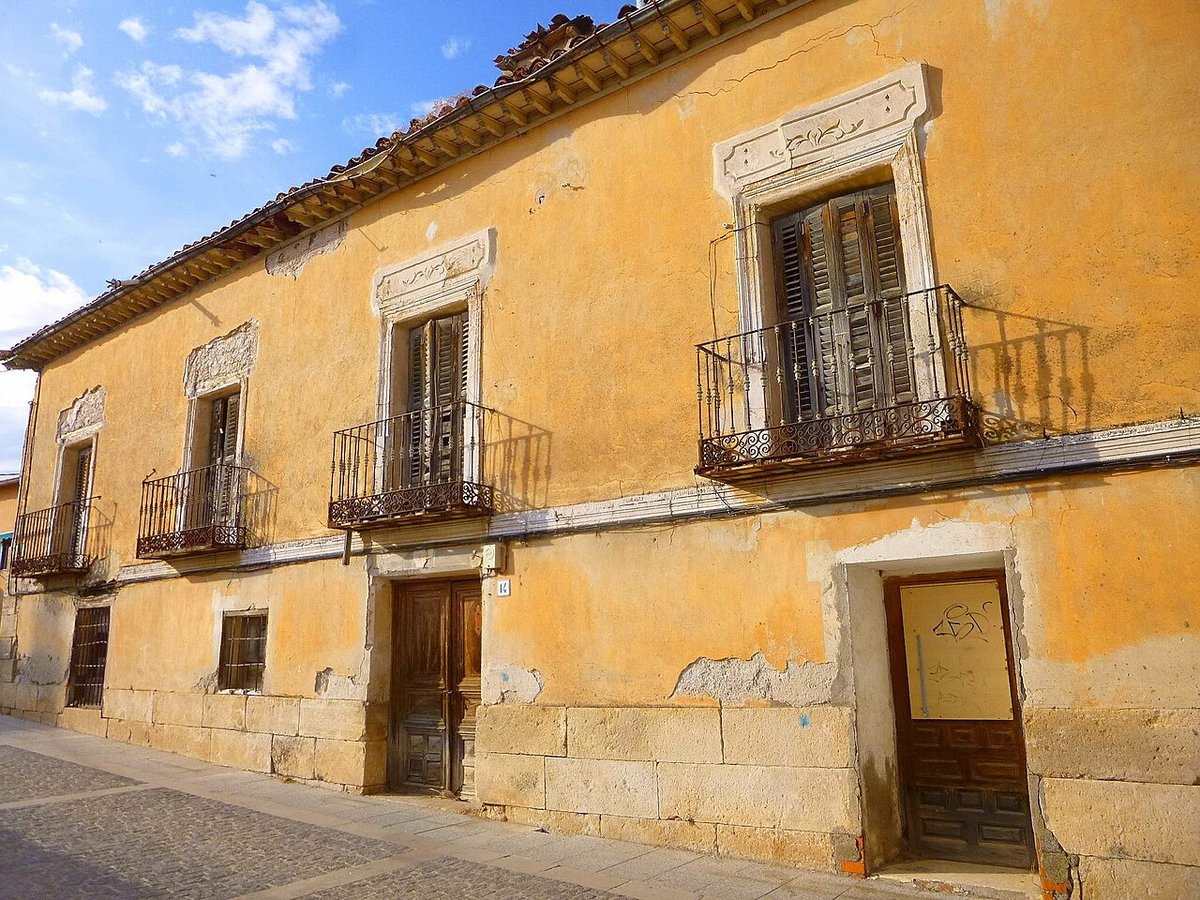
There is no planned urban layout. In both Horcajo and Aoslos, the streets simply follow the slope of the land, narrowing or climbing as the terrain demands. The architecture is functional. You can see stone masonry, curved tile roofs, and some wooden balconies on older buildings. Many houses have been renovated, but their original proportions—compact, built to withstand winter cold—remain clear.
The parish church in Horcajo, dedicated to San Pedro, dates from the 16th century with later modifications. It is a sober stone building. Inside, a Baroque altarpiece is often cited as the oldest piece of local heritage, though it is a modest work typical of rural churches in this region.
A working landscape of dehesa and oak groves
The surroundings are not dramatic mountain scenery, but a working landscape. Dehesas—open woodlands of holm oaks shaped by centuries of grazing—alternate with pastures and smaller oak groves. Dry stone walls, livestock enclosures, and old farming structures line the dirt tracks. This is not a preserved postcard; it is land that is still used.
Seasonal change is pronounced. Autumn colours the oaks and undergrowth. In wet years, people come to forage for mushrooms, following local regulations. Winter snow regularly covers the meadows and tracks, sometimes for days.
Walking the old connecting paths
A good way to understand the area is to walk the rural paths that link Horcajo to neighbouring villages like Madarcos or La Acebeda. These are old routes, used historically by shepherds and residents moving between settlements.
The walking is not technically difficult, but it is proper countryside terrain: dirt and stone tracks that can be muddy or dusty depending on the season. Early morning increases the chance of seeing birds of prey over the hills or herds of cattle moving across the fields. These walks make tangible how these communities were shaped by proximity and terrain.
Practical considerations for a visit
Spring and autumn are the most comfortable seasons for walking, with milder temperatures and active landscapes. Winters are cold with reliable snow; summers can be hot at midday, though evenings cool at this altitude. Your experience will depend heavily on when you come.
The village centres are small and can be seen in a short, aimless walk. From any street, you can be in open countryside within minutes. The lack of specific tourist infrastructure is typical here. Services are minimal.
Access is by road from the A-1 motorway, via exits for Buitrago or Cervera de Buitrago, followed by regional roads. In winter, check conditions if there has been ice or snowfall. What you find is a place where village and landscape still function as a single unit, largely unchanged by outside expectations.