Full Article
about Horcajuelo de la Sierra
Small architectural gem in the Sierra del Rincón; cobbled streets and an ethnographic museum
Hide article Read full article
A village that moves at its own pace
Some places seem built for constant movement, terraces full, cars coming and going, people in a rush. Horcajuelo de la Sierra belongs to a different rhythm altogether. Set at 1,144 metres above sea level and home to just over a hundred residents, it works with very little: a handful of narrow streets, sturdy houses, and the surrounding landscape doing most of the work.
The impression is immediate. Stone, wood, and quiet. There is no need for much else. This is part of Madrid’s Sierra Norte, where villages were shaped by long winters rather than the idea of attracting attention.
Inside the village
It does not take long to understand Horcajuelo. In about ten minutes, a clear picture forms, not because anything is missing, but because the scale is small and consistent.
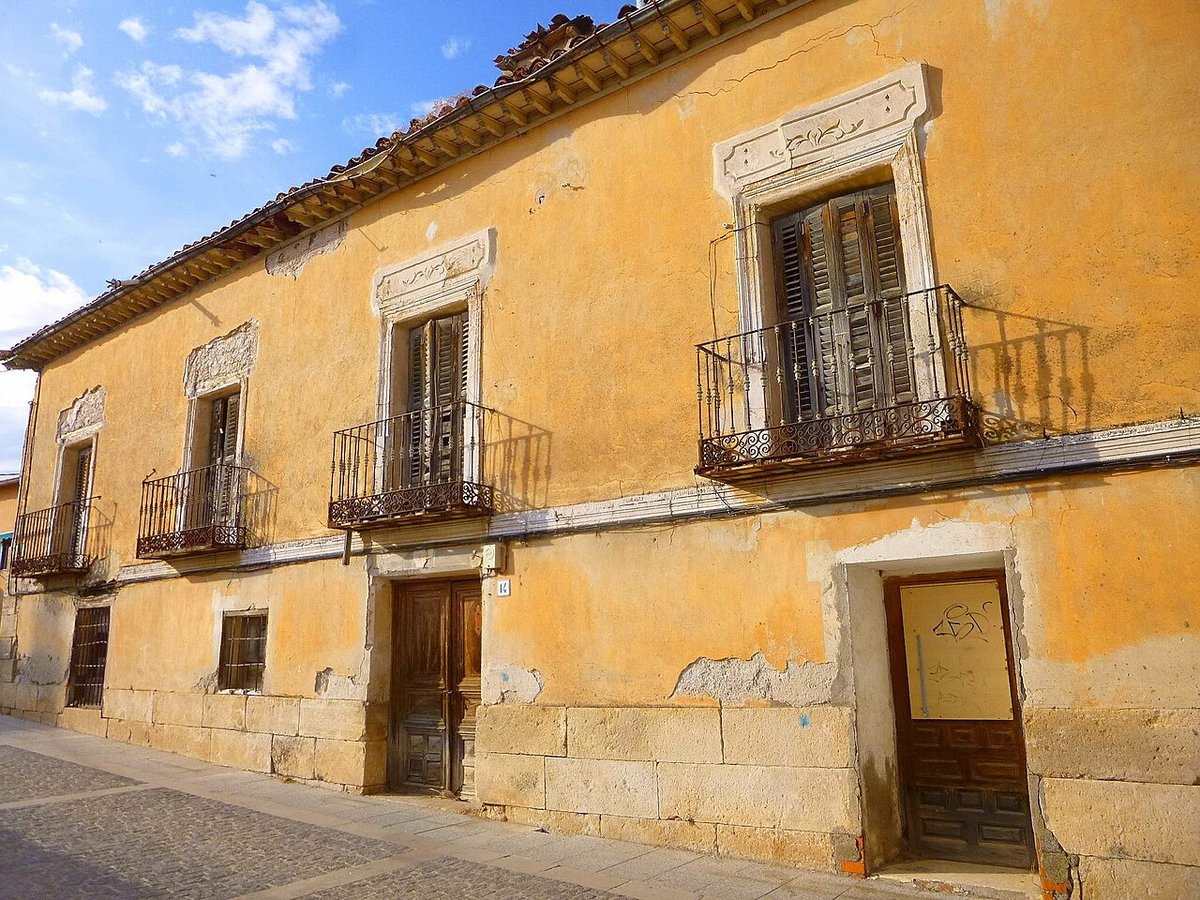
At the centre stands the church of San Nicolás, which acts as a natural point of reference. It has granite walls and a simple bell tower, with a cluster of masonry houses around it. Many feature wooden balconies, adding a practical touch rather than decoration for its own sake. Everything feels built to last.
Looking a little closer, small traditional structures still appear here and there. These were once used to store grain, keep tools, or shelter animals. They are easy to overlook if walking quickly, yet they reveal how life here was organised for generations.
The landscape beyond the streets
Step outside the village and the setting shifts almost immediately. Open meadows spread out, broken up by patches of Pyrenean oak and Scots pine. It is not a dense forest that closes in around you. Instead, the terrain alternates between clearings and clusters of trees, leaving the slopes visible.
The seasons bring noticeable changes. In autumn, the hills take on reddish and ochre tones. In summer, the shade from the oaks becomes the most welcome feature when the sun is strong. It is the kind of place that invites walking without a fixed plan, where direction matters less than simply moving through the landscape.
Paths shaped by daily life
There is no extensive network of marked trails filled with signposts and information panels. Many of the routes are the same ones that have always been used: paths for moving livestock, reaching kitchen gardens, or heading out to look for mushrooms when the season allows and luck is on your side.
Some stretches can be muddy after rain, and it is not unusual to come across gates that need to be opened and closed again. Nothing especially difficult, but it does require a bit of attention.
If the day starts early, there is often movement among the trees. Small birds such as robins and blue tits are easy to spot, and occasionally a kite can be seen gliding above the slopes. These details come and go quietly, without turning the place into a spectacle.
Food from the mountains
The cooking in this part of the Sierra Norte follows a straightforward logic shaped by the climate. Dishes are filling and designed for colder weather, built around legumes, meat, and slow-cooked recipes that are best enjoyed after time outdoors.
Judiones, large white beans typical of the region, appear frequently, along with stews that take their time on the stove. After a walk through the surrounding hills, this kind of food feels entirely in place.
Traditions that continue
During summer, the village becomes a little livelier. Local festivities bring together residents and people who return for a few days, creating a simple atmosphere centred on music and activities in the main square.
Some customs tied closely to rural life are still present as well. The matanza, the traditional slaughter carried out in some households, continues as part of everyday life rather than as something staged for visitors.
Winter brings a very different mood. There is less movement, smoke rises from chimneys, and the quiet of a small village settles in as the day fades.
A short visit is enough
Horcajuelo de la Sierra is not a place designed to fill an entire day with attractions, and that is part of its appeal.
A sensible approach is to park, walk slowly through the central streets, spend a moment near the church, and then follow one of the paths leading out into the countryside. Within minutes, the built environment gives way to open land.
In a couple of hours, it is possible to explore at an unhurried pace and gain a clear sense of what life looks like in a small village of the Sierra Norte.
Before setting off
The streets are narrow, so it makes sense to leave the car somewhere it does not get in the way and continue on foot.
Comfortable footwear is a good idea, especially when heading out along the surrounding paths. After rain, the ground can be slippery and muddy in places.
One more thing to bear in mind: this is not somewhere to rush. Passing through in ten minutes may leave the impression that there is very little here, which misses the point entirely.
A quiet stop along the way
Horcajuelo does not revolve around tourism. There are no large-scale attractions or a constant programme of activities. That absence helps preserve a calm that is harder to find in more visited villages of the Sierra Norte.
It works best as a peaceful stop within a wider route through the area. A place to stretch your legs, spend some time in the quiet, and then continue on.
Getting there from Madrid
From Madrid, the journey usually takes around an hour and a half. The route follows the A-1 motorway towards Burgos before continuing along roads that lead into the Sierra Norte.